Last updated: August 21, 2026
If you are looking for a simple, screen-free activity that keeps toddlers engaged for more than five minutes, toddler sensory bins are exactly what you need. In this guide, you will find everything from the best fillers and themes to safety tips and ways to stretch the fun all week long.
We have packed in enough ideas that you can set up a new bin every few days without repeating yourself.
What Are Toddler Sensory Bins and Why Do They Matter
A sensory bin is a shallow container filled with a base material and small objects that invite a child to explore with their hands. Toddler sensory bins are designed with safe, age-appropriate items that stimulate touch, sight, and sometimes sound and smell.
The benefits go well beyond simple entertainment. When toddlers scoop, pour, hide, and find objects in a bin, they are building fine motor skills, hand-eye coordination, and early math concepts like full versus empty.
Sensory play also supports language development because children naturally narrate what they are doing. You can boost this by asking open-ended questions like “What does that feel like?” or “Can you find the red one?”
Research in early childhood education consistently shows that hands-on, play-based learning helps toddlers retain concepts longer than passive instruction. A ten-minute sensory bin session can accomplish more developmental work than a comparable stretch of screen time.
The setup does not have to be elaborate or expensive. Many of the best toddler sensory bins use pantry staples, seasonal finds from the dollar store, or materials you already have on hand.
Choosing the Right Base Filler for Your Toddler Sensory Bin
The base filler sets the tone for the entire bin. Your choice should depend on your child’s age, any mouthing behaviors, and your own tolerance for mess.
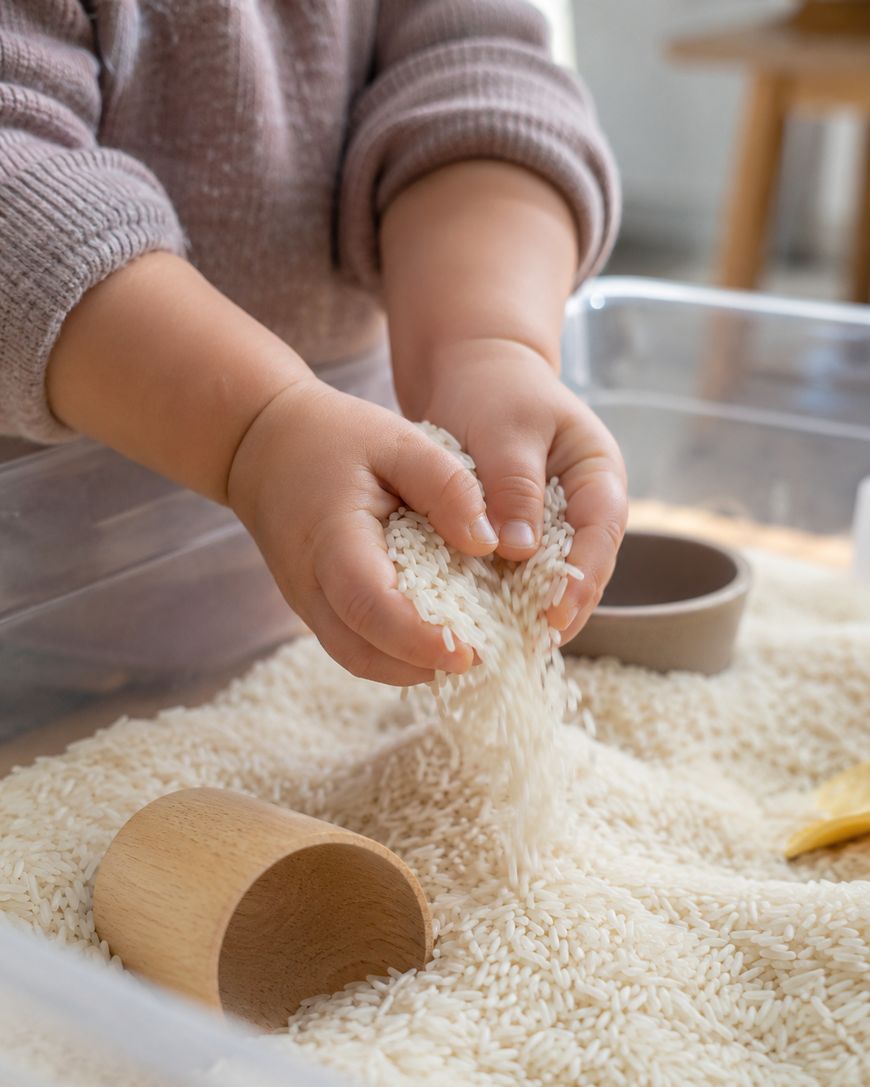
For younger toddlers who still explore with their mouths, edible bases are the safest option. Cooked oatmeal, dry rice, dried pasta, and cornmeal are all popular choices that pose minimal risk if ingested in small amounts.
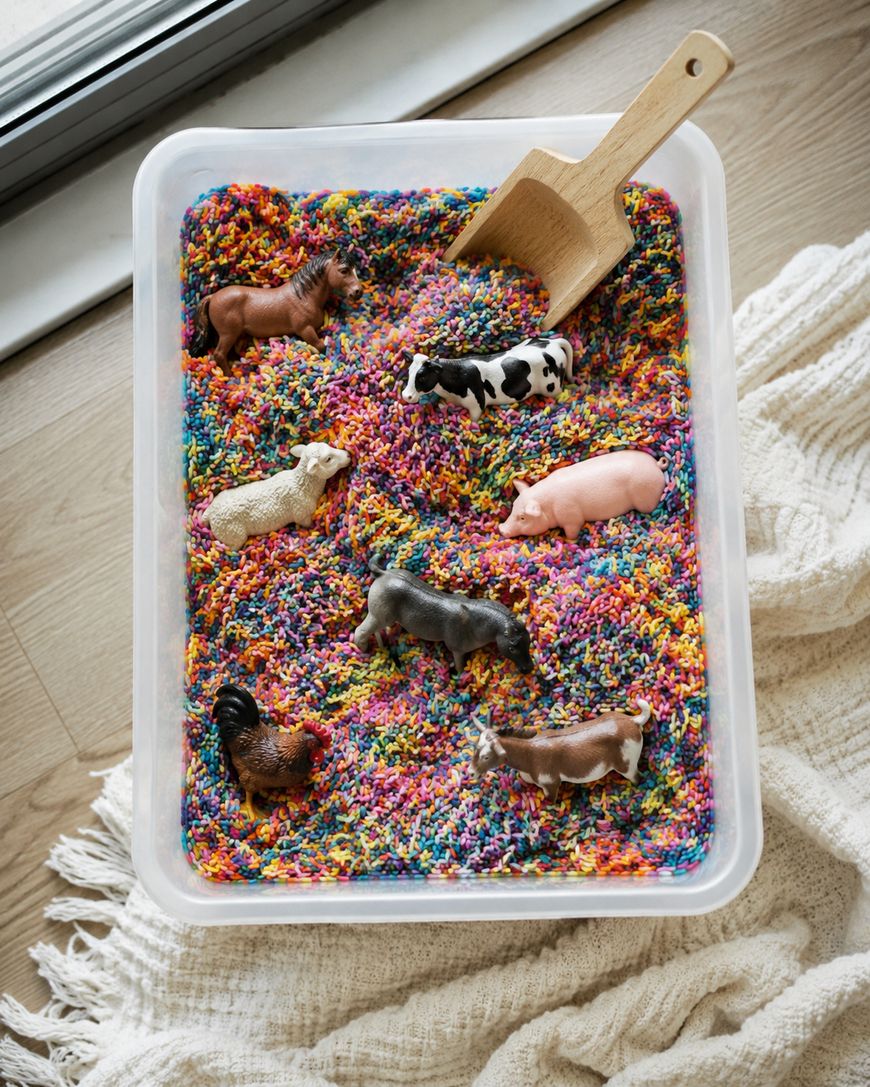
Dry rice is probably the most versatile edible filler you can use. It pours beautifully, makes a satisfying sound against the sides of the bin, and can be dyed with food coloring for added visual interest.
Dried beans and lentils add a different texture and a bit more weight, which some toddlers find deeply satisfying. Just supervise closely with children under three since small beans are still a choking risk.
For older toddlers who are past the mouthing stage, you open up a whole new world of non-edible fillers. Kinetic sand, water beads, cloud dough made from flour and baby oil, and shredded paper are all excellent choices.
Water beads deserve a special mention because their squishy, slippery texture is genuinely unlike anything else. They must be used with close supervision and stored carefully since they expand significantly and can be dangerous if swallowed.

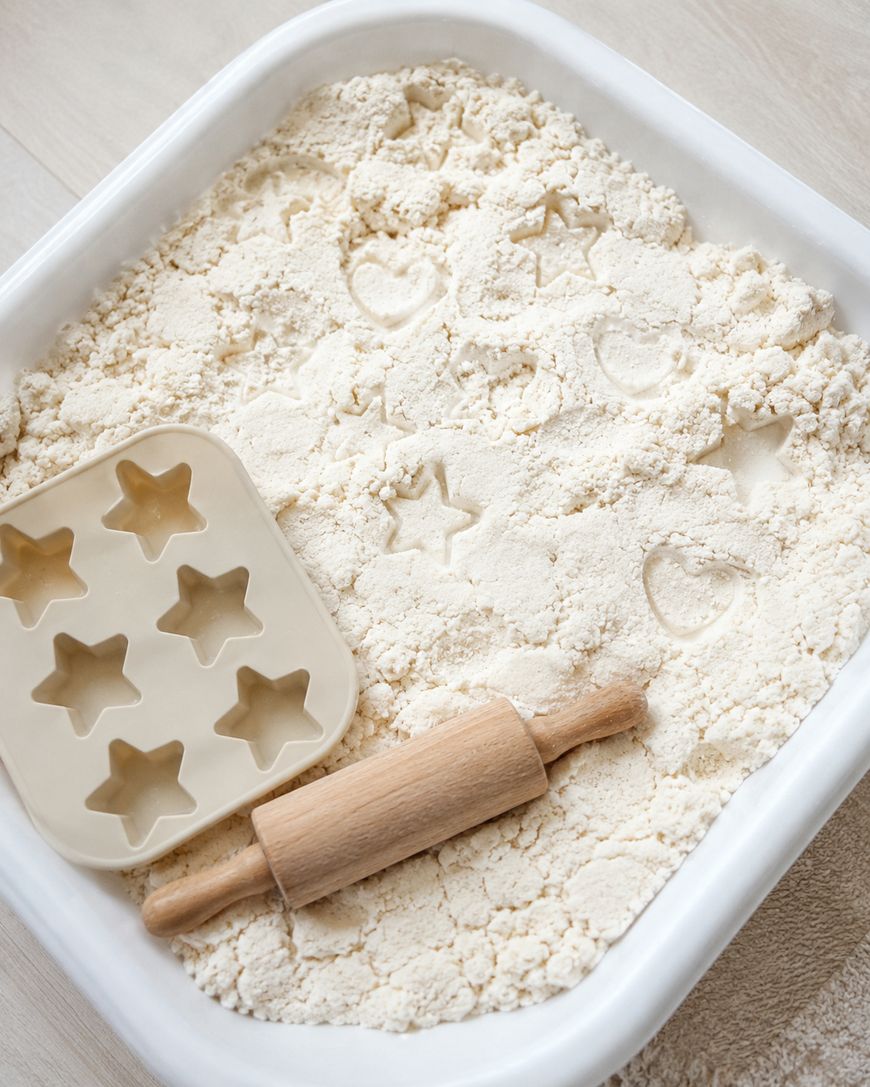
Cloud dough is a favorite in many households because it holds its shape when squeezed but crumbles when you let go. Mix eight cups of flour with one cup of baby oil, and you have a batch that will keep toddlers busy for an entire afternoon.
Toddler Sensory Bin Themes That Make Setup Simple
Giving your bin a theme helps you choose cohesive materials quickly and makes the play more narrative-rich. Themed toddler sensory bins also photograph beautifully if you enjoy sharing activities on social media.

A fall harvest bin is one of the easiest seasonal setups. Fill a large plastic bin with dried corn, small gourds, plastic leaves in red and orange, and a few toy animals. Add a small shovel and bucket and the bin practically runs itself.

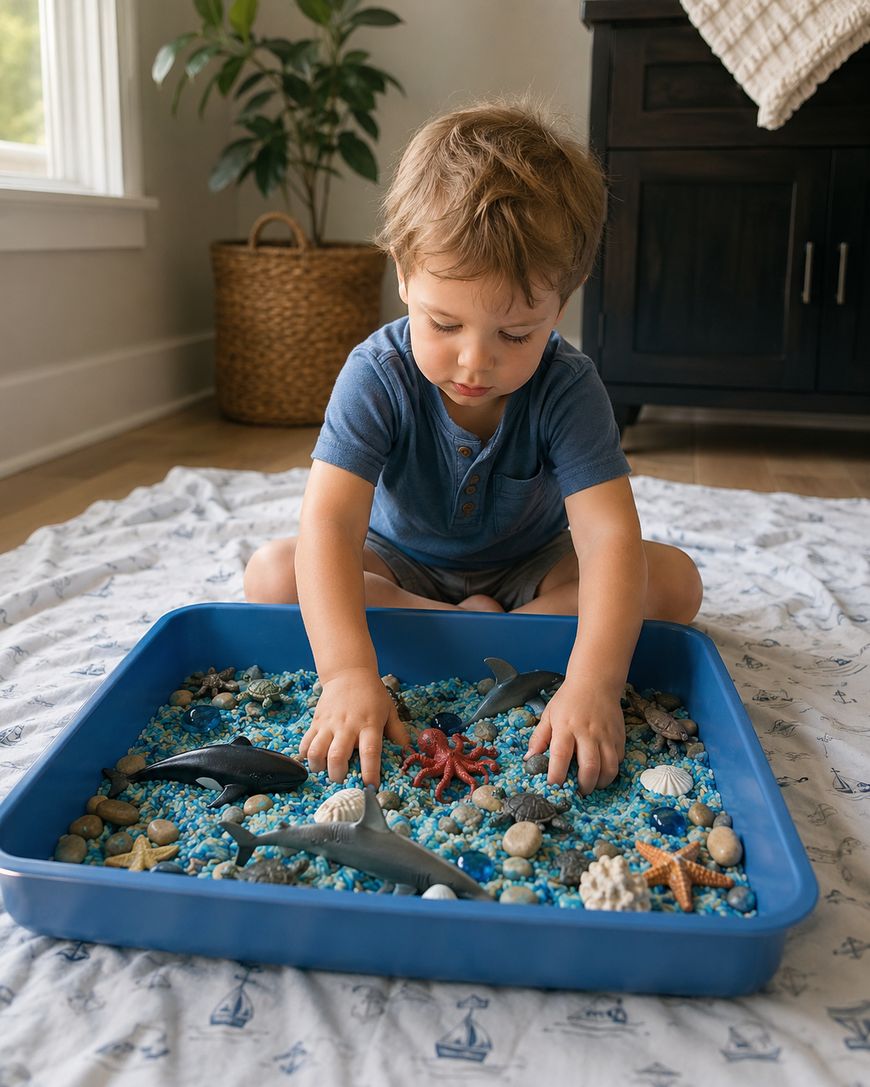
An ocean theme works wonderfully with blue-dyed rice or water beads as the base. Tuck in plastic sea creatures, smooth river stones, and a few shells. Toddlers love fishing out the animals with a small strainer or their bare hands.
A construction site bin is a perennial favorite with truck-loving toddlers. Use kinetic sand or brown rice as the base, add a few toy dump trucks and excavators, and hide small rocks or wooden blocks for them to unearth. The excavation element adds an extra layer of engagement.

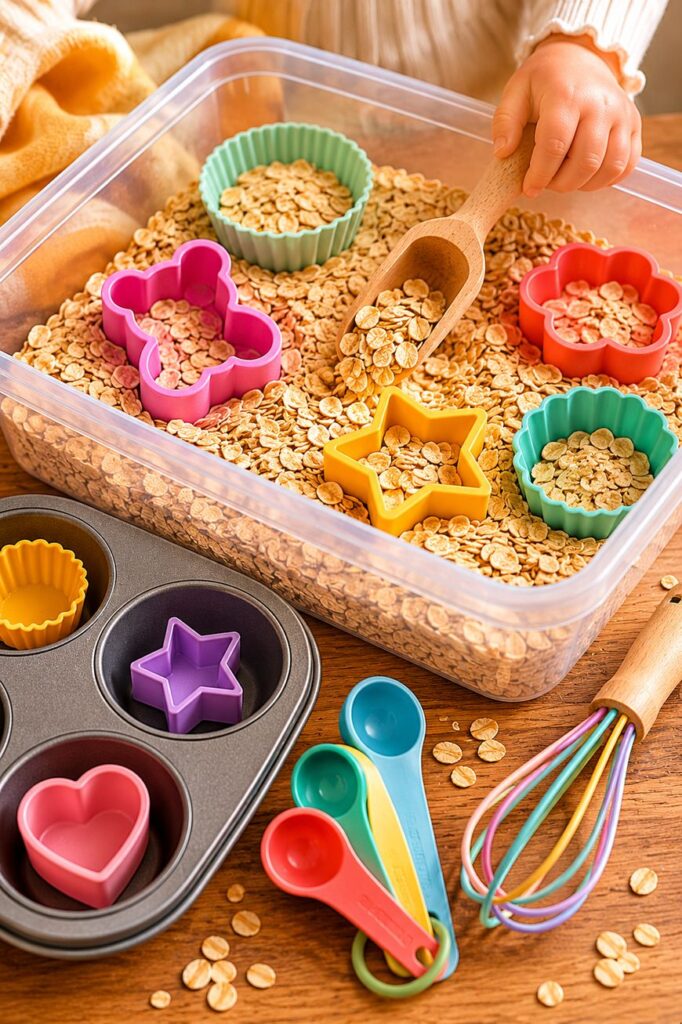
A baking or kitchen theme using oats, measuring spoons, muffin tins, and silicone molds encourages pretend play alongside sensory exploration. This is a great option for toddlers who love watching you cook because it gives them their own version of the activity.
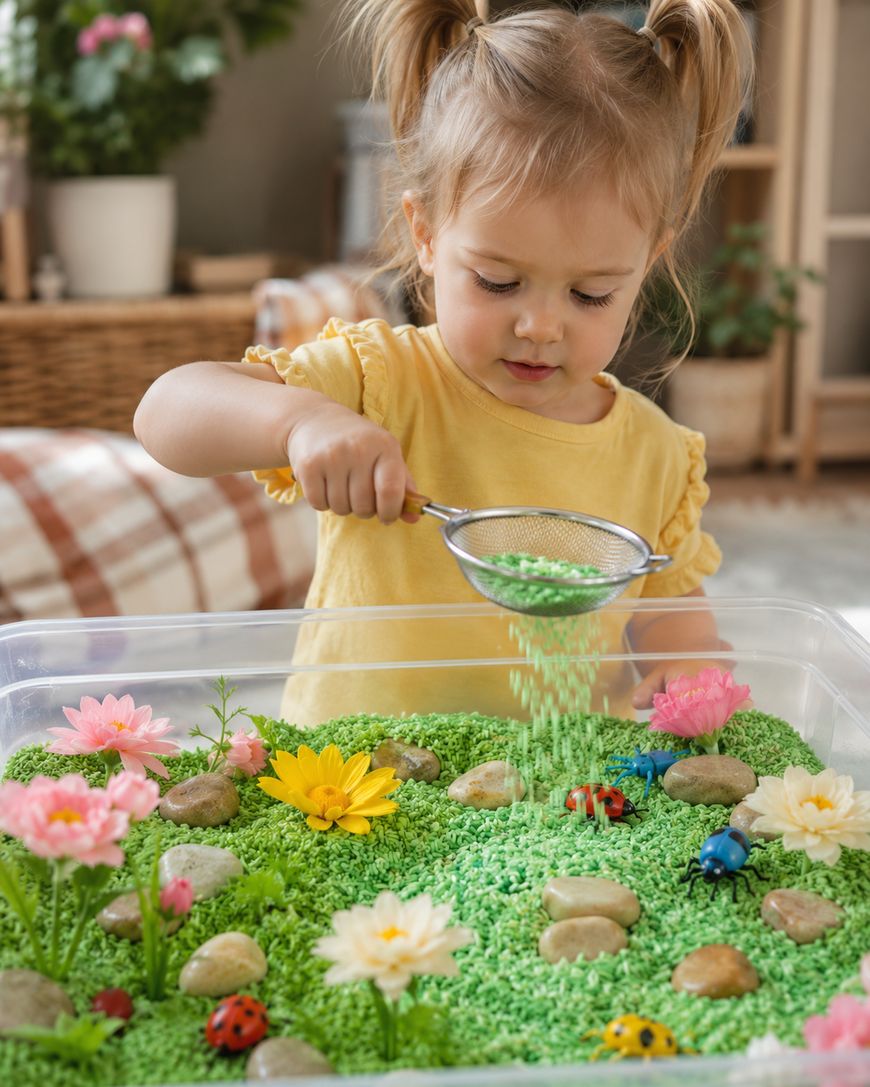
Seasonal holiday themes are an easy way to keep the bins feeling fresh without buying new materials. A Valentine’s Day bin might use pink rice, foam hearts, and small figurines. A spring garden bin could feature green-dyed rice, plastic flowers, and toy bugs.

Setting Up Toddler Sensory Bins Without the Stress
The biggest reason parents skip sensory bins is the anticipated mess. With a few simple strategies, you can keep the cleanup manageable and actually enjoy the activity alongside your child.
Place a fitted sheet or a large plastic tablecloth under the bin before you start. Any spills land on the sheet, and cleanup becomes as easy as folding it up and pouring the filler back into a storage bag.
Choose a container with low sides so your toddler can reach in easily, but high enough to contain most of the filler. Under-bed storage bins are a perfect size and inexpensive at most big-box stores.
Prepare the bin in advance and store it in a closet or on a shelf out of reach. Pulling it out as a special activity makes it feel more exciting and reduces the temptation to dump the whole thing immediately.
Keep the bin sessions short and intentional, especially at first. Fifteen to twenty minutes is often plenty, and ending before your toddler loses interest means they will be excited to play again next time.
If outdoor space is available, moving the bin outside eliminates almost all cleanup concerns. A patch of grass or a patio area is an ideal sensory bin zone in warm weather.
Extending the Learning in Your Toddler Sensory Bin
A well-designed bin can support multiple learning goals beyond the sensory experience itself. With a few simple add-ins, you can turn any toddler sensory bin into a rich educational activity.
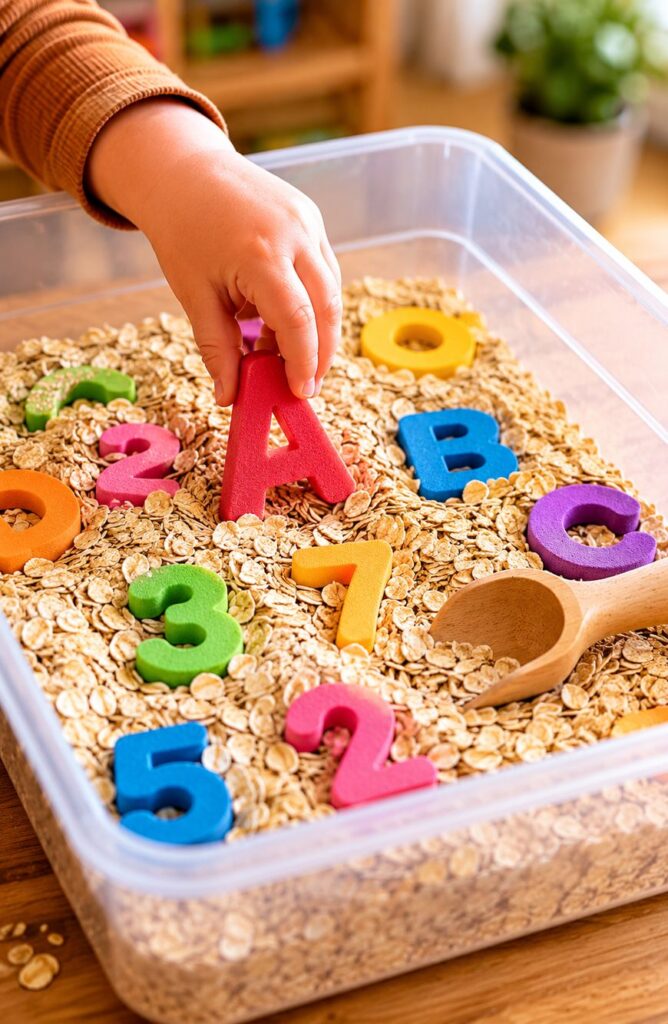
Hide letters or numbers in the base filler and ask your toddler to find them and name them. This works especially well with foam letters in a water bin or magnetic numbers buried in sand.
Add sorting containers in two or three colors and ask your toddler to sort hidden objects by color, size, or type. Even toddlers who are not yet verbal can successfully complete a sorting task and feel proud of the accomplishment.
Incorporate counting by asking your child to find five rocks, three shells, or two animals. This embeds early math naturally into play without it feeling like a lesson.
Use the bin as a backdrop for small world play by adding miniature figurines, fences, or simple props. A farm bin with rice and plastic animals becomes a whole narrative adventure when you add a small wooden barn.
Take photos of each bin you create and let your toddler flip through them on your phone or print them as a little sensory bin album. Revisiting past bins builds memory skills and gets toddlers excited about upcoming activities.
Safety Tips for Toddler Sensory Bins
Safety is the top priority when setting up any sensory activity for young children. Knowing what to watch for lets you set up with confidence and supervise effectively.
Always stay within arm’s reach during sensory bin play with toddlers under three. Even with edible fillers, the combination of small objects and an enthusiastic toddler means direct supervision is essential.
Inspect all small objects before adding them to the bin. Any item smaller than a toilet paper roll’s inner tube is a potential choking hazard and should be reserved for older children.
Water beads and foam beads must be stored in sealed, child-proof containers and kept completely out of reach when not in use. Dry beads are hard to see and can be swallowed accidentally.
Check bases like rice and oats for any signs of mold if stored for more than a week. Dry fillers keep well in sealed zip bags, but any moisture in the container can cause spoilage quickly.
Wash your toddler’s hands before and after bin play, especially when using non-edible fillers like kinetic sand or cloud dough. This is a good habit that also adds a calming bookend to the activity.
Frequently Asked Questions About Toddler Sensory Bins
What age can toddlers start using sensory bins?
Most children are ready for simple toddler sensory bins around twelve to eighteen months with close supervision. At this age, stick to larger objects and edible bases like oatmeal or cooked pasta to minimize risk.
How long should a sensory bin activity last?
Fifteen to twenty minutes is a sweet spot for most toddlers. Some children will play longer naturally, and that is perfectly fine, but there is no need to push past natural disengagement.
How do you keep sensory bin materials fresh?
Store dry fillers like rice, oats, and sand in airtight zip bags or lidded containers between uses. Most dry fillers can be reused for one to two weeks before refreshing them.
Can you use the same bin filler multiple times?
Yes, most fillers can be reused several times as long as they stay dry and clean. If you notice any clumping, unusual smell, or visible contamination, it is time to replace the filler.
Are water beads safe for toddlers?
Water beads are not recommended for children under three due to choking and ingestion risks. For older toddlers, they can be used with direct, constant supervision and must be stored completely out of reach.
How do you introduce a sensory bin to a toddler who seems hesitant?
Start by modeling the play yourself, scooping and pouring without any pressure for your child to join. Many hesitant toddlers warm up within a few minutes once they see it looks fun and safe.
Make Toddler Sensory Bins a Regular Part of Your Week
Toddler sensory bins are one of the most rewarding investments of time and a few dollars you can make for your child’s development. Once you have a collection of fillers and themed materials, setup takes less than five minutes and the payoff in engaged, happy play is enormous.
We hope these ideas inspire you to pull out a bin this week and watch your toddler light up. Start simple, follow your child’s lead, and do not worry about making it perfect. The best toddler sensory bin is the one you actually set up.
Outdoor play areas for toddlers
This post contains affiliate links. A full disclosure is available from the main menu.
Everyday learning activities for toddlers


Leave a Reply