Last updated: August 9, 2026
If you are looking for toddler playroom ideas that are actually doable, you are in the right place. We are going to walk you through everything you need to know to create a space your toddler will love, from storage solutions to sensory zones, without spending a fortune or losing your mind.
Setting up a great toddler playroom does not have to be complicated. With a few smart choices and a little planning, you can build a room that grows with your child and keeps the chaos manageable.
Start with Flooring That Is Safe and Easy to Clean
The floor is the foundation of any great toddler playroom, and it deserves some real thought. Toddlers spend a huge amount of time on the floor, so you want something soft, safe, and easy to wipe down.
Foam play mats are one of the most popular toddler playroom ideas for good reason. They cushion falls, come in bright colors, and can be rearranged or swapped out easily as your child grows.
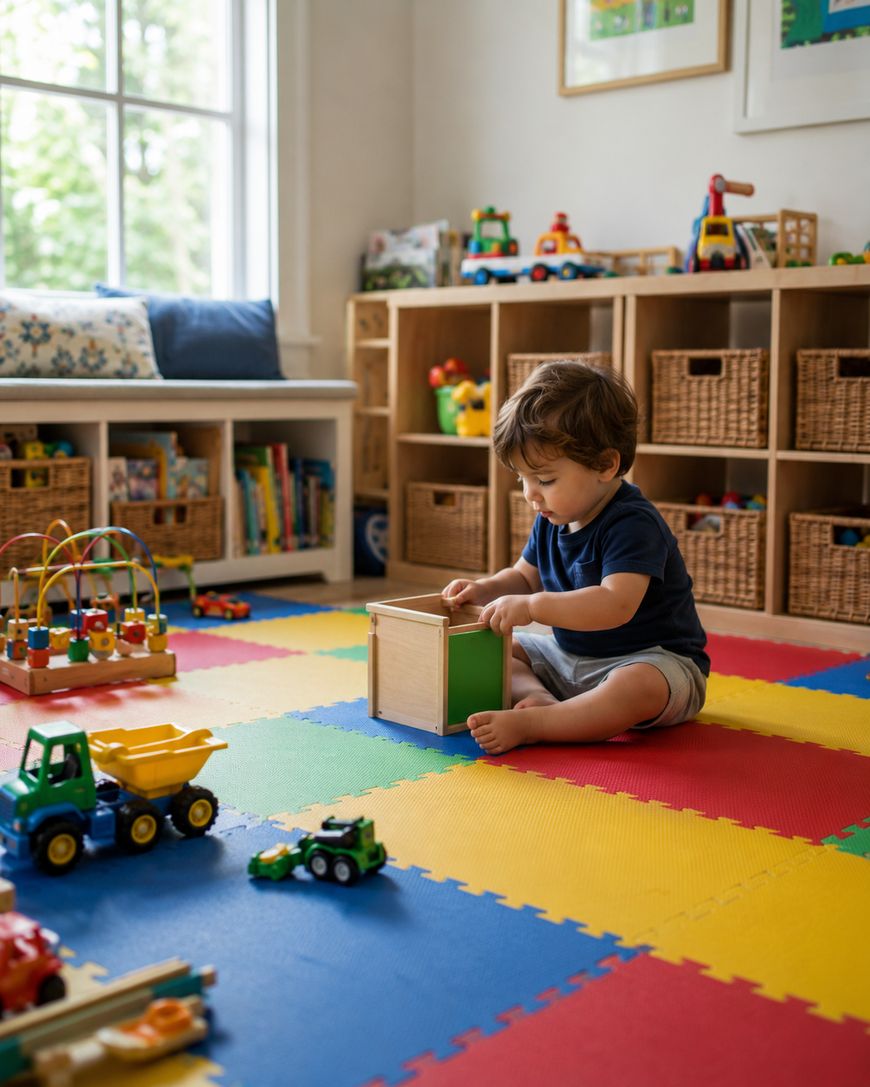
Interlocking foam tiles are budget-friendly and widely available. Look for options that are non-toxic and easy to wipe clean, since toddlers will inevitably drop snacks, dump water, and drag muddy shoes across whatever you put down.
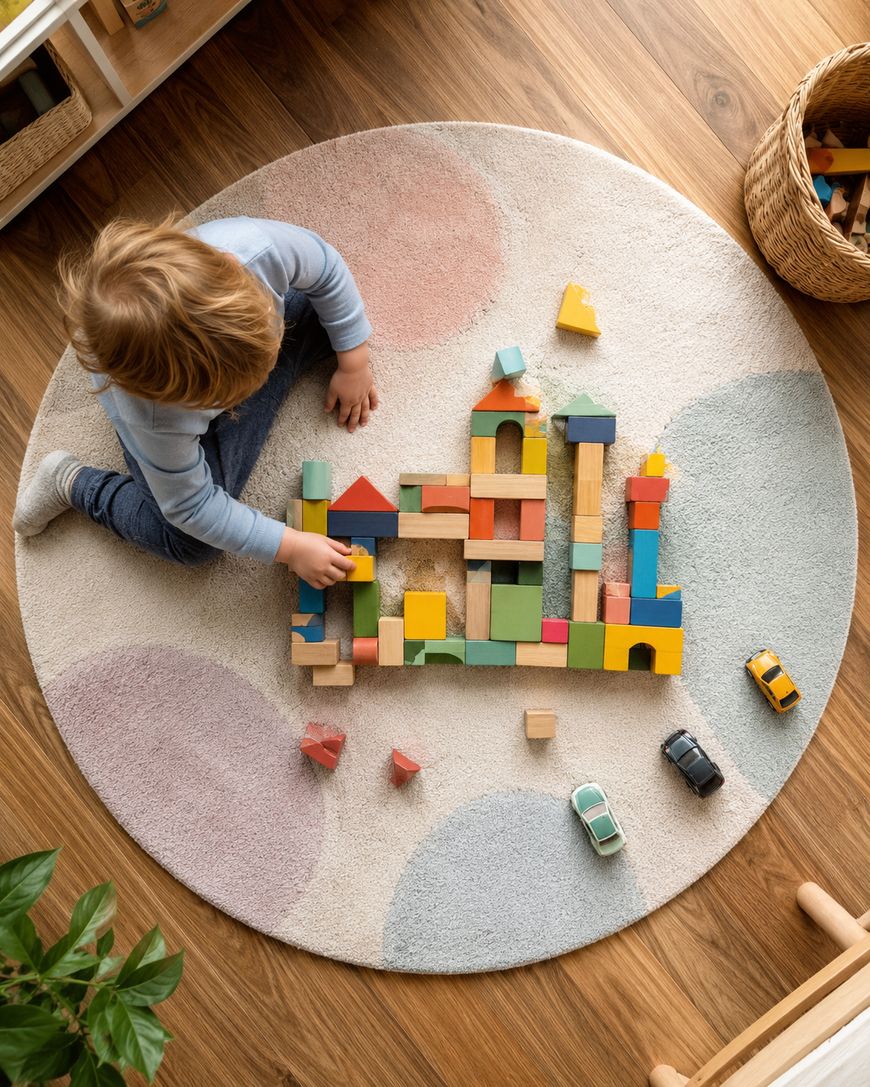
If you prefer a more polished look, a large washable area rug over hardwood or tile can work beautifully. Just make sure it has a non-slip backing and that it is actually machine washable, not just advertised as easy to clean.
Smart Storage Is the Secret to a Playroom That Stays Organized
No list of toddler playroom ideas would be complete without a serious conversation about storage. The right storage system can mean the difference between a room that stays tidy and one that becomes an obstacle course by 9am.
Low, open shelving units are one of the best investments you can make. When toys are stored at your toddler’s eye level and within easy reach, kids are far more likely to both access and return their things without needing your help every five minutes.
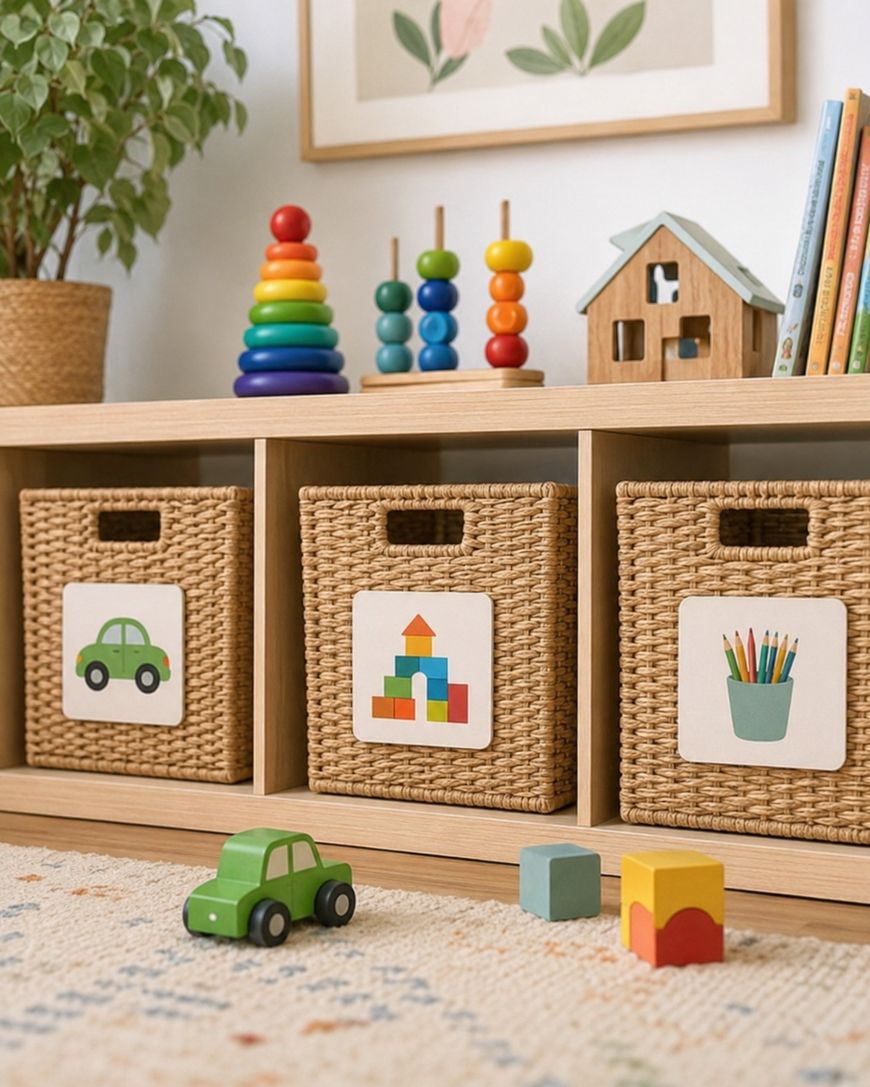
Labeled bins are a game changer, even for kids who cannot read yet. Use picture labels so your toddler knows exactly where the blocks go, where the toy cars live, and where the art supplies belong.
Rotating toys is another strategy that makes a huge difference. Keep only a portion of your toddler’s toy collection accessible at one time and swap things out every few weeks to keep interest high without adding more stuff.
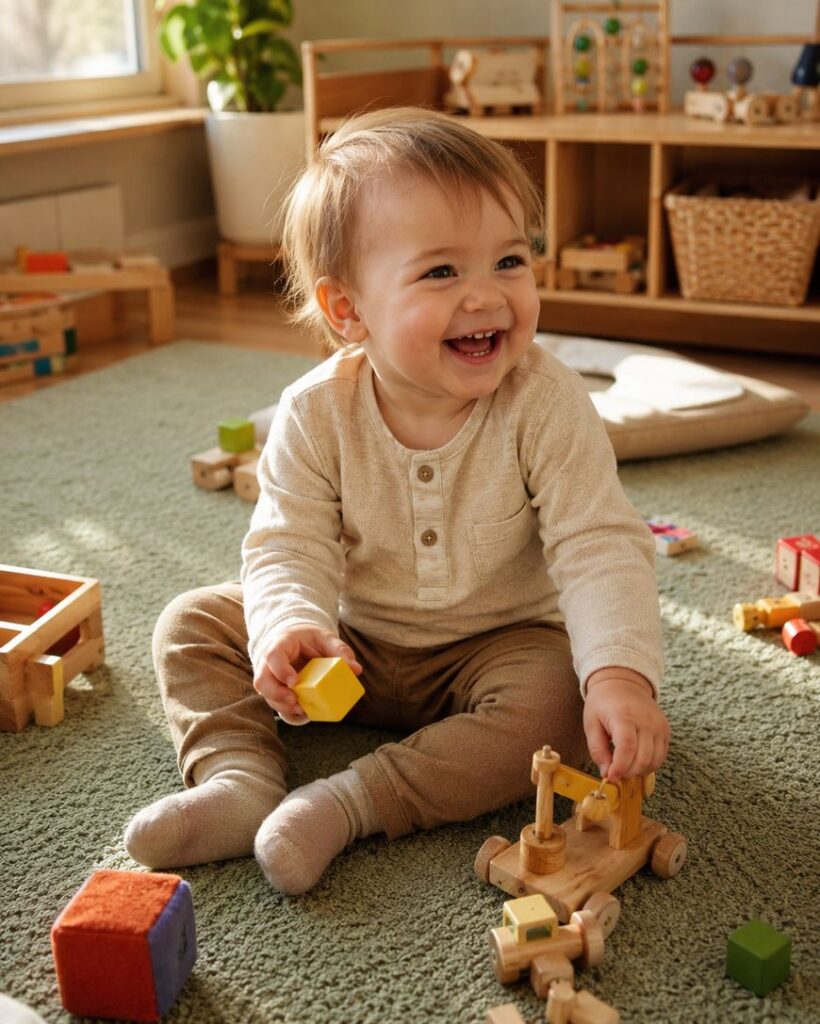
Consider a mix of open and closed storage. Open bins work well for chunky toys and building blocks, while closed baskets or cabinets help corral the visual clutter of smaller items and craft supplies.
Create a Cozy Reading Nook Your Toddler Will Actually Use
A reading corner is one of those toddler playroom ideas that pays dividends for years. Even very young toddlers love to flip through picture books, and having a dedicated cozy spot makes that habit feel special and intentional.
A small bean bag chair, a floor cushion, or a low upholstered chair in a corner with a bookshelf at arm’s reach is all you need to get started. Add a soft throw blanket and maybe a battery-operated string of lights to make it feel magical.
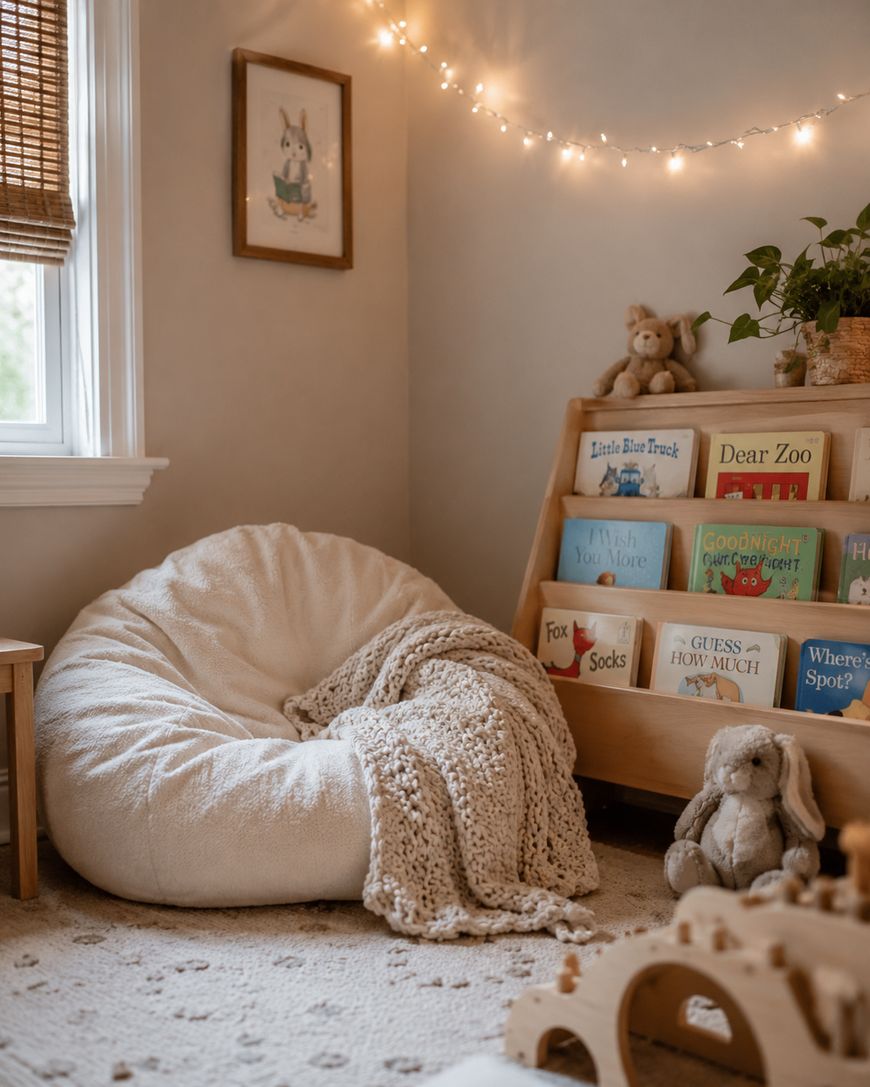
A low bookshelf with books displayed face-out rather than spine-out makes it so much easier for toddlers to find and choose what they want. It also encourages browsing and builds early literacy skills without any effort on your part.
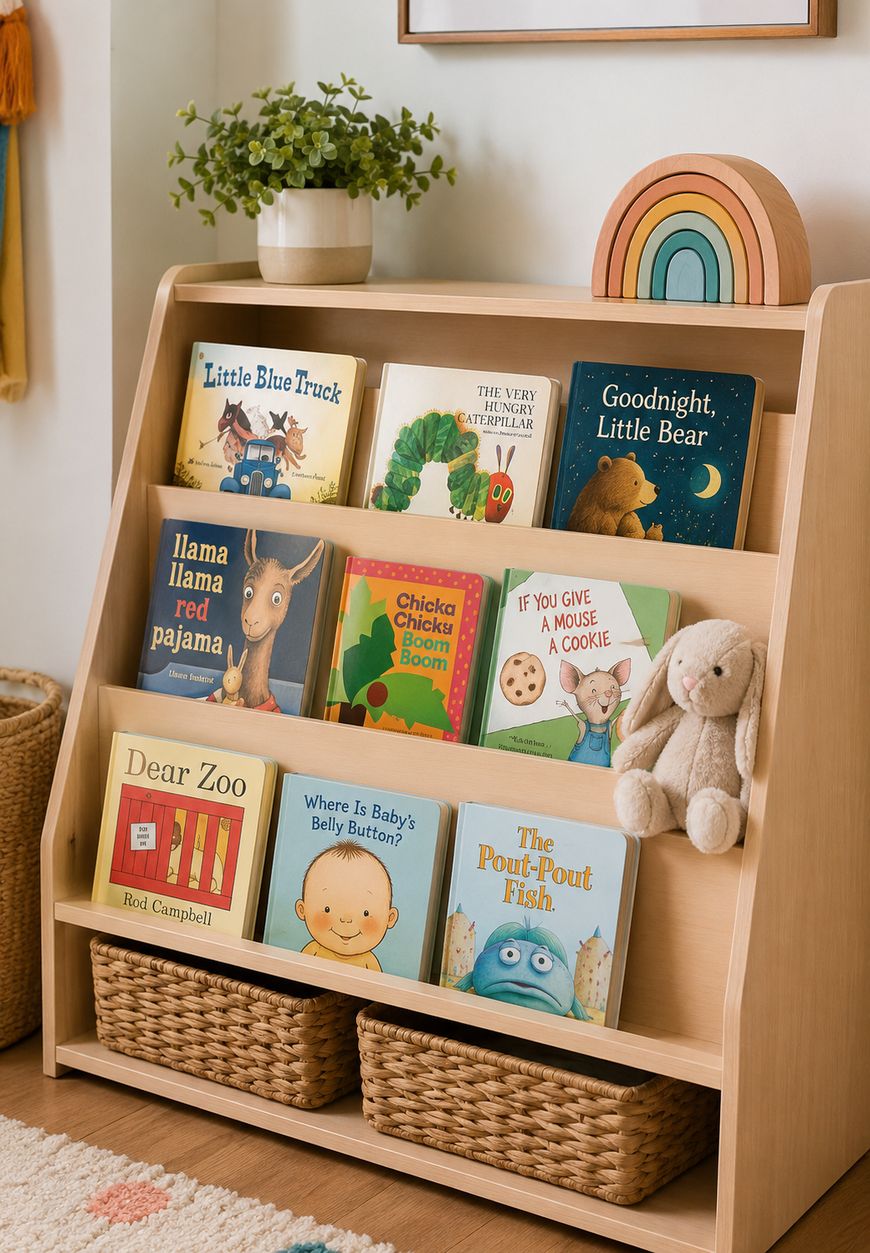
You can change out the books on display seasonally or based on themes you are exploring together. This keeps the reading nook feeling fresh and gives your toddler new things to discover without buying new books every month.
Incorporate a Sensory Play Area for Hands-On Learning
Sensory play is one of the most developmentally important activities for toddlers, and building it into your playroom setup is one of the smartest toddler playroom ideas you can implement. It supports brain development, fine motor skills, and emotional regulation all at once.
A sensory table or bin does not have to be expensive. A shallow plastic storage bin filled with kinetic sand, water beads, dried pasta, or rice gives toddlers hours of hands-on exploration.
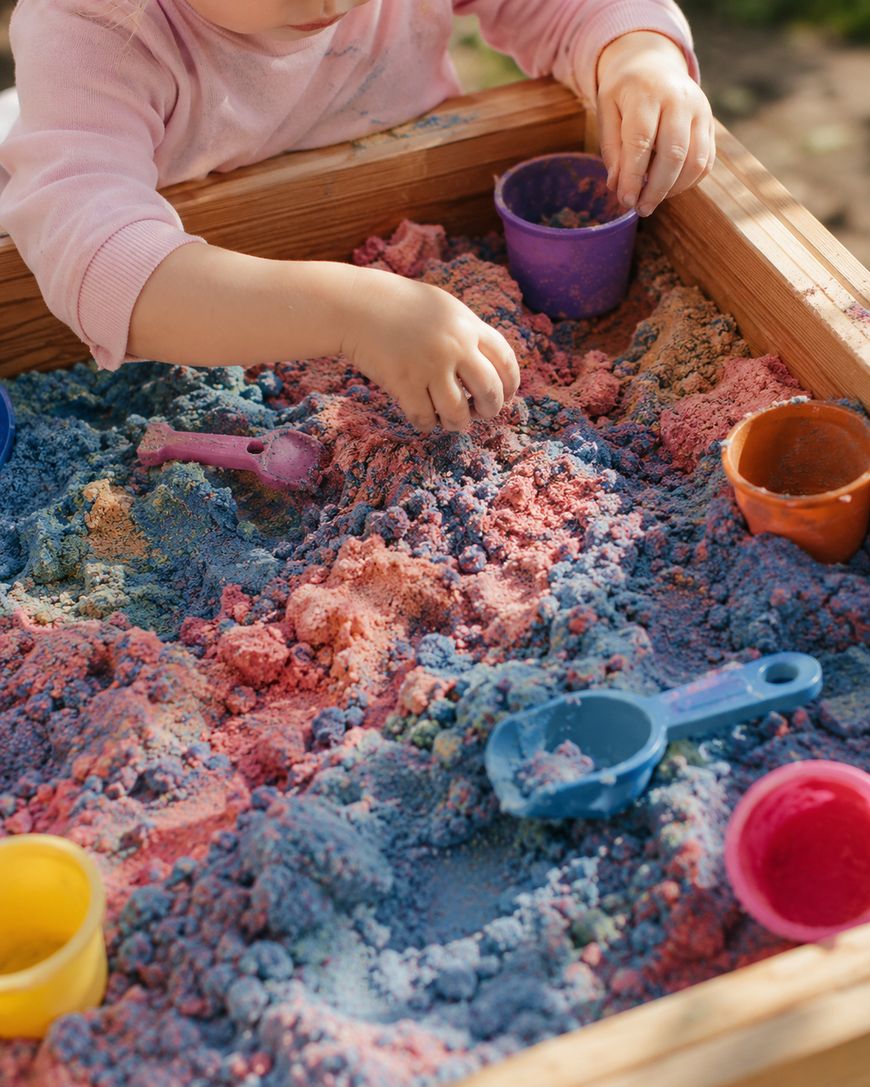
Keep a small bin of accessories nearby like cups, spoons, scoops, and small containers so your toddler can pour, measure, and transfer to their heart’s content. These simple activities build math skills and concentration without feeling like school.
Rotate the fillings regularly to keep things interesting. One week it might be dried beans, the next it could be water with floating foam letters, and the week after that, shaving cream on a tray for drawing with fingers.
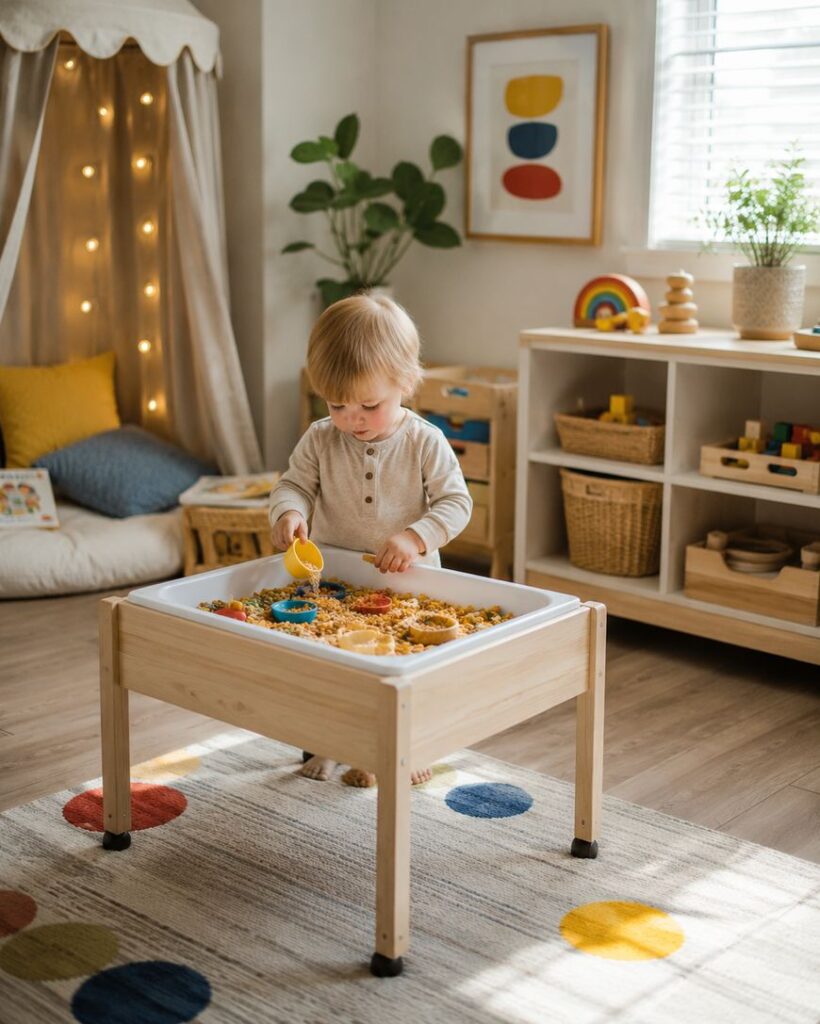
Place the sensory area on your easiest-to-clean surface and keep a small dustpan and brush nearby so your toddler can help sweep up spills. Teaching cleanup as part of the activity from the start saves a lot of frustration later.
Add an Art Zone That Encourages Creativity Without the Mess
Every toddler playroom should have a dedicated space for art and creative expression. Toddlers are naturally drawn to making marks, exploring colors, and creating things with their hands, and giving them a proper place to do it channels that energy productively.
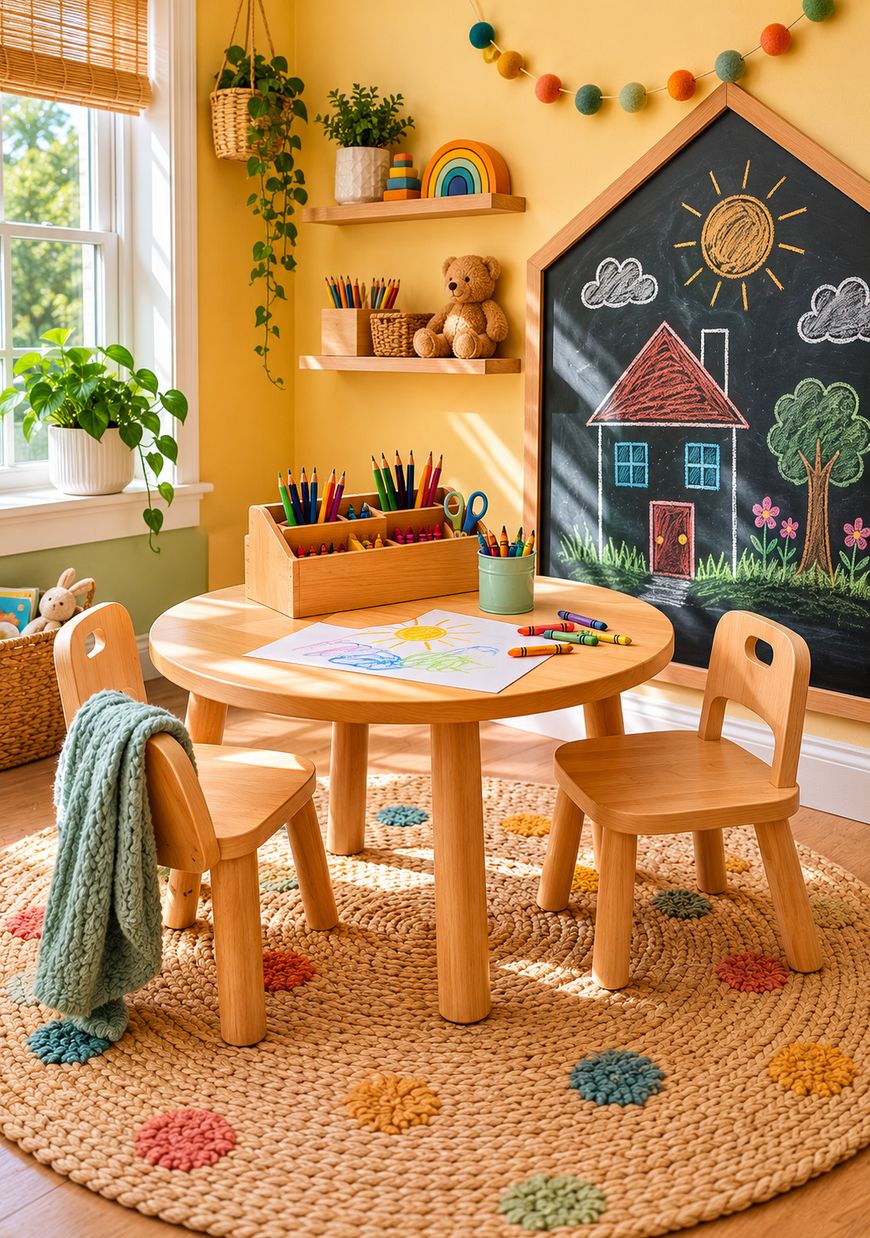
A low table with two or three small chairs or stools works perfectly as an art zone. Pair it with a storage caddy or tray that holds crayons, washable markers, chunky chalk, and a stack of plain paper.
A wall-mounted art display is one of those toddler playroom ideas that is both functional and adorable. Hang a length of twine with mini clothespins so your toddler can display their finished masterpieces, which builds pride and motivation to create more.
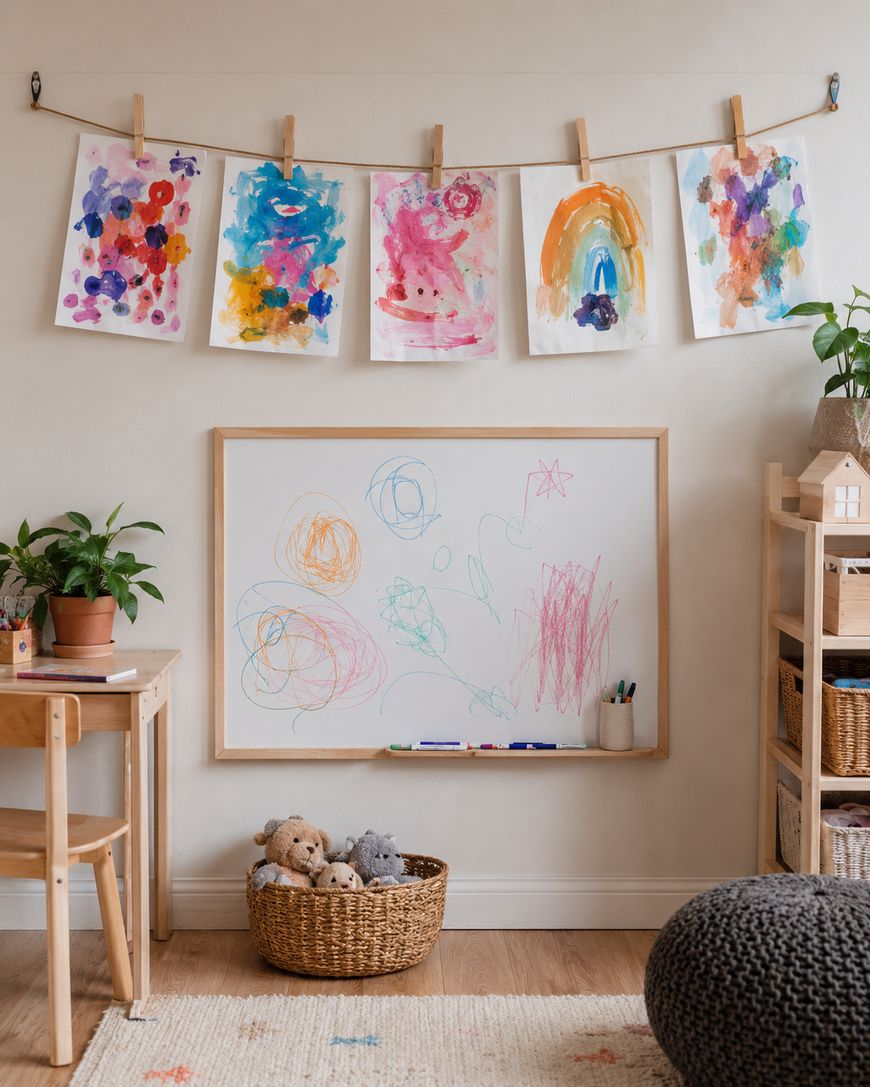
A small chalkboard or whiteboard mounted low on the wall gives toddlers a reusable surface for drawing and practicing marks. It also cuts down on paper use and gives them a vertical surface to work on, which is great for shoulder and wrist development.
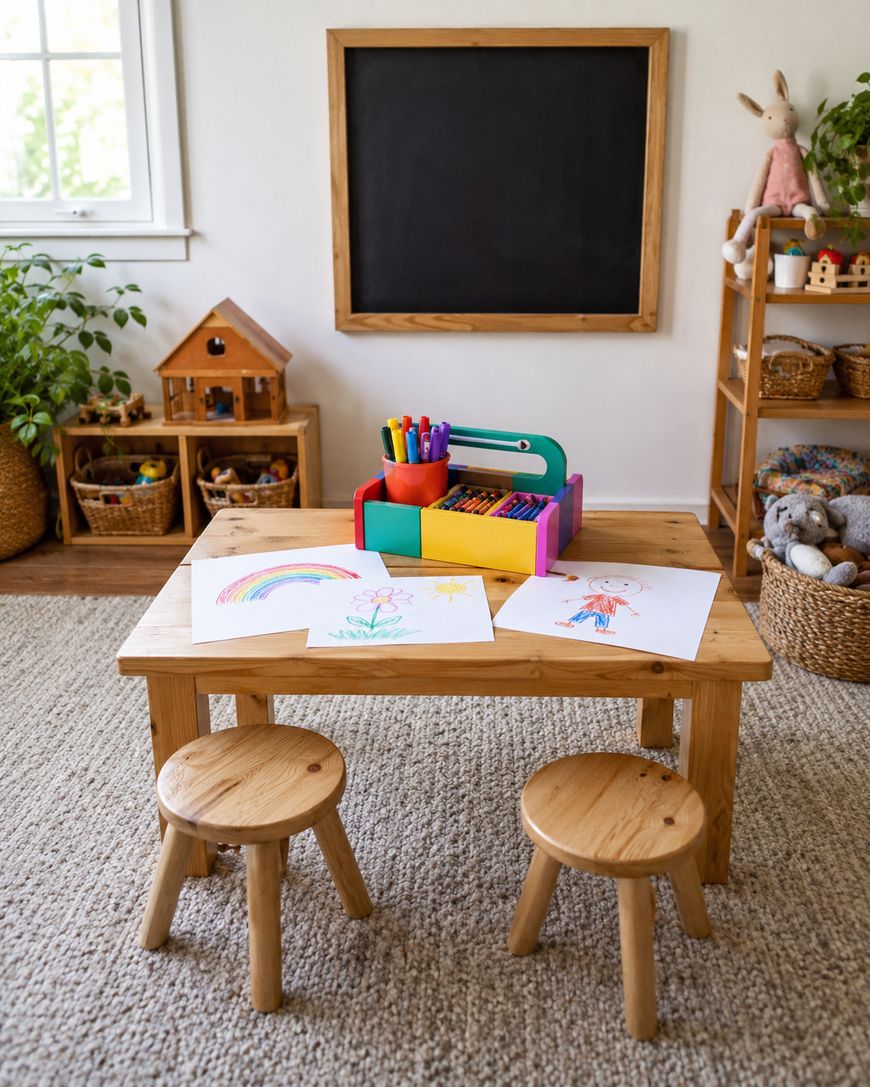
Keep art supplies age-appropriate and always within reach. When toddlers have to ask for permission or help to access their materials, the creative impulse often fizzles out before it gets started.
Think About Zones and Flow When Arranging the Space
One of the most overlooked toddler playroom ideas is thinking about the room in terms of distinct zones rather than just filling it with toys. When a room has clear areas for different types of play, toddlers move between activities more fluidly and stay engaged longer.
Consider dividing the space into an active zone, a quiet zone, and a creative zone. The active zone might have a small climber, a balance board, or a soft obstacle course. The quiet zone is your reading nook. The creative zone is the art table and sensory bin.
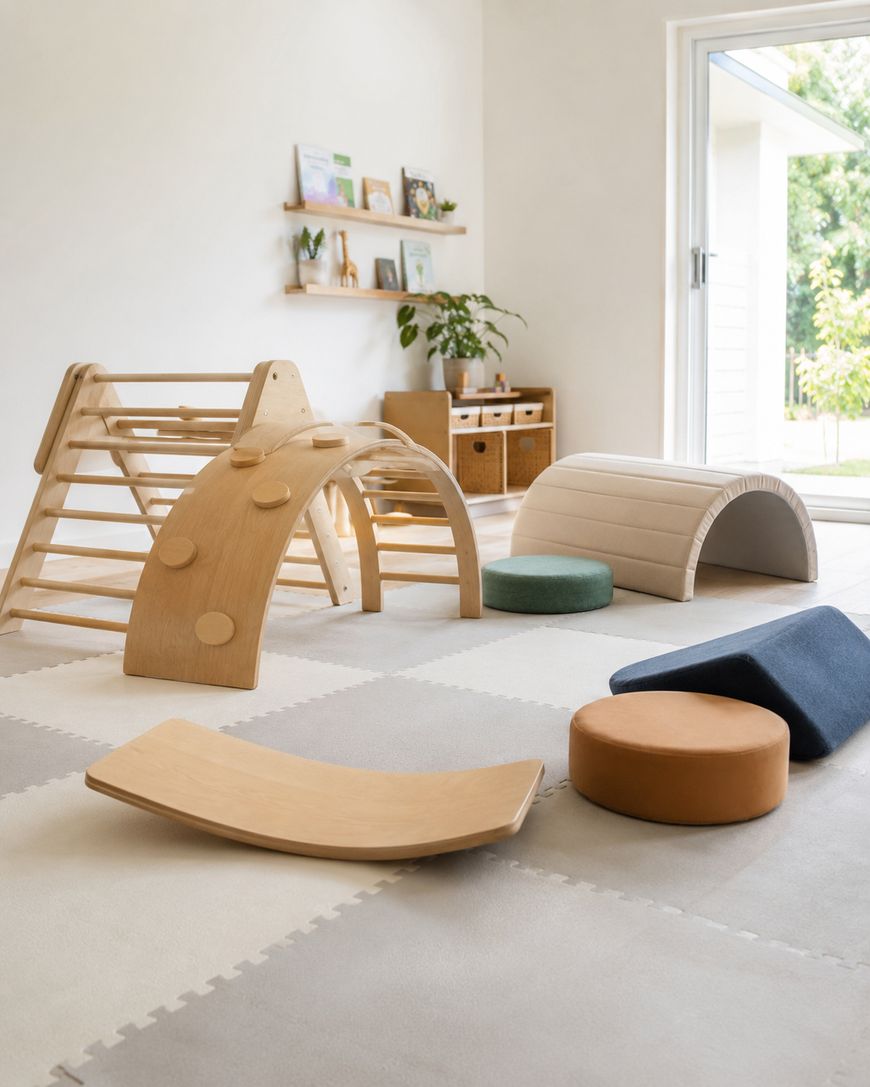
Use a low shelf or a small rug to visually separate the zones without putting up walls. Even a simple color change in the rug can signal to a toddler that they are moving from one type of play to another.
Make sure pathways between zones are clear and wide enough for your toddler to move freely. A room that feels too crowded actually decreases play quality because kids cannot spread out or move their bodies the way they need to.
Safety Considerations Every Toddler Playroom Needs
No guide to toddler playroom ideas would be complete without covering safety basics. Toddlers are fast, fearless, and remarkably creative when it comes to finding hazards you did not anticipate.
Anchor all bookshelves and storage units to the wall, even low ones. Toddlers climb, and furniture tip-overs are a leading cause of childhood injuries that are entirely preventable with a few wall anchors.
Cover all electrical outlets and keep cords tucked away or managed with cord covers. Use furniture with rounded edges where possible, and add corner guards to any sharp edges you cannot replace.
Choose toys and materials that are developmentally appropriate and free of small parts that could be choking hazards. Even if your toddler seems past the mouthing stage, visitors or younger siblings may not be.
Keep the playroom door open during play so you can easily monitor what is happening without hovering. A baby gate across the door can keep your toddler contained in a safe space while still allowing you to hear and see everything.
Why a Dedicated Toddler Playroom Makes Such a Difference
Having a designated play space changes everything for both you and your toddler. When kids have a room that is truly theirs, they are more likely to play independently and stay engaged longer.
A well-designed playroom also helps with cleanup because everything has a home. You will spend less time hunting down toy pieces scattered across three rooms and more time actually enjoying your toddler’s excitement over their space.
Toddlers thrive on predictability and routine, and a dedicated playroom supports both. Knowing exactly where to go to play and exactly where things belong helps little ones feel secure and confident.
It also creates a natural boundary that keeps the rest of your home a little calmer. When the playroom has everything your toddler needs, there is less reason for toys to migrate into every corner of the house.
Frequently Asked Questions About Toddler Playroom Ideas
What is the most important thing to include in a toddler playroom?
Safe, accessible storage is the most important element of any toddler playroom. When your toddler can reach their toys, find what they want, and put things away independently, the room works the way it should. Everything else builds from there.
How do I keep a toddler playroom from getting too cluttered?
Rotating toys is the most effective strategy for managing clutter. Keep only a portion of toys accessible at one time and swap them out every few weeks. This keeps the room visually calmer and keeps your toddler’s interest higher than if everything is always available.
What kind of flooring is best for a toddler playroom?
Foam interlocking tiles or a large washable rug over hard flooring are both excellent options. You want something that cushions falls, is easy to clean, and does not contain harmful chemicals. Look for non-toxic certifications when purchasing foam tiles.
How much space do you really need for a toddler playroom?
You do not need a huge room to create a great toddler playroom. Even a small bedroom or a corner of a living room can be transformed into an engaging play space with smart furniture choices and thoughtful organization. The key is using vertical space and keeping only what your toddler actually uses.
Should toddlers have access to all their toys at once?
Generally, no. Having access to every toy at once is overwhelming for toddlers and actually leads to less engaged play. Rotating a smaller selection keeps things interesting and manageable. A good rule of thumb is to have out only what fits neatly in the storage you have.
How do I make a toddler playroom feel cozy without making it hard to clean?
Stick to washable textiles, easy-wipe surfaces, and simple storage systems. A cozy reading nook with a washable cushion, string lights, and a few soft toys can feel warm and inviting while still being completely practical. Avoid anything with lots of small decorative pieces that collect dust or fall apart easily.
Bringing Your Toddler Playroom Ideas to Life
Creating a great toddler playroom is one of the most rewarding things you can do for your little one’s development and your own sanity. When the space works well, your toddler plays longer and more joyfully, and you get a little breathing room in return.
Start with the basics, a safe floor, good storage, and a reading corner, then build from there as you learn what your toddler gravitates toward. You do not have to do everything at once, and you definitely do not have to spend a lot of money.
The best toddler playroom ideas are the ones that fit your space, your budget, and your child’s personality. Pick two or three ideas from this post and start there. Your toddler will not need perfection; they just need a space that feels like theirs.


Leave a Reply