Last updated: August 10, 2026
You are looking for ways to keep kids moving, and we have exactly what you need. These obstacle course ideas for kids will turn any yard, living room, or backyard into an adventure zone using items you probably already own.
Whether you are planning a birthday party, a rainy afternoon activity, or just need to burn some serious energy, these setups are easy to pull together fast.
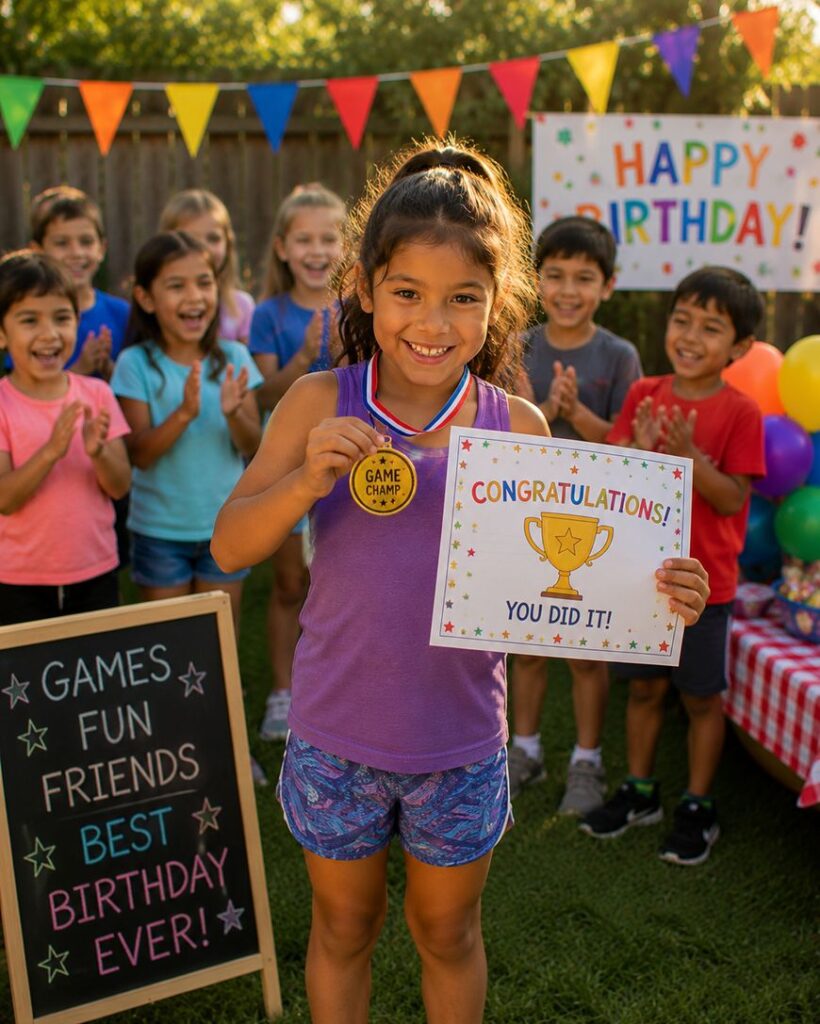
Backyard Obstacle Course Ideas for Kids
A backyard is the ultimate obstacle course playground. You have space, grass to soften falls, and the freedom to spread things out as wide as you want.
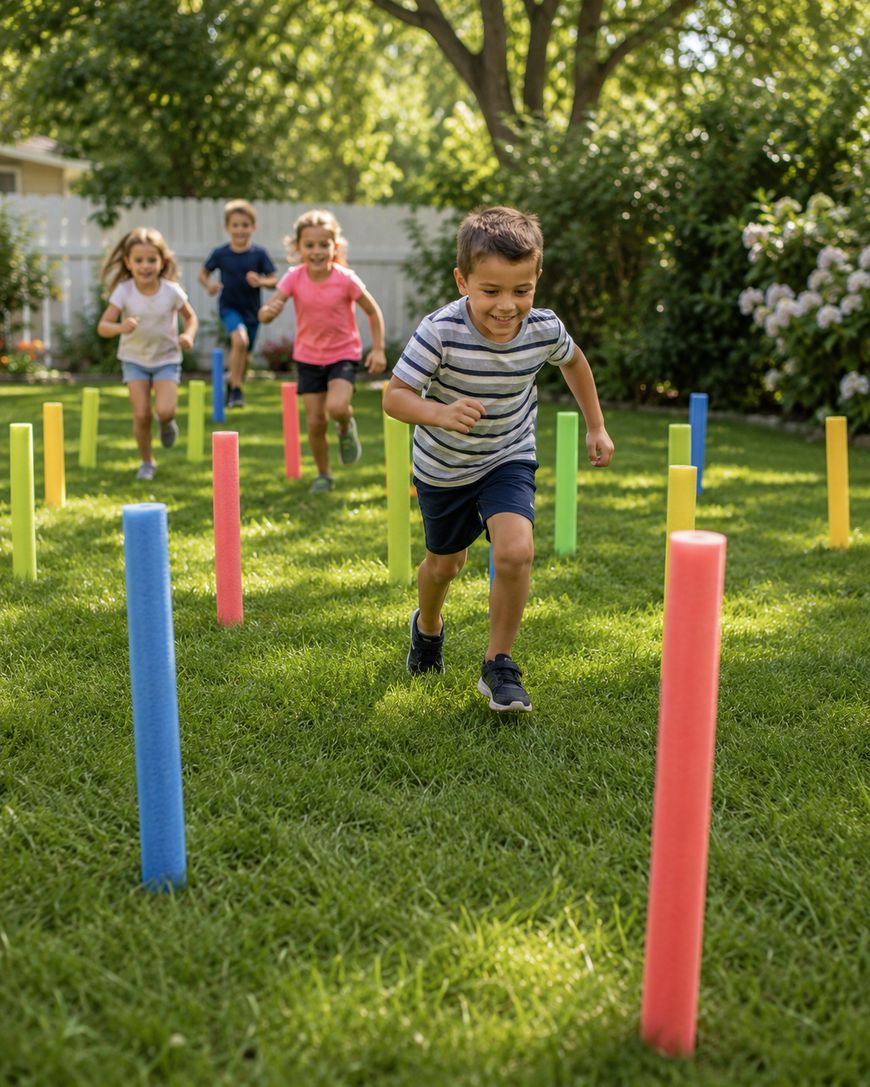
Set up a zigzag run using garden stakes or pool noodles stuck into the ground. Kids weave through them at full speed, which does wonders for lateral movement and coordination.
Add a crawl zone by draping an old bed sheet over two chairs or low sawhorses. Children have to drop down and army crawl their way through before they can move on.

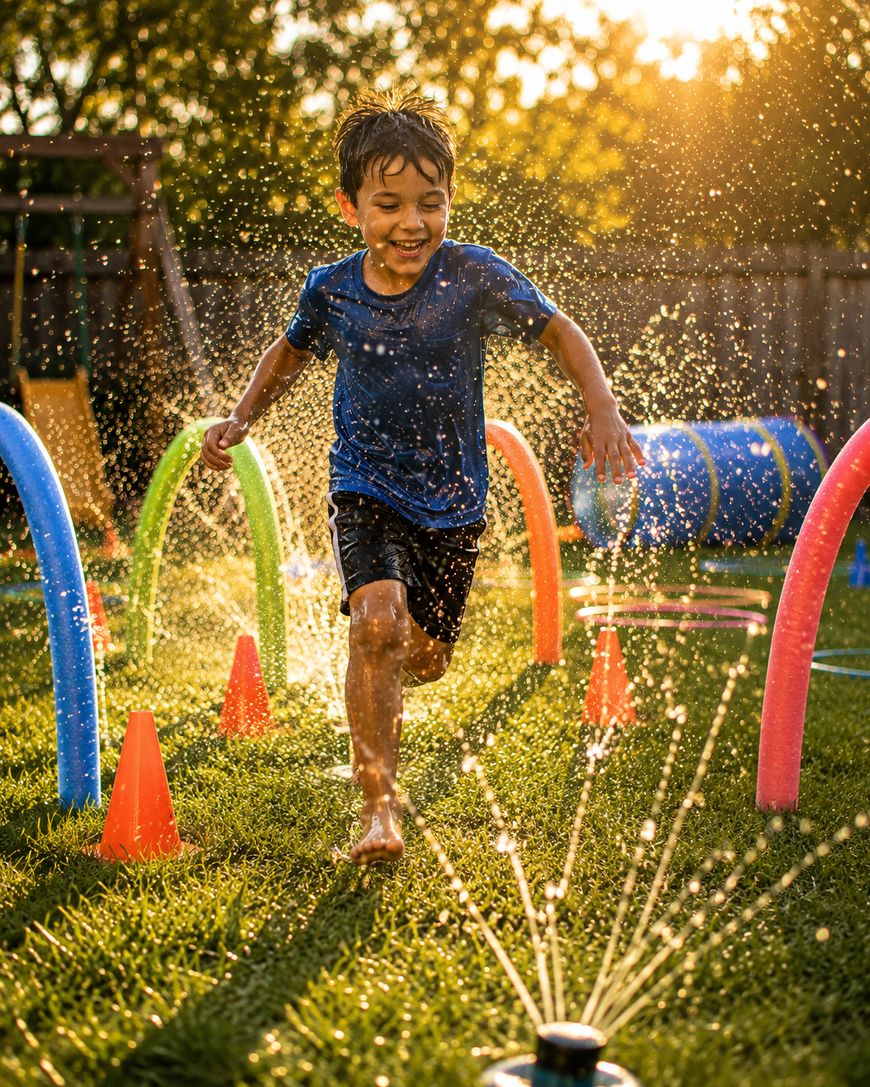
A sprinkler section is a crowd favorite on hot days. Run the sprinkler at one end of the course and require kids to dash through it before continuing to the next challenge.
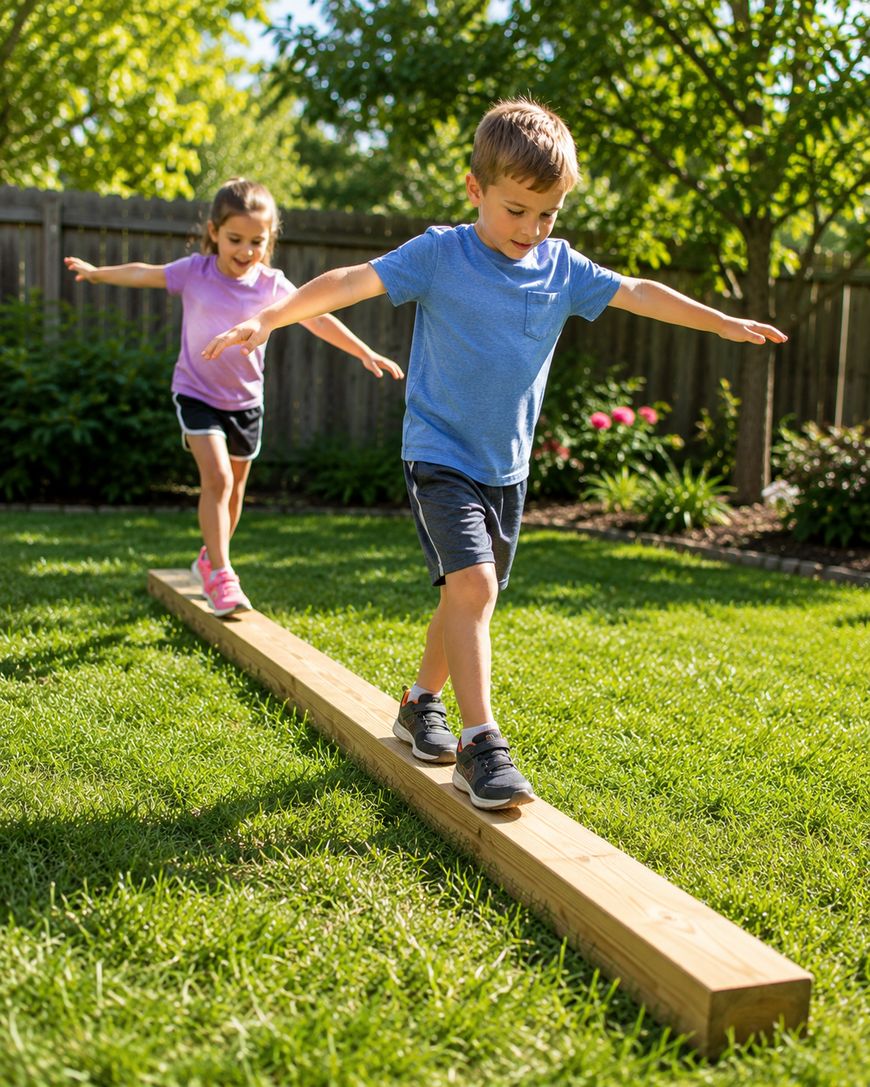
Include a balance beam using a two-by-four laid flat on the grass. Kids walk across it heel-to-toe without stepping off, which challenges their focus and core strength at the same time.
Finish with a “home base” target like a hula hoop on the ground where they have to land a beanbag toss before crossing the finish line. This adds a skill element that slows the race down in the best possible way.
Tire runs are another backyard classic. Lay old tires flat in a row and have kids hop through each one without touching the sides. If you do not have tires, chalk circles on the driveway or patio work just as well.
A jump section using a low rope tied between two stakes at ankle height adds another movement pattern. Kids hop over it going forward, then step back over it going sideways for an extra challenge.

Indoor Obstacle Course Ideas for Kids
Bad weather does not have to stop the fun. Indoor obstacle course ideas for kids can turn your living room or hallway into just as exciting a setup as anything outside.
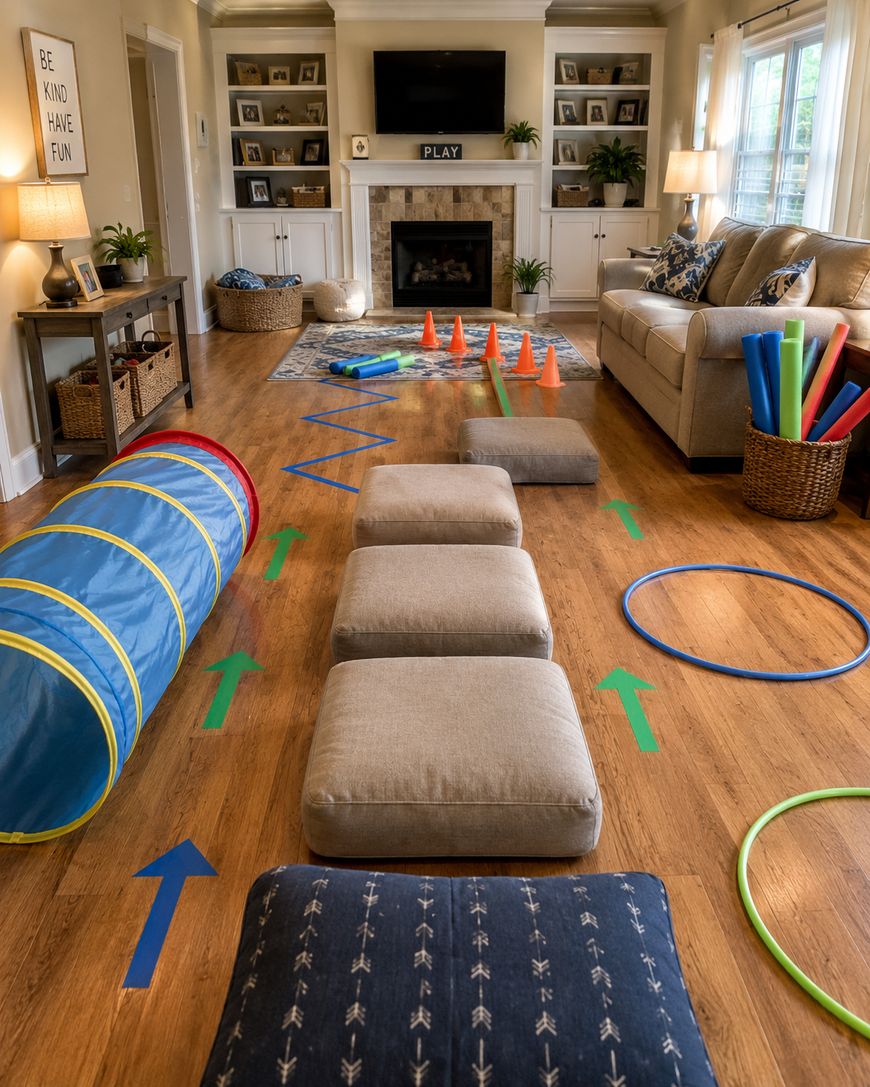
Couch cushions stacked in a row make excellent stepping stones. Lay them across the floor and have kids jump from one to the next without touching the carpet, which you can declare is “lava.”
A tunnel crawl made from chairs lined up in a row with blankets draped over them is always a hit. Make the tunnel long enough that kids have to commit to crawling through rather than just ducking in and out.
Tape lines on the floor with painter’s tape to create a balance walk, a jump sequence, or a hopscotch-style pattern. Painter’s tape peels right off without damaging floors, so you can redesign the course whenever you want.
Set up a limbo bar in a doorway using a pool noodle resting on two stacks of books. Lower it after each round to keep the challenge increasing as kids get warmer.
A pillow hurdle section works well in hallways. Stack pillows to create small hurdles kids have to step or jump over, spacing them close enough that they have to think about their footwork.
Ball-rolling zones work well in kitchens or hardwood areas. Kids have to roll a ball from one end of the course to the other using only their nose or a spoon before moving to the next station.
Obstacle Course Ideas for Toddlers
Toddlers need courses built around their developmental stage. You want big, simple movements they can feel successful completing rather than complex sequences that lead to frustration.
A simple ball kick zone where a large ball is placed and toddlers have to kick it into a basket or through a gap works perfectly. The success is immediate and satisfying, which keeps little ones engaged.
Step-over pool noodles laid flat on the ground are just the right challenge for toddlers. They have to pick their feet up deliberately, which strengthens the hip flexors and improves gait patterns.
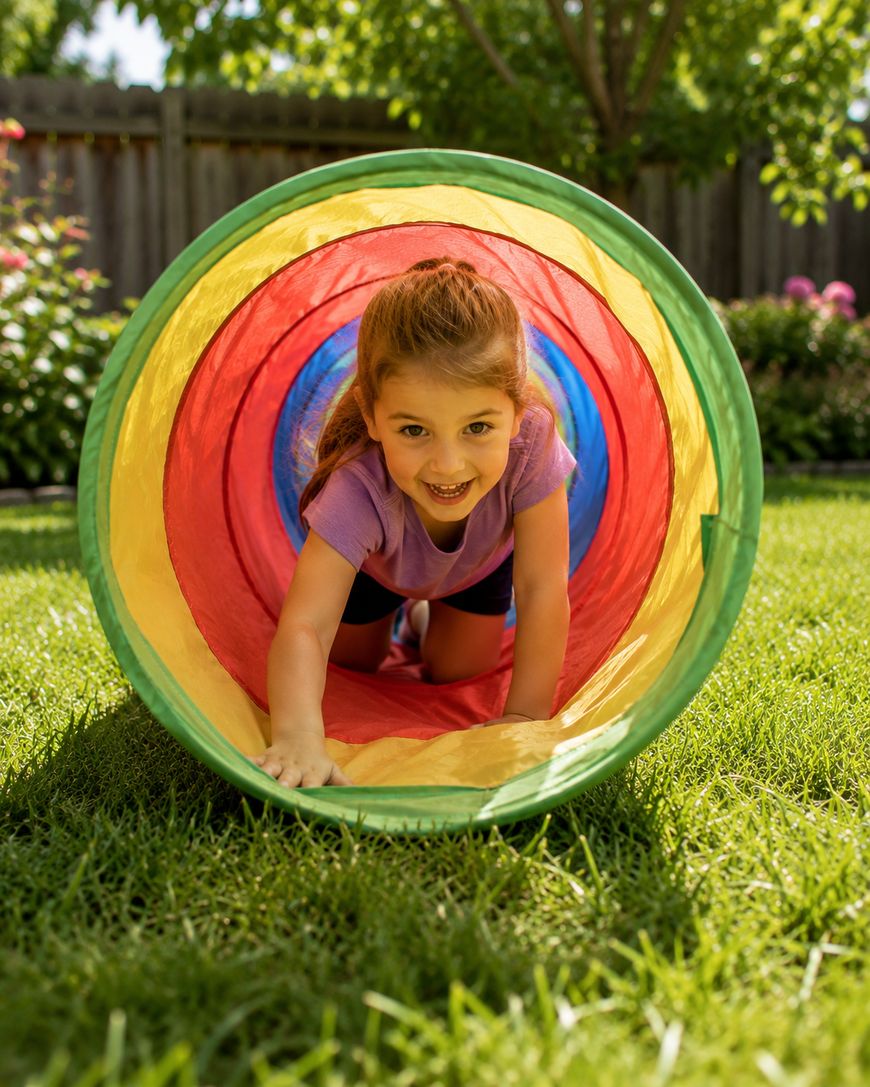
A sensory crawl tunnel bought from any toy store adds excitement. Toddlers love enclosed spaces, and crawling through a colorful tunnel feels like a genuine adventure to a two or three year old.
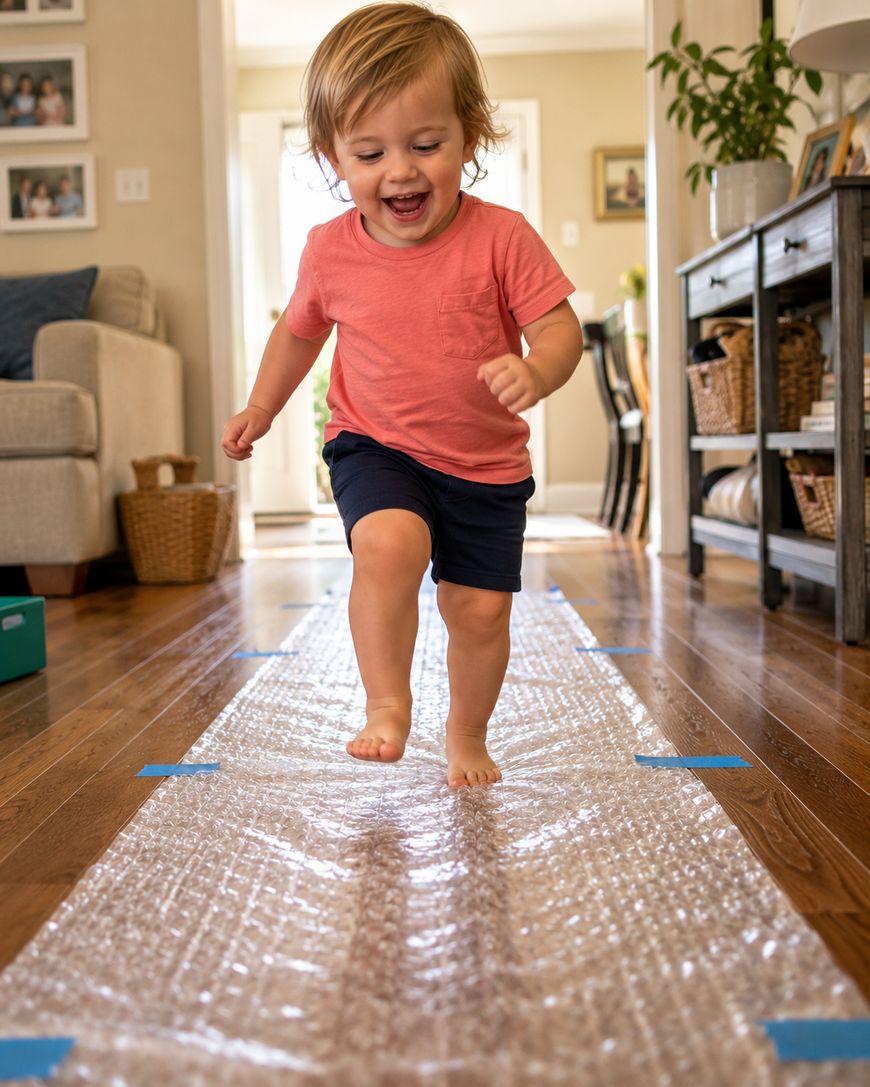
Bubble wrap squares taped to the floor create a satisfying stomp zone. Toddlers love the sound and sensation, and walking across it gives them great tactile feedback through their feet.
Keep the toddler course in a circle or loop so they naturally want to run it again and again. Repetition is how toddlers build skills, and the loop format removes the need for you to redirect them after each pass.
Obstacle Course Ideas for a Party
A party obstacle course needs to entertain a crowd, run smoothly with lots of kids cycling through, and stay safe when excitement levels are high. The key is designing stations wide enough for two kids to run side by side so you can race teams against each other.
Set up two identical lanes and split kids into teams. Each team sends one member through at a time, relay style, with the next child going as soon as the previous one crosses the finish line.
A sponge carry challenge is great for summer parties. Kids dip a sponge into a bucket of water, carry it across the course on top of their head, and squeeze it into an empty bucket on the other side. The team that fills their bucket first wins.
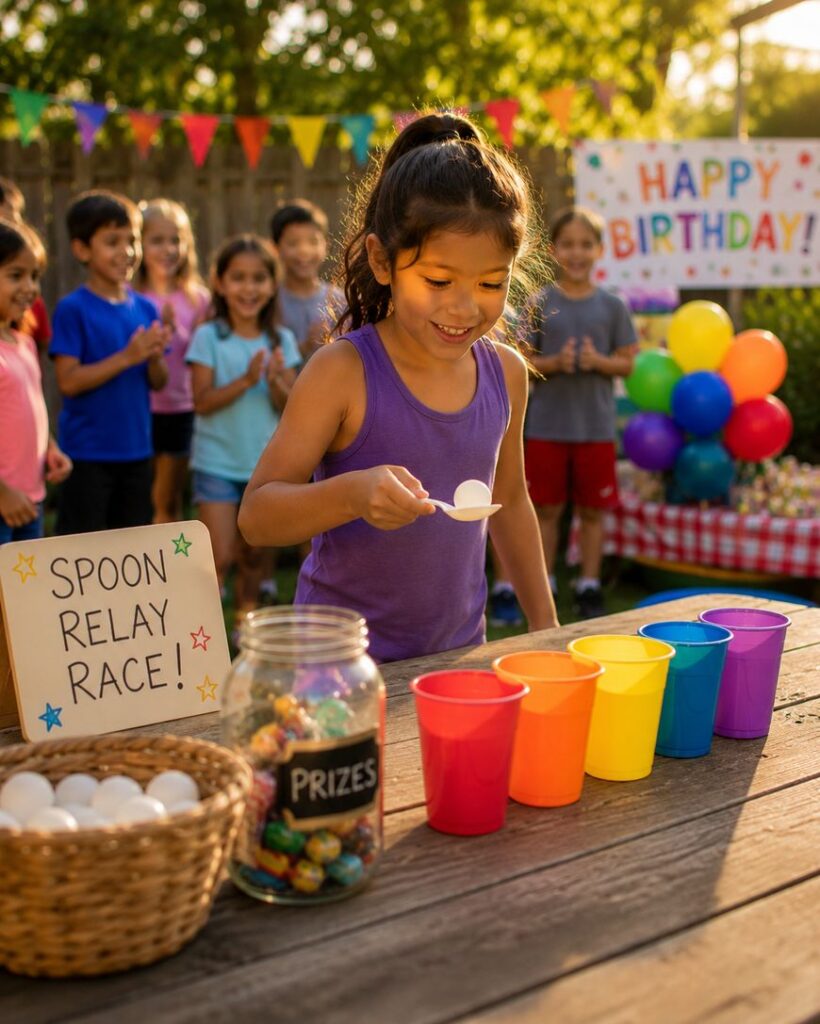
An egg-and-spoon section using plastic Easter eggs slows kids down in a funny, challenging way. They have to move carefully, which creates natural comedy and keeps the crowd entertained even when they are not the ones racing.
For evening or indoor parties, glow-in-the-dark elements are magical. Glow sticks tucked into pool noodles or glow tape on the floor create a course that looks completely different from a regular daytime setup.
Always include a silly zone where kids have to do something goofy before moving on, like spinning in three circles, doing five jumping jacks, or quacking like a duck. These moments get everyone laughing and are often the most memorable part of the whole event.
How to Build the Best Obstacle Course for Kids
The setup process matters as much as the design itself. Before kids run the course, walk through it yourself to check that every station is safe, secure, and set at the right difficulty level.

Space stations far enough apart that kids can reset between challenges rather than crashing into the next task while still in motion from the last one. About six to eight feet between stations is a good starting point.
Explain each station before the first run so kids know what they are supposed to do at each point. A quick demo removes confusion and keeps the energy flowing smoothly once the course starts.
Time each run with a stopwatch or phone timer and record scores. Kids are naturally motivated by their own times, and seeing improvement after a second or third run is incredibly satisfying for them.
Change up one or two elements every few runs to keep the course feeling fresh. Swap the hula hoop for a beanbag toss, or replace the balance beam with a hopscotch grid to extend the activity without starting over from scratch.
Q&A: Obstacle Course Ideas for Kids
What age is good for an obstacle course?
Kids as young as eighteen months can enjoy simple obstacle courses with stepping and crawling elements. The course just needs to match their developmental abilities, with bigger challenges coming as they grow.
How long should a kids obstacle course be?
A good backyard obstacle course for kids usually has six to ten stations and takes between two and four minutes to complete. That length keeps kids challenged without losing their attention or wearing them out before they want to run it again.
Can you do obstacle courses inside a small space?
Absolutely. A hallway, living room, or even a single large bedroom can host a great indoor obstacle course. Use vertical elements like limbo bars, crawl tunnels, and floor tape patterns to pack a lot of challenge into a small footprint.
What materials do you need for a kids obstacle course?
Most obstacle courses come together with items you already own: chairs, blankets, pillows, hula hoops, pool noodles, jump ropes, tape, and buckets. You do not need to buy special equipment to create a course kids will love.
How do you keep kids interested in an obstacle course?
Timing runs with a stopwatch, racing in teams, and adding new elements every few rounds keeps the energy high. Kids love competition, personal records, and novelty, so build those three things into how you run the course.
Are obstacle courses safe for kids?
Yes, with a few simple precautions. Keep the course on soft surfaces when possible, remove trip hazards between stations, and avoid anything above waist height for younger children. A quick safety walkthrough before the first run catches most issues before anyone gets hurt.
Make It Happen Today
You do not need a big budget or a lot of space to put together an obstacle course ideas for kids setup that keeps everyone busy for hours. Start with what you have, run the course a few times, and let the kids suggest changes as they go.
Some of the best obstacle courses we have ever seen were built in fifteen minutes with blankets, masking tape, and whatever was in the garage. The kids who ran them had just as much fun as any commercial playground could offer.
Pick three or four ideas from this post, set them up this afternoon, and watch what happens. We are willing to bet you will be asked to do it all over again tomorrow.
Why Obstacle Courses Are So Good for Kids
Obstacle courses do a lot more than tire kids out, though that is definitely a bonus. They build gross motor skills, coordination, balance, and problem-solving all at once.
Kids who run obstacle courses regularly tend to develop better spatial awareness and body confidence. They also learn to push through challenges, which is a skill that carries well beyond the backyard.
Running the same course again and again naturally motivates kids to beat their own time. That self-competition mindset teaches persistence without any adult pressure involved.
The best part is that you can scale difficulty up or down in minutes. Younger children can crawl under tables and step through hula hoops, while older kids can tackle more complex sequences that require real agility and thinking.


Leave a Reply