Last updated: August 7, 2026
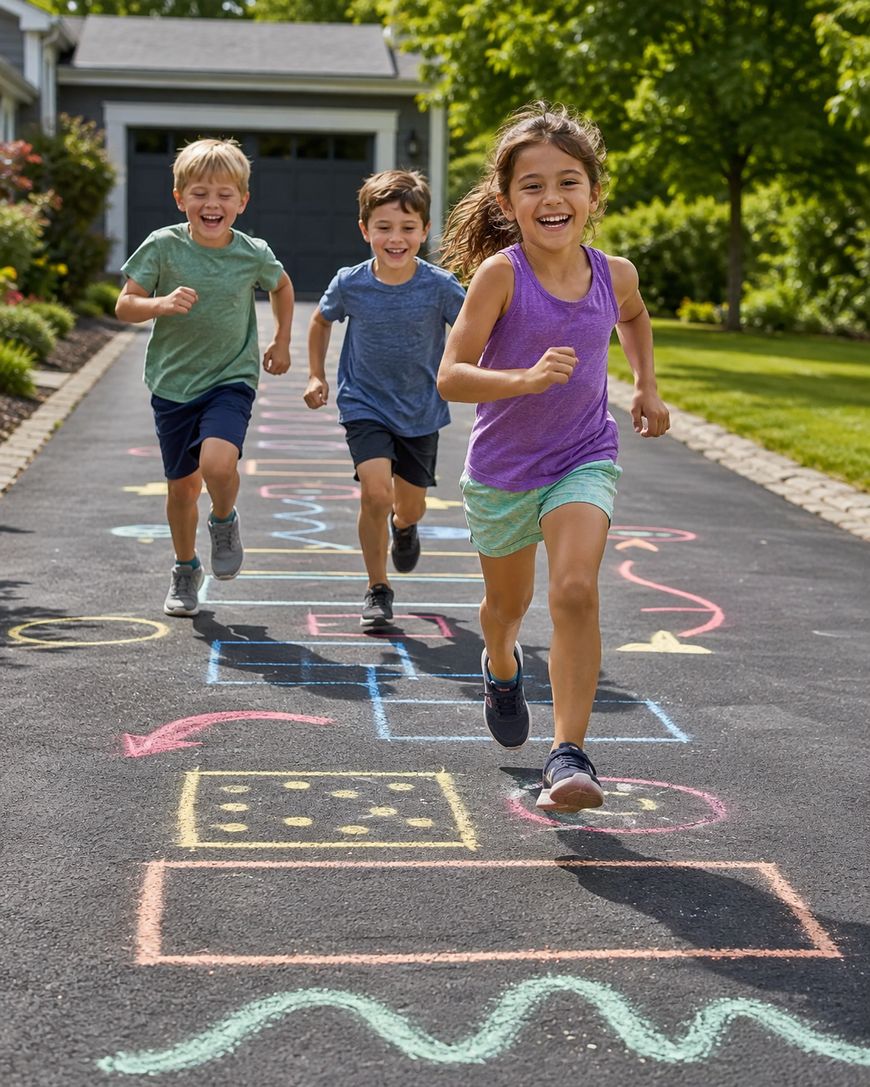
You don’t need a single piece of fancy equipment to keep kids entertained for an entire afternoon. A bucket of sidewalk chalk and a stretch of driveway or sidewalk is all it takes to build chalk obstacle course ideas that get everyone moving, laughing, and begging for one more round.
These setups work for a solo kid burning off energy before dinner or a whole group of neighborhood friends turning your driveway into the neighborhood hangout spot. Grab your chalk and let’s get drawing.
Hopscotch Ladder
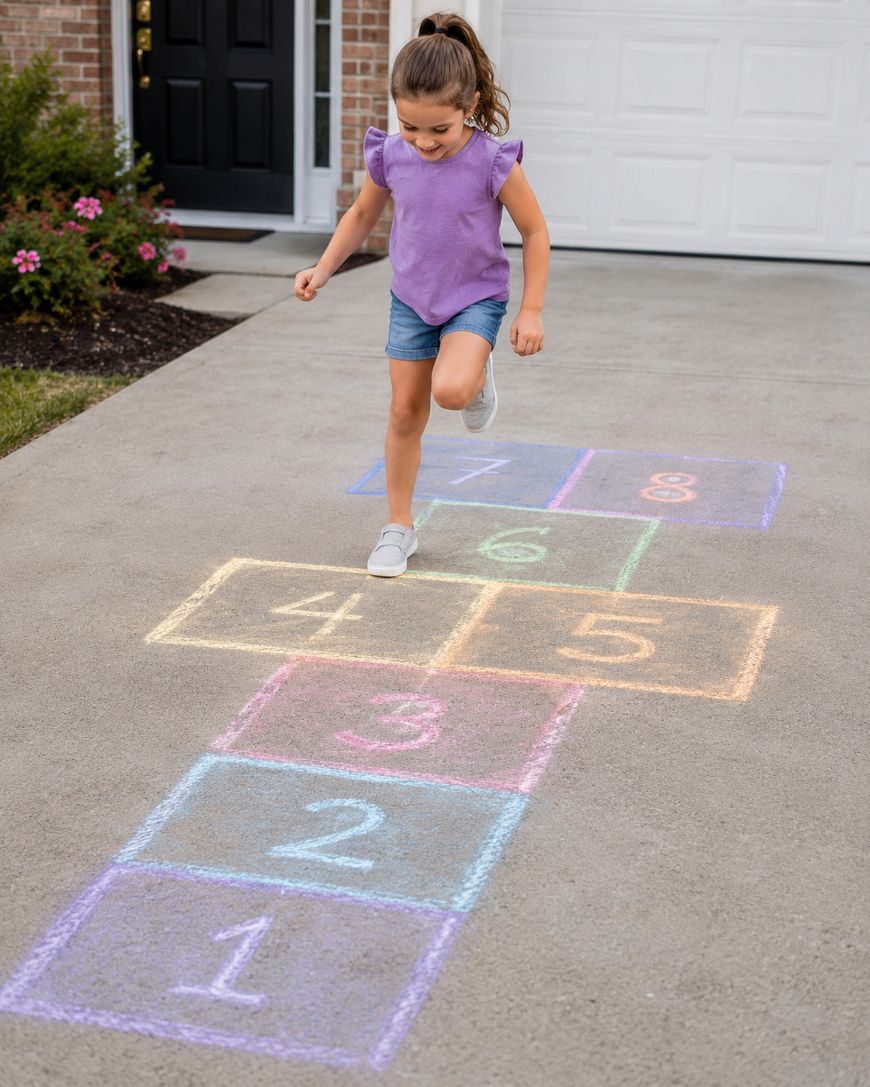
Draw a classic hopscotch grid, but stretch it long and narrow like a ladder instead of the usual box shape. Kids hop foot to foot down the length of it, then turn around and hop back the other direction.
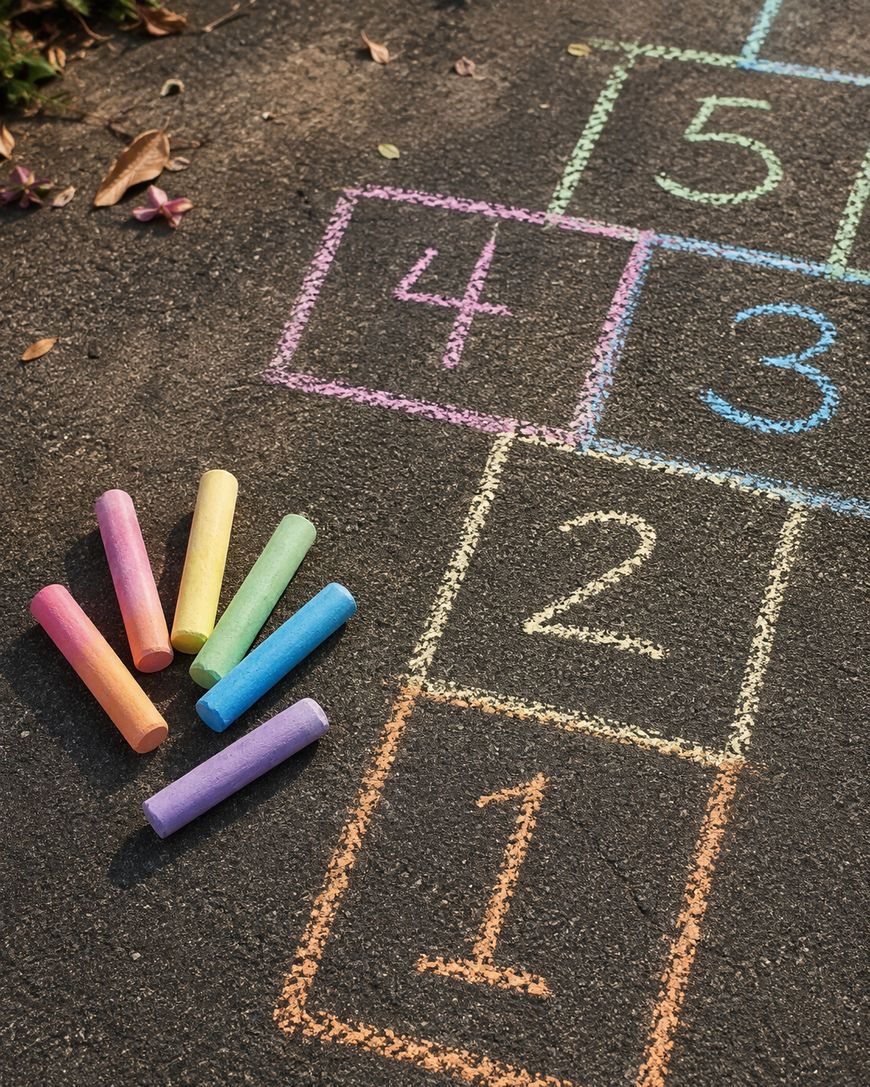
Add a twist by numbering the squares out of order, so kids have to hop in sequence 1 through 10 instead of straight down the line. It slows them down just enough to make them think about foot placement, which is great for balance and coordination.
Balance Beam Lines
Draw two parallel lines about six inches apart, running in a wavy or zigzag pattern across the pavement. The goal is simple: walk heel to toe between the lines without stepping outside them.
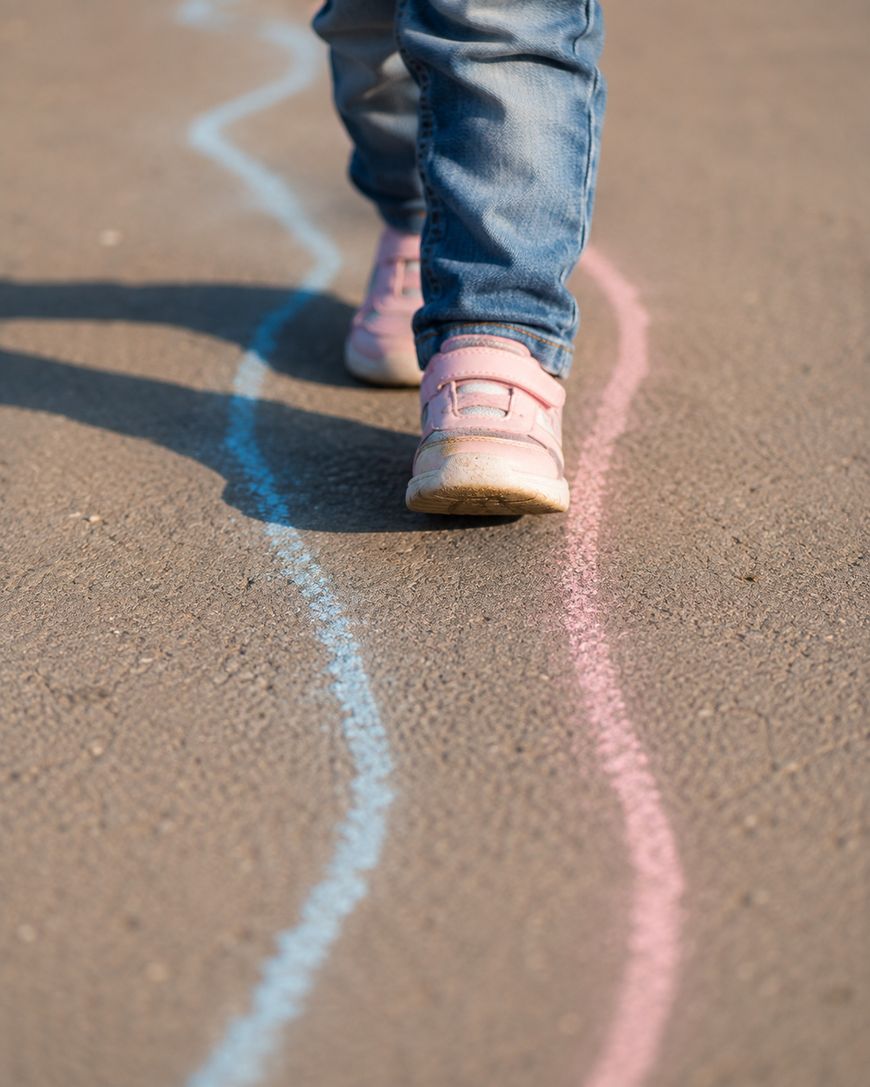
This is one of the easiest chalk obstacle course ideas to set up because it takes less than a minute to draw. Make the path curve sharply in a few spots to add a real balance challenge for older kids, or keep it straight and wide for toddlers who are just learning to walk a line.
Animal Move Stations
Draw a series of large circles or squares spaced a few feet apart, and write one animal name inside each: bear, crab, frog, bunny. Kids move from station to station doing that animal’s signature movement, bear crawling on hands and feet or hopping like a bunny.
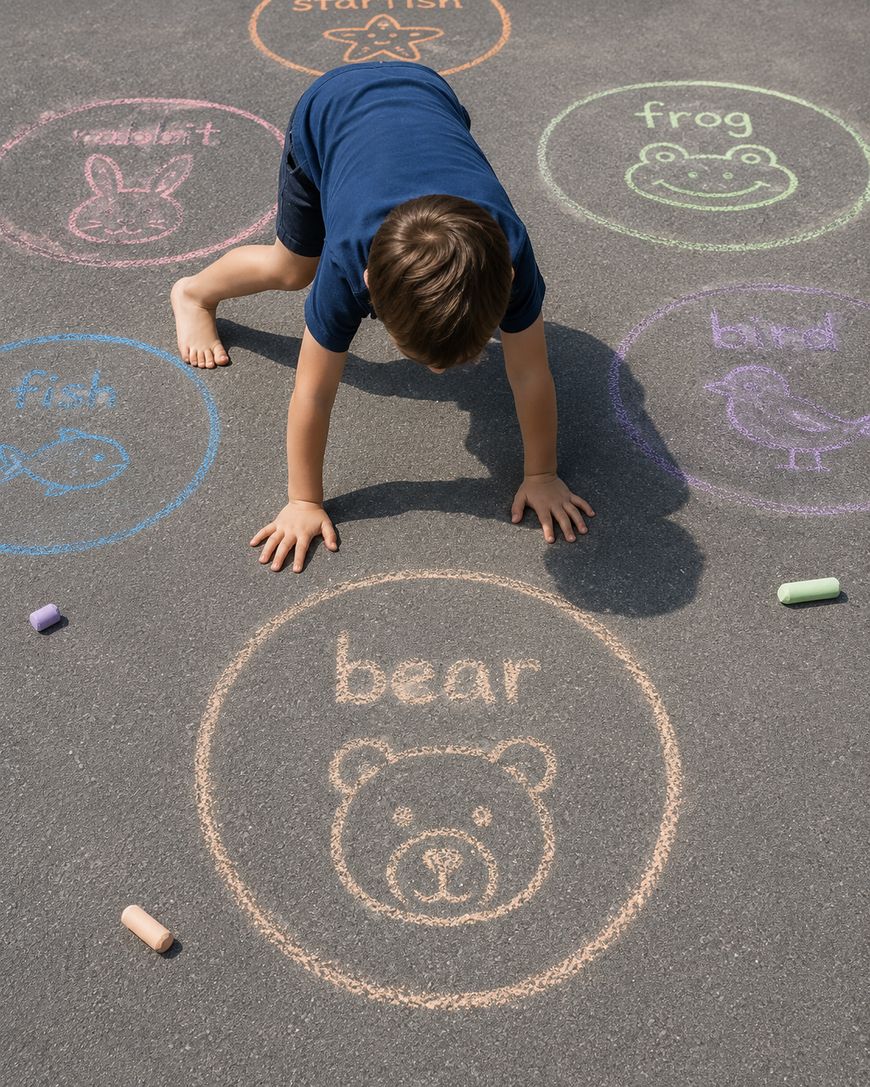
This station works every major muscle group without kids even realizing they’re exercising. Rotate the animals every few weeks to keep the course feeling fresh, since repetition is what makes kids lose interest fastest.
Spinning Spiral
Draw a big spiral starting from a small center point and winding outward, similar to a snail shell. Kids start in the middle and spin their way out along the line, or start on the outside and spiral their way in toward the center.
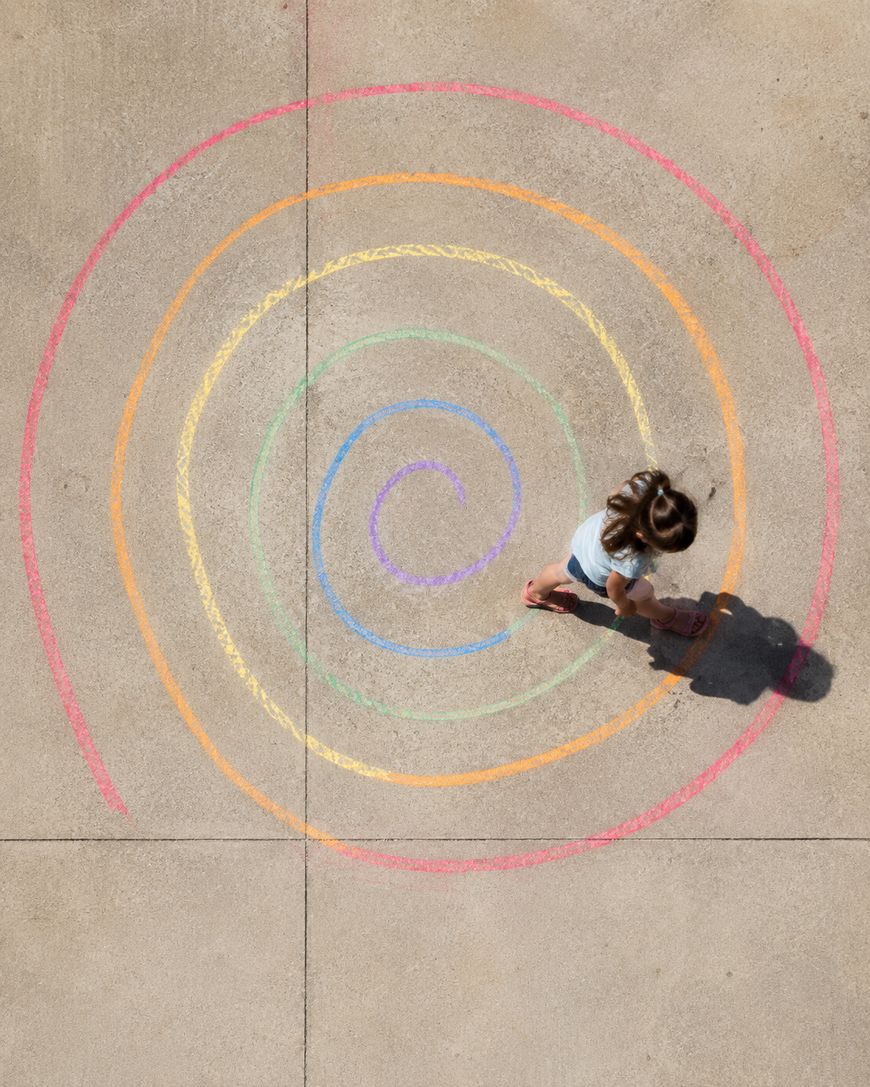
Spirals are visually striking and photograph beautifully, which makes this one a favorite for kids who like showing off their course to parents. Add small stars or dots along the spiral path as checkpoints kids have to touch with their foot as they go.
Target Toss Zone
Draw a large bullseye with three or four rings, then set a small beanbag or rolled-up sock nearby. Kids stand at a chalk-marked throwing line a few feet back and try to land their toss in the center ring for the highest score.
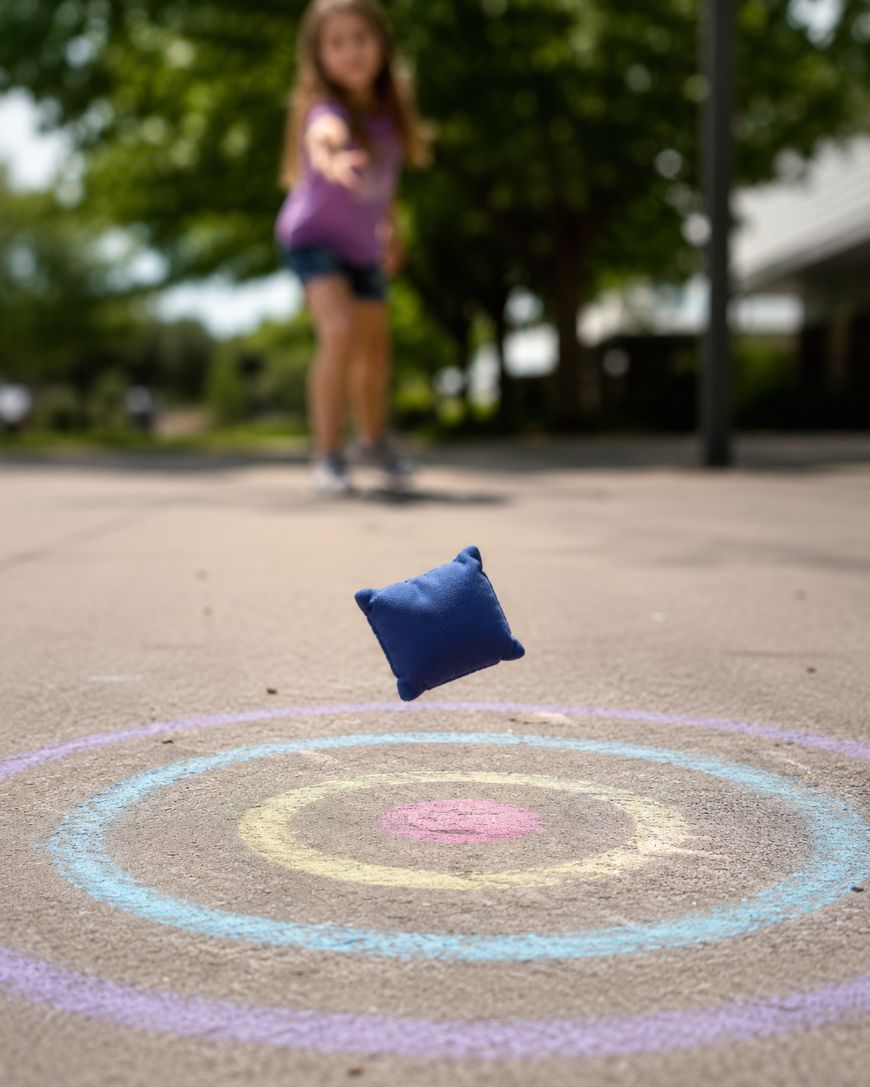
This station is a nice breather between the more physically demanding parts of the course, since it rewards aim and control instead of speed. It also works well as a final station, letting the course end on a fun scoring note rather than a sprint.
Jump and Freeze Squares
Draw a row of squares, each labeled with a different action: jump, spin, freeze, clap, squat. Kids move square to square performing whatever action is written inside, holding a freeze pose for a count of three before moving on.
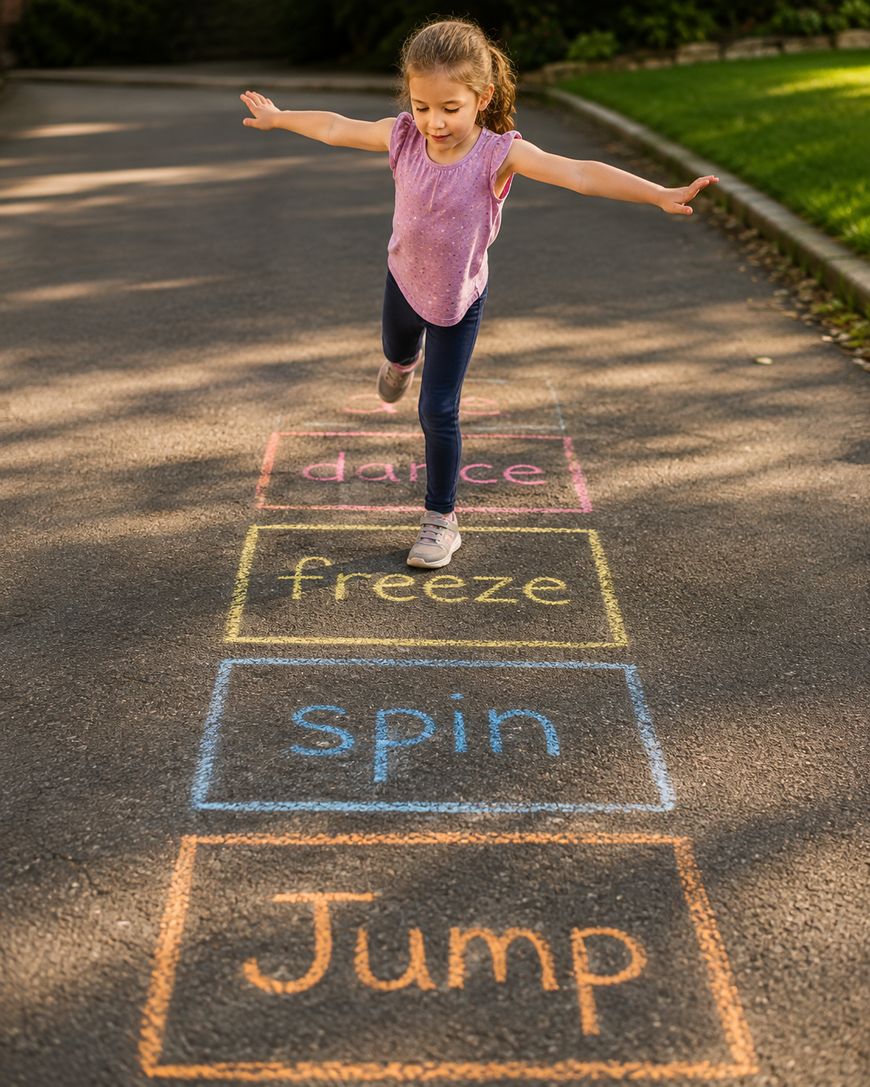
Adding a “freeze” square or two forces kids to slow their momentum, which keeps the course from turning into an all-out sprint that ends too fast. It also adds a giggle factor, since holding a silly pose in front of friends rarely goes without laughter.
Snake Path Crawl
Draw a long, winding S-shaped path wide enough for a kid to crawl through on hands and knees. Mark the start and finish clearly so there’s no confusion about where the crawl begins and ends.
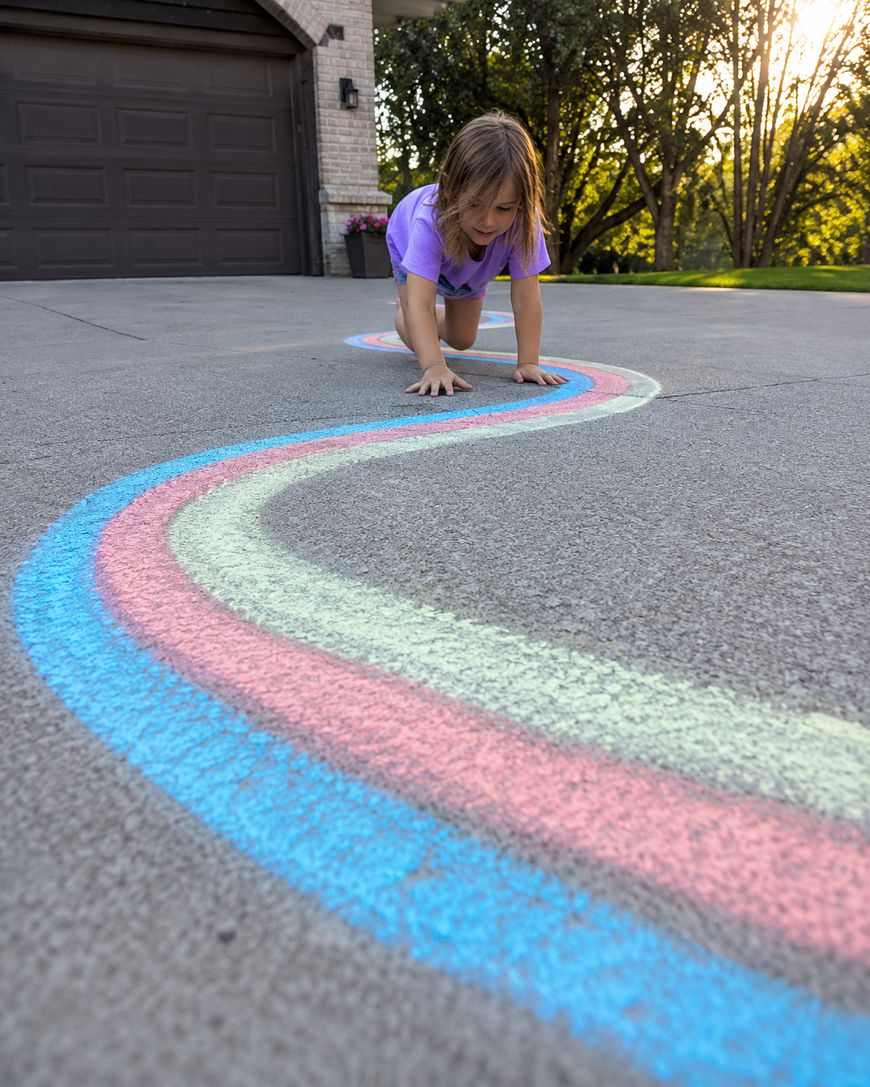
This is one of the more physically demanding chalk obstacle course ideas on the list, so it works best placed near the middle of a longer course rather than at the very start. Younger kids can walk the path instead of crawling if the ground is too warm or rough for hands and knees.
Why Chalk Obstacle Courses Work So Well
Chalk courses give kids a reason to move without feeling like exercise, which matters more than most parents realize when it comes to keeping kids active. The visual, colorful nature of a chalk-drawn course also makes it feel like a game rather than a workout, so even reluctant kids tend to jump right in.
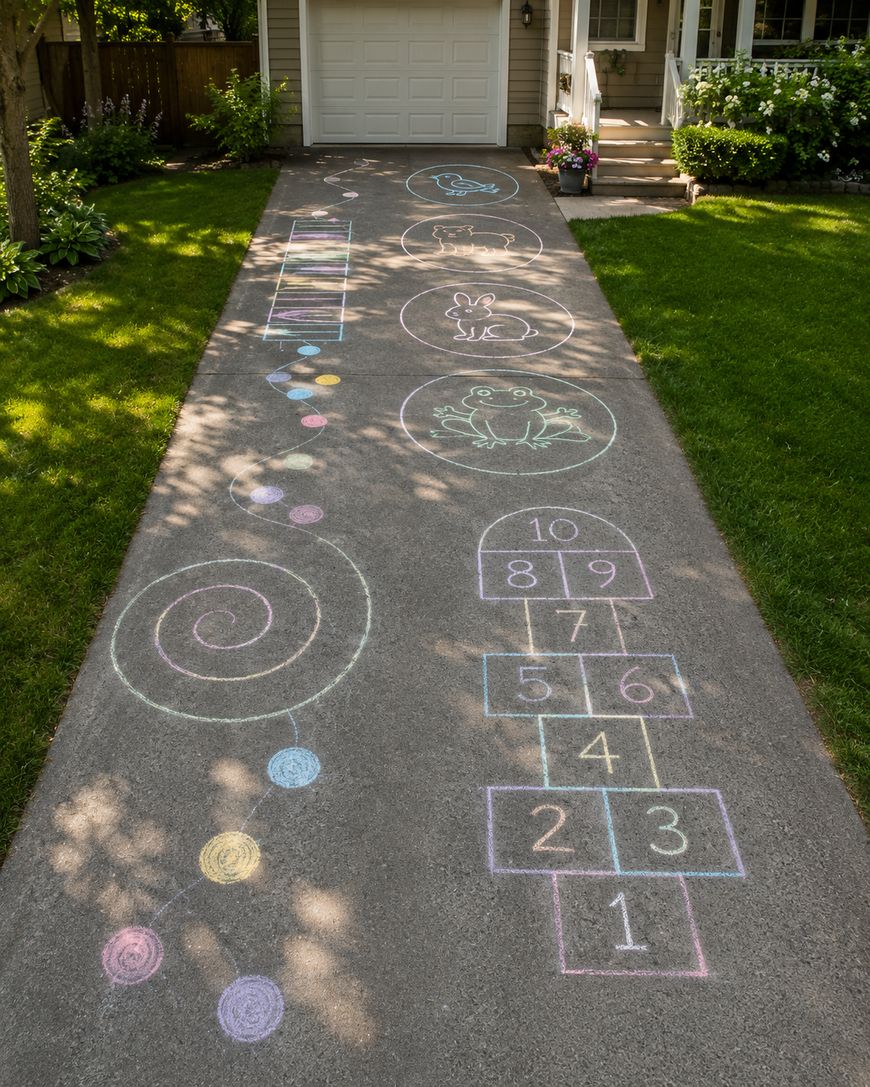
Another advantage is how easily the whole thing adapts. You can stretch a course across an entire driveway for a big group, or shrink it down to a single sidewalk square for a quick solo round before nap time. When the chalk wears off or rain washes it away, you’re never more than a few minutes from drawing a brand new version.
Frequently Asked Questions
How long does a chalk obstacle course take to set up?
Most courses come together in fifteen to twenty minutes, depending on how many stations you include. Simple courses with three or four stations can be drawn in under ten minutes.
What chalk works best for obstacle courses?
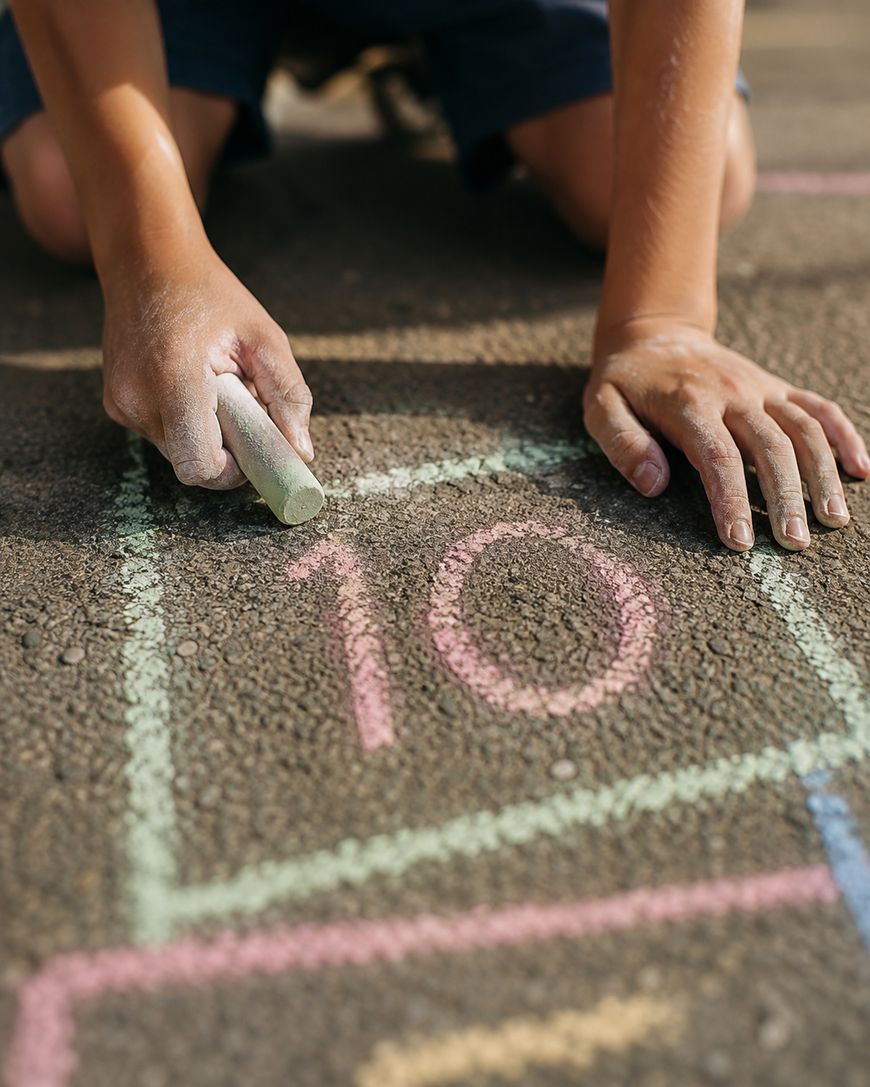
Thick sidewalk chalk sticks work better than thin classroom chalk since they cover pavement faster and hold up longer outdoors. Jumbo chalk sticks made specifically for driveways are worth the extra cost if you plan to do this often.
How do I keep the course from getting boring?
Rotate two or three stations each time you redraw the course so kids never see the exact same layout twice. Letting kids help design a station or two also keeps things exciting, since they take ownership over their own obstacle.
Can this work on grass instead of pavement?
Chalk needs a hard surface to show up properly, so grass won’t hold the drawing. You can still recreate the layout on grass using rope, cones, or painter’s tape as substitute markers.
What age range is this good for?
Most of these stations flex easily for toddlers through early elementary kids, with older kids handling the balance and crawling stations with more speed and control. Younger toddlers may need a parent nearby for the balance beam and spiral stations.
Do I need any equipment besides chalk?
A beanbag or rolled sock for the target toss is the only extra item, and even that can be swapped for a small ball you already own. Everything else on this list only requires chalk and pavement.
Ready to give it a try? Grab a few colors of chalk, pick three or four of these chalk obstacle course ideas, and let the kids help you draw the next round.
Looking for more ways to keep kids moving outside? Check out these obstacle course ideas for kids and these outdoor activities for kids.



Leave a Reply