Last updated: August 9, 2026
You want a playroom that helps your child play independently instead of dumping every toy onto the floor. These montessori playroom ideas focus on low shelves, simple layouts, and a rotation system you can actually keep up with. Nothing here requires a full remodel or a Pinterest-perfect budget.
Start With Low, Open Shelving
The single biggest shift in any montessori playroom is getting toys off high shelves and out of closed bins. Kids need to see their options at eye level to choose independently.
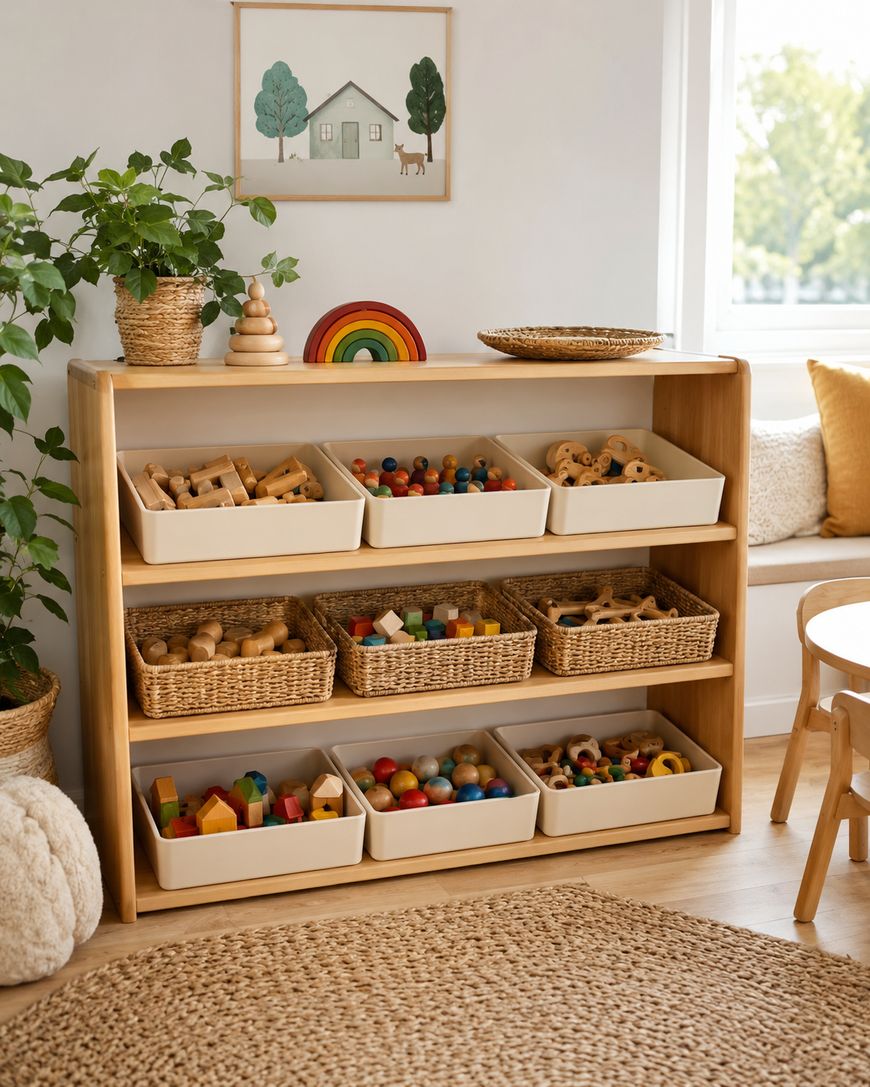
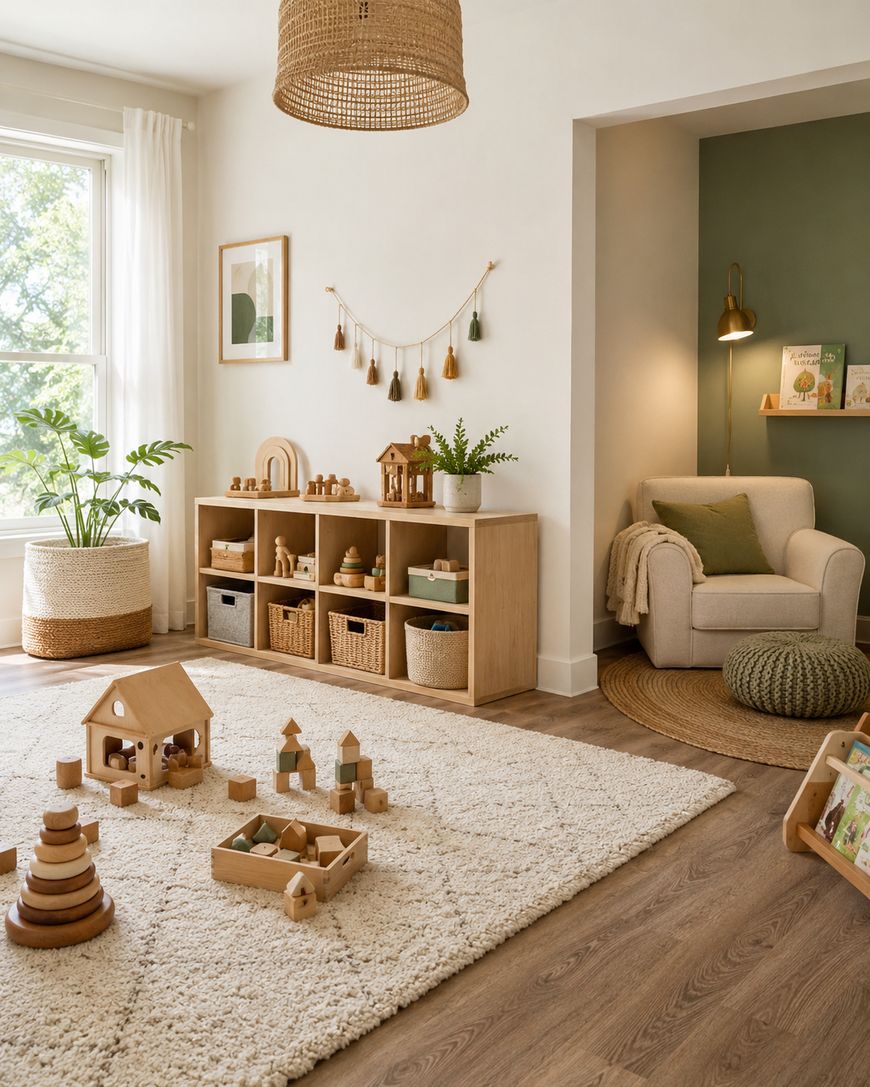
Use shelves no taller than your child’s shoulder height so everything stays within reach without climbing. A simple three or four tier shelf works better than one tall bookcase, since it spreads toys out instead of stacking them.
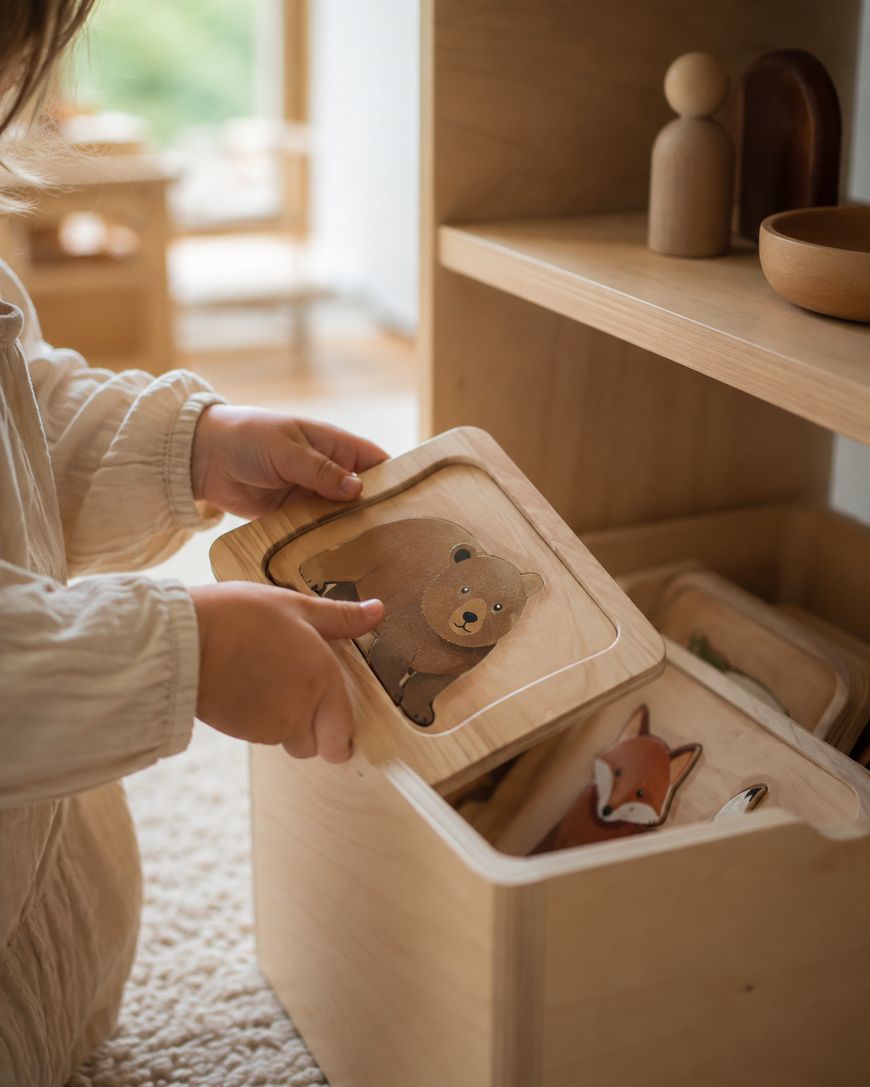
Open bins beat lidded ones almost every time. A lid adds a step between your child and the toy, which usually means they grab something else instead of working to open it.
Limit What’s Out at Once
A playroom with too many toys out at once actually slows down independent play. Kids scan a crowded shelf, get overwhelmed, and default to dumping everything into a pile.
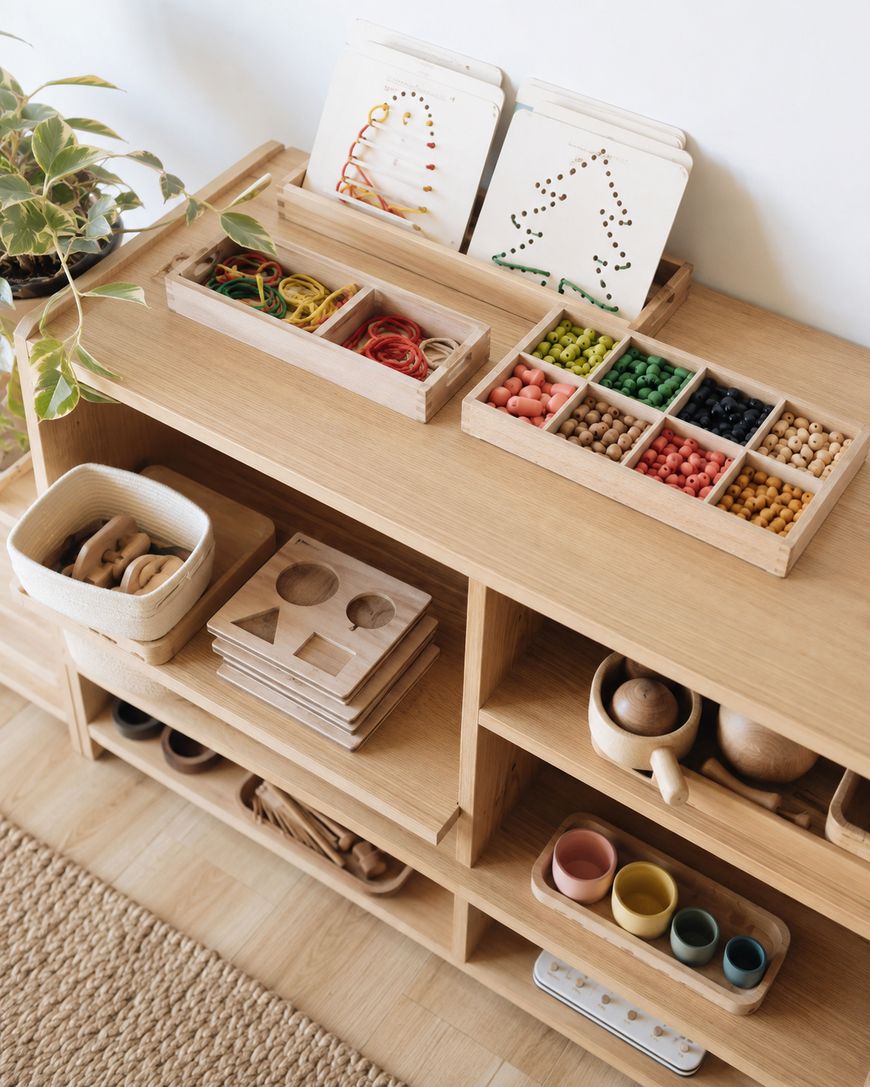
Aim for somewhere between eight and twelve activities on display at a time. That’s few enough to see clearly and few enough that cleanup feels manageable to a toddler or preschooler.
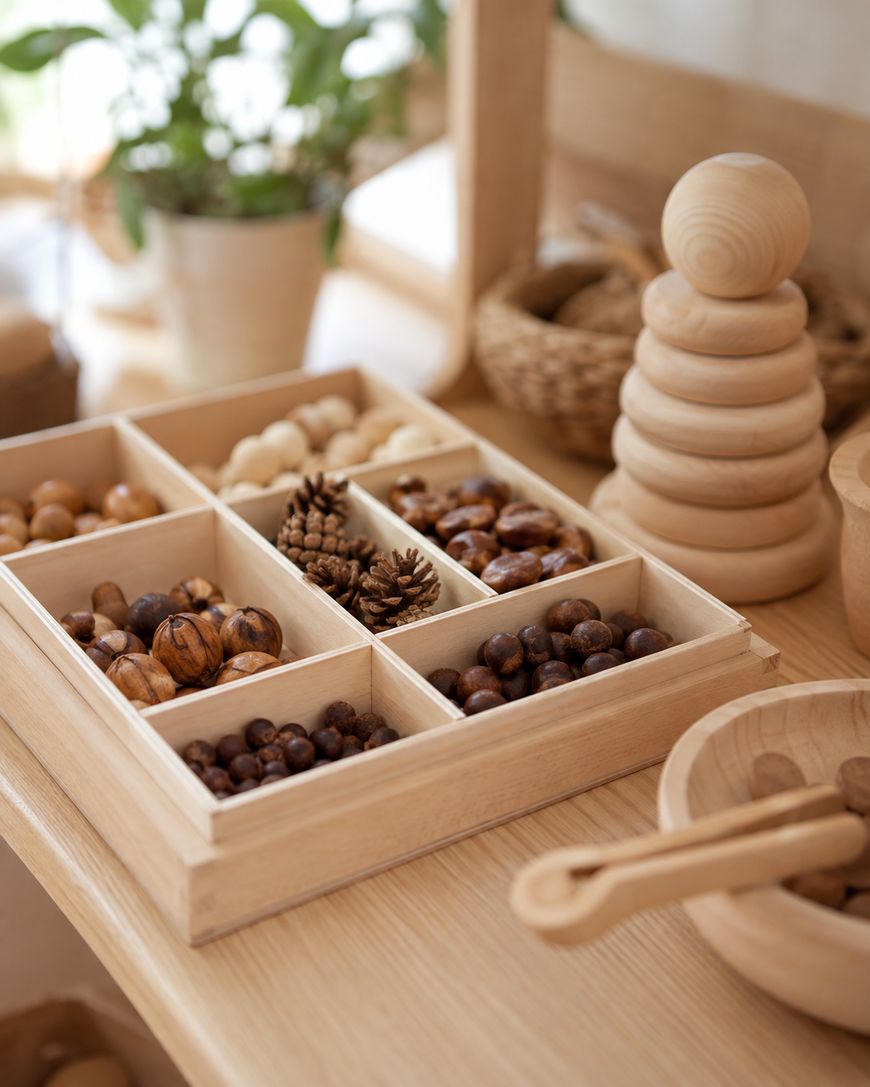
Group toys by type of skill rather than by theme. Put fine motor activities together, sensory bins together, and building materials together so your child starts to notice patterns in what each shelf offers.
Build a Toy Rotation System
Store the rest of your toys in bins in a closet, garage, or under-bed container, sorted loosely by category. Every two to four weeks, swap a few items on the shelf for ones in storage.
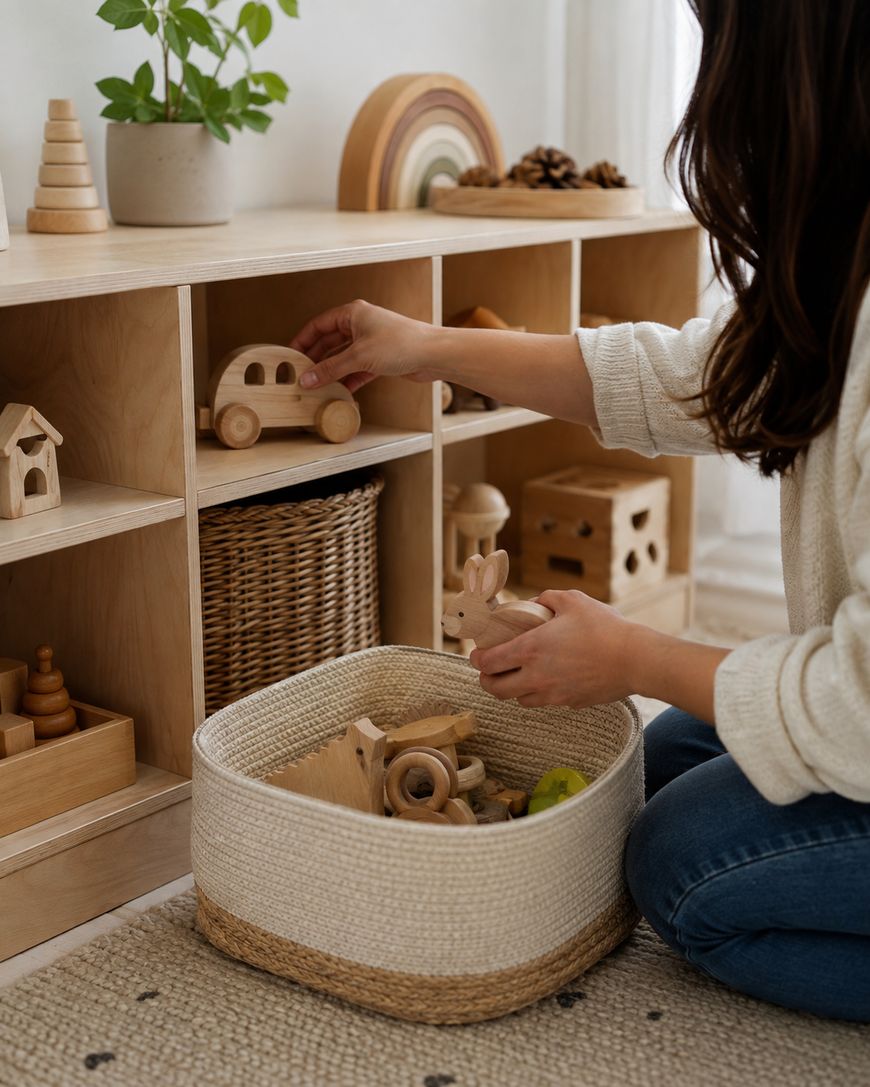
This is where most montessori playroom ideas fall apart in real life, because rotation sounds simple but gets forgotten. Set a recurring reminder on your phone so it happens on a schedule instead of whenever you remember.
You don’t need to rotate everything at once. Swapping just three or four items keeps the shelf feeling fresh without turning rotation into a two hour project.
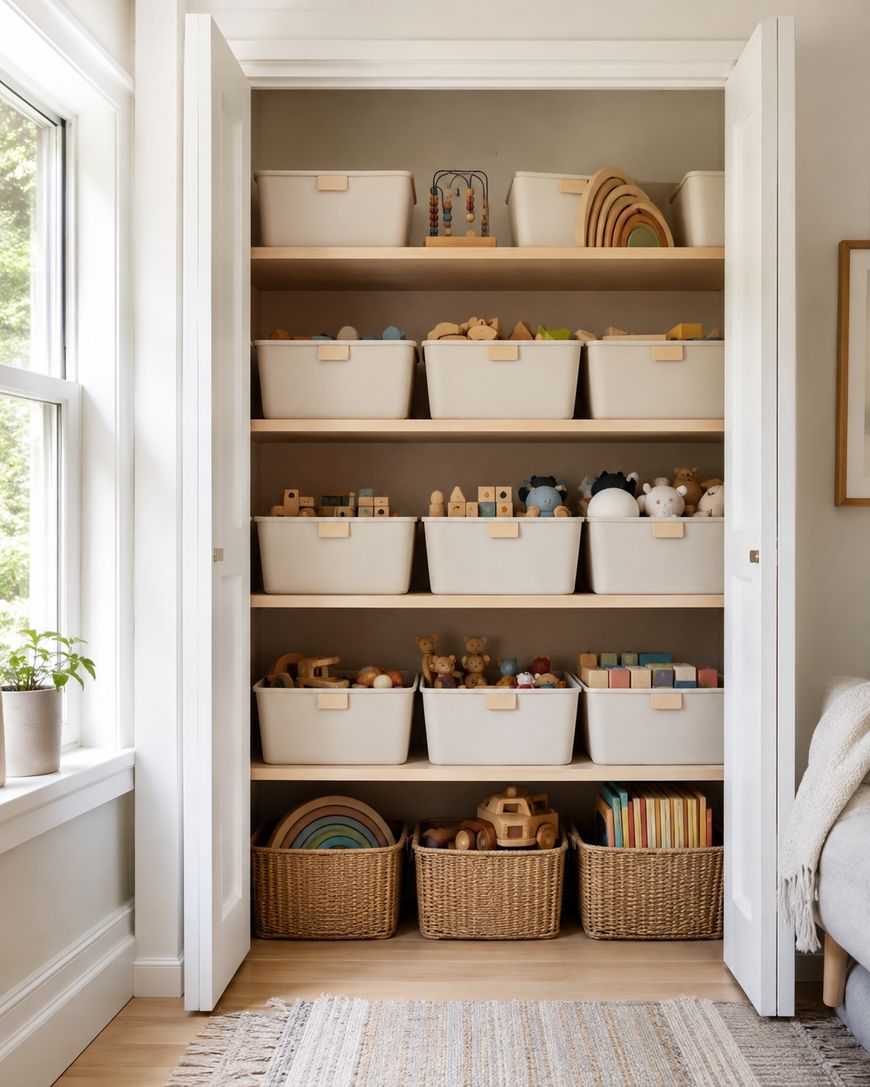
Create Defined Activity Zones
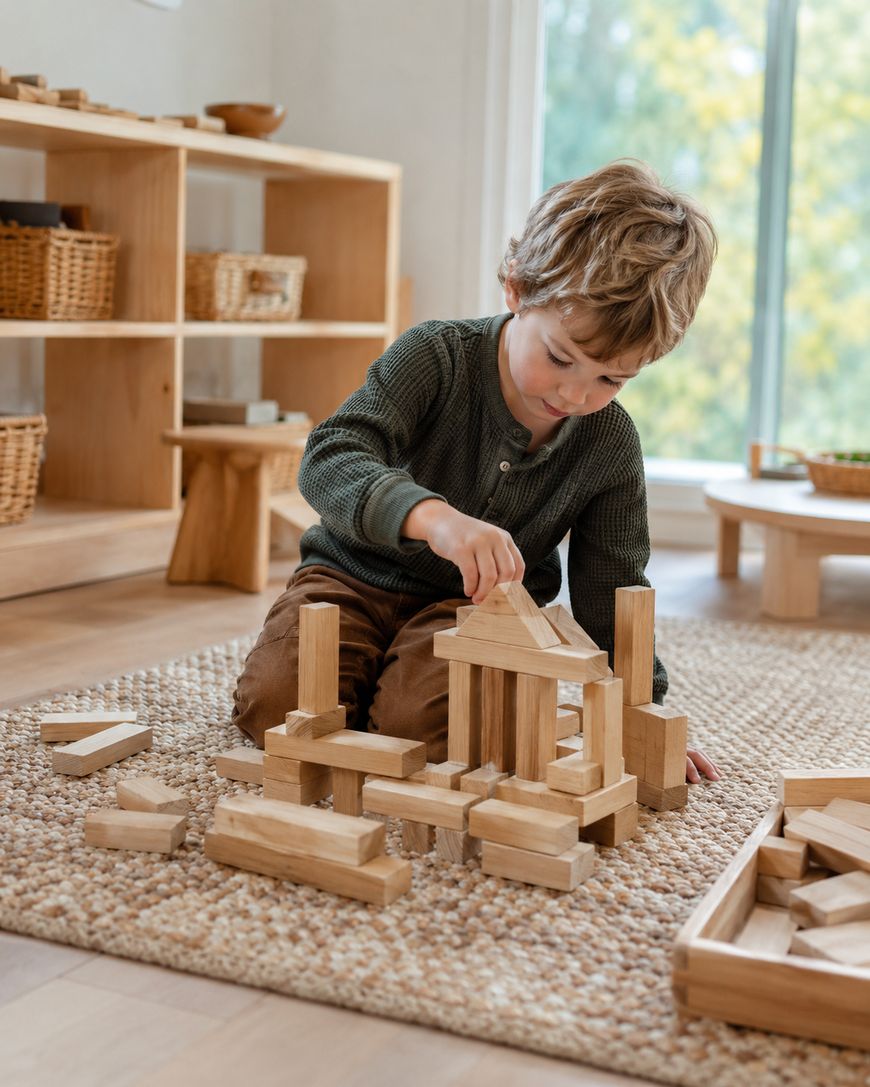
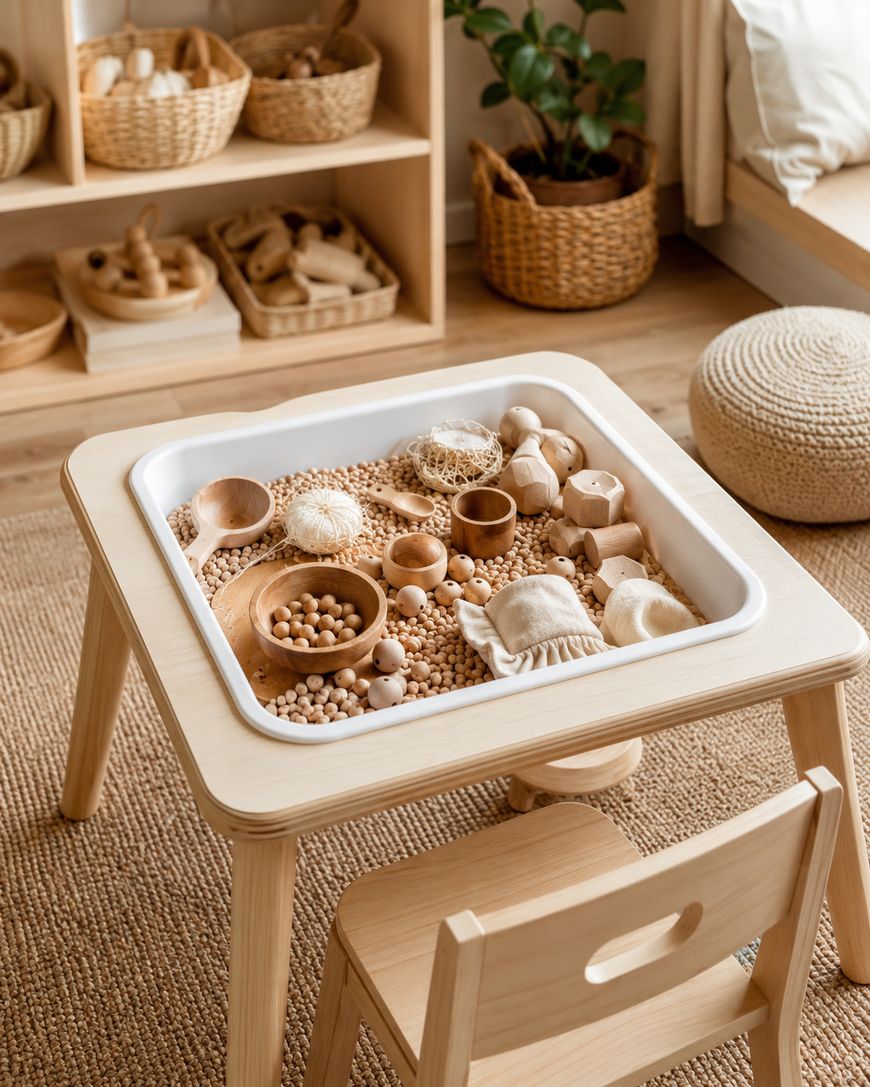
Rather than one big open floor, break the room into two or three small zones. A reading corner, a building or block area, and a sensory or art table give your child a sense of where each type of play happens.
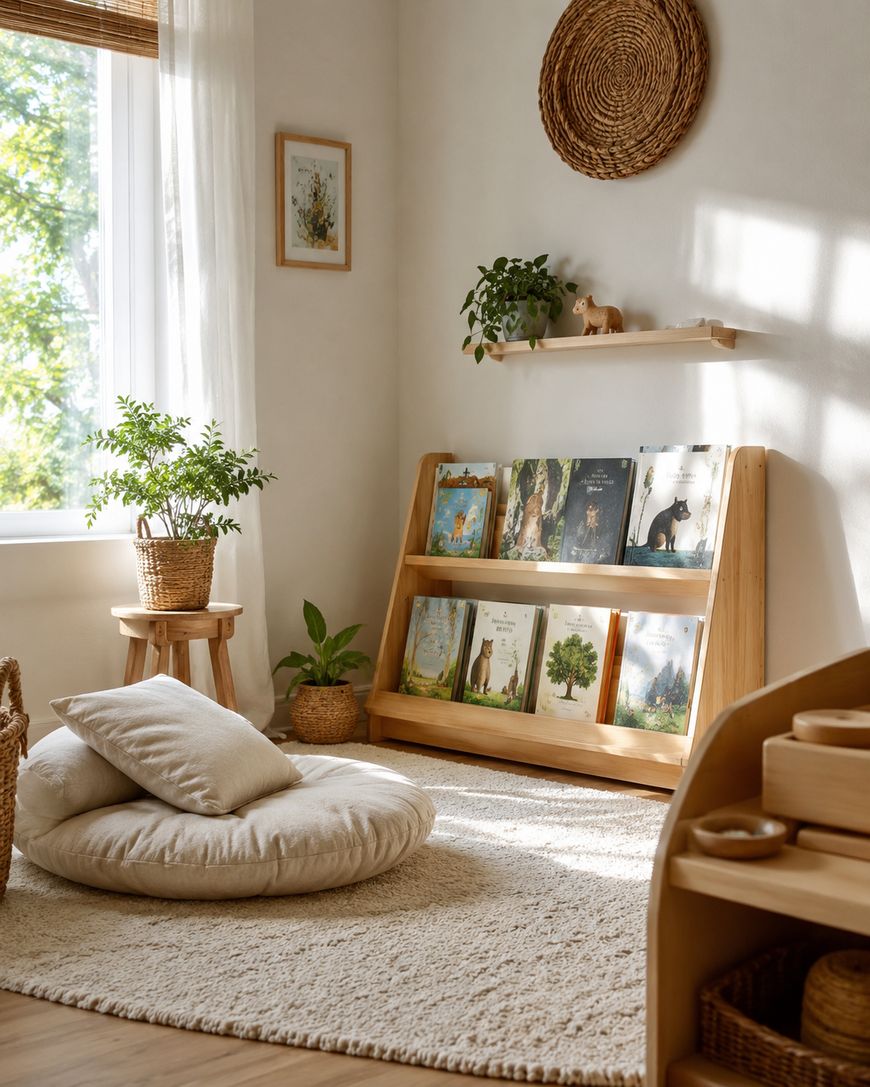
A soft rug or a small shelf can mark the edge of a zone without needing a wall or divider. This visual boundary helps kids understand that blocks stay in the block area and books stay near the reading corner.
Keep a small table and two chairs sized for your child, not adult furniture scaled down awkwardly. A table at the right height makes puzzles, drawing, and snack-time activities feel like they belong to your child.
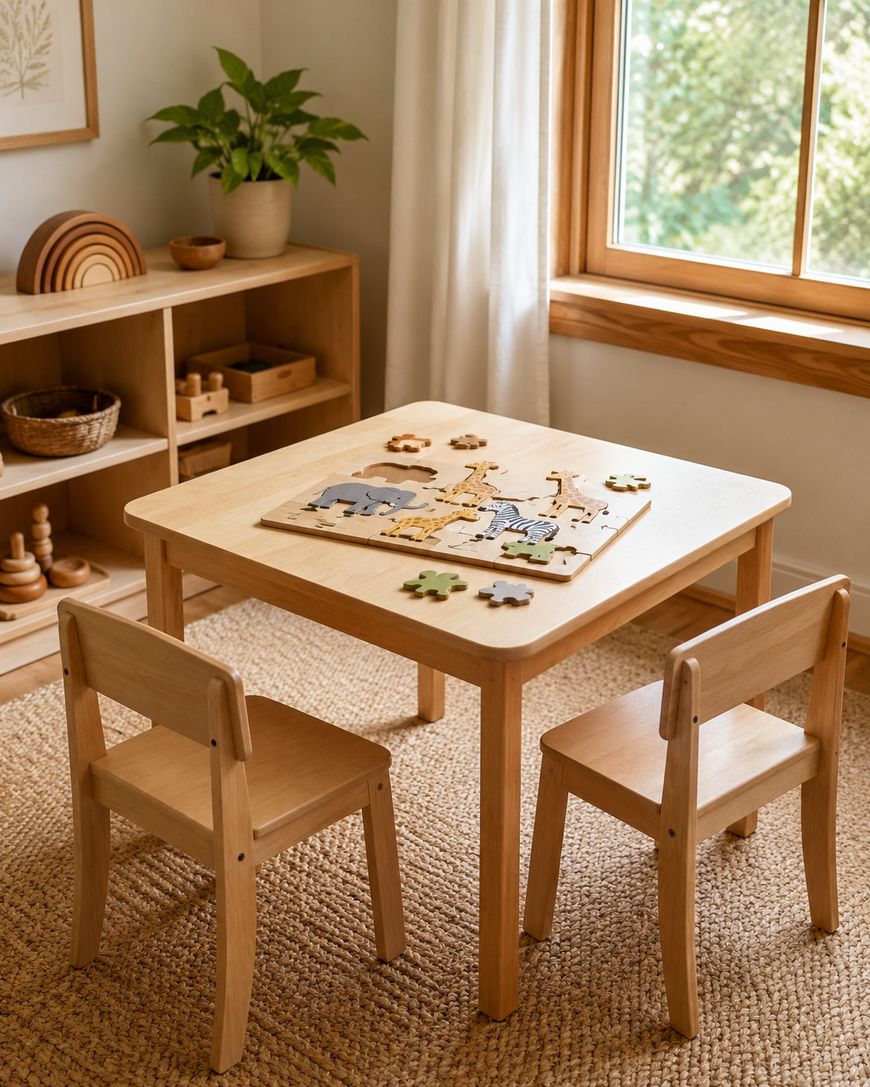
Choose Materials Kids Can Actually Use Independently
Look for toys and materials with a clear beginning and end, like puzzles, lacing cards, or simple sorting trays. These give your child a sense of completing something on their own, which builds confidence over open-ended toys that need adult direction.
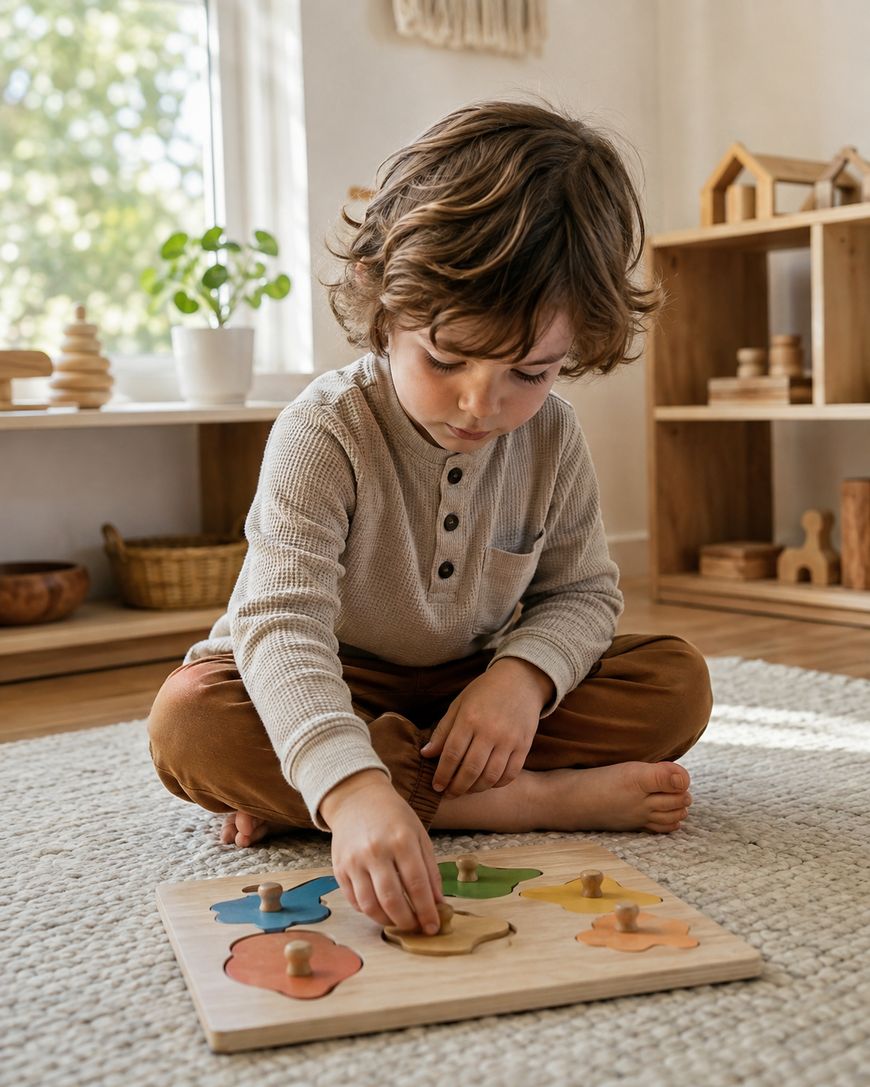
Wood and natural materials tend to hold up better under daily rotation than plastic, and they photograph well if you’re documenting the room for yourself. That said, plastic toys with a clear purpose still fit the same shelf system just fine.
Avoid toys with too many pieces or steps for your child’s current age. A toy that’s slightly too advanced usually ends up ignored on the shelf, taking up space that a better-matched activity could use.
Why a Montessori Playroom Works So Well
A montessori-style playroom isn’t about matching aesthetics or buying specific branded materials. It works because it removes the friction between a child and independent play, letting them choose, use, and put away an activity without needing help at every step.
This approach also cuts down on the constant toy clutter that builds up in a typical playroom. When only a rotating selection is visible, cleanup takes minutes instead of becoming a nightly battle.
Over time, kids in these spaces tend to play longer with fewer toys because each one gets real attention instead of getting lost in a pile.
Frequently Asked Questions
What age is a montessori playroom appropriate for?
Most of these ideas work well from around 12 months through early elementary age. You’ll simply adjust the materials and shelf height as your child grows.
Do I need to buy all new montessori-branded toys?
No. Many toys you already own can work on an open shelf as long as they have a clear purpose and fit the rotation system.
How often should I rotate toys in a montessori playroom?
Every two to four weeks works for most families, though you can rotate sooner if you notice your child losing interest in what’s currently out.
What if I only have a small space for a playroom?
A small corner of a bedroom or living room works fine. Focus on one short shelf and a rug rather than trying to fit in full zones.
Is it okay to mix montessori shelving with regular toy storage?
Yes. Many families keep a montessori-style shelf for daily activities and a separate bin for bath toys, outdoor gear, or items that don’t fit the open-shelf format.
Bring These Ideas Into Your Space
You don’t need a full room or a big budget to start using these montessori playroom ideas this week. Pick one shelf, limit what’s on it, and set a reminder to rotate in a few weeks, then build out zones and materials as you go.
For more inspiration, take a look at our Montessori toddler bedroom ideas and Toddler playroom ideas.



Leave a Reply