Last updated: October 16, 2026
If you need egg drop project ideas that actually protect the egg, you are in the right place. Below you will find seven tested designs, from a classic parachute to a cushion box, plus tips to help your build survive the fall.
Pick one that fits the materials you already have at home, and you can start building today.
Egg Drop Project Ideas to Try First
The best egg drop project ideas all follow the same simple rule. You either slow the fall down, spread out the force of the landing, or do both at once.

Each design below uses everyday materials like paper, tape, cotton balls, and cardboard. Read through all seven, then choose the one that feels doable for your age group and your supplies.
Idea 1: The Classic Parachute
A parachute works by catching air, which slows the egg as it falls. Cut a large square from a plastic grocery bag or a lightweight fabric scrap, then tie four or more strings to the corners.

Attach the strings to a small lightweight basket or paper cup that holds the egg snugly. Pad the inside with tissue or cotton so the egg cannot bounce around when it lands.
A wider parachute catches more air, so try making one a little larger than you think you need. If the chute tangles on the way down, practice folding it neatly before every drop.
Idea 2: The Straw Cage
Drinking straws are surprisingly strong when you build them into a frame. Tape straws together to form a cube or a rounded cage that surrounds the egg on every side.
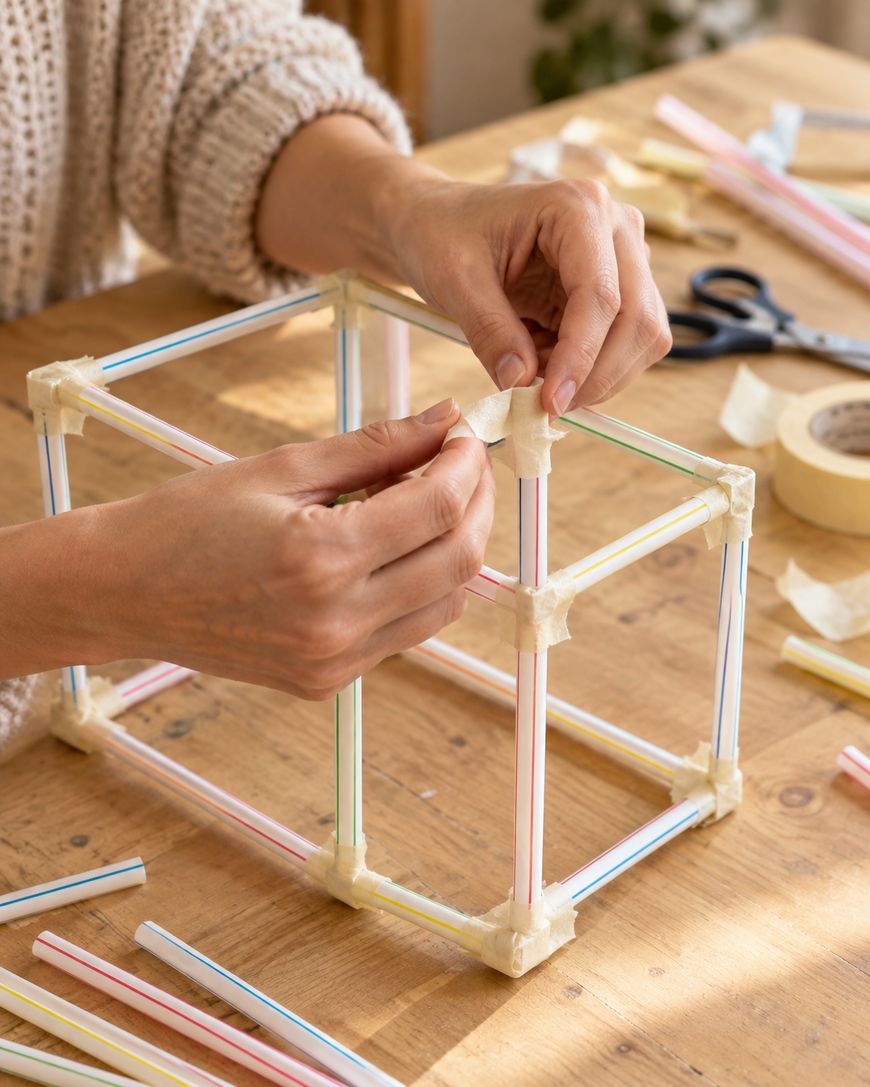
The straws bend and flex on impact, which absorbs energy before it reaches the egg. Add a few extra straws along the bottom, since that is the side that usually hits the ground first.
This design is lightweight, so it falls slowly on its own. Add a paper streamer or two for extra drag if you want an even softer landing.
Idea 3: The Cushion Box
Find a small cardboard box with a lid and fill it with soft material. Packing peanuts, shredded paper, crumpled tissue, cotton balls, or bubble wrap all work well.
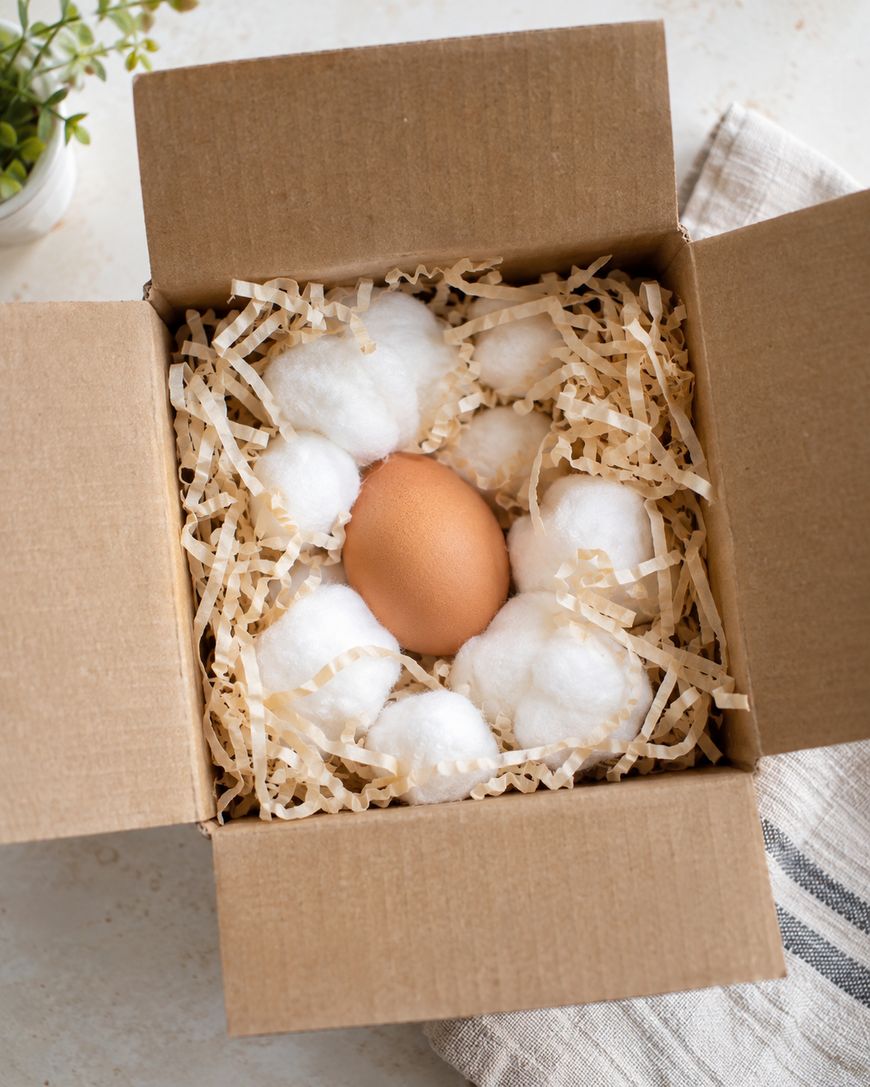
Place the egg in the center so it sits surrounded by padding on every side. Close the lid and tape it shut, then seal any gaps so the filling cannot shift.
The key to this one is a tight pack. If the egg can slide around inside, it will crack, so keep filling until there is no wiggle room.
Idea 4: The Balloon Bumper
Balloons make wonderful shock absorbers because air compresses when it is squeezed. Inflate several small balloons and tape them around a lightweight container that holds the egg.

Position the balloons so they stick out past the container on all sides. When the whole build hits the ground, the balloons take the hit first and the egg stays calm in the middle.
Keep balloons away from sharp edges and craft tools so they do not pop early. Test your design on a soft surface like grass before moving to harder ground.
Idea 5: The Paper Cup Sandwich
This one is quick and great for younger kids. Place the egg inside a paper cup padded with cotton balls, then place a second cup upside down over the top and tape the rims together.
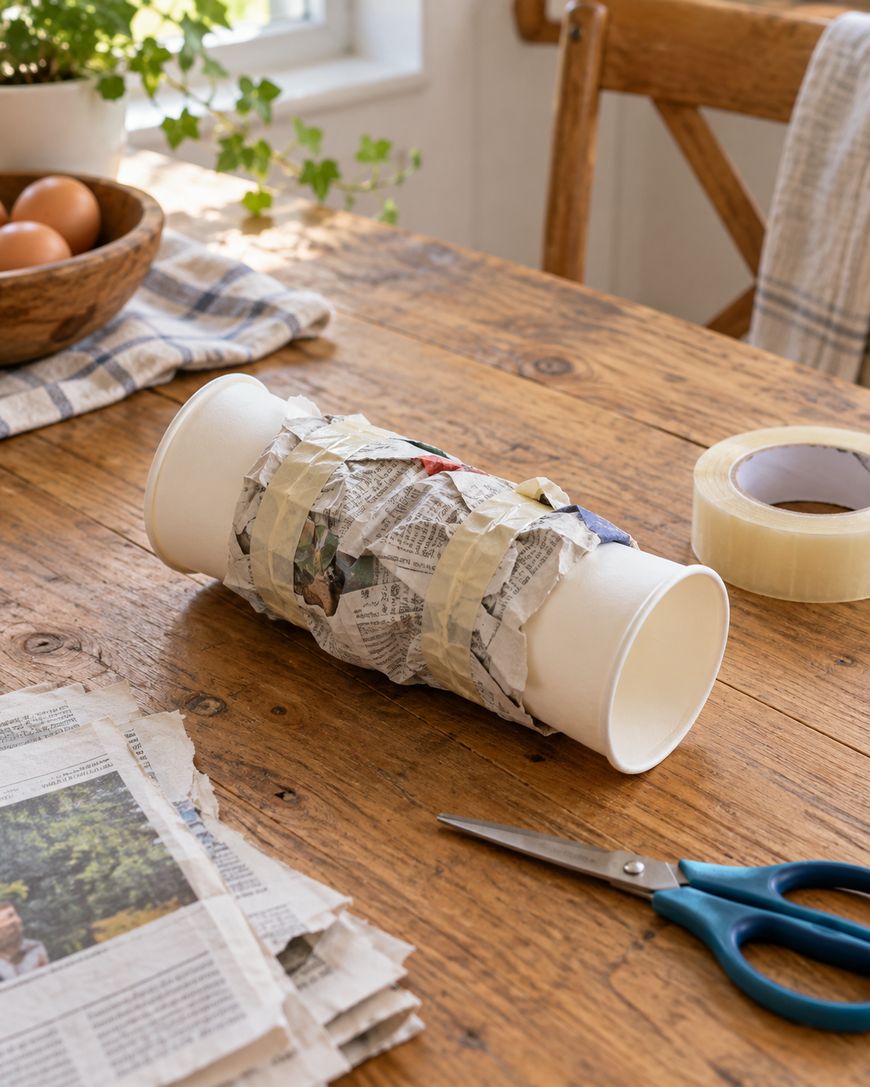
Wrap the outside with a few layers of crumpled newspaper and secure it with tape. The result looks a little silly, but the layers of paper create a strong crumple zone.
If you want more protection, tape a ring of cardboard around the middle like a bumper. The extra width keeps the sandwich from landing on its side.
Idea 6: The Cereal Box Capsule
A cereal box is the perfect size for an egg capsule. Cut it down so it stands about as tall as your egg plus a little extra, then line it with soft fabric or foam.
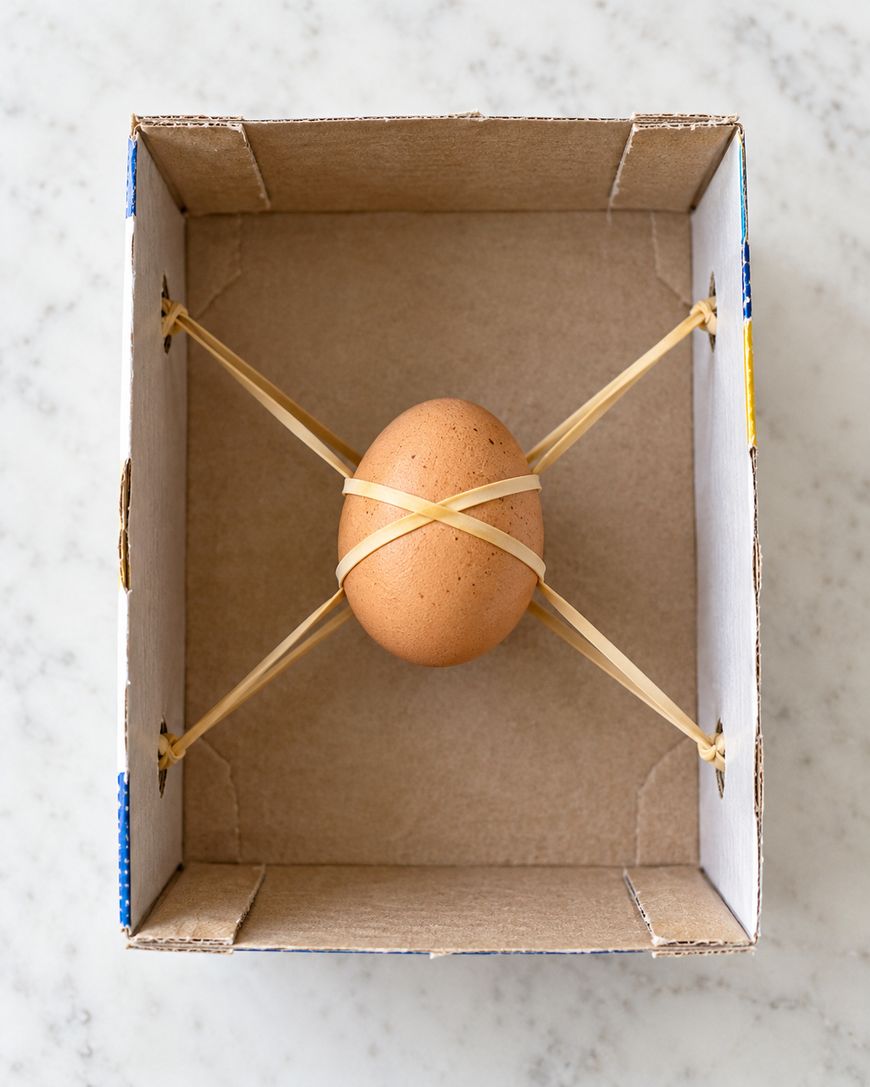
Hang the egg inside using rubber bands stretched across the opening. The bands hold the egg in the center, so it never touches the walls of the box.
Rubber bands act like tiny springs, which is why this design handles bumps so well. Test the egg for a few gentle shakes before you try a real drop.
Idea 7: The Sponge Landing Pad
Sometimes the smartest idea is protecting the landing spot rather than the egg. Stack a few kitchen sponges or a thick foam pad in a shallow tray and secure them with tape.
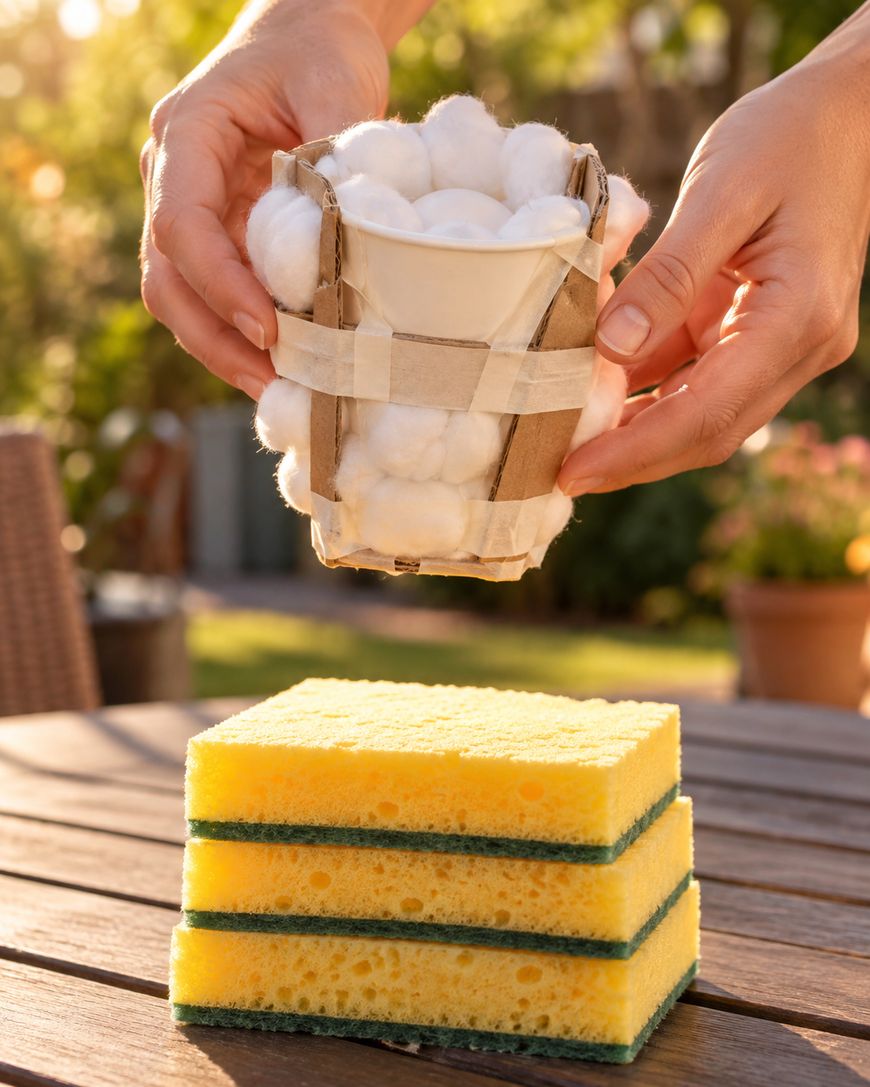
Drop your egg container onto the pad and watch how much softer the landing feels. This is a great option if your teacher allows a cushioned target in the rules.
You can combine this idea with any of the designs above for a double layer of defense. Always check your project guidelines first so you know what is allowed.
How to Choose the Best Egg Drop Project for Your Group
The right design depends on your age group, your supplies, and how much time you have. Younger kids often do best with the paper cup sandwich or the cushion box, since both are simple and forgiving.
Older students may enjoy the parachute or the cereal box capsule because they involve more engineering. Think about how many materials you can gather and how patient your builders are.
If you are working in a classroom, set a material budget so every team starts on equal footing. A small limit pushes kids to think creatively instead of just adding more stuff.
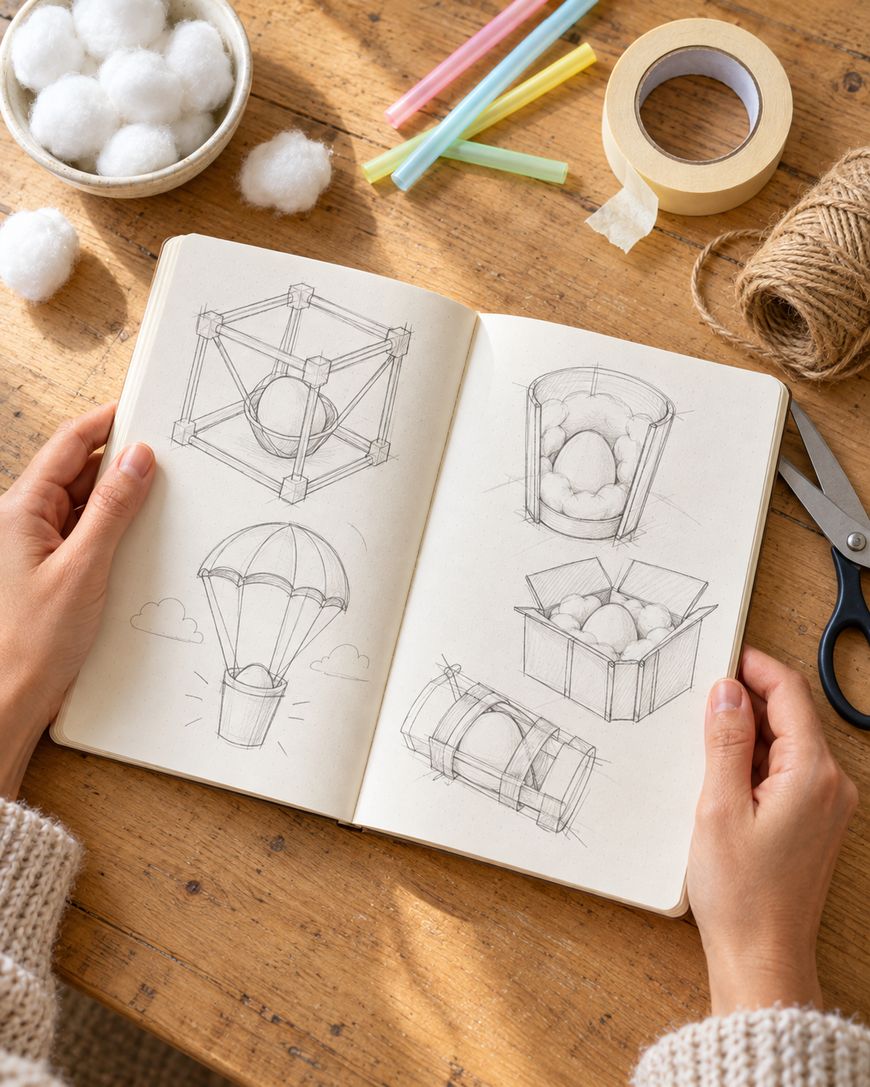
For a family afternoon, let everyone sketch a plan first and then vote on the best one. Planning together makes the building part feel smoother and more fun.
Remember that the goal is learning, not perfection. A cracked egg still teaches you something about force, speed, and design, so celebrate the attempt either way.
The Simple Science Behind Egg Drop Project Ideas
Every egg drop is really a lesson in physics. When something falls, gravity pulls it toward the ground and it speeds up until it hits.

The sudden stop at the bottom is what cracks the egg, because the force of the stop has to go somewhere. Your job is to make that stop longer and gentler.
A parachute adds air resistance, which slows the fall. A cushion or crumple zone adds time to the landing, which spreads the force out and lowers the peak impact on the shell.
Shape matters too. Wider designs are steadier, and an egg that sits in the center of a build is farther from the point of impact than one pressed against the wall.
This is why almost every winning design combines two or three tricks. A parachute plus a padded cup, for example, slows the fall and softens the landing.
Kids can learn to talk about these ideas in simple words like slow, soft, and spread out. Those three words are a great way to explain the science without any complicated math.
Tips for Building a Stronger Egg Drop Project
A few small habits can make a big difference in how your build performs. Start by testing the design with a practice egg or a ball of clay before you use a real egg, so you can fix weak spots for free.
Keep the total weight low, since a lighter build falls more gently and hits with less force. Balance matters as well, so tape heavier parts near the center to help the build fall evenly.
Make sure the egg cannot move inside its container. Pad every gap with cotton or tissue, then give the finished build a gentle shake to check for rattling.
Use tape generously at every joint. Strong seams keep the design together when it lands, which protects the egg from sudden shifts inside.
Finally, record each drop in a notebook so you can see what changed from one try to the next. Even a quick note about what worked and what broke turns a fun activity into real science.
Staying Safe During Your Egg Drop
Egg drops are a blast, but a few safety habits keep the day smooth. Raw eggs can carry germs, so wash your hands with soap and water after handling them and clean any surfaces the egg touches.

Drop from a safe spot, such as a sturdy step stool, a low ledge, or a deck with an adult nearby. Never climb onto a roof or an unsteady ladder for a project like this.
Lay down a tarp or old sheet where the egg will land, which makes cleanup much easier. Keep little ones back from the drop zone so no one gets hit by a falling build or splashed by a broken egg.
If your school or club has specific rules about drop height and supplies, follow those rules first. They are written with your group’s safety in mind.
Questions About Egg Drop Project Ideas
What materials work best for an egg drop project?
Soft, flexible materials tend to work best. Cotton balls, bubble wrap, sponges, straws, balloons, and shredded paper all absorb impact well. You can mix a few of them in the same build.
Should I use a parachute or a padded box?
Both can work, and the best builds often use both. A parachute slows the fall, while padding softens the landing. If you can only pick one, start with padding, since it is easier to get right.
Can I use a hard-boiled egg for practice?
Yes, a hard-boiled egg is a handy stand-in for early tests. It will not break the same way a raw egg does, so use it to check balance and fit, then run the final test with a raw one.
How do I keep the egg from moving inside the container?
Fill every gap with soft padding until the egg cannot shift. Rubber bands stretched across an opening can also hold it in the center. A quick gentle shake test will show you if anything rattles.
Why did my egg crack even with lots of padding?
The usual culprits are loose padding, a build that landed on its side, or too much weight. Check where the egg sat inside the container and where the build touched down. Then adjust one thing at a time.
Ready to Start Your Egg Drop Project?
You now have seven creative egg drop project ideas, a handle on the science, and a handful of tips to build with confidence. Choose the design that matches your supplies, gather your materials, and plan a safe drop zone.
Try one idea this weekend, then test a second to see which protects the egg better. Share your results with your family or class, because the best part of any egg drop project is comparing what worked.
Science Experiments for Kids That Turn Curiosity Into Learning
Educational Activities for Kids That Make Learning Feel Like Play




Leave a Reply