Last updated: August 30, 2026
Setting up effective classroom rules is one of the most important things you can do at the start of the school year. In this post, you will find practical, research-backed strategies to help you create rules that students understand, respect, and actually follow. We will cover everything from how to write your rules to how to enforce them consistently all year long.
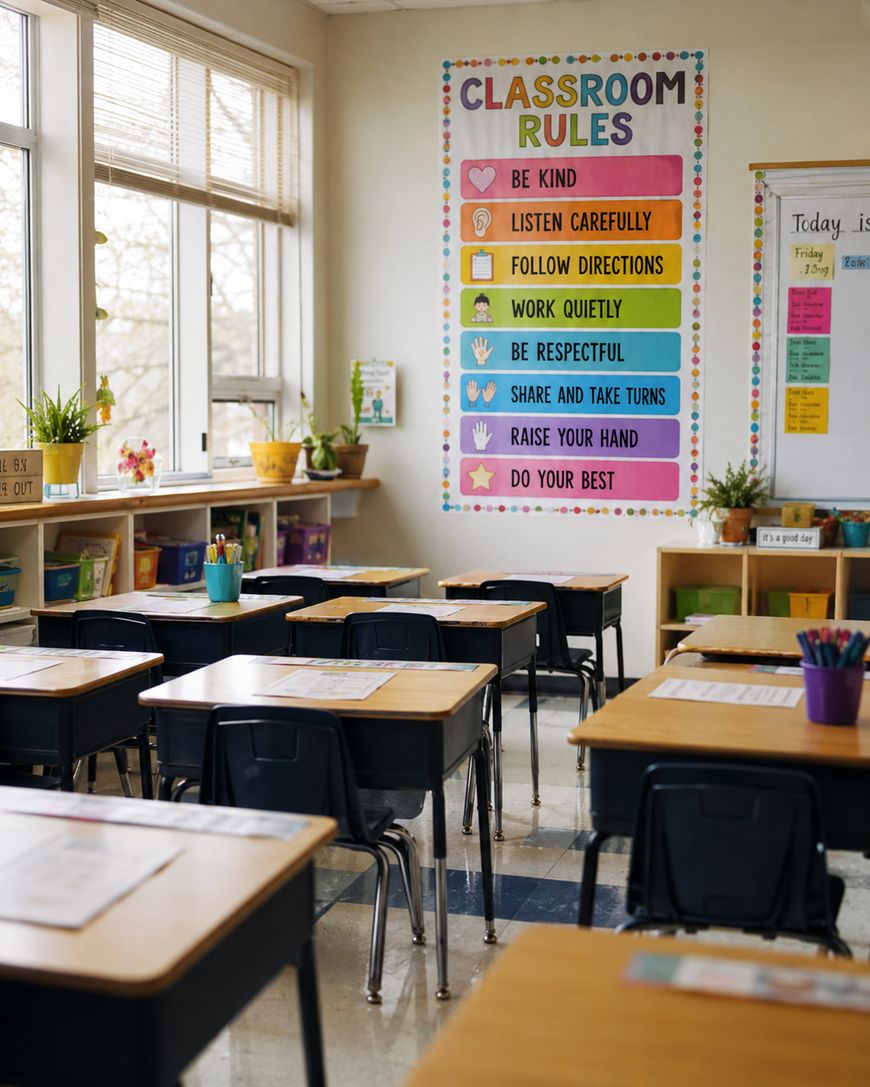
Why Classroom Rules Matter More Than You Think
Classroom rules are not just about keeping order. They are the foundation of a learning environment where every student feels safe, respected, and ready to grow.
When rules are clear and consistently applied, students spend less time testing limits and more time focused on learning. Research consistently shows that classrooms with structured expectations have fewer behavioral disruptions and higher academic achievement.
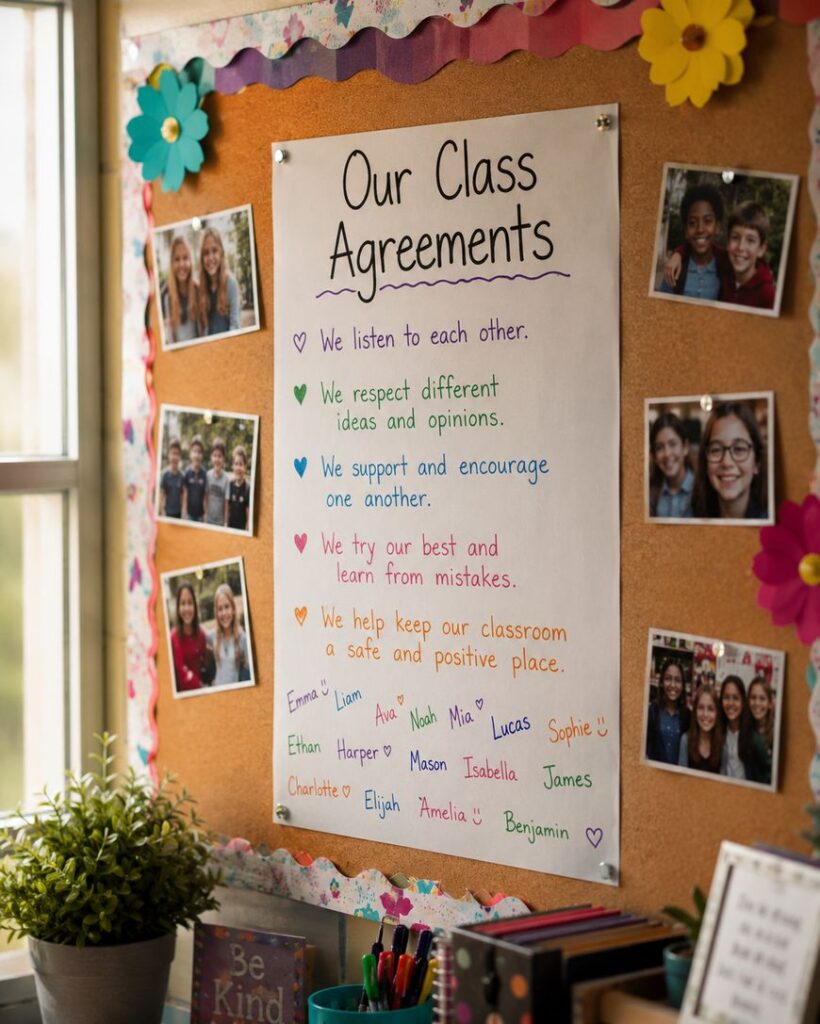
Beyond academics, classroom rules teach students skills they will use for the rest of their lives. Following directions, respecting others, and taking responsibility are habits that start in the classroom and carry into every area of adult life.
Many teachers underestimate how much students actually want structure. Children and teenagers thrive when they know what is expected of them, and they feel more secure in environments where the rules are fair and predictable.
Without clear classroom rules, even the best lesson plans can fall apart. A single student who is unclear about expectations can derail an entire class period, and that disruption costs everyone valuable learning time.
How to Write Classroom Rules Students Will Actually Follow
The way you write your classroom rules matters just as much as what the rules say. Rules written in a positive, proactive tone are far more effective than a list of prohibitions.
Instead of writing “no talking during independent work,” try “we use quiet voices during independent work time.” The shift is subtle, but it tells students what to do rather than what not to do, which is easier for the brain to process and follow.
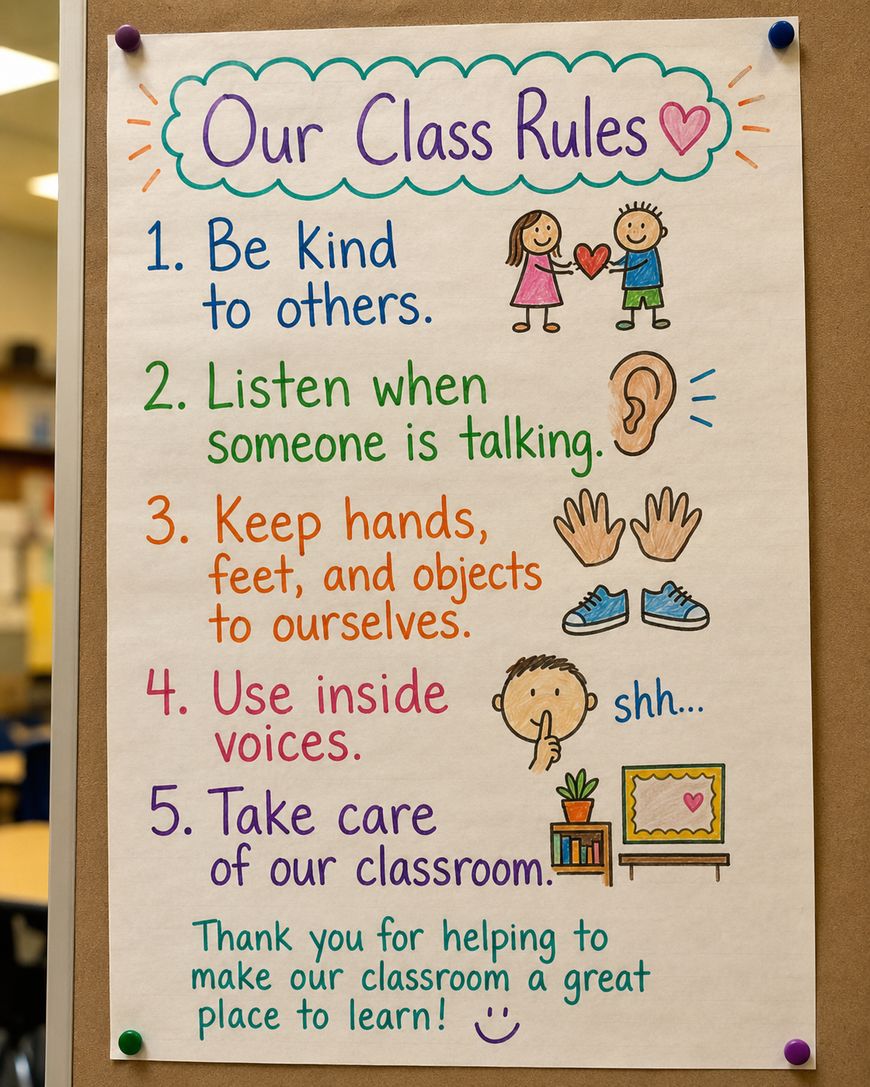
Keep your list of classroom rules short. Five rules or fewer is the sweet spot for most grade levels. When you have too many rules, students cannot remember them, and enforcement becomes inconsistent.
Each rule should be broad enough to cover multiple situations. A rule like “we treat everyone with respect” can apply to how students speak to each other, how they handle shared materials, and how they behave during disagreements.
Use simple, age-appropriate language that your students can read and explain back to you. If a kindergartner cannot paraphrase a rule in their own words, it is too complex. If a high schooler finds a rule condescending or childish, it will not earn their buy-in.

Consider involving students in creating the classroom rules, especially at the middle and high school level. When students have a voice in shaping the expectations, they develop a sense of ownership and are significantly more likely to hold themselves and each other accountable.

Write the rules on a prominent chart or display them digitally where every student can see them easily from their seat. Visibility matters, especially in the first weeks of school when everyone is still learning the routines.
Classroom Rules vs. Classroom Procedures: Know the Difference
One of the most common mistakes new teachers make is confusing classroom rules with classroom procedures. Understanding the difference will make your management system far more effective.
Classroom rules are broad expectations that reflect your values and the culture you want to build. They answer the question: what kind of community do we want to be?

Classroom procedures are the specific steps students follow for routine tasks. How do you sharpen a pencil? What do you do when you finish early? Where do you turn in your homework? These are procedures, not rules.
Both are essential, but they serve different purposes. Rules guide behavior and character. Procedures create efficiency and consistency in daily routines.
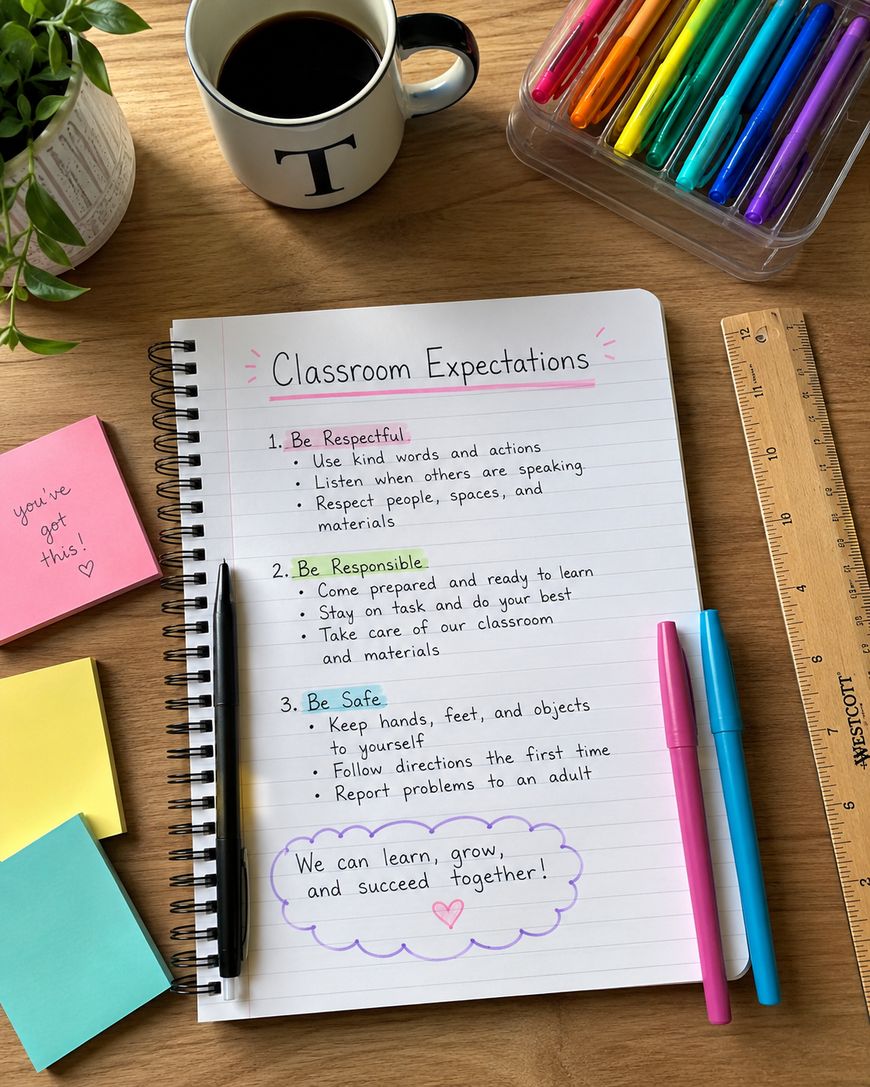
When a student breaks a rule, there is usually a consequence involved. When a student does not follow a procedure correctly, the appropriate response is reteaching, not discipline.
Keeping this distinction clear helps you respond to misbehavior appropriately. Not every classroom issue is a rule violation, and treating minor procedure mistakes as discipline problems can damage your relationship with students unnecessarily.
Teaching procedures explicitly at the start of the year, and revisiting them after breaks, dramatically reduces the number of times you have to redirect students during the day.
How to Introduce Classroom Rules on the First Day
The first day of school sets the tone for everything that follows. How you introduce your classroom rules on day one will shape how seriously students take them all year.

Do not just read the rules off a poster. Walk students through each one with examples, role play, and discussion. Ask students what each rule looks like, sounds like, and feels like in action.
Use the first week to practice the rules repeatedly, not just announce them. Have students role play scenarios where they apply the rules. Let them discuss what a respectful classroom looks and sounds like.

Be explicit about why each rule exists. Students who understand the reasoning behind a rule are much more likely to internalize it. “We raise our hands so that everyone gets a chance to share” makes more sense to a student than a rule that just appears to be about control.
Revisit the rules after every school break. Students need reminders after extended time away, and treating the return from winter or spring break like a mini first day helps reset expectations quickly and smoothly.
Enforcing Classroom Rules Consistently All Year
Consistency is the single most important factor in whether your classroom rules will actually stick. Students notice immediately when a rule is applied differently depending on the student or the teacher’s mood that day.
Create a clear, calm response plan for when rules are broken. Your response should be predictable and proportionate, and it should never embarrass or shame the student publicly.

A warning system that escalates gradually works well for most classrooms. A quiet verbal reminder, followed by a private conversation, followed by a parent contact or referral, gives students the chance to self-correct before consequences become more serious.
Document rule violations in a simple log. This serves two purposes: it keeps you accountable for consistency, and it provides evidence if you ever need to have a formal conversation with a parent or administrator.
Celebrate when students follow the rules, especially early in the year. Positive reinforcement is not just for younger students. A simple acknowledgment like “I appreciate how our class handled that transition today” goes a long way toward reinforcing the culture you are building.

When classroom rules are broken repeatedly by the same student, it is worth investigating what is driving that behavior. Students who consistently struggle with a particular rule may need support, not just consequences.
Building a Positive Classroom Culture Around Your Rules
Classroom rules are most effective when they are embedded in a broader culture of respect, belonging, and shared purpose. Rules alone cannot create a positive classroom. They need to be backed by relationships.
Take time to build genuine connections with your students. Learn their names, their interests, and what matters to them. Students who feel seen and valued by their teacher are far more motivated to meet that teacher’s expectations.

Use community-building activities at the start of the year to establish a sense of “we” in your classroom. When students feel like they belong to a group, they are more invested in the shared agreements that hold that group together.
Model the behavior you expect. If your classroom rule is “we treat everyone with respect,” students are watching how you speak to them, how you respond when you make a mistake, and how you handle conflict. You are the most visible role model in the room.
Revisit your classroom rules when the community feels off. After a rough stretch, a class meeting to talk about how the community is doing and what everyone needs to get back on track can be far more powerful than additional consequences.
Setting up effective classroom rules is one of the most important things you can do at the start of the school year. In this post, you will find practical, research-backed strategies to help you create rules that students understand, respect, and actually follow. We will cover everything from how to write your rules to how to enforce them consistently all year long.
Questions and Answers About Classroom Rules
How many classroom rules should a class have?
Most experts recommend five rules or fewer for any grade level. A shorter list is easier for students to remember and easier for teachers to enforce consistently. Focus on broad, values-based rules that can cover a wide range of situations rather than writing a separate rule for every possible scenario.
Should students help create classroom rules?
Involving students in creating classroom rules, particularly in grades four and above, significantly increases buy-in and accountability. When students have contributed to the expectations, they feel a sense of ownership and are more likely to hold themselves and their peers to those standards. You can guide the conversation to ensure the final rules align with your non-negotiables while still honoring student voice.
What is the difference between a rule and a consequence?
A rule is an expectation about behavior, while a consequence is what happens when that expectation is not met. Consequences should be logical, proportionate, and connected to the rule that was broken. For example, if a student misuses materials, a logical consequence might be losing access to those materials temporarily. Consequences work best when they are calm, consistent, and focused on teaching rather than punishment.
How do you handle a student who repeatedly breaks classroom rules?
Repeated rule-breaking often signals an unmet need, whether that is academic frustration, social difficulty, or something happening outside of school. Start with a private conversation to understand what is going on. From there, consider whether a behavior plan, additional support, or a parent conference would be helpful. Escalating consequences without addressing the root cause rarely leads to lasting change.
When should classroom rules be updated or changed?
Rules can be revisited if they are consistently not working, if the classroom community has evolved, or if a rule is no longer relevant to the students in front of you. A class meeting is a great format for evaluating rules together. Be transparent with students about why a change is being considered, and involve them in deciding what the new expectation should be.
How do you handle classroom rules in a substitute teacher situation?
Write your classroom rules and key procedures into a clear, simple substitute folder. Include the location of the rules display in your room, and brief substitutes on how you typically respond to common behaviors. Establishing a classroom culture where students take pride in showing their best behavior for any adult is the goal. When students know the expectations are the same regardless of who is in the room, transitions to a substitute go much more smoothly.
Conclusion: Start Strong With Classroom Rules That Stick
Effective classroom rules are not about control. They are about creating a community where everyone can learn, grow, and feel safe.
When you take the time to write rules thoughtfully, introduce them with care, enforce them consistently, and embed them in a culture of respect and belonging, you set your students up for a successful year.
Start the year with clear classroom rules, revisit them often, and watch as your students rise to meet the expectations you have built together. The investment you make in the first few weeks will pay off every single day that follows.




Leave a Reply