Last updated: August 30, 2026
These toddler outdoor activities are simple, safe, age-appropriate ways for your 1–3-year-old to move, explore, and play outside. The simplest default approach is to rotate a few low-prep options (water, chalk, balls, nature walks) and repeat them often with short 10–20 minute play blocks.
Toddler Outdoor Activities You Can Do Anywhere
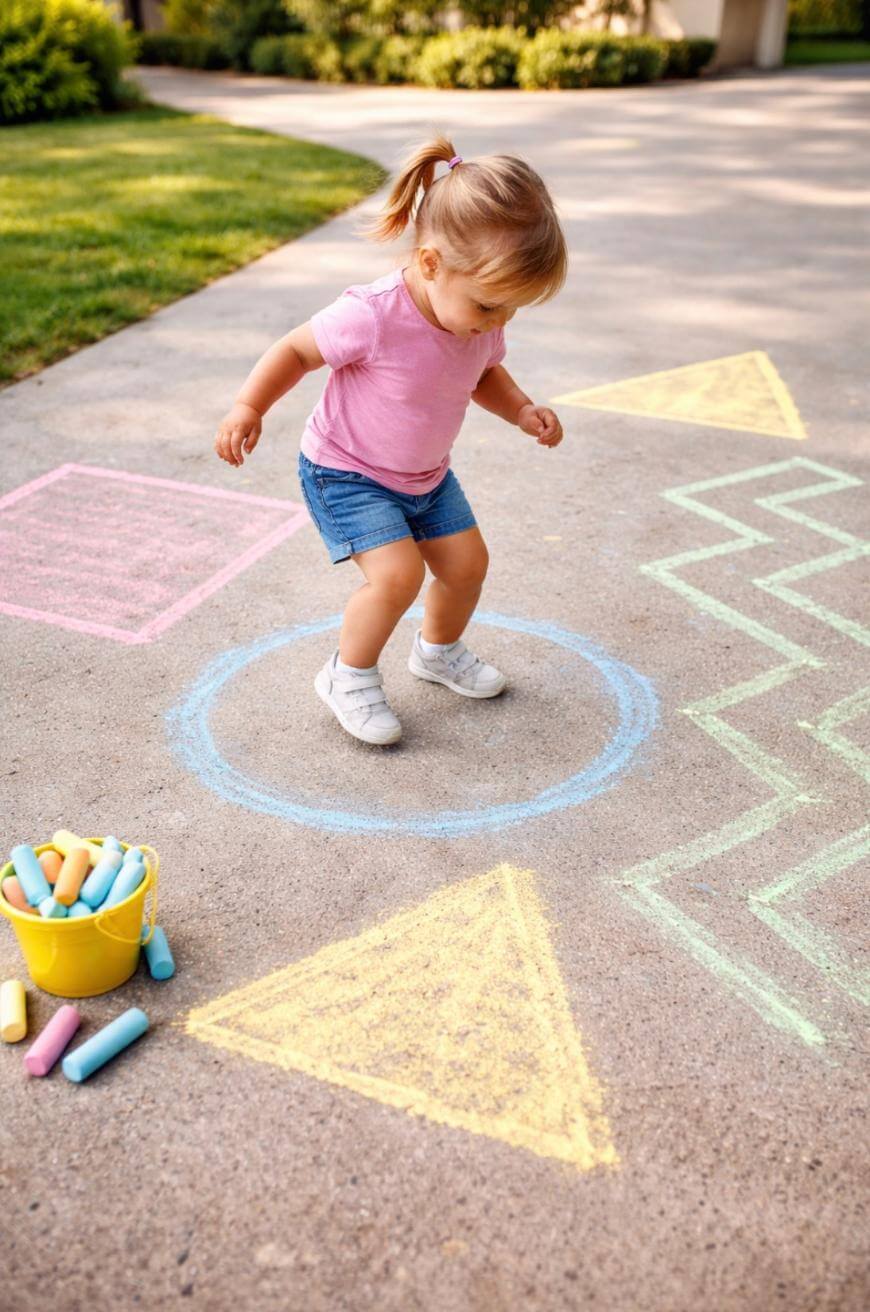
1. Sidewalk Chalk “Big Shapes”
Draw 3–5 huge shapes (circle, square, zigzag) and ask your toddler to walk the line, hop on corners, or “park” a toy car inside each shape.
Upgrade it by assigning a color to each shape so they can practice quick matching (“Find the blue circle”) without turning it into a lesson.
2. Bucket Water Pour Station
Set out 2–3 containers, one small pitcher, and a scoop, and let your toddler pour back and forth on a towel or patch of grass.
Keep it easy: start with just one bucket of water and one cup, then add more pieces only if they’re staying engaged.

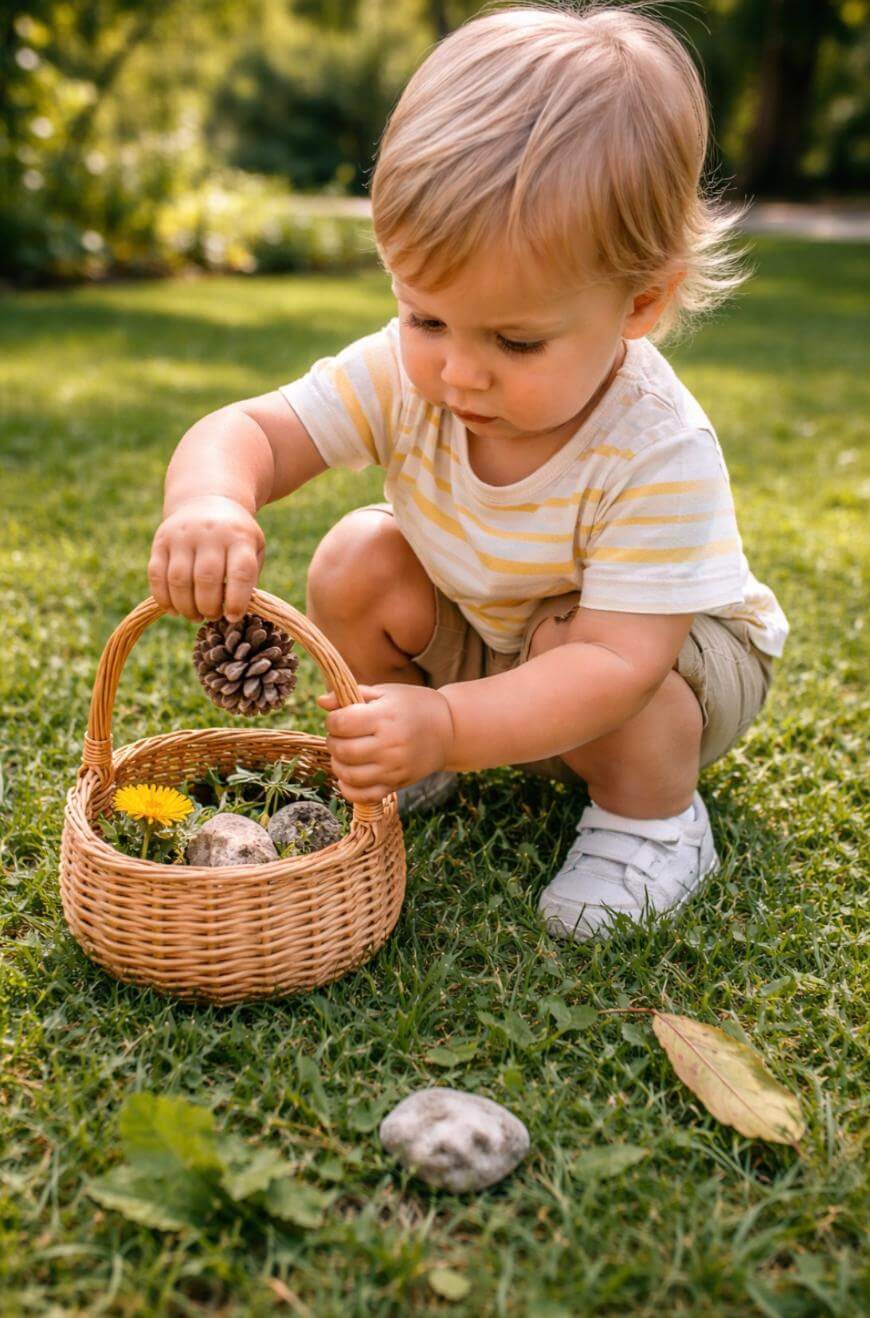
3. Nature “Treasure” Basket
Hand them a small basket and invite them to collect 5 safe items like leaves, rocks, pinecones, or petals.
The trick is to keep it short—aim for a 5-minute hunt—so it feels like a win, not a wandering marathon.
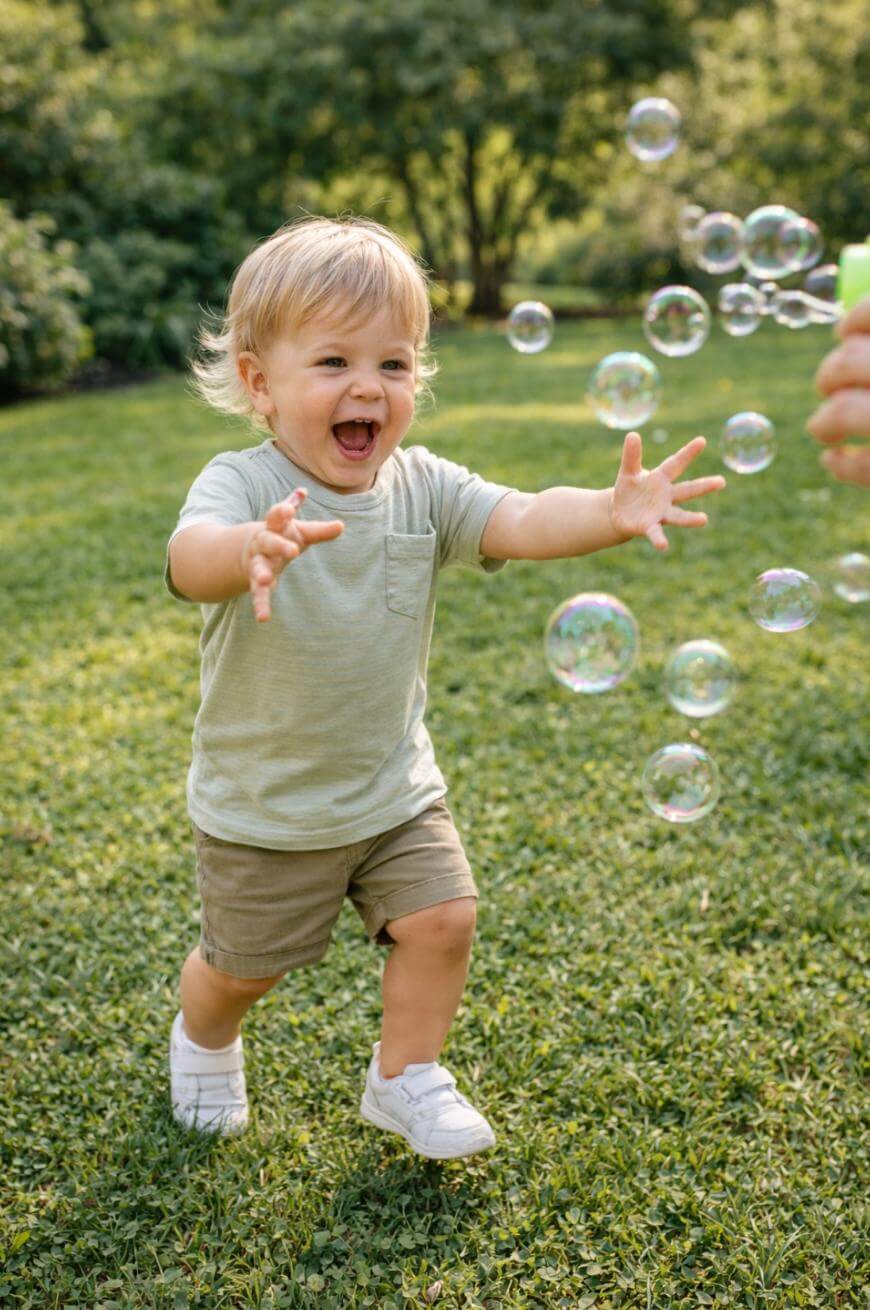
4. Bubble Chase Sprints
Blow bubbles and let them chase and pop them, then pause and repeat so they get tiny bursts of running practice.
If you want to stretch the activity, call out simple targets like “Pop 3 bubbles!” and celebrate the count.
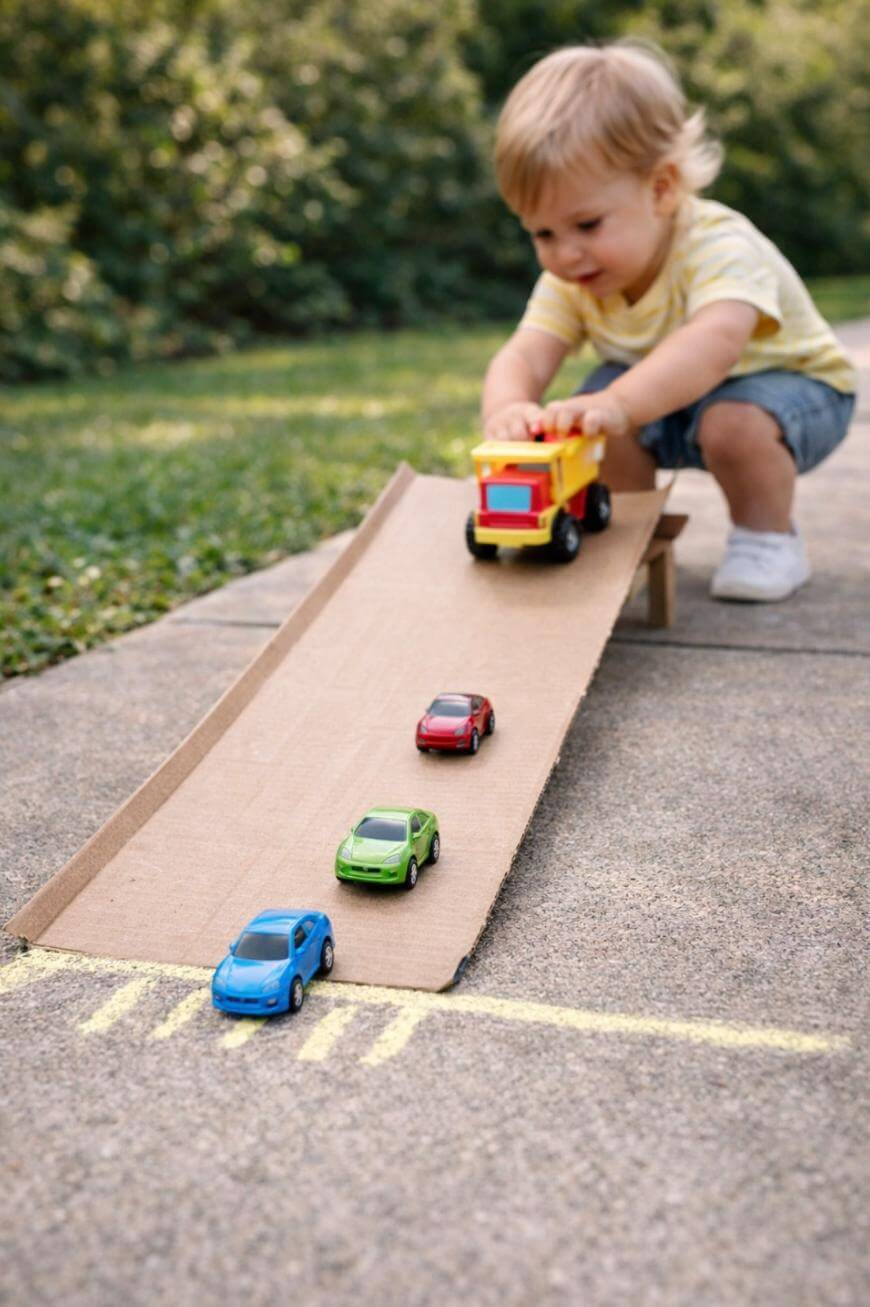
5. Toy Car Ramp With Cardboard
Prop a piece of cardboard on a step, curb, or a sturdy box to make a ramp, then send cars down one at a time.
Add a “finish line” with chalk and cheer when they make it past it to keep them coming back for repeats.
6. “Go, Stop” Movement Game
You say “Go!” and they move; you say “Stop!” and they freeze, even if the freeze is wobbly and hilarious.
Keep rounds to 30–60 seconds so they don’t melt down, and treat “almost stopped” as success.
7. Sidewalk Chalk Road Map
Draw a simple road with a few turns, then let them drive toy cars along the path and park in a “garage” square.
If they’re into it, add one rule like “Cars only drive on the road” to introduce gentle structure.
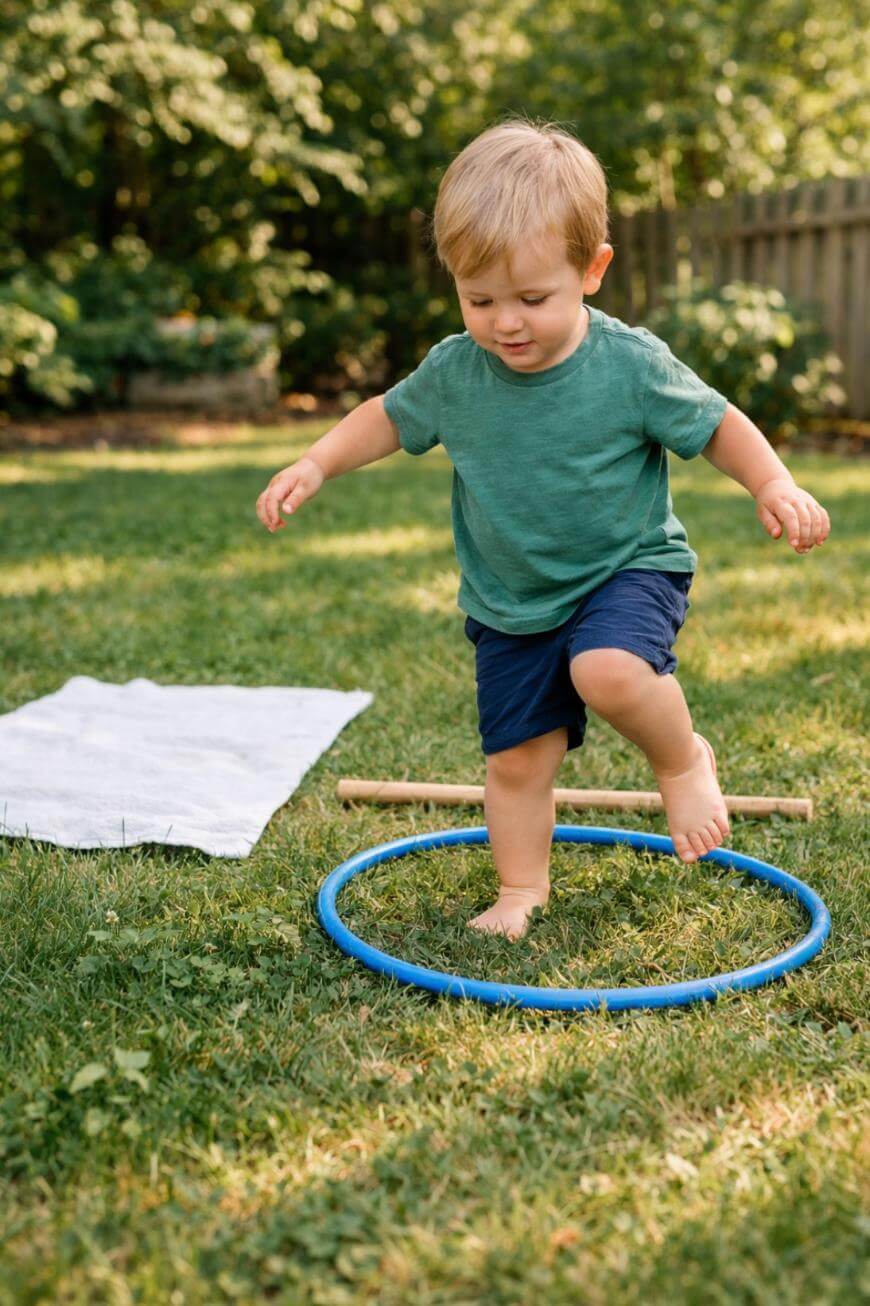
8. Mini Obstacle Path With What You Have
Use 3–6 items like a towel (jump over), a stick (step over), and a hula hoop (step in) to create a tiny circuit.
One obstacle per “station” is enough for toddlers—too many pieces can turn into frustration fast.
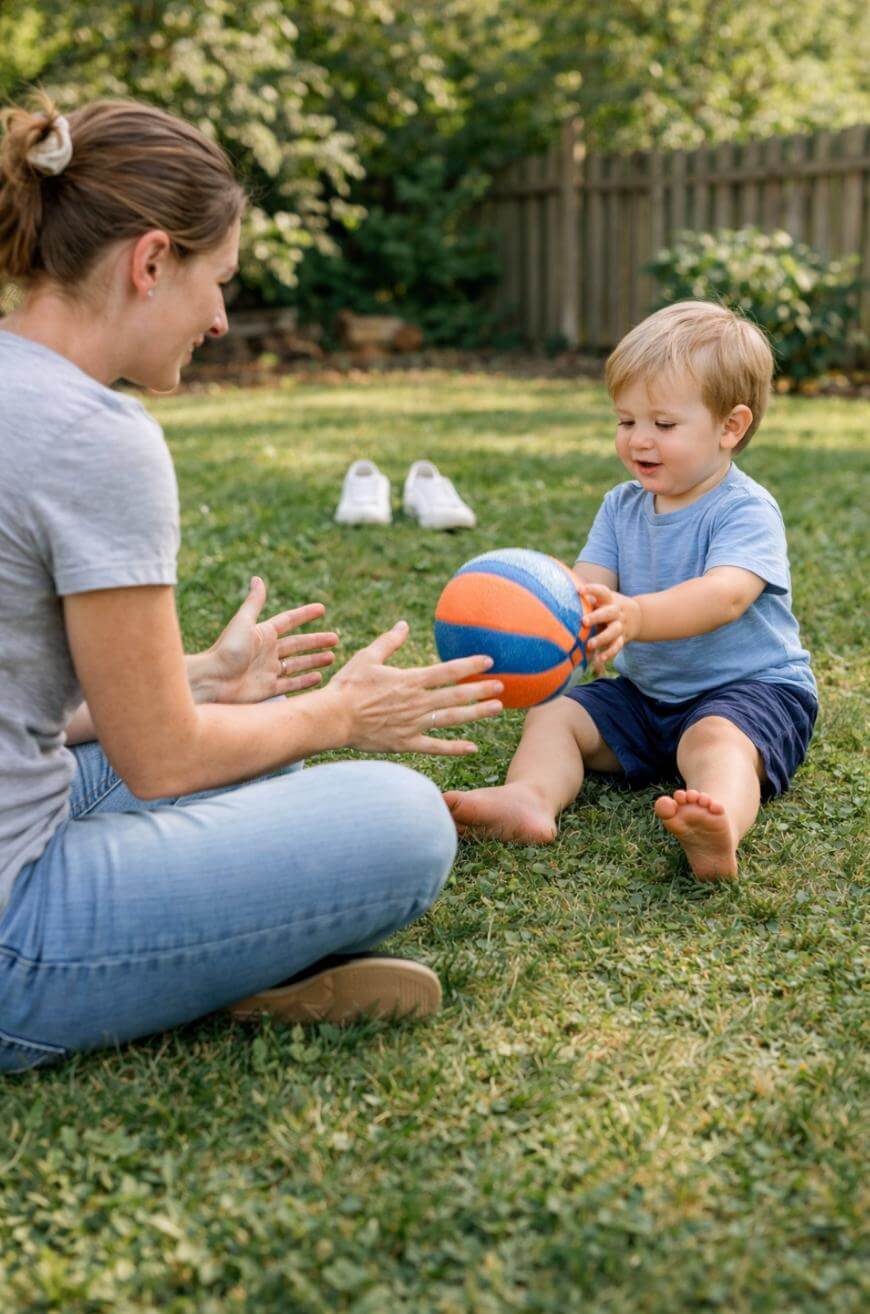
9. Ball Roll And Kick Practice
Sit facing each other and roll a ball back and forth, then switch to gentle kicking toward a “goal” like two shoes.
Choose one ball size and stick with it for a few days; repetition is what builds the skill.
10. Spray Bottle Wall Art
Give them a clean spray bottle with water and let them “paint” a fence, sidewalk, or exterior wall that can safely get wet.
A simple rule helps: “Spray the wall, not people,” and you’ll avoid half the chaos.

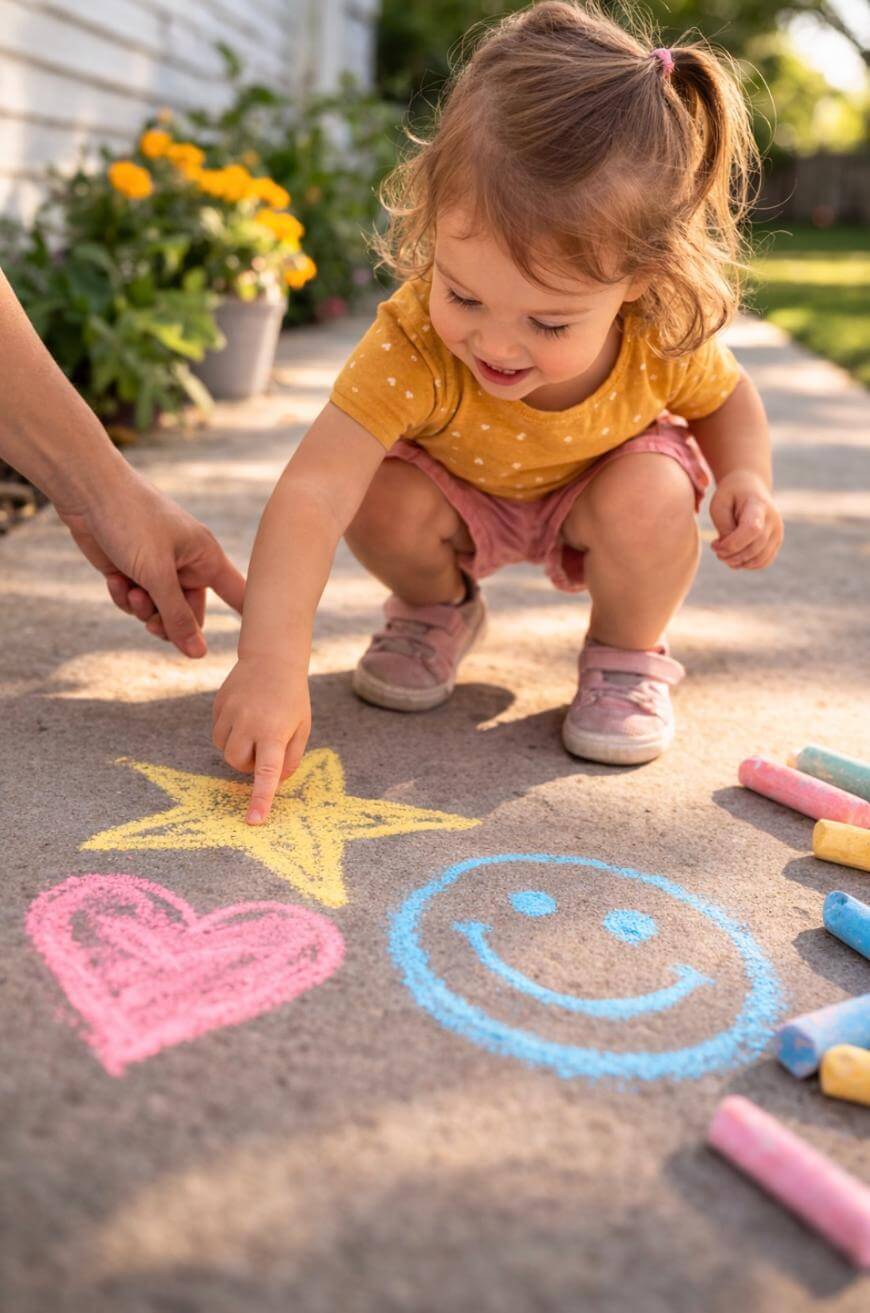
11. Sidewalk Chalk “Find And Touch”
Draw simple icons (star, heart, smiley face) and ask them to touch the one you name.
If they’re not ready for drawings, just use colors and say, “Touch the green spot.”
12. Picnic Snack + Blanket Reset
Put down a blanket outside and have a small snack break as an intentional “reset” activity.
This works best when you set a timer for 10 minutes so it doesn’t become an endless stall.
13. Leaf Pile Toss And Stomp
If it’s fall, make a small leaf pile and let them stomp, toss handfuls, or jump in from one step away.
Keep the pile small and fluffy; toddlers don’t need a giant pile for it to feel magical.
14. “Animal Walk” Parade
Call out animals and copy how they move: waddle like a penguin, hop like a bunny, stomp like a bear.
Pick 3 animals per round so it stays doable and you can repeat the favorites.
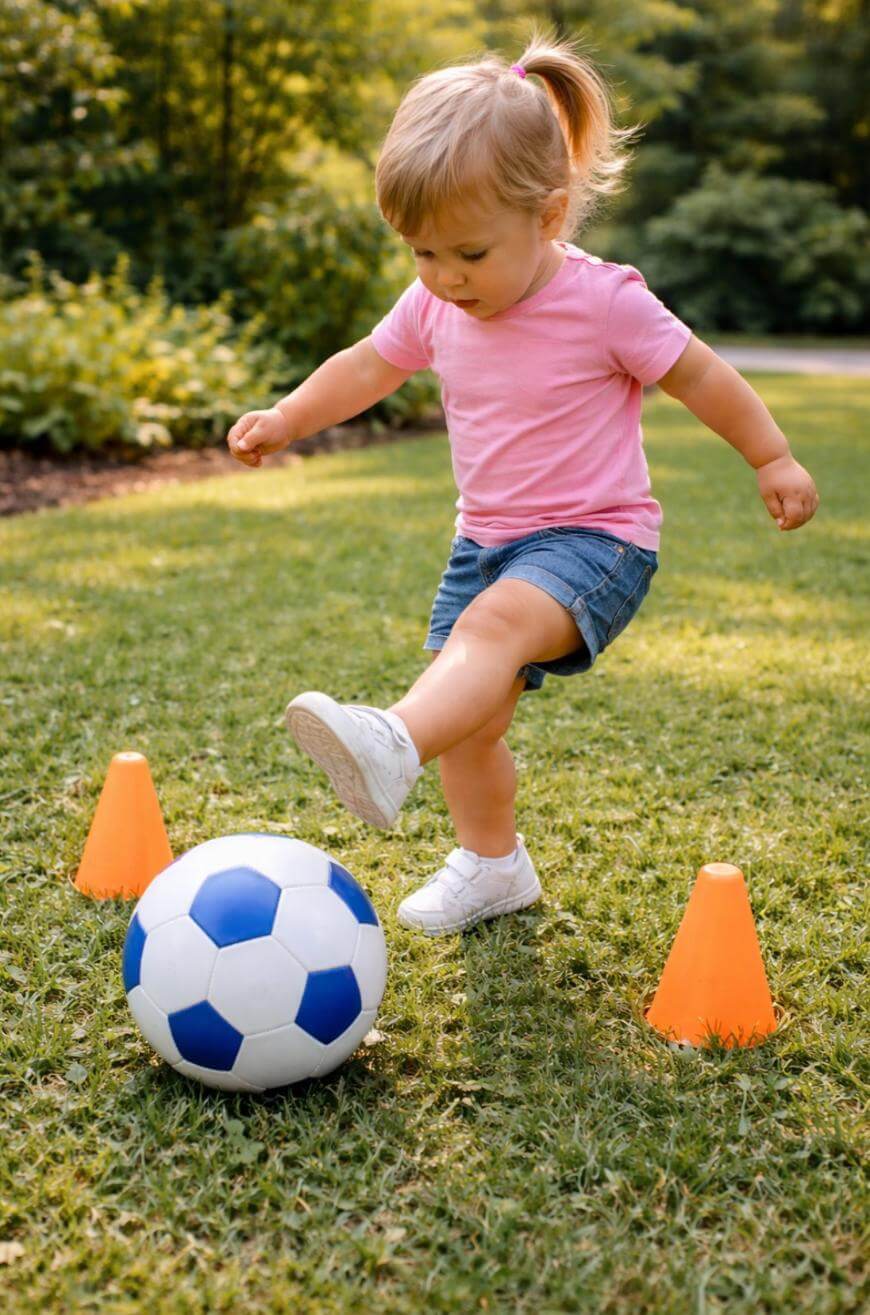
15. Sidewalk Chalk Target Toss
Draw 3 circles on the ground and toss beanbags, soft balls, or rolled socks into each target.
Start close—about 2–3 feet—then step back only when they’re feeling confident.
16. Playground “One Thing” Challenge
At the playground, choose one focus like “slides only” or “climb then slide,” instead of trying everything.
This prevents overwhelm and keeps transitions smoother, especially with toddlers who struggle with leaving.
17. Scavenger Hunt With Pictures
Call out 5 things to spot: a bird, a flower, a truck, a tall tree, a mailbox.
If they can’t find one, you find it together—this is about attention, not testing.
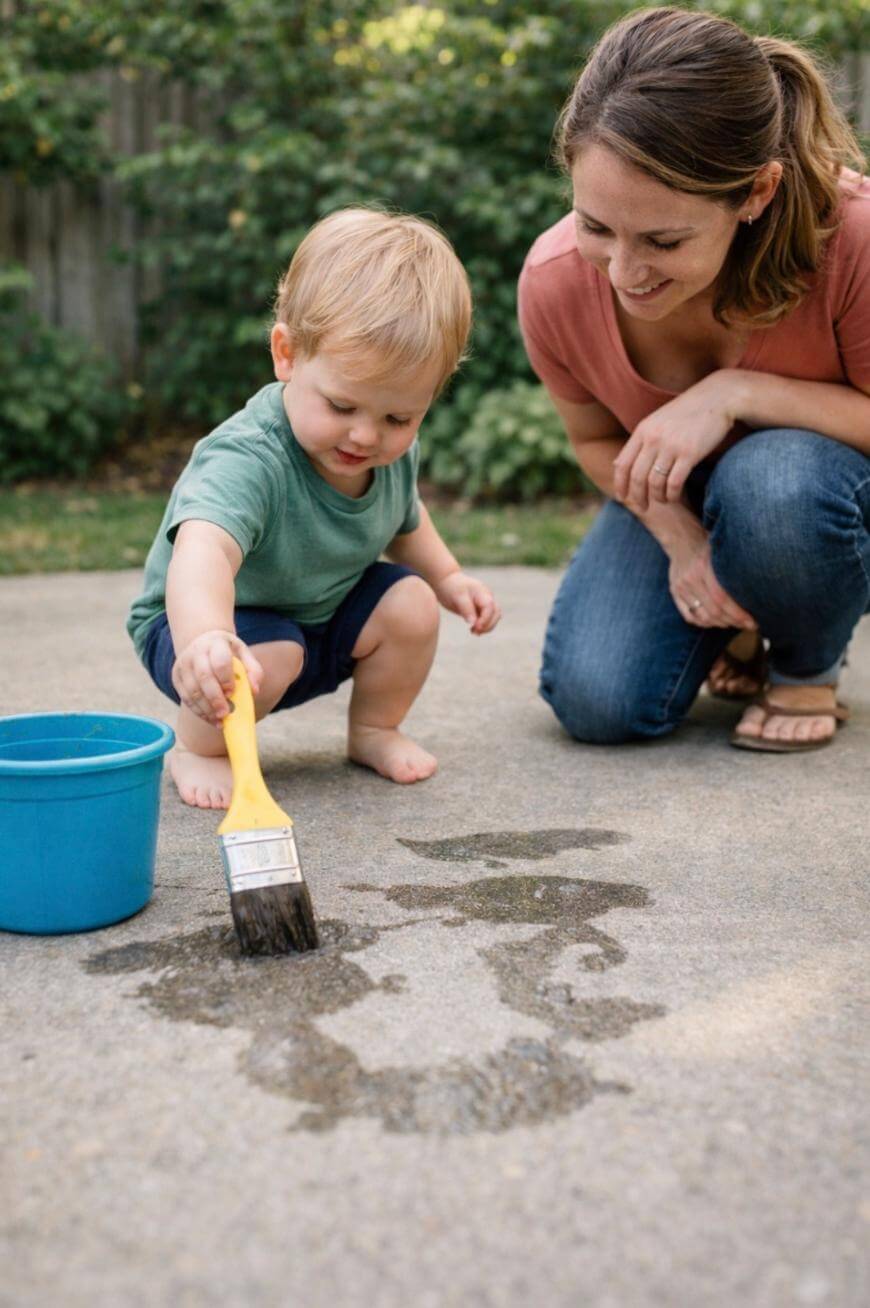
18. Water Brush “Painting” On Concrete
Use a big paintbrush and a cup of water and let them paint the sidewalk; it disappears and they can do it again.
This is a great low-mess alternative to paint and still feels like real art.
19. Stick Collector And “Stick Band”
Let them collect a few short sticks and tap them together like rhythm instruments.
Set one boundary—no swinging near faces—and you’ll keep it fun and safe.
20. Garden Dig Box
Fill a small bin with dirt or sand and give them a scoop, spoon, and a few plastic cups for digging and dumping.
If you don’t want dirt everywhere, place the bin on a towel and keep play to 15 minutes.
21. “Wash The Toys” Tub
Put a shallow tub of soapy water outside and let them wash plastic toys with a sponge.
The win is the “grown-up job” feeling, so narrate it simply: “You’re washing the truck!”
22. Sidewalk Chalk Hop Spots
Draw a line of circles and have them step, hop, or march from one to the next.
For most toddlers, stepping is the right starting move, and hopping comes later.
23. “Follow The Leader” Walk
You lead with silly moves—tiny steps, big steps, tiptoes, backwards steps—and they copy.
Keep it to a short loop and end with a predictable finish like “Now we run to the door!”
24. Outdoor Sensory “Feel And Tell”
Offer 3 textures like grass, bark, smooth rock, and let them touch and say “soft,” “rough,” or “cold.”
Don’t overdo the words; one label per item is plenty for toddlers.
How To Pick The Right Outdoor Activity Fast
25. Match The Activity To Their Energy Level
Choose water, chalk, or sensory play when they’re tired, and choose chase games or obstacle paths when they’re wired.
A simple rule is to alternate “big body” and “small hands” activities every 15–30 minutes.
26. Use A Time Box So You End On A Win
Toddlers do better with short sessions, so set a timer for 10–20 minutes and stop while it’s still going well.
If they beg for more, give a second short round instead of turning it into a drawn-out battle.
27. Keep The Setup Under 2 Minutes
If the setup takes too long, the activity becomes your job, not their play.
Pick options you can start with one item—chalk, a ball, bubbles, a cup of water—and add more only if needed.
Common Mistakes To Avoid With Toddlers Outside
28. Offering Too Many Choices At Once
Giving five options often leads to indecision or meltdowns, even with fun activities.
Offer two choices: “Chalk or bubbles?” and you’ll usually get a quicker yes.
29. Expecting Sharing Skills Before They’re Ready
Outdoor toys can trigger big feelings, especially at parks.
Bring duplicates when you can (two balls, two trucks) and narrate simple turns without lectures.
30. Pushing Past Hunger Or Heat
Most outdoor play problems are actually snack, water, or weather problems.
A practical baseline is water every 20–30 minutes and shade breaks when the sun feels intense.
Key Takeaways
Toddlers do best with simple outdoor play they can repeat often.
Aim for 10–20 minute activity blocks and rotate between movement and sensory play.
Keep setups under 2 minutes so you spend more time playing than prepping.
Use chalk, water, bubbles, and balls as your reliable “always works” basics.
Offer two choices to reduce overwhelm and power struggles.
Bring duplicates to parks when possible to prevent sharing meltdowns.
FAQ
What if your toddler gets bored after 5 minutes?
That’s normal, so switch to a new activity quickly and keep the next one even simpler. Two short rounds often work better than one long one.
Do you need special equipment for toddler outdoor play?
No, you can do most activities with chalk, a ball, a bucket, and a few household containers. Repetition matters more than new gear.
How long should a toddler play outside each day?
A practical target is 30–90 minutes total, split into small chunks. Weather, naps, and mood matter more than hitting a perfect number.
What’s the safest way to do water play outdoors?
Use shallow water only and stay within arm’s reach the entire time. Keep the play area on grass or a towel to reduce slipping.



Leave a Reply