Last updated: August 3, 2026
If you’re drowning in tiny onesies, mismatched socks, and a pile of blankets you can’t seem to wrangle, we’ve got you covered. This guide walks you through everything you need to know about baby closet organization, so you can stop searching for the right size at 2 a.m. and actually find what you need fast.
Why Baby Closet Organization Matters More Than You Think
A well-organized baby closet isn’t just about aesthetics—it’s about saving your sanity during some of the most exhausting months of your life. When you can grab a clean sleeper in seconds during a midnight diaper change, it genuinely makes a difference in how you feel.
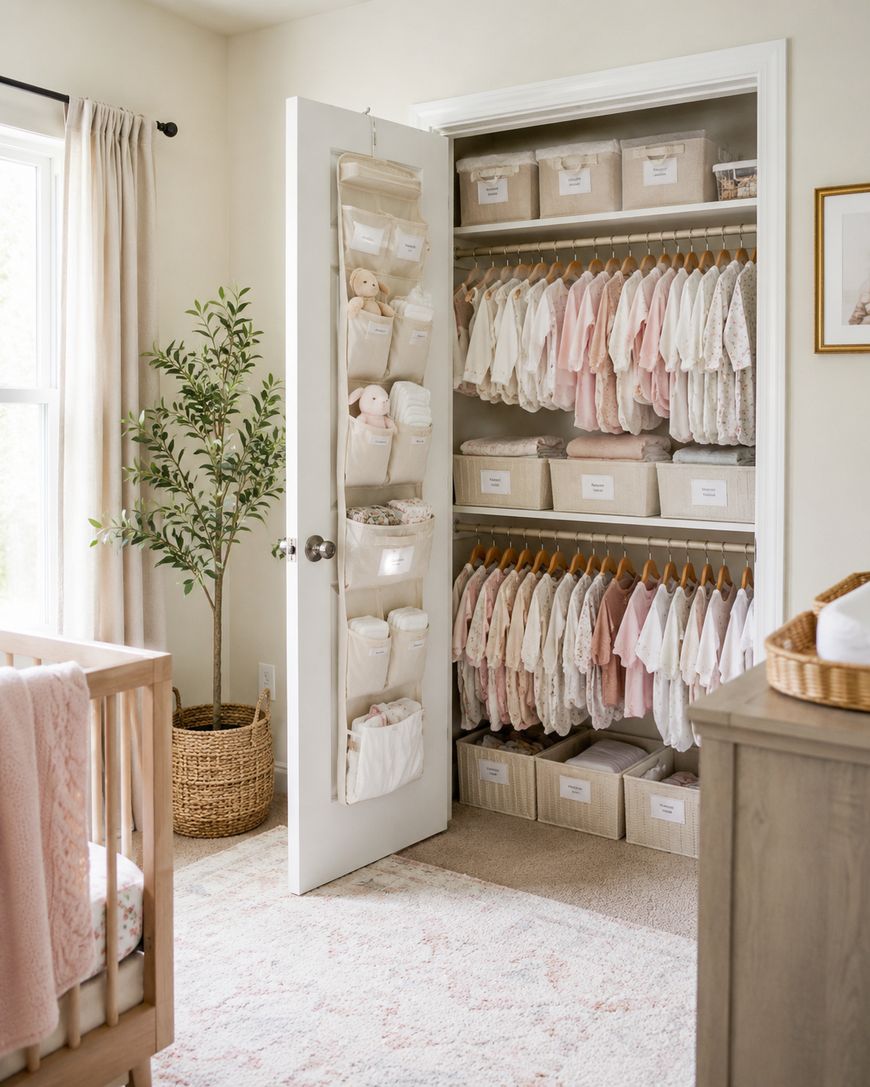
Babies go through multiple outfit changes daily, and without a solid system, the closet becomes a black hole where nothing can be found and everything gets wrinkled. A thoughtful setup means less laundry confusion, fewer lost socks, and a calmer start to each day.
Beyond the practical side, an organized nursery closet helps you keep track of what your baby actually has. You’ll know when you’re running low on size 3-6 month sleepers or when the winter hats have mysteriously disappeared, so you can shop intentionally instead of impulse-buying duplicates.
Start with a Closet Audit Before You Organize Anything
Before you buy a single bin or add another hanger, take everything out of the closet and start fresh. This step is non-negotiable if you want your baby closet organization system to actually stick.
Sort items into categories: clothing by size, clothing by season, gear, feeding supplies, extra bedding, and anything else that’s ended up in there. As you sort, set aside items your baby has already outgrown—boxing those up immediately frees up prime real estate for what you actually need right now.
Check expiration dates on any stored items like formula or medications, and donate anything that’s in great condition but clearly won’t get used. Once you know exactly what you’re working with, you can plan your storage layout around your real needs rather than guessing.
The Best Baby Closet Organization Systems by Closet Type
Not every nursery comes with a generous walk-in closet, and that’s okay. The trick is matching your organization system to the space you actually have.
Reach-In Closets
For a standard reach-in closet, double hanging rods are your best friend. Baby clothes are tiny, which means a single rod wastes half the vertical space. Adding a second rod at a lower height effectively doubles your hanging capacity without spending much at all.
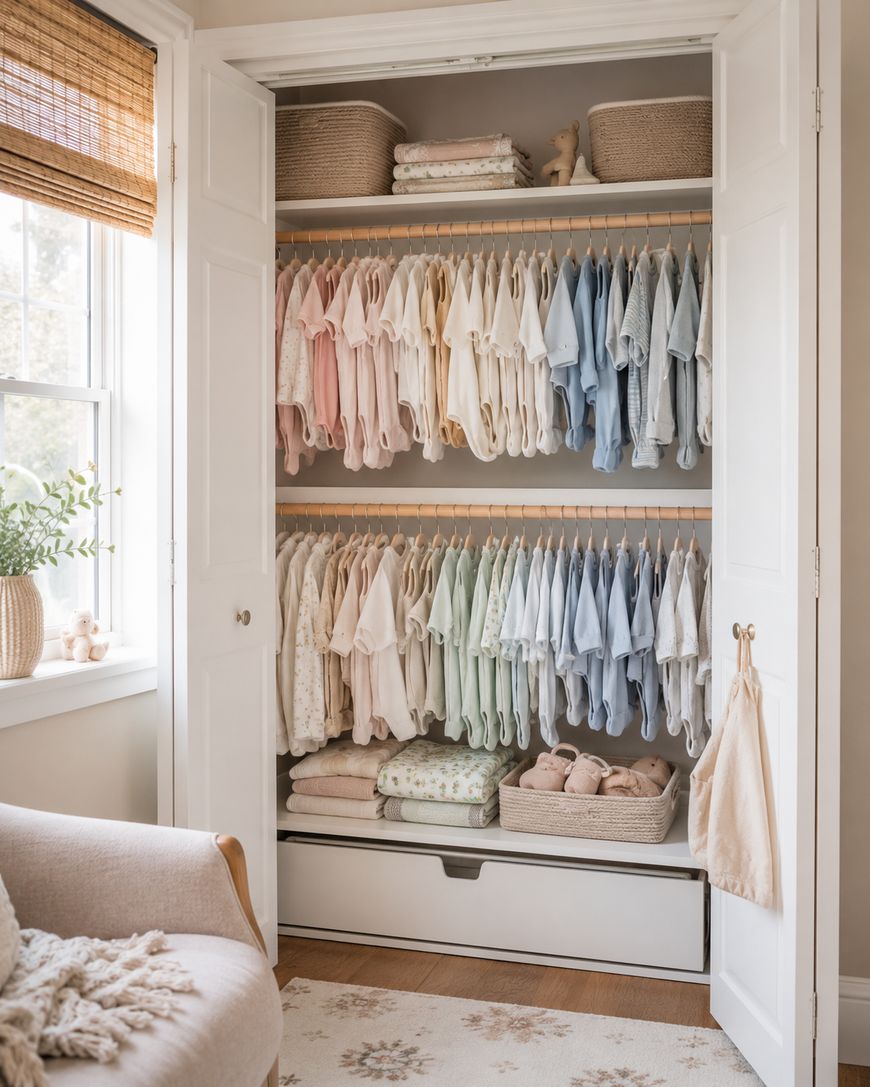
Use slim velvet hangers to keep things from slipping and to maximize how many items fit on each rod. Reserve the top rod for items you need less frequently—special occasion outfits, seasonal pieces, or the next size up that isn’t in rotation yet.
Small or Shallow Closets
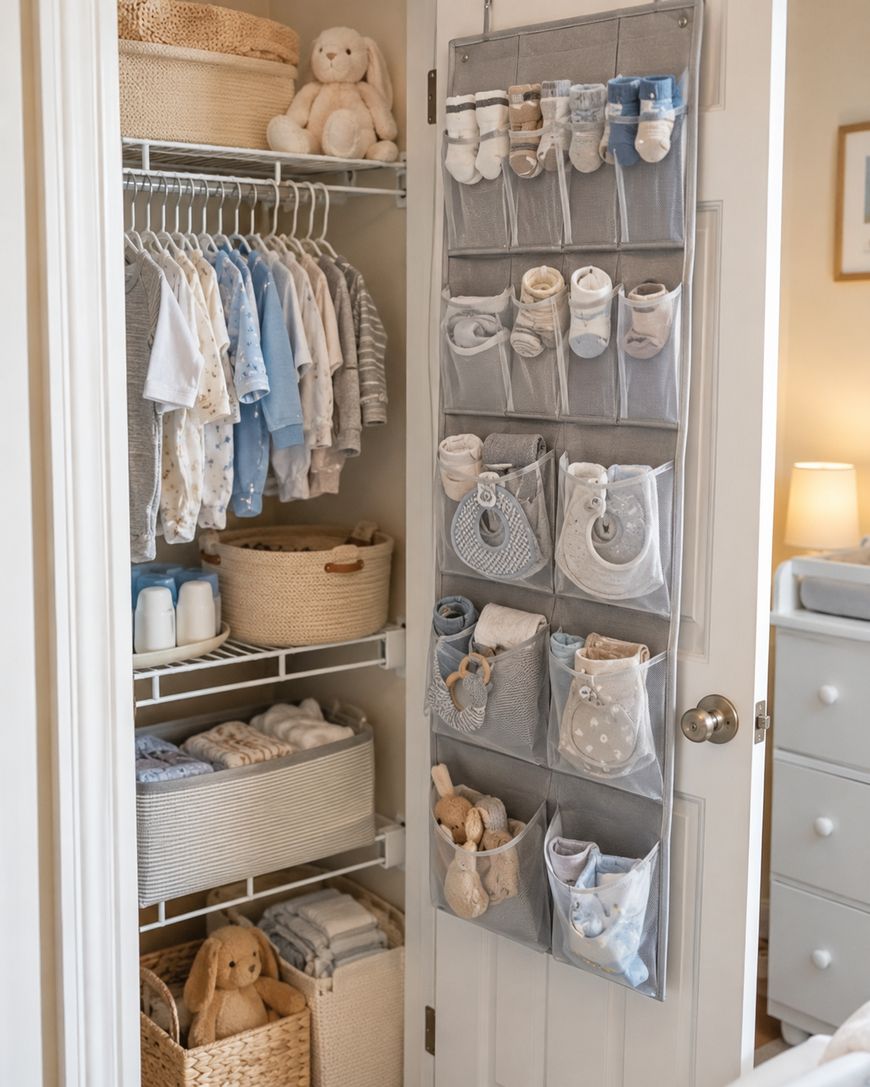
When you’re working with minimal depth, go vertical. Stackable bins on shelves, over-the-door organizers, and wall-mounted hooks all use space that would otherwise go to waste.
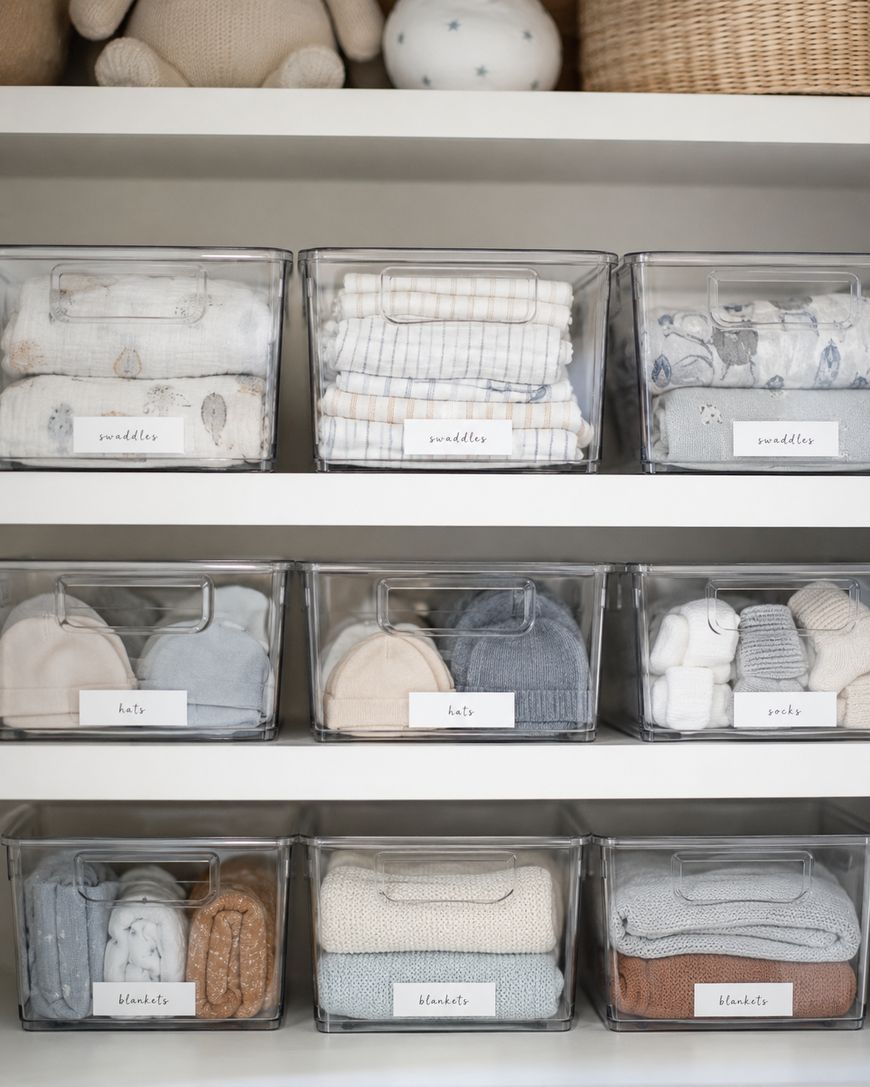
Clear stackable bins work especially well in shallow closets because you can see the contents at a glance without pulling everything out. Label each bin by category—swaddles, bibs, socks, hats—and you’ll always know where things belong.
Walk-In Nursery Closets
If you’re lucky enough to have a walk-in, resist the urge to fill every inch immediately. Leave breathing room for growth, because babies accumulate things faster than you’d expect.
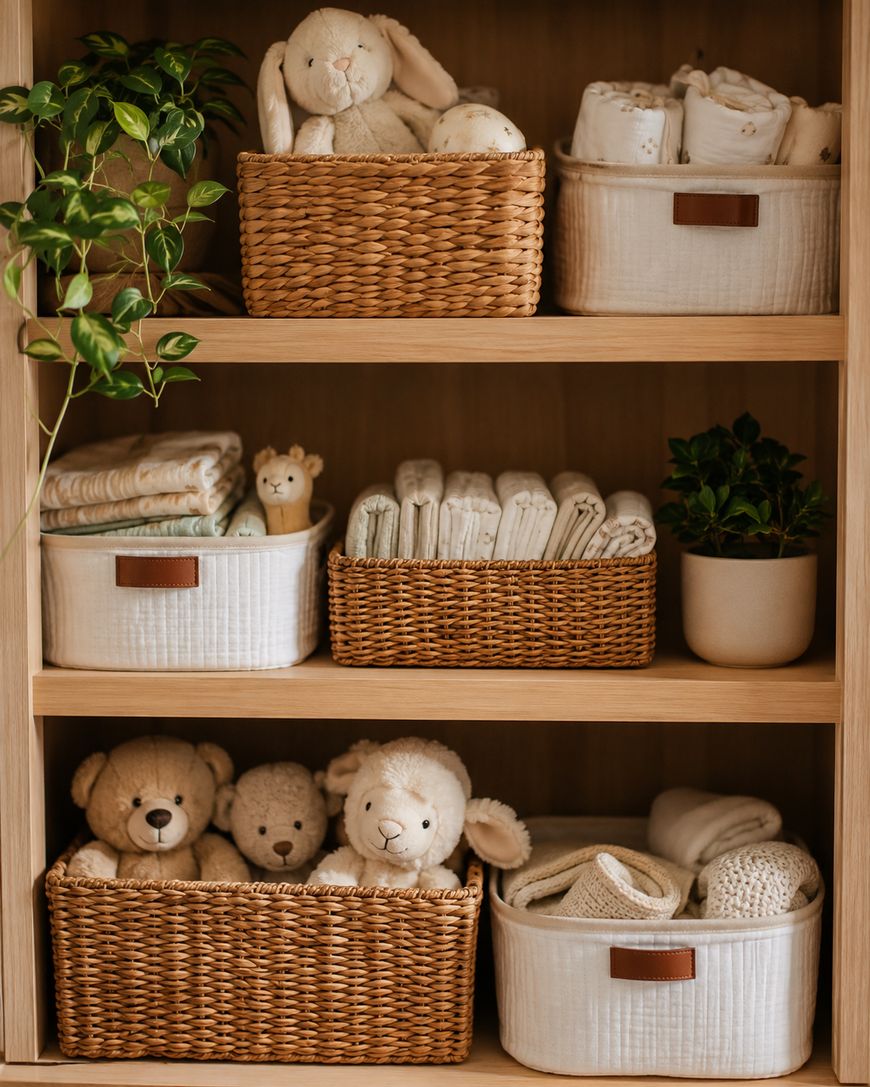
Dedicate one section to current size clothing, one section to the next size up, and use the back or a high shelf for seasonal or special items. A rolling cart or small dresser inside the closet can handle folded items like onesies and pajamas without taking up any bedroom floor space.
How to Organize Baby Clothes by Size and Season
One of the most common baby closet organization mistakes is mixing sizes. When you’re sleep-deprived and running late, the last thing you need is to pull out a 6-month outfit only to realize your baby is still solidly in newborn sizes.
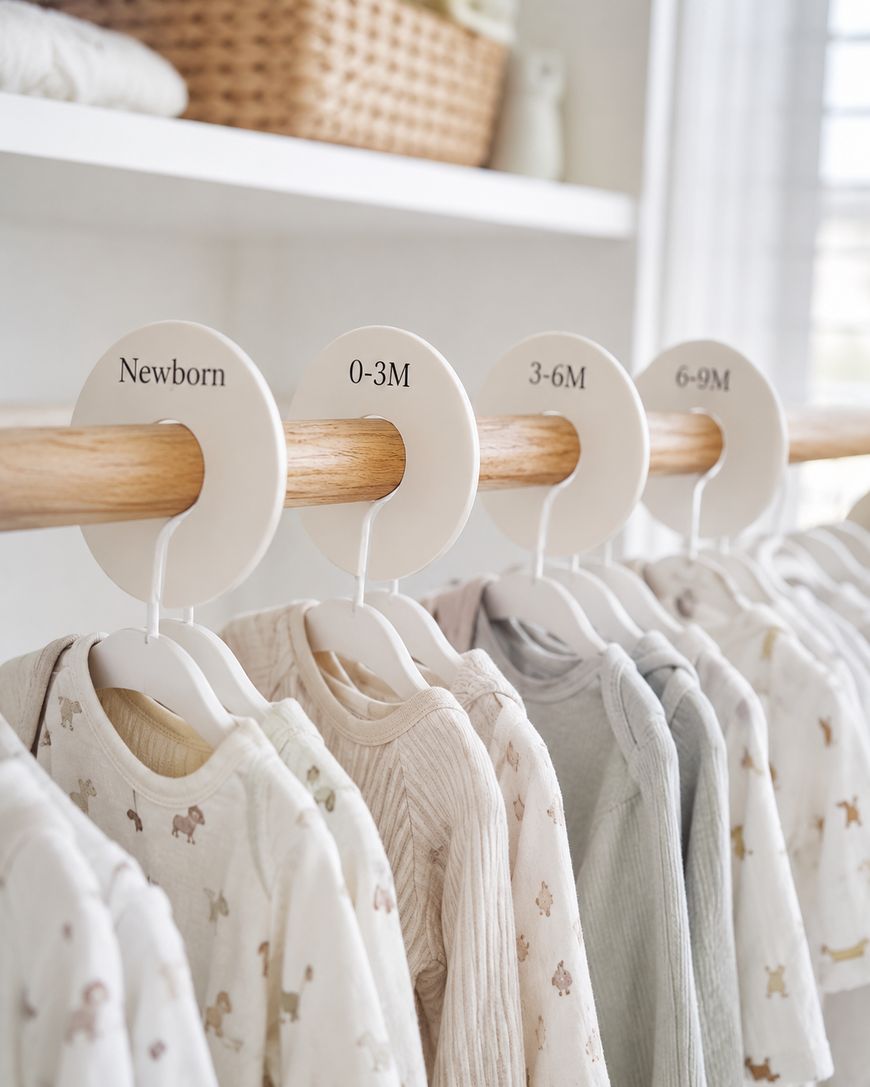
Use labeled dividers on your hanging rods to separate each size category clearly. You can find closet dividers specifically designed for baby clothes, or make your own with cardboard circles and a marker. The investment of five minutes to set these up saves hours of frustration over the months ahead.
For seasonal organization, keep current-season items at the front of the closet within easy reach. Off-season clothing can go in a labeled storage bin on the top shelf or under the crib—just make sure it’s clearly marked with both the size and season so future you will actually know what’s inside.
When your baby grows out of a size, box it up right away rather than letting it linger in the closet. Keeping outgrown clothes mixed in with current ones makes everything harder to navigate. If you plan to save items for a future baby, label boxes clearly and store them somewhere accessible but out of the way.
The Best Storage Bins and Baskets for a Baby Closet
Bins and baskets do the heavy lifting in any baby closet organization setup, and choosing the right ones makes a real difference. The general rule is: use clear bins where you need to see contents quickly, and use decorative baskets for items you access less often or that sit out in the open.
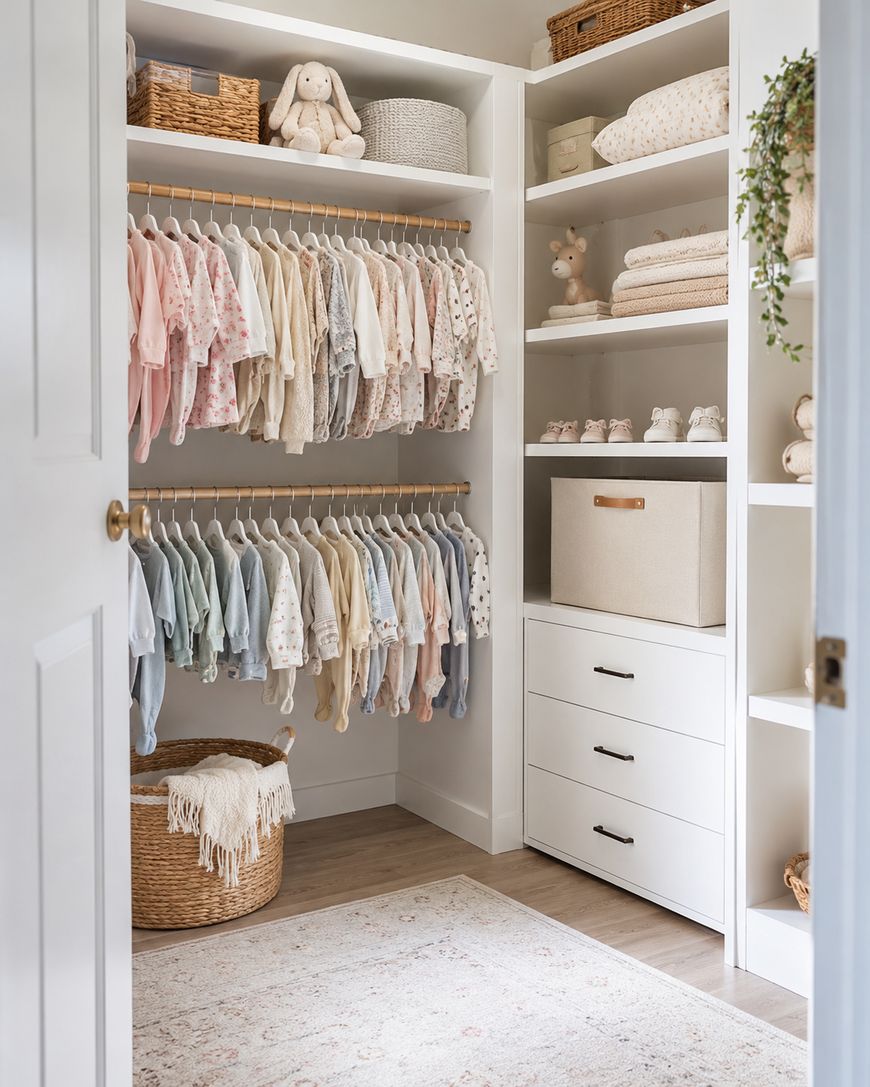
Clear stackable bins are ideal for the closet shelf because you can identify what’s inside at a glance. Look for bins with lids to keep dust off stored items, and make sure they stack securely so nothing topples over in the middle of the night.
Fabric bins and baskets work beautifully for softer items like extra blankets, swaddles, and stuffed animals. They’re also easier to grab quickly since you don’t have to deal with a lid. Choose a color or pattern that works with your nursery’s aesthetic so the closet feels cohesive even when the door is open.
Wicker or rattan baskets add warmth and texture while keeping things tidy on open shelves. Use them for items like burp cloths, washcloths, or small accessories that would otherwise get lost in larger containers.
Organizing Baby Gear and Accessories in the Closet
Clothing is only part of the equation—baby gear and accessories can quickly take over if you don’t have a plan. Diaper bag essentials, extra pacifiers, nail clippers, thermometers, and hair accessories all need a home.
A small drawer unit or rolling cart inside the closet is perfect for tiny accessories. Designate one drawer for health and grooming items, one for feeding accessories, and one for miscellaneous baby gear. This way, everything has a specific spot and you’re not digging through a junk drawer at midnight.
Over-the-door organizers with pockets are another great option for accessories. They hang on the back of the closet door and keep small items visible and accessible without taking up any shelf space. Use them for diapers, wipes packs, socks, hair ties, and all those little items that tend to disappear.
For larger gear like a baby monitor, extra cords, or instruction manuals, a dedicated bin on the top shelf works well. Keep it labeled and resist the urge to use it as a general catch-all—once a bin becomes the “everything else” spot, it defeats the purpose entirely.
Maintaining Your Baby Closet Organization System
The best baby closet organization system is one you can actually maintain through the fog of new parenthood. That means building in regular reset moments rather than waiting until everything is chaos.
Do a quick five-minute tidy of the closet once a week—return any items that have drifted from their spot, check if anything needs to be restocked, and peek at whether it’s time to size up. This small habit prevents the slow slide back into disorder that happens when organization is treated as a one-time project rather than an ongoing practice.
Every time your baby moves into a new size, treat it as a mini-audit. Pull out everything in the old size, box it up or donate it, and rotate in the new size from your stored collection. This transition moment is also a great time to reassess whether your current system is working or if anything needs to be adjusted.
As your baby grows, their storage needs will change. A newborn needs primarily tiny clothing, swaddles, and feeding supplies. By the time they’re a toddler, shoes, hats, and more varied clothing take over. Give yourself permission to evolve the system as your child does.
Q&A: Baby Closet Organization Questions Answered
How do I organize a baby closet with very little space?
Start by doubling your hanging rod and going vertical with stackable bins on shelves. An over-the-door organizer on the back of the closet door can hold a surprising number of small items without using any shelf space at all.
What is the best way to organize baby clothes by size?
Use closet dividers labeled by size range to separate hanging clothes, and store the next size up in a clearly labeled bin toward the back of the closet or on the top shelf. When your baby grows into a new size, move those items to the front so they’re always within easy reach.
Should I use open bins or bins with lids in a baby closet?
Use lids for items you store long-term or rotate seasonally, since lids keep dust and pests out. For everyday items you reach for constantly, open bins are more practical—you can grab what you need without fumbling with a lid at 3 a.m.
How often should I reorganize the baby closet?
A quick weekly reset of five minutes or less keeps things from spiraling. A more thorough reorganization makes sense every time your baby moves into a new clothing size, which in the early months can feel like every few weeks.
What should I keep in the baby closet versus a dresser?
Hang items that wrinkle easily—special outfits, rompers, pants—and fold items that don’t, like onesies, sleepers, socks, and bibs. Keep everyday basics in a dresser for fast access and reserve the closet for the fuller wardrobe and stored items.
How do I keep baby socks organized?
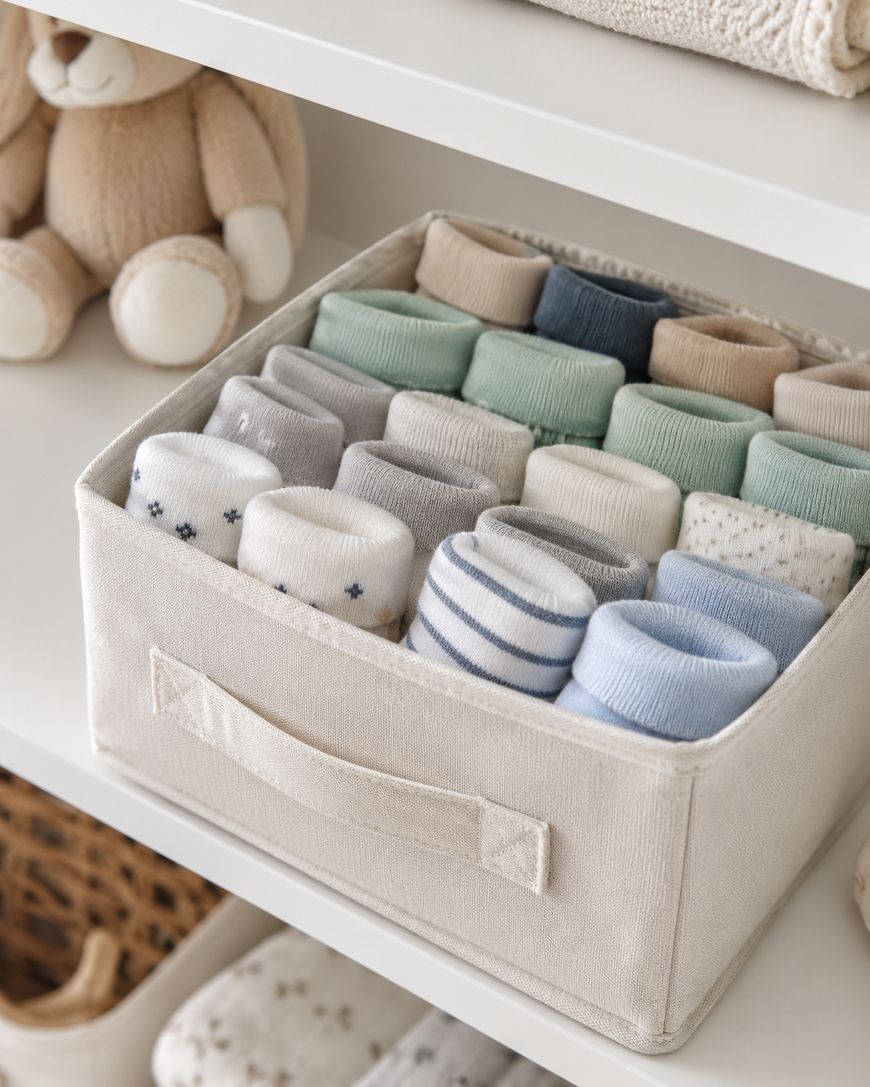
A small open bin or a divided organizer specifically for socks is the most practical approach. Fold pairs together before putting them away, and keep only the current size in the closet—store next-size socks with other next-size clothing so they don’t get mixed in.
Your Organized Nursery Starts Today
Baby closet organization doesn’t have to be complicated or expensive. Start with what you have, clear out what you don’t need, and build a system around your real daily routine.
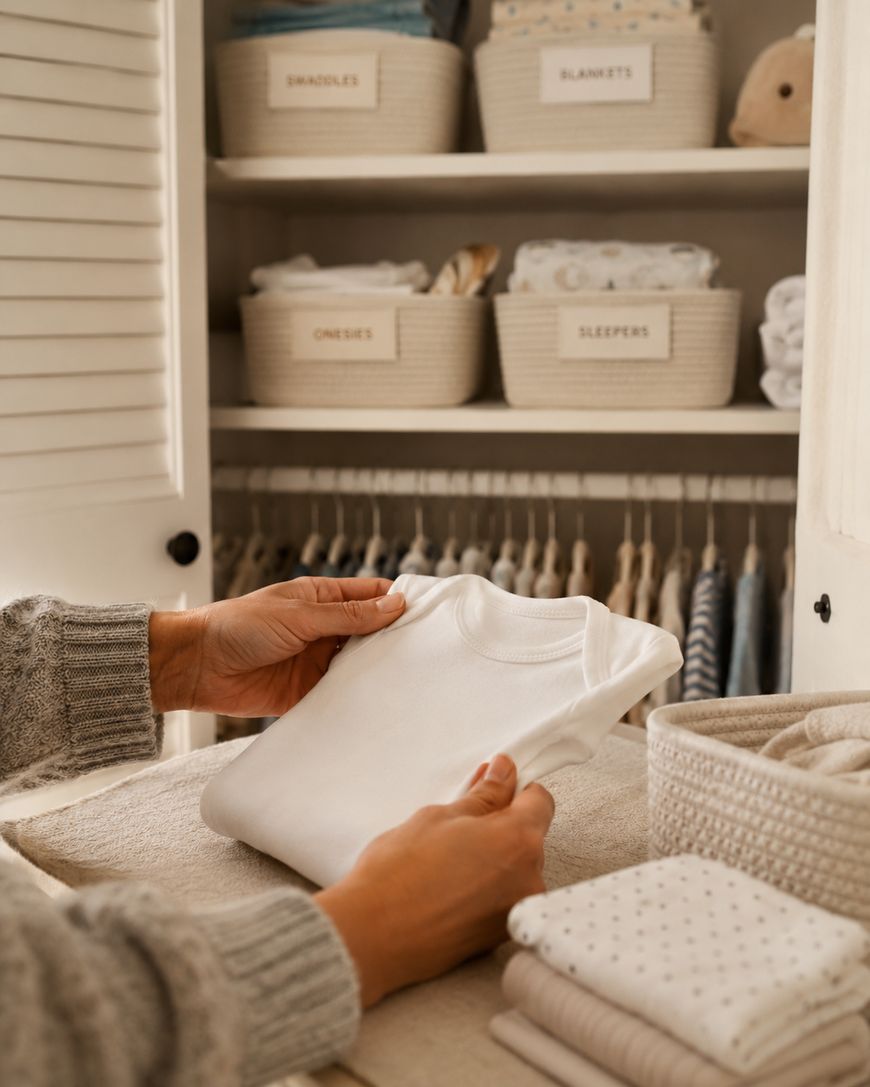
Whether you’re working with a tiny reach-in closet or a spacious walk-in, the principles of baby closet organization stay the same: categorize, label, keep current items accessible, and build in a simple maintenance habit. Your future sleep-deprived self will thank you every single time you reach into that closet and find exactly what you need.
Pick one section to tackle today—even just sorting by size or adding a second hanging rod—and build from there. Small steps add up fast, and a calm, functional nursery closet is absolutely within reach.



Leave a Reply