Last updated: August 3, 2026
You are staring at a closet stuffed with tiny clothes and wondering where to even start.
Below you will find toddler closet organization ideas that work in real life, not just in photos.
We will walk through the setup, the products worth buying, and the small tricks that make mornings easier for you and your toddler.
Start With a Full Closet Reset
Before you organize anything, you need to empty the closet completely.
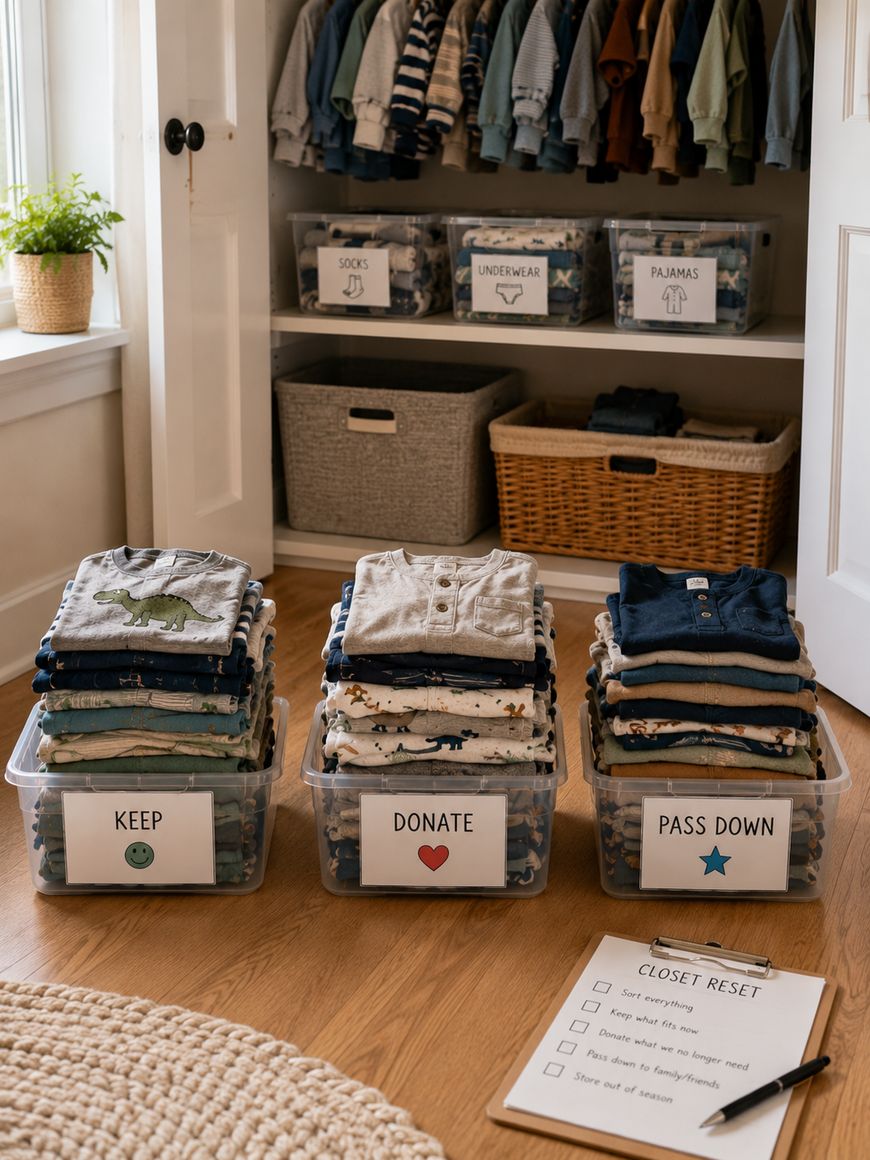
Pull every item out and sort into three piles: keep, donate, and pass down to a sibling or friend.
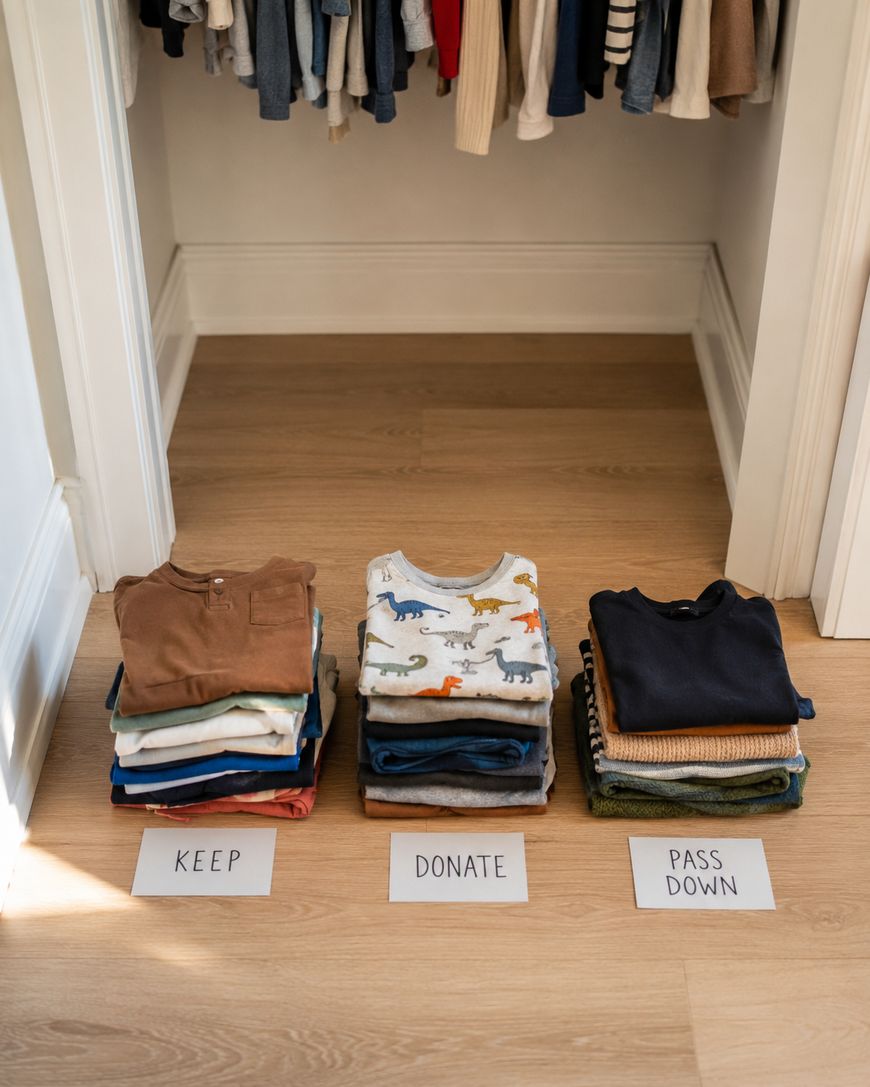
You will likely find clothes that no longer fit, tags that were never removed, and duplicates you forgot you owned.
This is also the moment to check for stains or damage, since a torn shirt does not deserve a spot back in the closet.
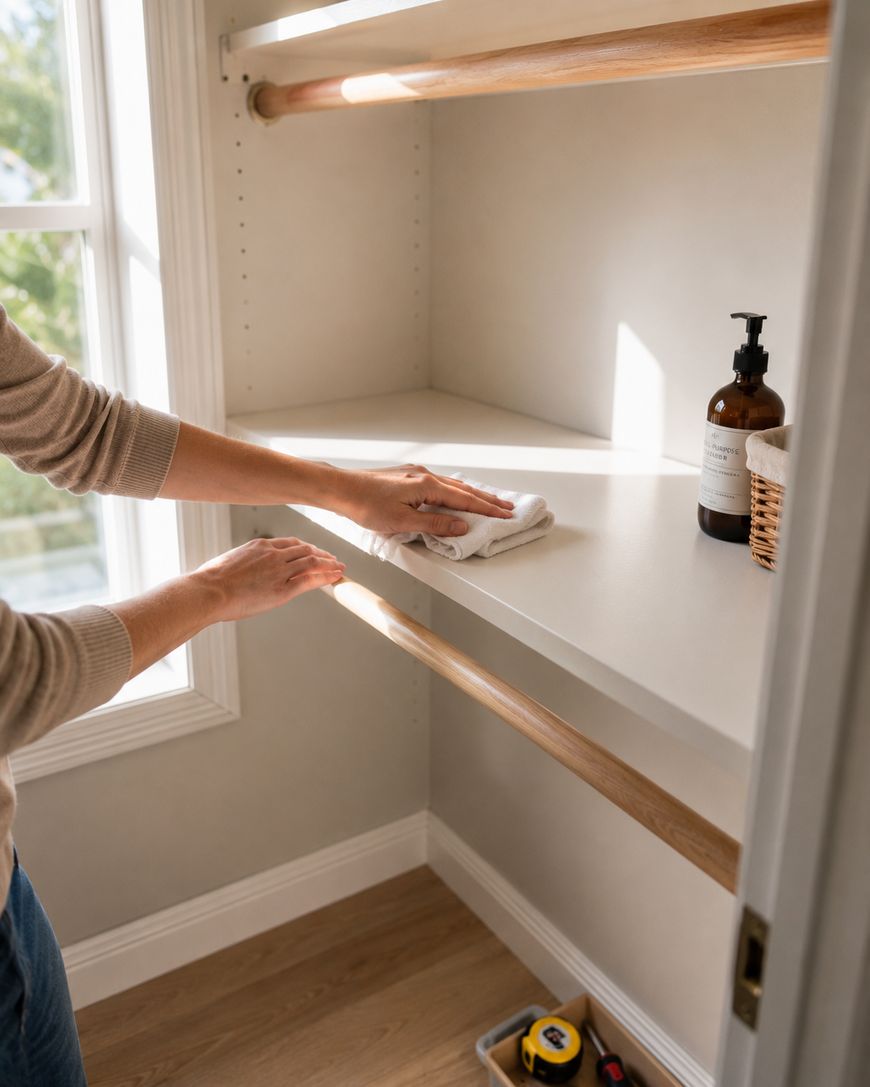
Once the closet is empty, wipe down the shelves and rod before anything goes back in.
A clean slate helps you see the actual space you are working with, rather than guessing around piles of clothes.
We recommend doing this reset every season, since toddlers grow out of sizes faster than most adults expect.
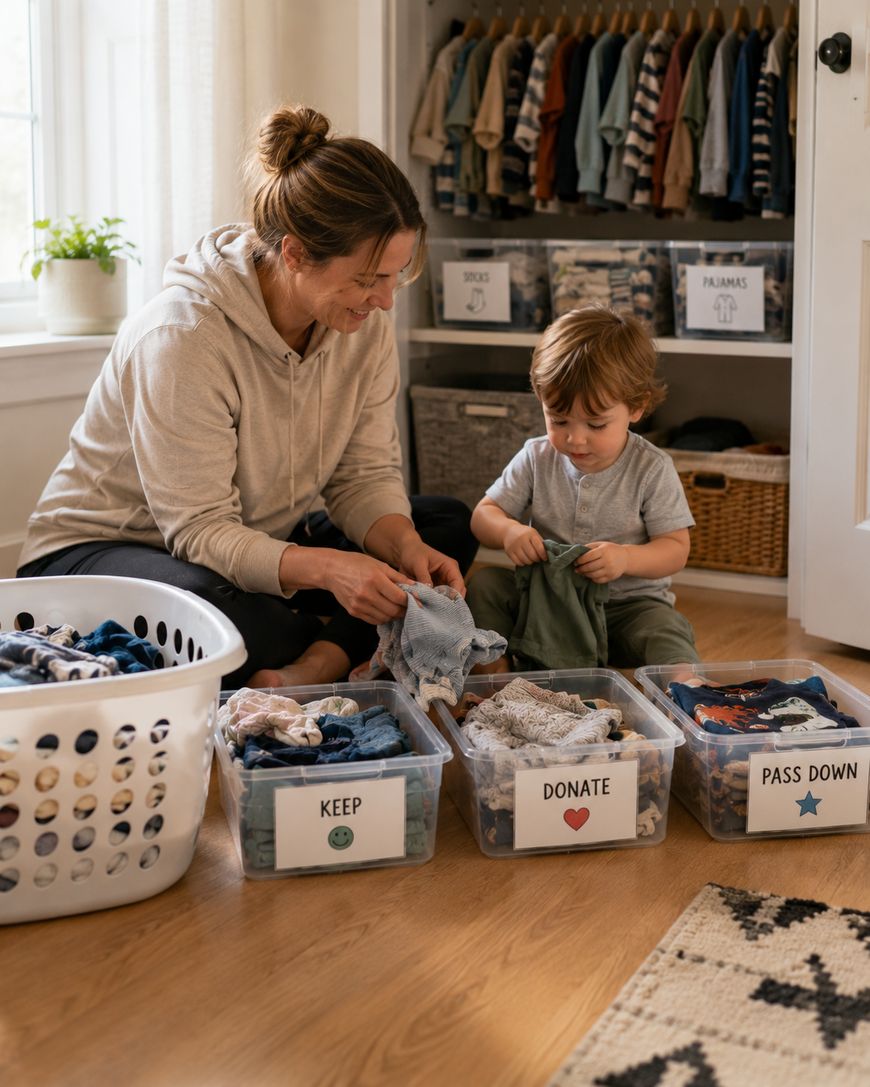
Set aside twenty minutes and put on a podcast, because this part goes faster than you think once the pile is sorted.
By the end of this step, you should have a clear closet and a much smaller pile of clothes that actually belong in it.
That smaller pile is what you will organize in the next steps, and it makes every following step easier.
Lower the Rod So Your Toddler Can Reach
One of the most useful toddler closet organization ideas is also the simplest: lower the closet rod.
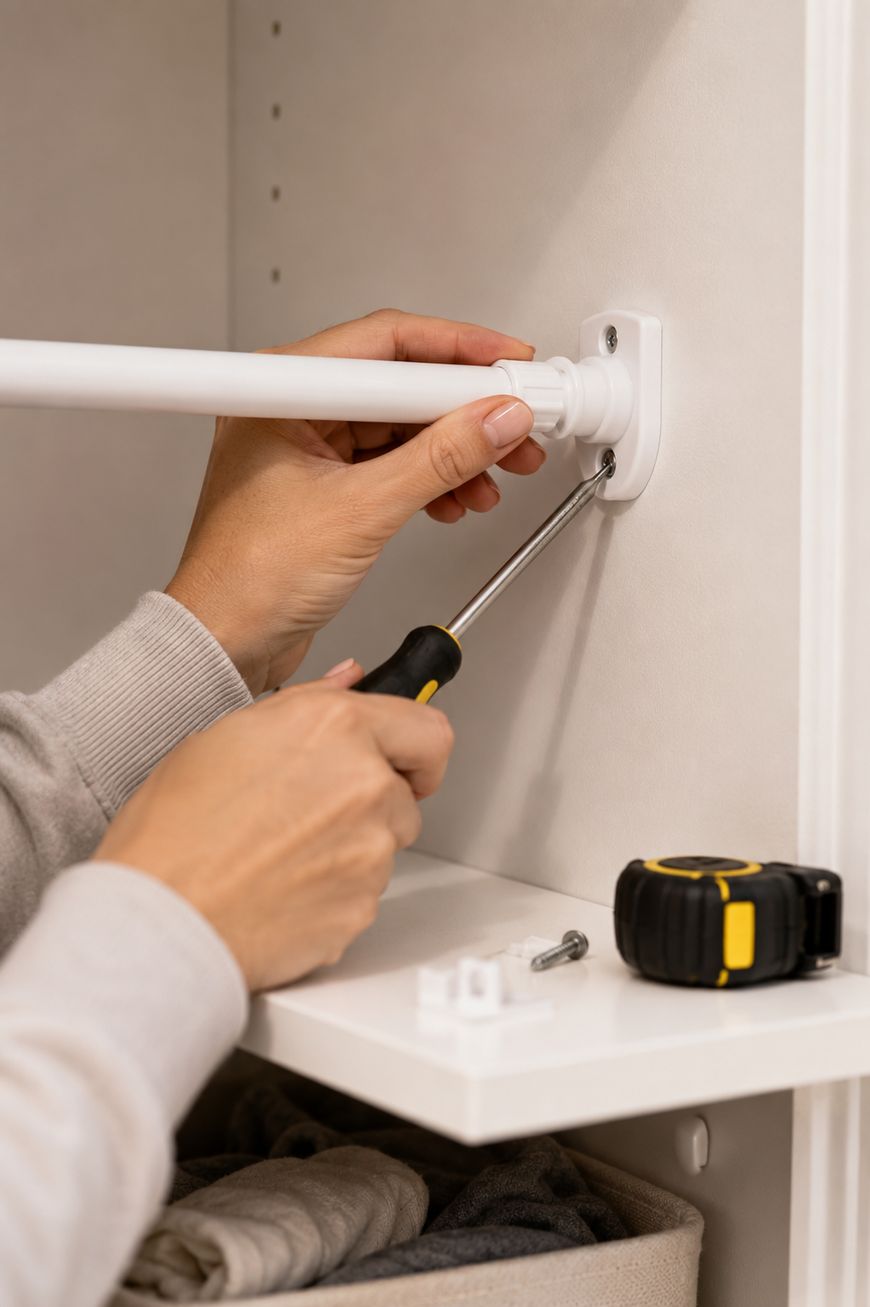
Most closets are built for adult heights, which means your toddler can never see or reach their own clothes.
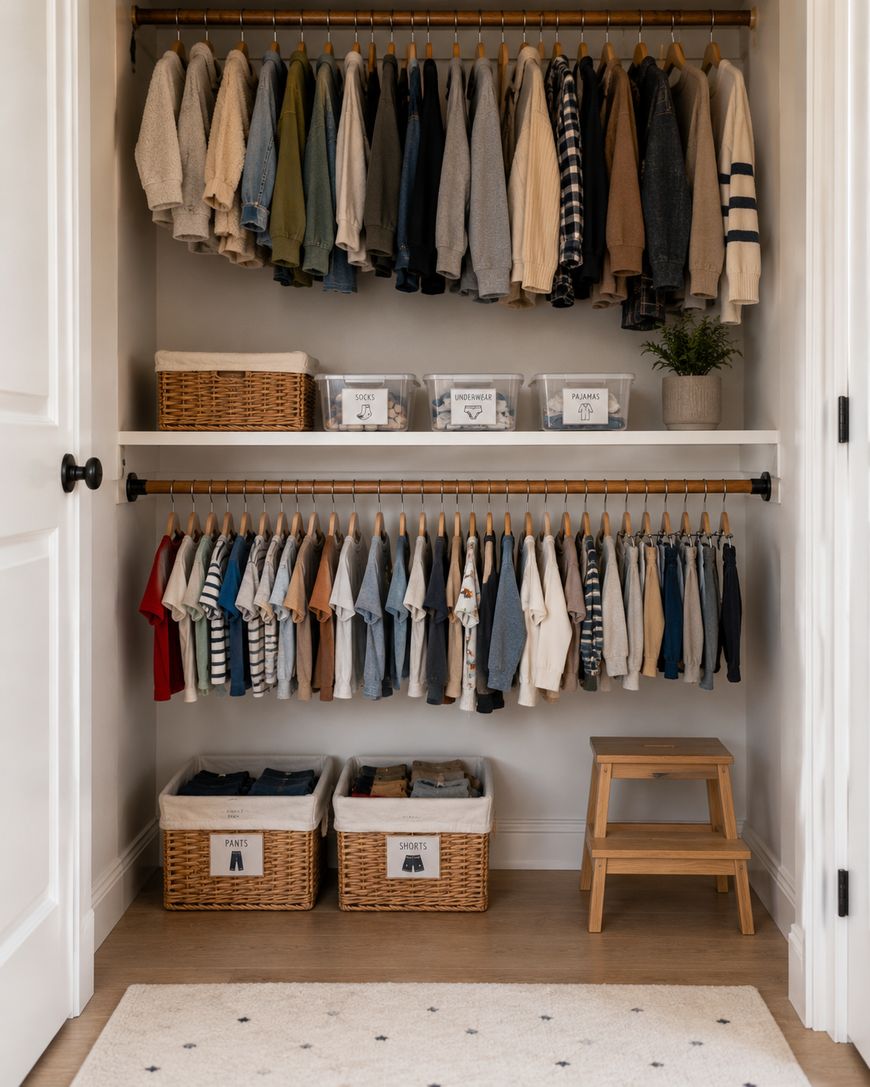
A double hang rod system, with one rod lowered to toddler height, lets your child start choosing their own outfits.
This small change builds independence and cuts down on the morning scramble where you are picking out clothes while also making breakfast.
You can install a simple tension rod or a permanent bracket rod, depending on how much you want to commit to the space.
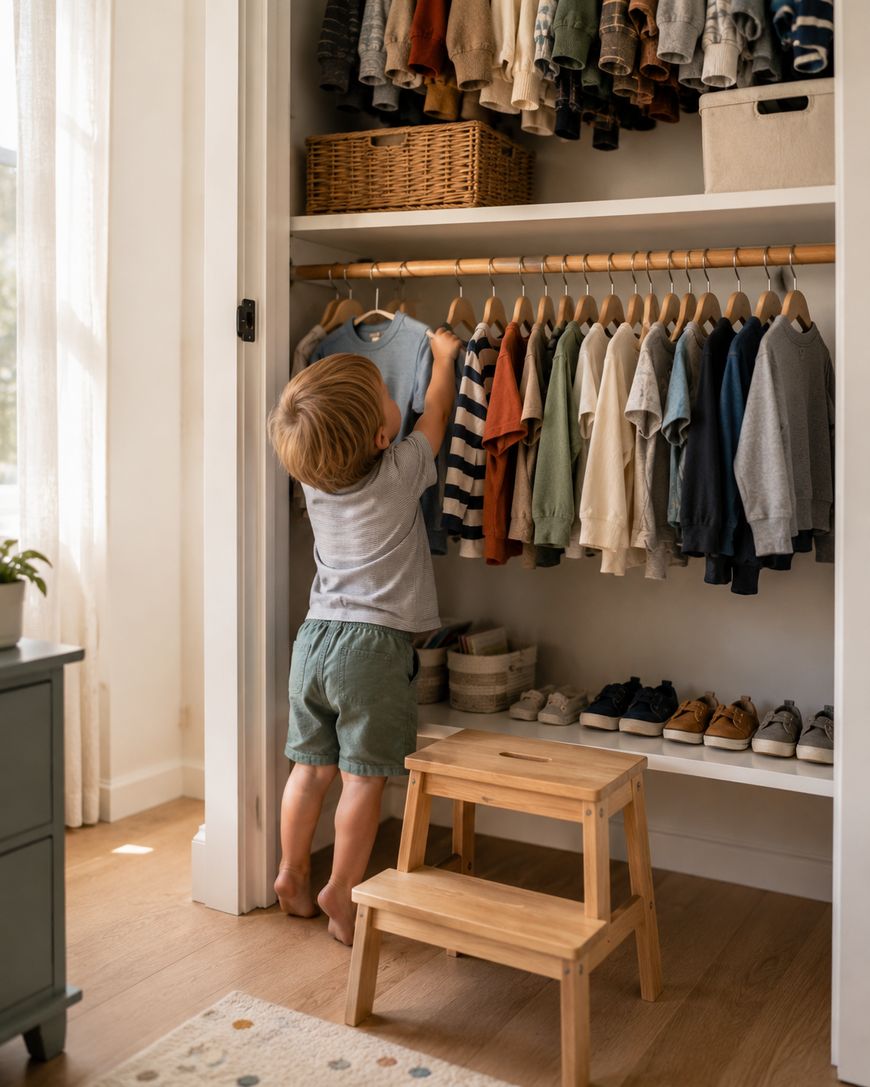
Hang everyday items like t-shirts, leggings, and light jackets on this lower rod.
Save the upper rod or a high shelf for out-of-season clothes, formal outfits, or anything your toddler does not need daily access to.
Pair the lower rod with a step stool nearby, so your toddler can also reach the shelf above if needed.
Once this is in place, you will notice your toddler wanting to pick their own clothes, even if the outfit is a little mismatched.
That is a good sign. It means the system is working the way it should.
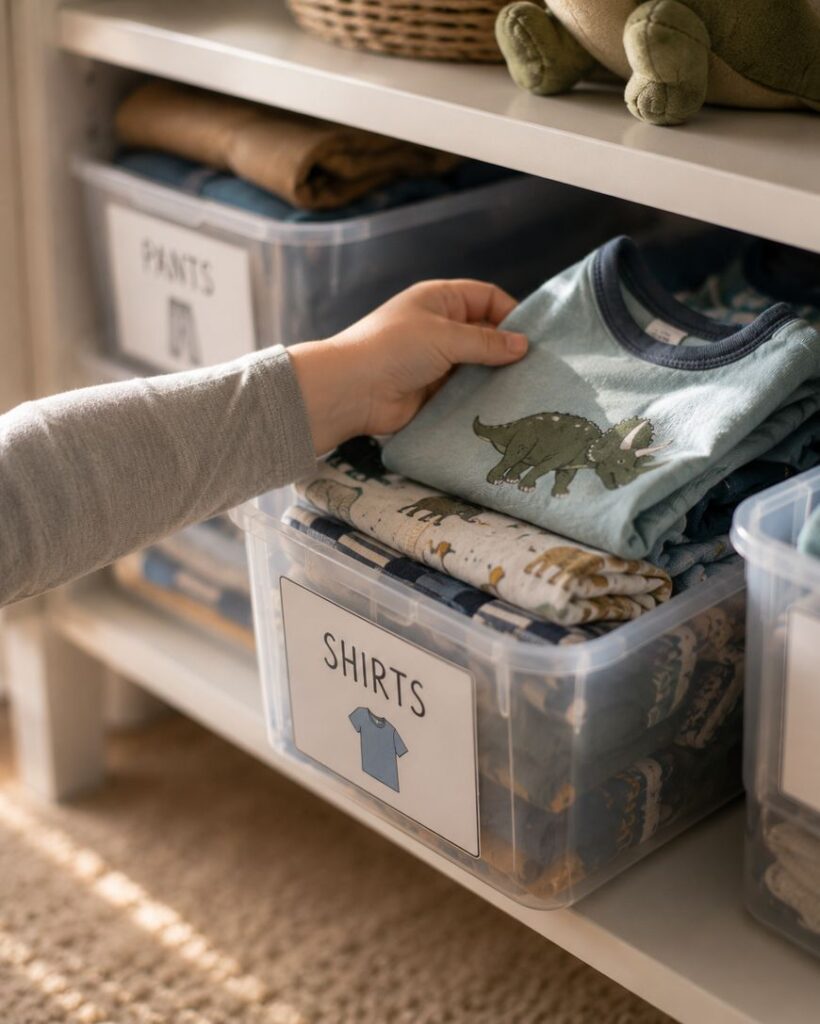
Use Bins and Baskets for Everything Else
Bins solve the problem of loose items that never had a real home before.
Socks, underwear, hair accessories, and pajamas all do better in labeled bins than folded on a shelf.
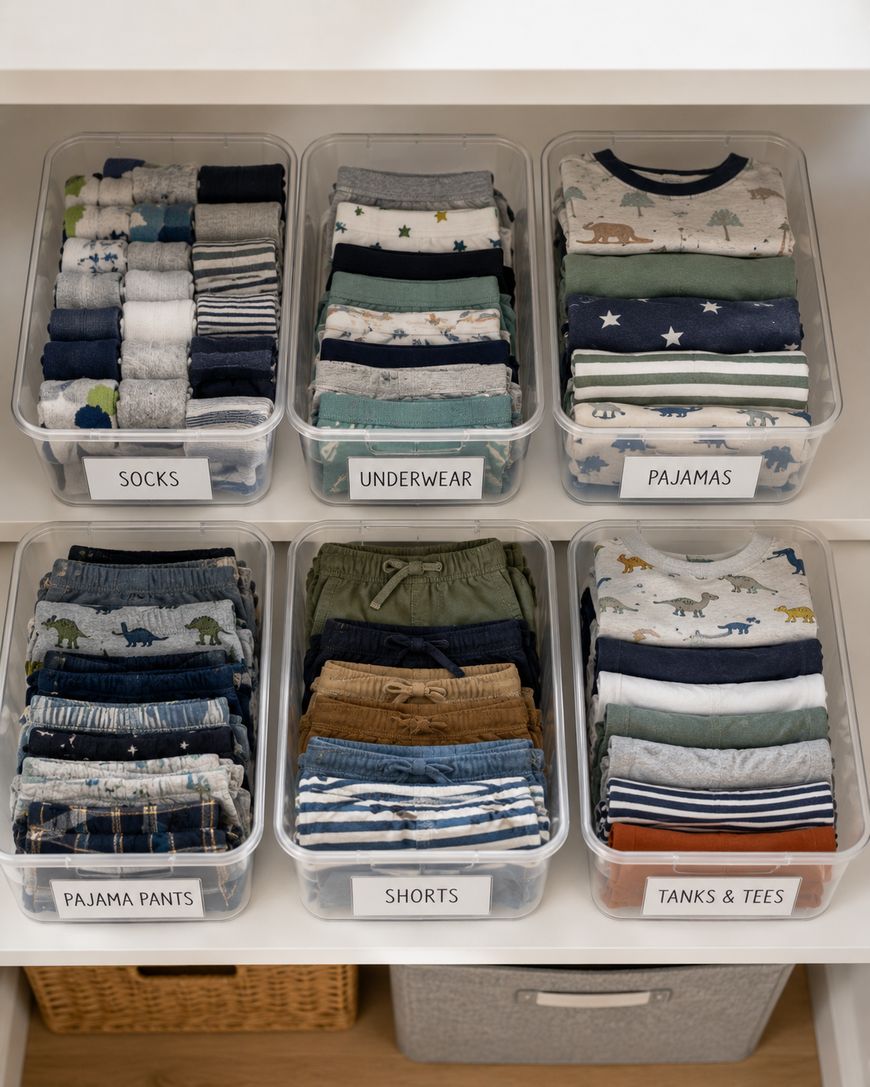
Choose bins that are easy for small hands to pull out and push back in, since your toddler will eventually help with this.
Clear bins work well because you can see what is inside without opening every single one during a rushed morning.
Fabric bins are a good alternative if you prefer a softer look, though they hide contents unless you add a label.
We suggest grouping similar items together, so all socks live in one bin and all pajamas live in another.
This also makes laundry day faster, since put-away becomes a matter of tossing items into the right bin rather than folding and stacking.
If your closet has a shelf above the rod, stack two or three bins there for seasonal items or accessories you do not need daily.
Keep the bins your toddler uses most often on the lowest shelf, right at their eye level.
The goal is a system where your toddler can find and return items without asking you for help every time.
Add Labels Your Toddler Can Actually Read
Labels are only useful if your toddler can understand them, and most toddlers cannot read yet.
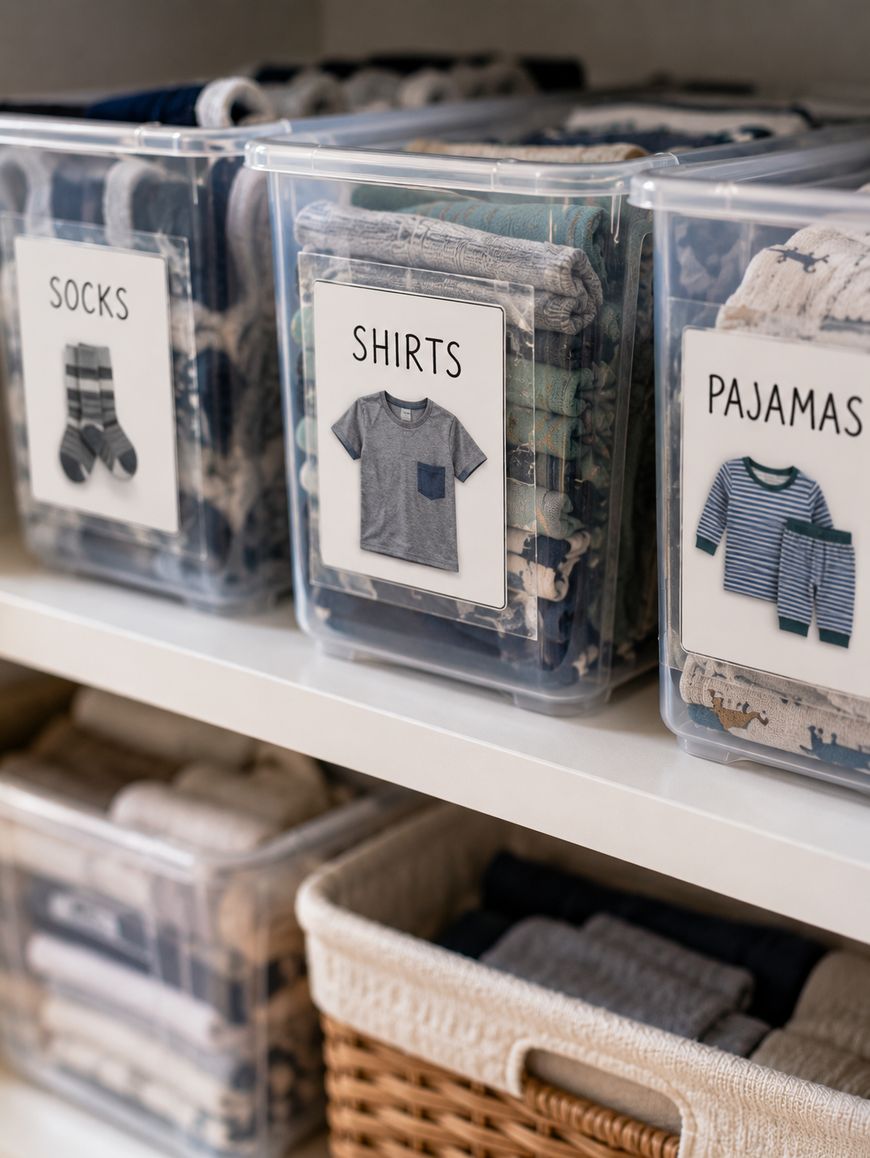
Picture labels solve this problem by pairing a simple image with each bin or drawer.
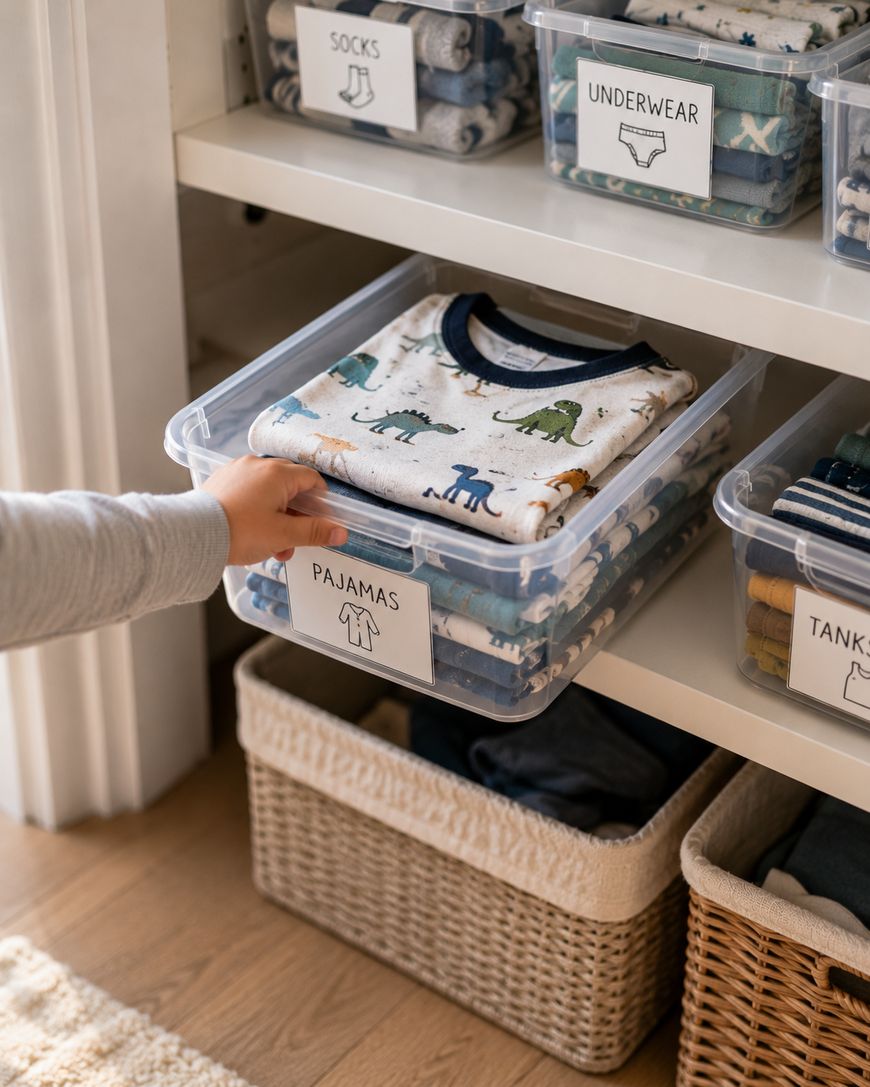
A small photo of a sock, a shirt, or pajamas tells your toddler exactly what belongs where, even before they can read words.
You can make these labels yourself with a printer and clear packing tape, or buy a pre-made set designed for kids’ closets.
Attach the labels at your toddler’s eye level, not yours, so they are actually useful during daily use.
This step matters more than it seems, since a system without labels usually falls apart within a few weeks.
Toddlers thrive on repetition and visual cues, and labels give them both in a way that words alone cannot.
Once labels are in place, ask your toddler to help sort a basket of clean laundry using the pictures as a guide.
This turns cleanup into a game rather than a chore, and it reinforces the system every time you do laundry together.
Over time, your toddler will start recognizing the labels on their own, which frees up your mornings even further.
Keep Shoes and Accessories Off the Floor
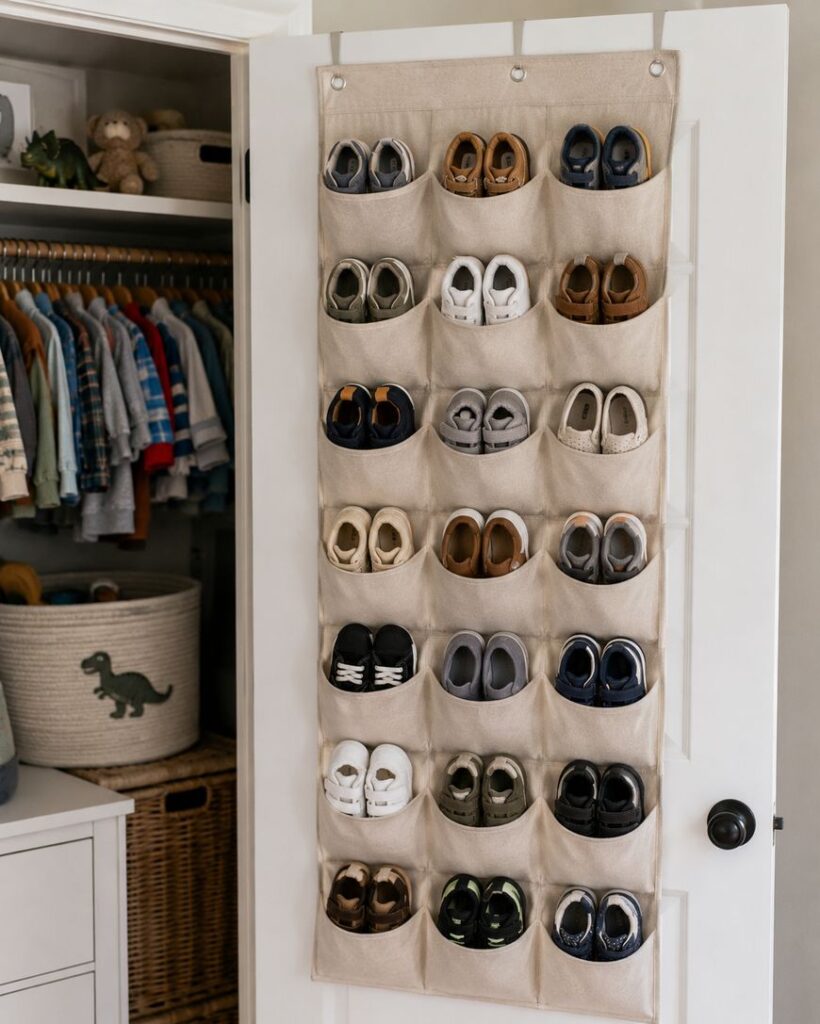
Shoes tend to pile up on the closet floor, which makes the whole space feel cluttered even when everything else is organized.
A shoe rack or a hanging shoe organizer keeps pairs together and off the ground.
Hanging organizers work well in smaller closets since they use vertical space instead of floor space.
If your toddler has a lot of accessories, like headbands, bows, or belts, a hook strip or small caddy keeps these from getting lost in a drawer.
We recommend placing the shoe rack near the closet entrance, so shoes are the first thing grabbed on the way out the door.
This small placement choice saves you from searching for a matching shoe while everyone is already running late.
Keep out-of-season shoes, like snow boots in summer, in a bin on the upper shelf instead of taking up daily space.
A tidy floor also makes the closet feel bigger and easier to move around in, especially for small hands and feet reaching for clothes.
This is one of the easier toddler closet organization ideas to implement, and it makes an immediate visual difference.
Common Questions About Toddler Closet Organization
How often should I reorganize my toddler’s closet?
Most families find a seasonal reset works best, roughly every three to four months.
Toddlers grow quickly, so checking sizes each season keeps the closet from filling up with clothes that no longer fit.
What bins work best for small closets?
Clear stackable bins tend to work best in small closets since they use vertical space efficiently.
Look for bins with handles, since these are easier for both you and your toddler to pull off a shelf.
Should I let my toddler pick their own outfits?
Yes, within reason. Letting your toddler choose from a lowered rod builds independence and cuts down on morning battles.
You can always set boundaries, like limiting choices to two weather appropriate outfits placed at the front of the rod.
How do I stop clothes from ending up on the floor?
A lower rod paired with bins usually solves this, since your toddler has an actual place to put things back.
Keeping the system simple, with only a few bins and one rod height, makes it easier for a toddler to maintain on their own.
What if my closet is very small?
Small closets benefit most from vertical solutions, like hanging organizers and stacked bins.
A closet door organizer can also add storage without taking up any additional floor space.
Do I need to buy expensive organization systems?
No. Many of these toddler closet organization ideas use simple bins, a tension rod, and printed labels you can make at home.
Start small, see what your toddler actually uses, and add more structured pieces only if you find you need them.
Ready to Start Organizing
You do not need a full weekend or a big budget to make these toddler closet organization ideas work in your home.
Start with the reset, lower the rod, add a few labeled bins, and see how quickly your mornings change.
Pick one section of the closet today and get started, since even a small change makes tomorrow morning easier.


Leave a Reply