Last updated: August 30, 2026
These baby food recipes are simple, age-appropriate meals you prepare at home (usually puréed, mashed, or soft finger foods) so your baby can safely eat real ingredients. It’s easiest to start with single-ingredient purées, then slowly combine flavors and textures as your baby tolerates them.
Most people do best by batch-cooking 3–5 basic bases each week (a veggie, a fruit, a protein, a grain, and a healthy fat), then mixing and matching into quick meals.
Baby Food Recipes Ideas You Can Rotate All Week
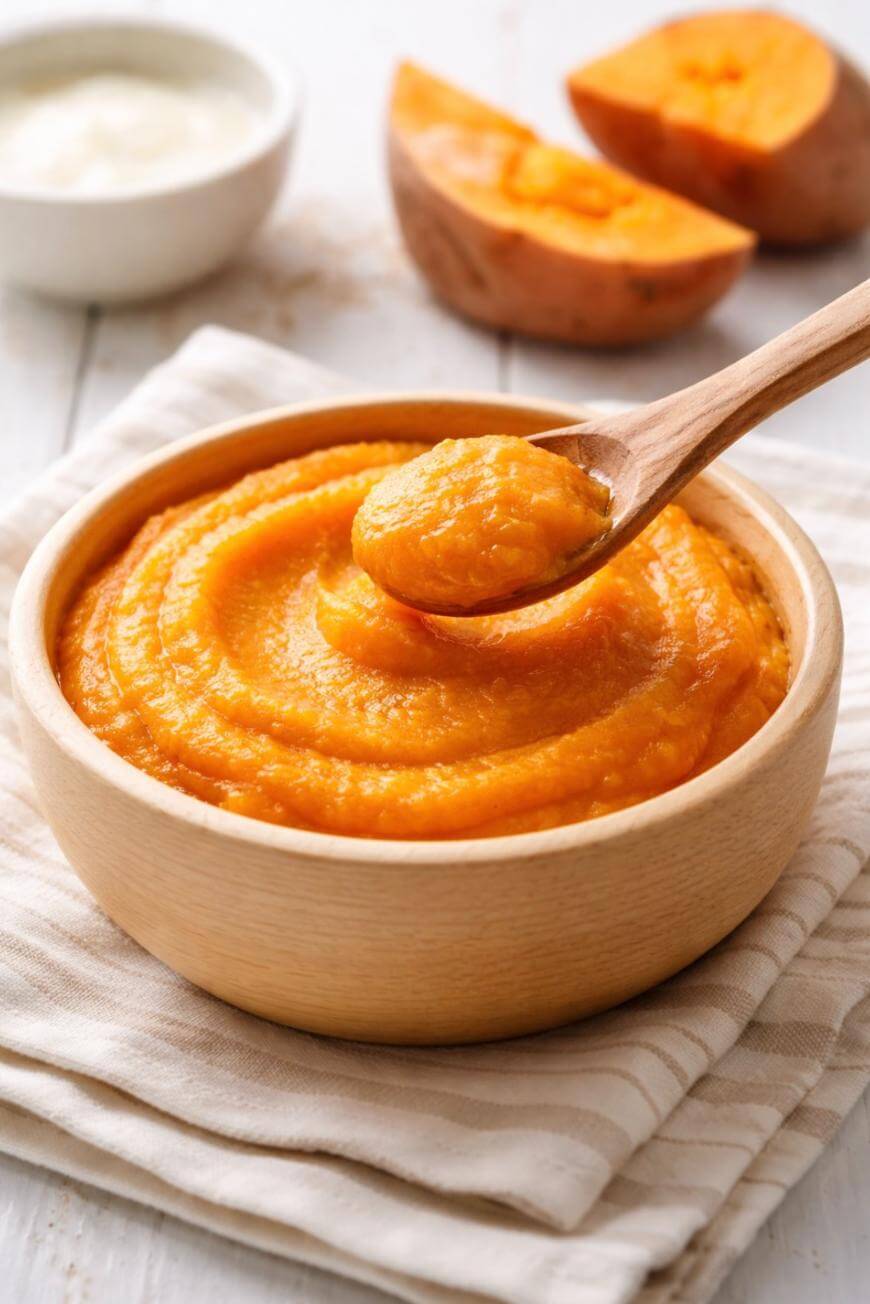
1. Single-Ingredient Sweet Potato Purée
Steam or roast sweet potato until it mashes easily, then blend with water, breast milk, or formula to a smooth texture.
A simple upgrade is to thin it more for early eaters and keep it thicker for older babies who are ready for mash textures.
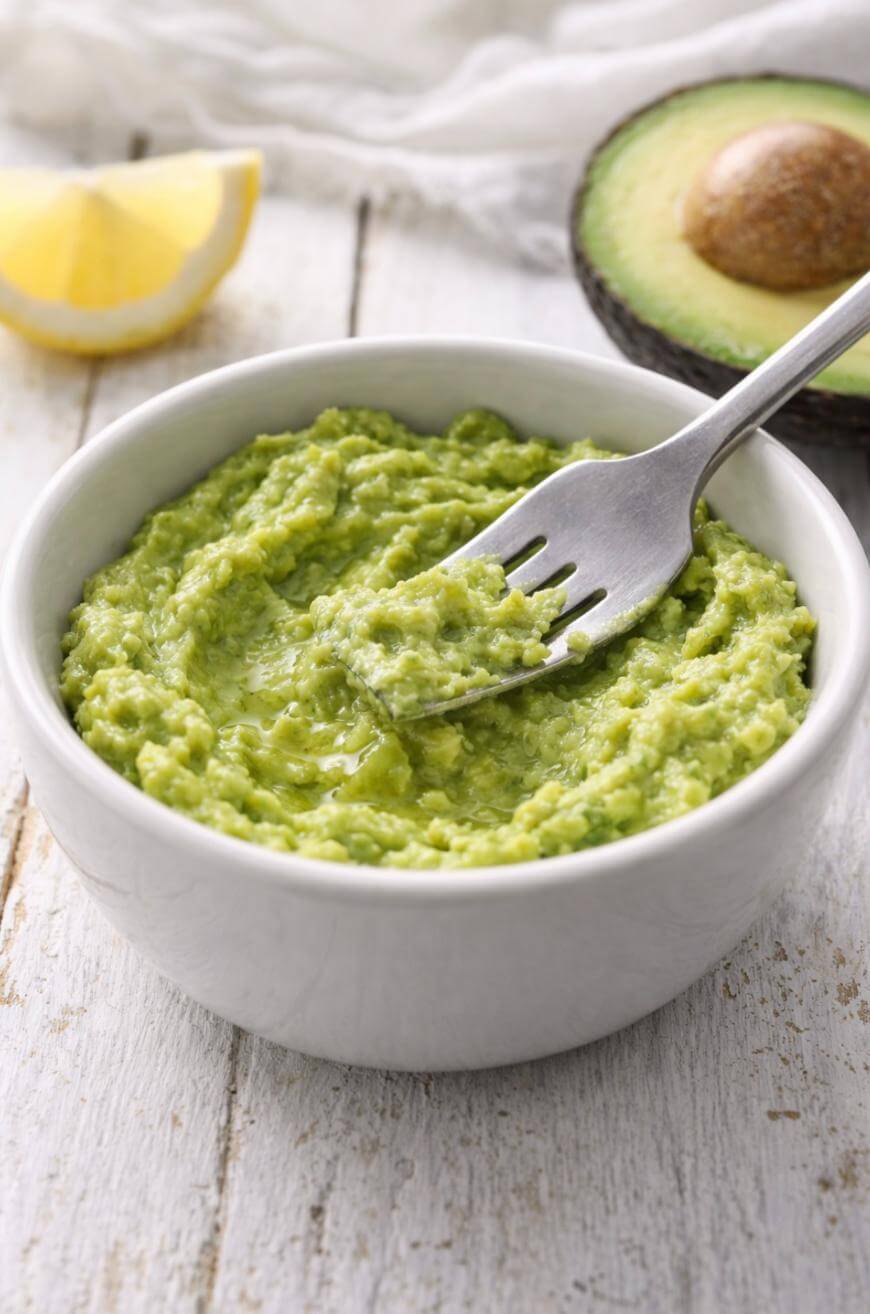
2. Single-Ingredient Avocado Mash
Mash ripe avocado with a fork until smooth and creamy, adding a tiny splash of water if needed.
If it browns, press plastic wrap directly onto the surface or mix in a few drops of lemon for older babies who have already tried citrus.
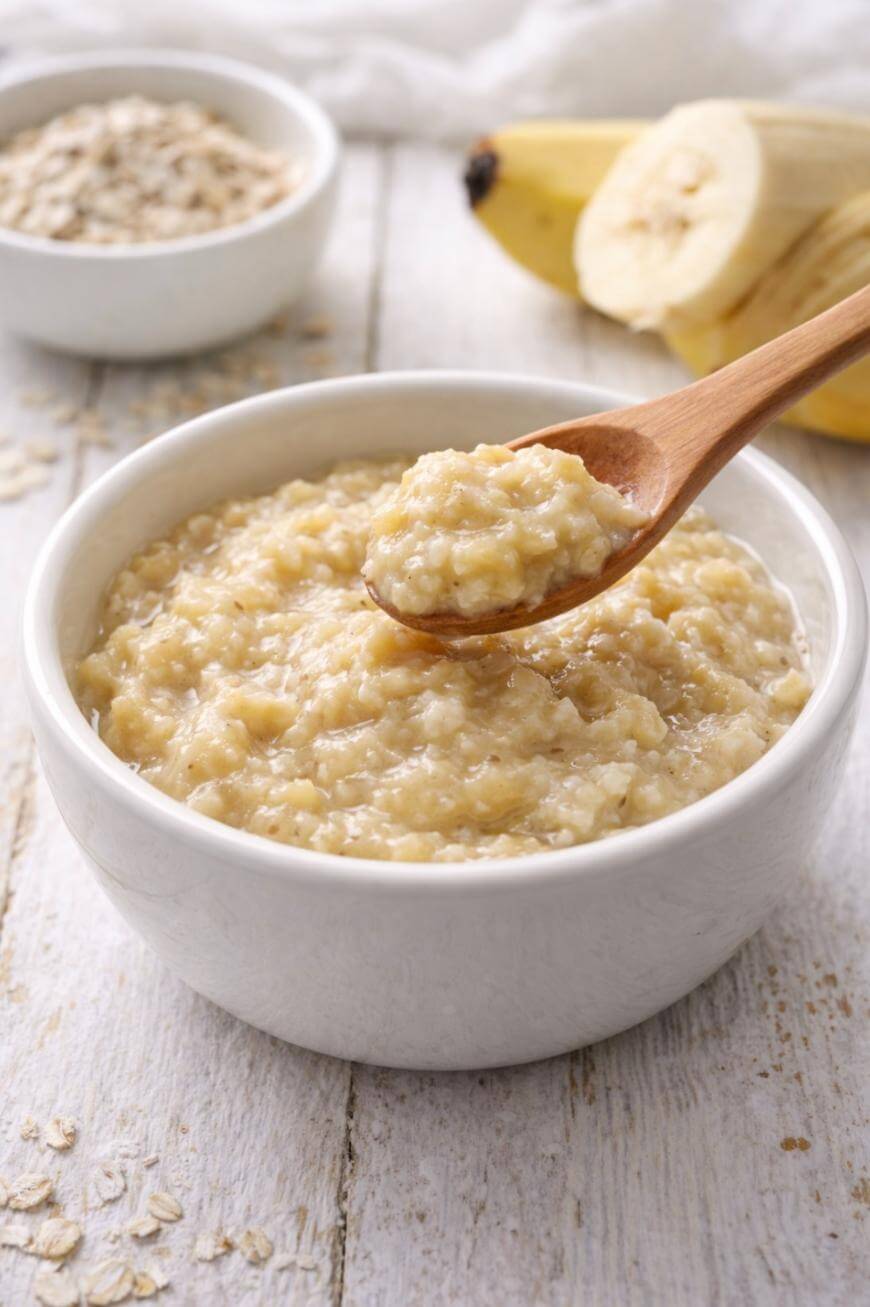
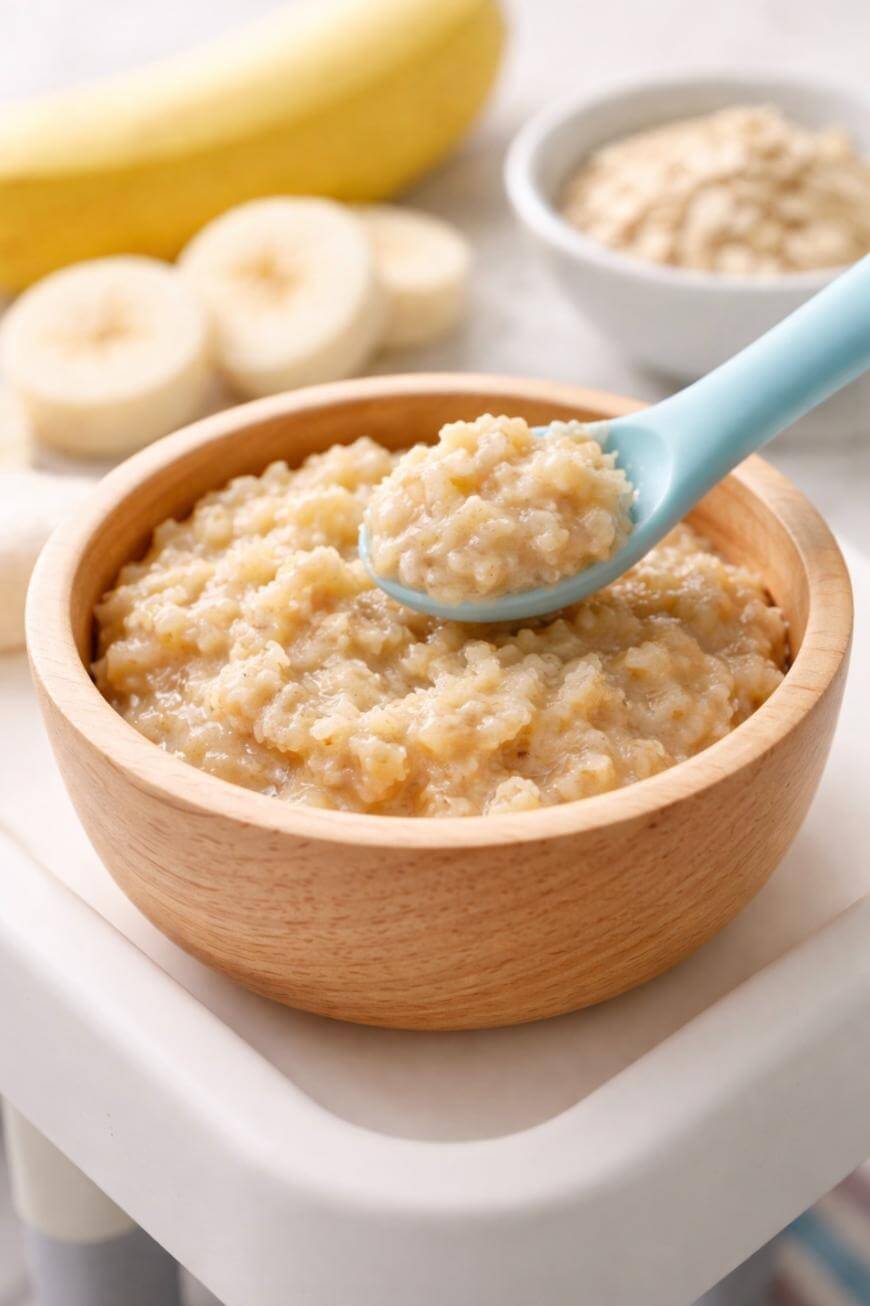
3. Banana Oat Mash
Mash banana and stir in finely ground oats that have been cooked soft with water until fully tender.
If your mash feels gluey, use a slightly larger oat grind or add an extra tablespoon of water to loosen it.
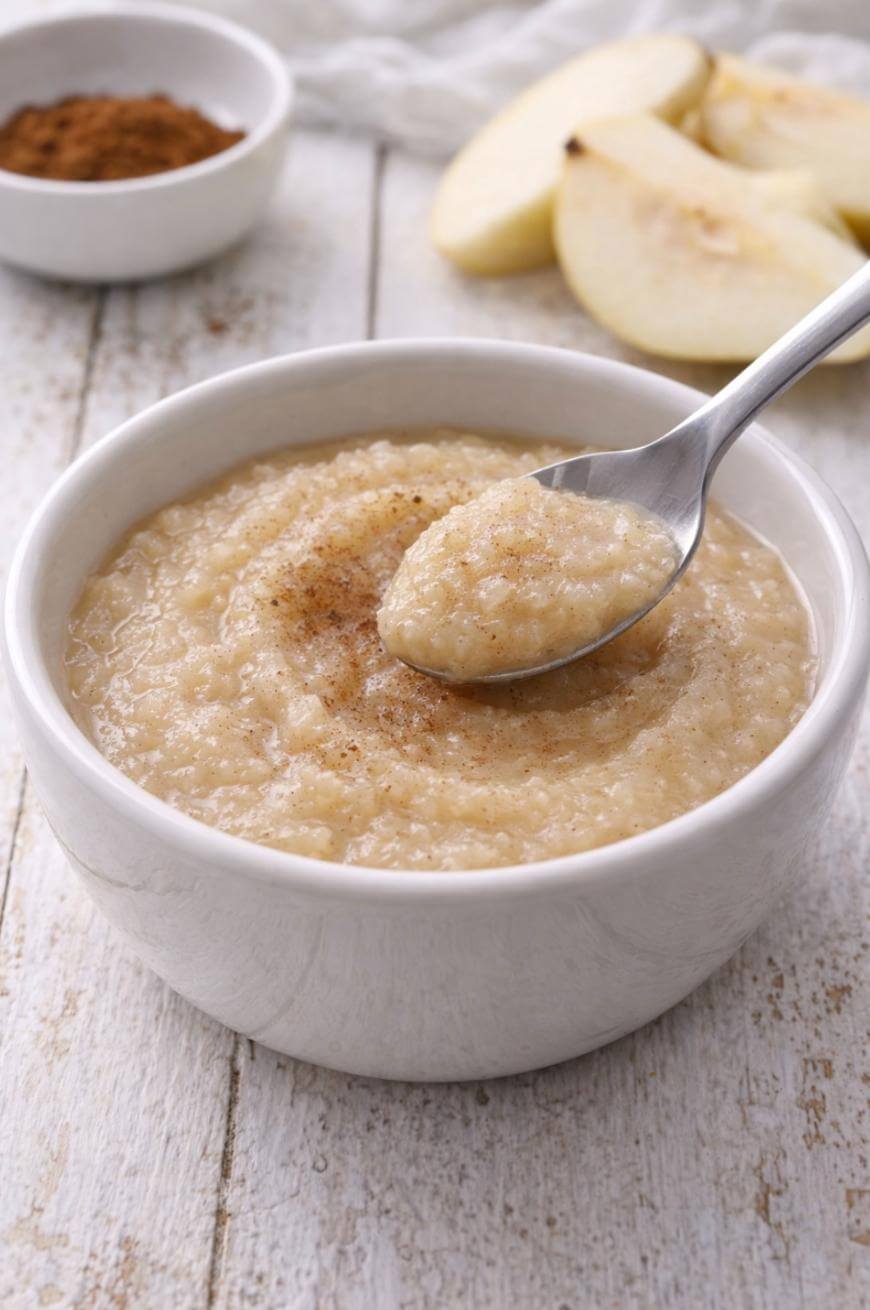
4. Pear Purée With Cinnamon (Optional)
Steam pear slices until very soft, then blend into a smooth purée.
For babies who are already doing well with spices, a pinch of cinnamon adds flavor without added sugar.
5. Apple-Carrot Purée
Steam apple and carrot together until both are fork-tender, then blend to your baby’s preferred consistency.
If carrots make it too thick, add a bit more cooking liquid so it stays easy to swallow.
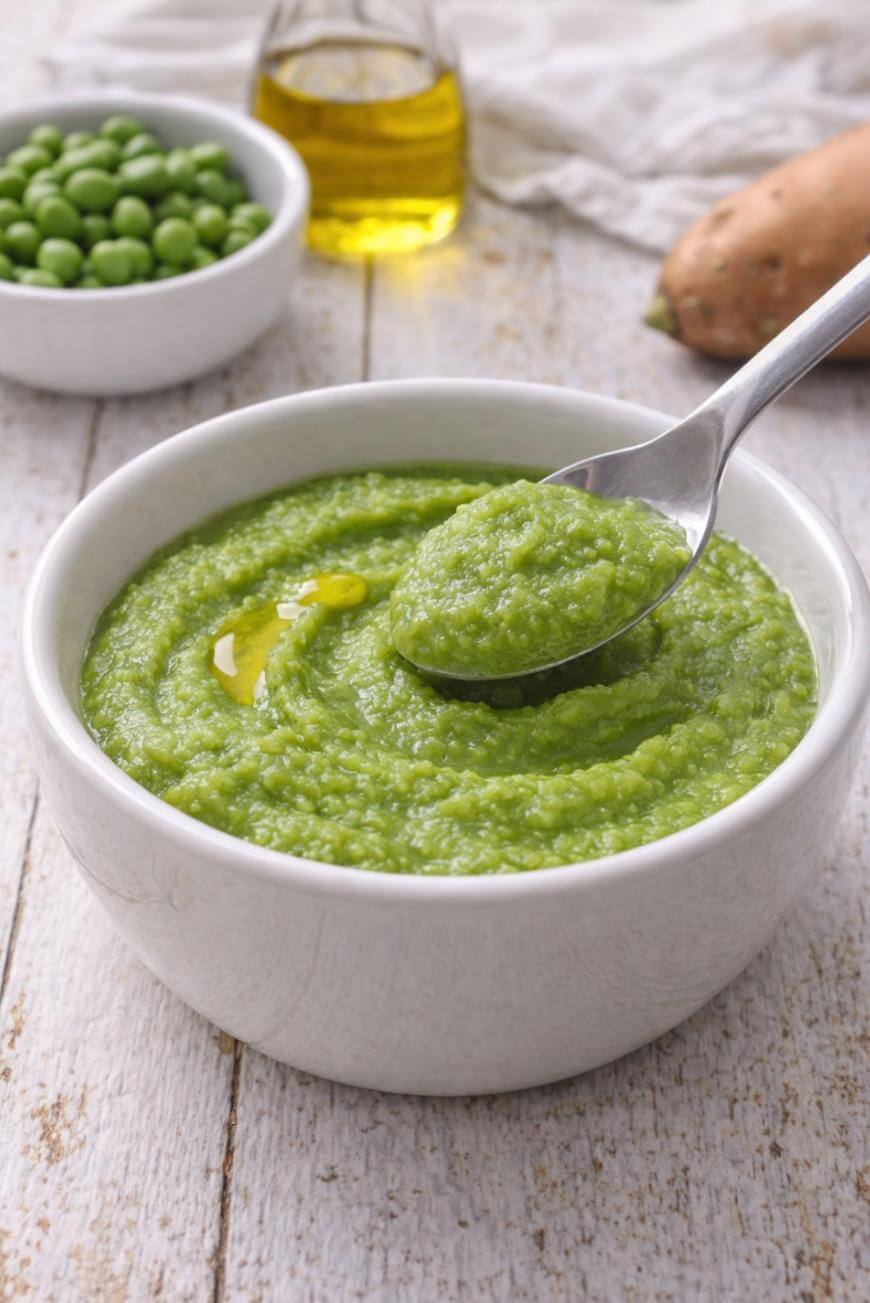
6. Pea Purée With Olive Oil
Steam peas until soft, blend, then stir in 1/4 teaspoon olive oil per serving for extra calories and smoother texture.
If peas taste “green” and sharp, mixing in a little sweet potato balances the flavor nicely.
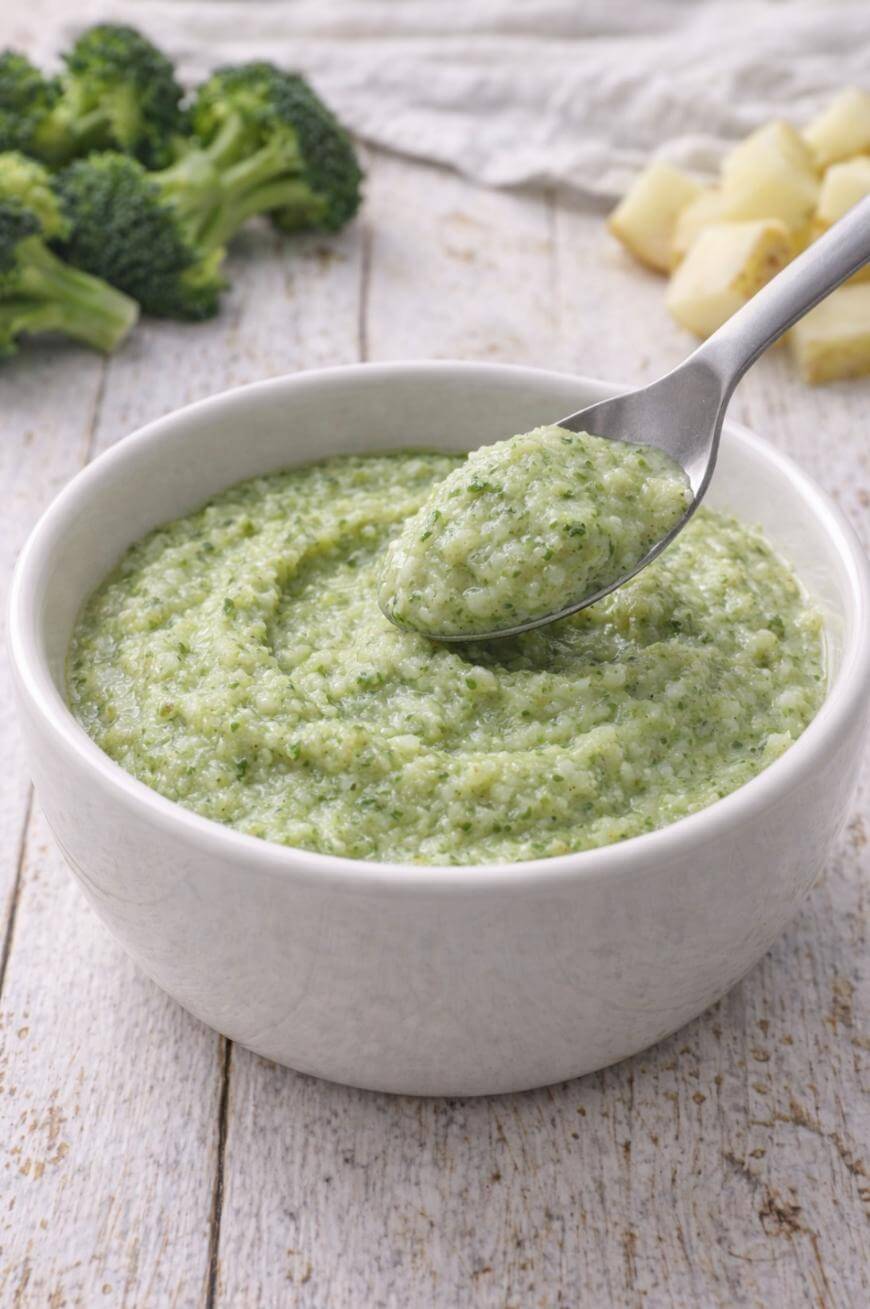
7. Broccoli-Potato Purée
Steam broccoli florets and peeled potato until soft, blend, and thin as needed.
A common mistake is undercooking broccoli stems, so stick to florets or cook stems much longer.
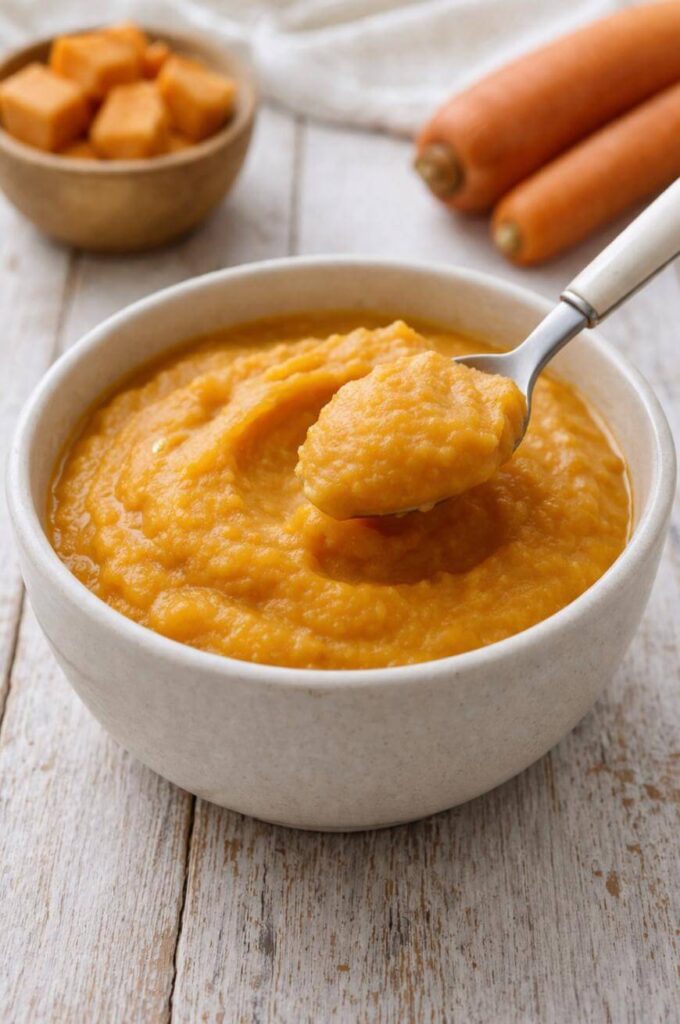
8. Butternut Squash Purée
Roast squash halves cut-side down until spoon-soft, then blend the flesh with water.
Roasting brings out sweetness, which helps babies accept veggie flavors without relying on fruit every time.
9. Mango Yogurt Smash (Dairy-Tolerant Babies)
Mash ripe mango and stir into plain, unsweetened full-fat yogurt.
If your baby is new to dairy, start with 1–2 teaspoons of yogurt mixed into fruit rather than a full serving.
10. Chicken And Carrot Purée
Cook chicken thoroughly, then blend with steamed carrots and a little broth or water to reach a smooth texture.
To avoid a grainy purée, blend longer and add liquid slowly until it turns silky.
11. Turkey And Zucchini Purée
Steam zucchini until very soft, then blend with cooked turkey and a splash of cooking liquid.
Zucchini is watery, so it’s great for thinning meats that can otherwise be dense.
12. Lentil Purée With Tomato (Well-Cooked)
Cook red lentils until they fall apart, then blend with a small amount of cooked tomato.
A smart upgrade is to cook lentils with extra water so they’re already smooth and easier to purée.
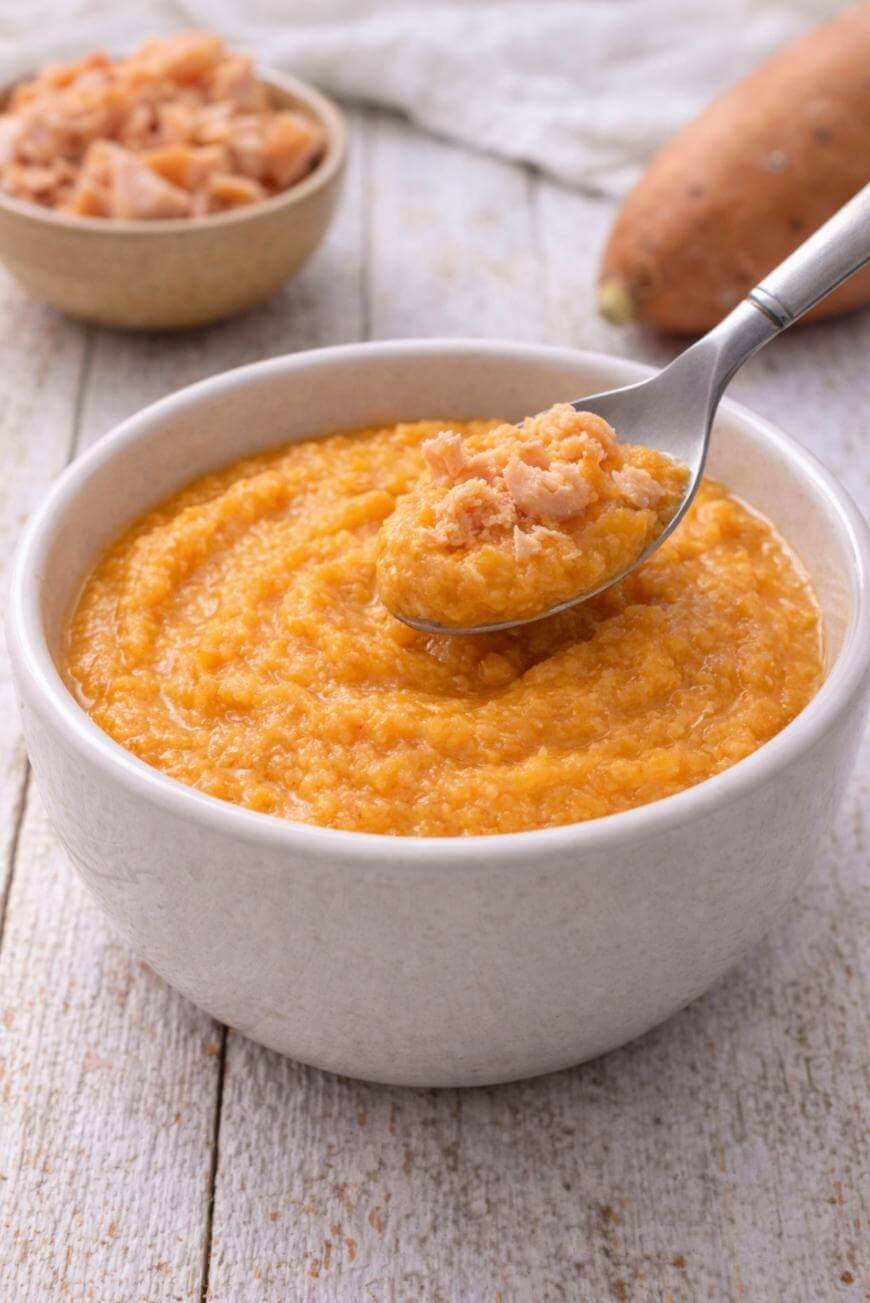
13. Salmon And Sweet Potato Mash
Bake salmon until flaky, then mix a small amount into mashed sweet potato.
Keep the salmon portion small at first so you can watch for tolerance, then gradually increase as it goes well.
14. Egg Yolk Mash (Fully Cooked)
Hard-boil an egg, mash the yolk with breast milk, formula, or water into a smooth paste.
If the yolk gets crumbly, add liquid in tiny increments until it becomes a spoonable consistency.
15. Iron-Boosted Beef And Pumpkin Purée
Slow-cook beef until tender, then blend with roasted pumpkin and broth to smooth it out.
A common win is freezing this in small portions so you can add a spoonful to other veggie purées for iron.
16. Quinoa And Blueberry Mash
Cook quinoa until very soft, then mash and mix with smashed blueberries.
If quinoa feels too “seedy,” cook it longer with extra water and mash harder before adding fruit.
17. Rice Congee Base
Simmer rice with lots of water until it becomes a soft porridge, then blend or mash to your baby’s stage.
You can use congee as a neutral base for veggies, meats, or fruit without making every meal taste sweet.
18. Creamy Nut Butter Oatmeal (Allergen Introduction)
Stir 1/4 teaspoon smooth peanut butter or almond butter into warm, thin oatmeal until fully dissolved.
Start with very small amounts and keep the texture thin so it’s not sticky, which can be harder for babies to manage.
19. Chickpea Tahini Blend (Older Babies)
Blend well-cooked chickpeas with water until smooth, then add a tiny amount of tahini for flavor.
If it’s too thick, increase water and serve it as a spread on toast strips for babies doing finger foods.
20. Spinach And White Bean Purée
Cook spinach until wilted and soft, then blend with well-cooked white beans and water.
Beans can be chalky if under-blended, so blend longer than you think you need.
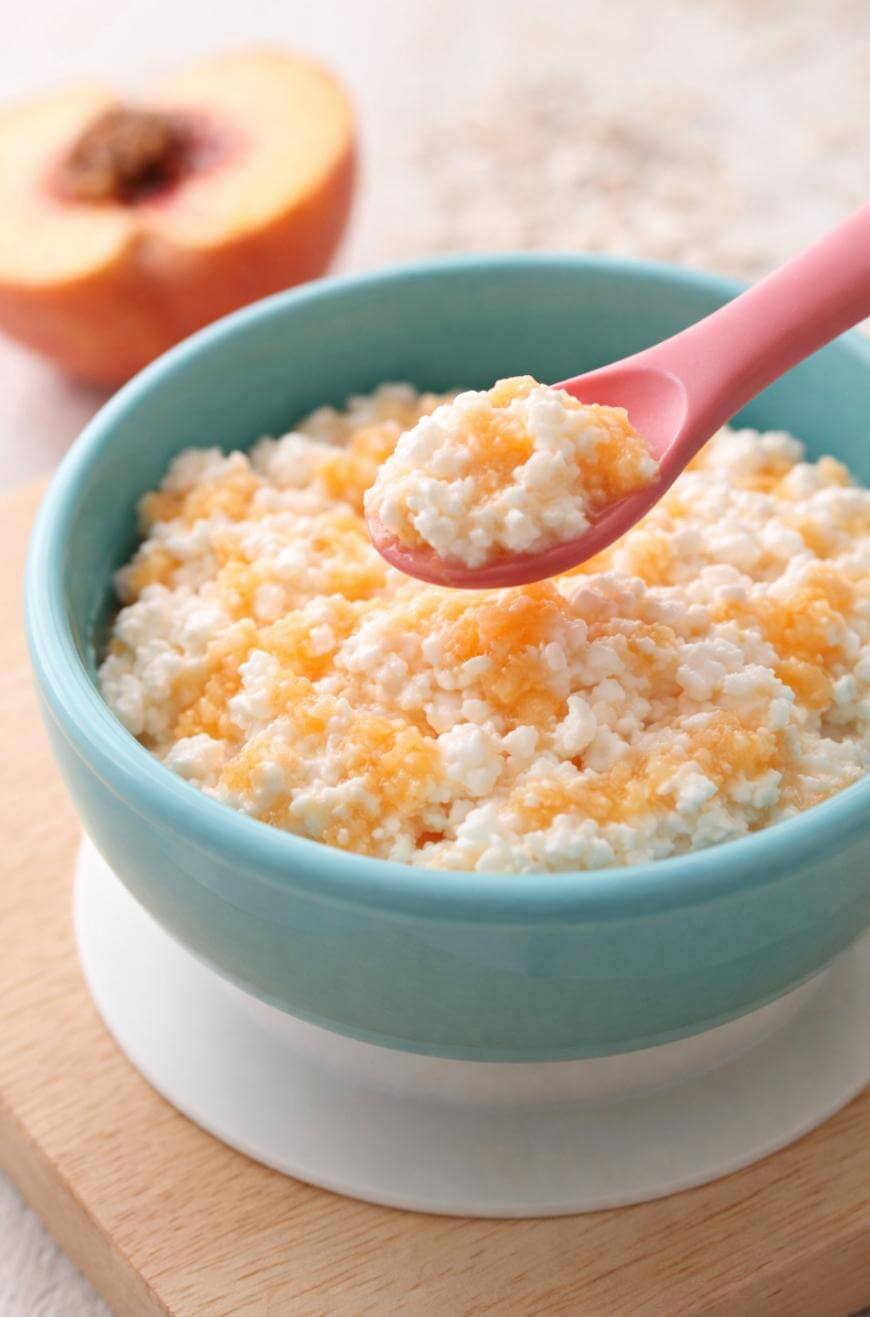
21. Cottage Cheese And Peach Smash (Texture Practice)
Mash ripe peach and stir into full-fat cottage cheese, crushing curds if your baby needs smoother texture.
If the curds are too chunky, blend briefly for a thicker purée that still encourages texture tolerance.
22. Banana And Chia Pudding (Soaked)
Mash banana and stir in chia seeds, then let it sit until it thickens and seeds soften.
For younger babies, use a smaller amount of chia and add extra yogurt or water so it stays easy to swallow.
23. Soft Veggie Medley Mash
Steam a combo like cauliflower, carrots, and peas until everything is very soft, then mash coarsely.
A useful upgrade is saving some unmashed pieces for older babies who can handle soft finger foods.
24. Finger-Food Egg Muffin Bites (Older Babies)
Bake whisked egg with finely chopped cooked veggies in mini muffin tins until fully set.
Cut into strips or small pieces and avoid added salt, which keeps it baby-friendly.

How To Build Baby Food Recipes Into A Simple Weekly System
Use A 5-Base Batch Plan
Cook 1 veggie, 1 fruit, 1 protein, 1 grain, and 1 fat-forward add-in each week, then combine them into different meals.
This reduces decision fatigue while still giving your baby variety across flavors and nutrients.
Follow A Texture Progression Instead Of Staying In Purée Mode
Start smooth, then move to thicker purées, then to mashed textures, then to soft finger foods as your baby shows readiness.
A practical timing guideline many families use is spending about 1–3 weeks at each texture step, adjusting based on gagging, comfort, and skill.
Keep Portions Small And Consistent
A helpful serving starting point is 1–2 tablespoons per meal for early eaters, then gradually increasing as appetite grows.
If your baby wants more, you can offer seconds, but staying consistent helps you spot reactions and tolerance.
Add Calories With Tiny Fat Boosts
Stir in 1/4 teaspoon olive oil, butter, yogurt, or nut butter per serving when appropriate for your baby.
This is especially useful if your baby fills up fast and you want each bite to carry more energy.
Mix Sweet With Savory To Avoid A “Fruit-Only” Preference
Combine a fruit with a veggie or protein so your baby doesn’t learn that every spoonful tastes like dessert.
For example, pear can soften the flavor of peas, and apple can pair well with chicken.
What To Avoid With Baby Food Recipes
Skip Added Salt And Added Sugar
Your baby does not need extra seasoning from salt or sugar, and it can crowd out the natural flavors you want them to learn.
If you want more flavor, use mild herbs and spices after single ingredients are going well.
Avoid Sticky, Thick, Hard-To-Swallow Textures
Very thick nut butter, dry egg chunks, and dense meat purées can be tricky even when ingredients are safe.
Thin or blend with liquid until it slides easily off a spoon without being watery.
Don’t Freeze Everything In Huge Portions
Large portions lead to waste and make it harder to rotate variety.
A simple rule is freezing in 1-ounce cubes so you can thaw exactly what you need.
Storage, Safety, And Cost Guidance For Baby Food Recipes
Use Clear Fridge And Freezer Time Limits
A common home-kitchen guideline is to refrigerate homemade baby food for up to 48 hours and freeze for up to 2–3 months in airtight containers.
Label portions with the date so you rotate older cubes forward and avoid mystery meals.
Budget A Simple Starter Setup
You can get started with a steamer basket, blender or stick blender, ice cube trays, and small containers, often for $30–$80 total.
If you already have a blender, your real cost can drop to $10–$25 for storage trays and containers.
Use One “Allergen Day” Each Week
Pick one day to introduce or repeat a common allergen in a controlled, small amount, like peanut, egg, dairy, wheat, or fish.
This keeps you organized and helps you avoid introducing multiple new things at the same time.
Key Takeaways
Start with single-ingredient purées, then combine flavors as tolerance builds.
Batch-cook 3–5 bases weekly to make variety easy.
Move through textures gradually instead of staying on smooth purées too long.
Use small fat boosts like 1/4 teaspoon olive oil to increase calories when needed.
Freeze in 1-ounce portions to reduce waste and increase mix-and-match options.
Skip added salt and sugar and let your baby learn real flavors.
FAQ
Can You Use Frozen Fruits And Vegetables For Homemade Baby Food?
Yes, frozen produce is fine as long as it is plain with no added sauces or salt. Cook it until very soft, then purée or mash to your baby’s stage. It can be a cost-friendly option that reduces prep time.
How Do You Know When To Move From Purées To Finger Foods?
You can move on when your baby handles thicker textures without distress and can bring food to their mouth with interest. Start with very soft sticks or pieces that squish easily between your fingers. Keep pieces large enough to grip, then reduce size as skill improves.
What If Your Baby Refuses Vegetables In Baby Food Recipes?
Keep offering them in small amounts and pair them with a familiar base like sweet potato or yogurt. You can also rotate preparation methods, since roasted veggies often taste sweeter than steamed. Repeated exposure over time usually helps more than forcing bigger portions.
Is It Cheaper To Make Baby Food At Home?
Yes, it can be cheaper, especially if you batch-cook and freeze in small portions. Costs vary by ingredient, but a week of homemade basics is often less than buying multiple pouches and jars. Using seasonal produce and frozen veggies can lower costs further.



Leave a Reply