Last updated: October 9, 2026
Construction paper crafts turn a quiet afternoon into something worth taping to the fridge, and they cost almost nothing to pull off. Below you will find projects sorted by how simple they are, what season they suit, and how much room they take up on the table.
Grab the pack from the closet and start with whichever one your kids will sit still for.
Easy Construction Paper Crafts to Start With
A paper chain garland is the classic first project because it needs nothing but strips and glue. Cut the paper into strips the long way, loop the first one into a circle, then thread the next strip through before gluing it closed.
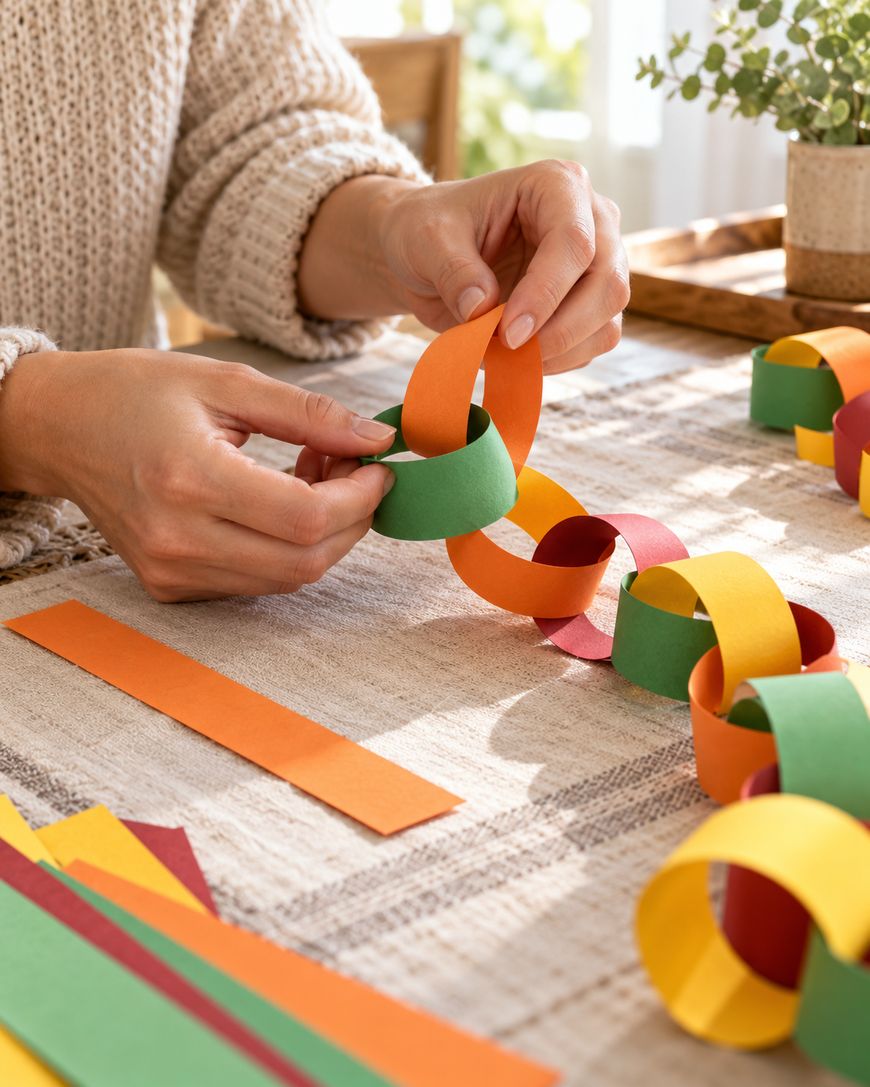
Kids who cannot manage scissors yet can still do the looping and gluing, which is usually the part they want anyway.
Woven paper placemats come next. Fold one sheet in half, cut slits from the fold toward the open edge without cutting all the way through, then weave contrasting strips in and out until the sheet is full.
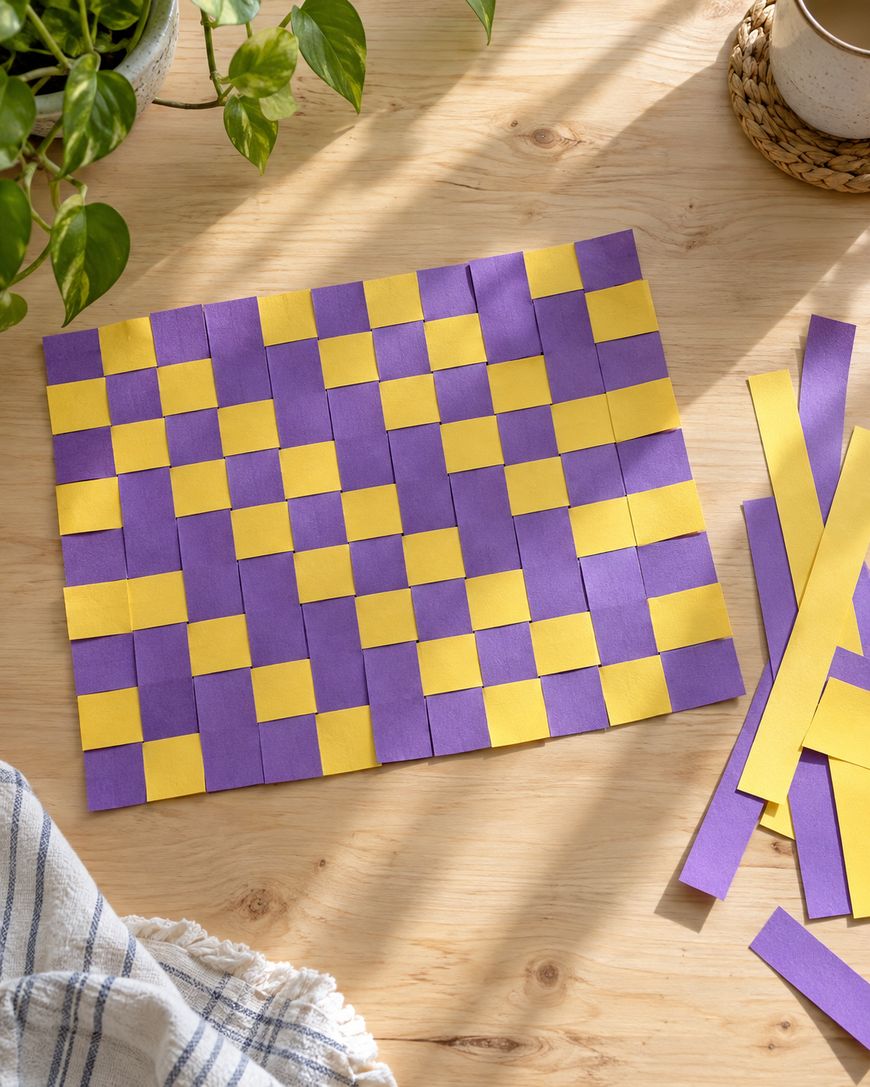
The finished mat looks far more impressive than the effort it took, which is exactly what you want from a starter craft.
Torn paper mosaics skip scissors altogether. Draw a simple shape on a background sheet, then let your kids tear other colors into rough pieces and glue them inside the outline.

Tearing instead of cutting is a genuinely good fine motor exercise, and it makes the mess easier to sweep up at the end.
Construction Paper Crafts That Turn Into Animals
An accordion caterpillar is the one that always gets requested twice. Fold two long strips back and forth over each other to build a springy body, then add a circle head, paper antennae and a face drawn in marker.
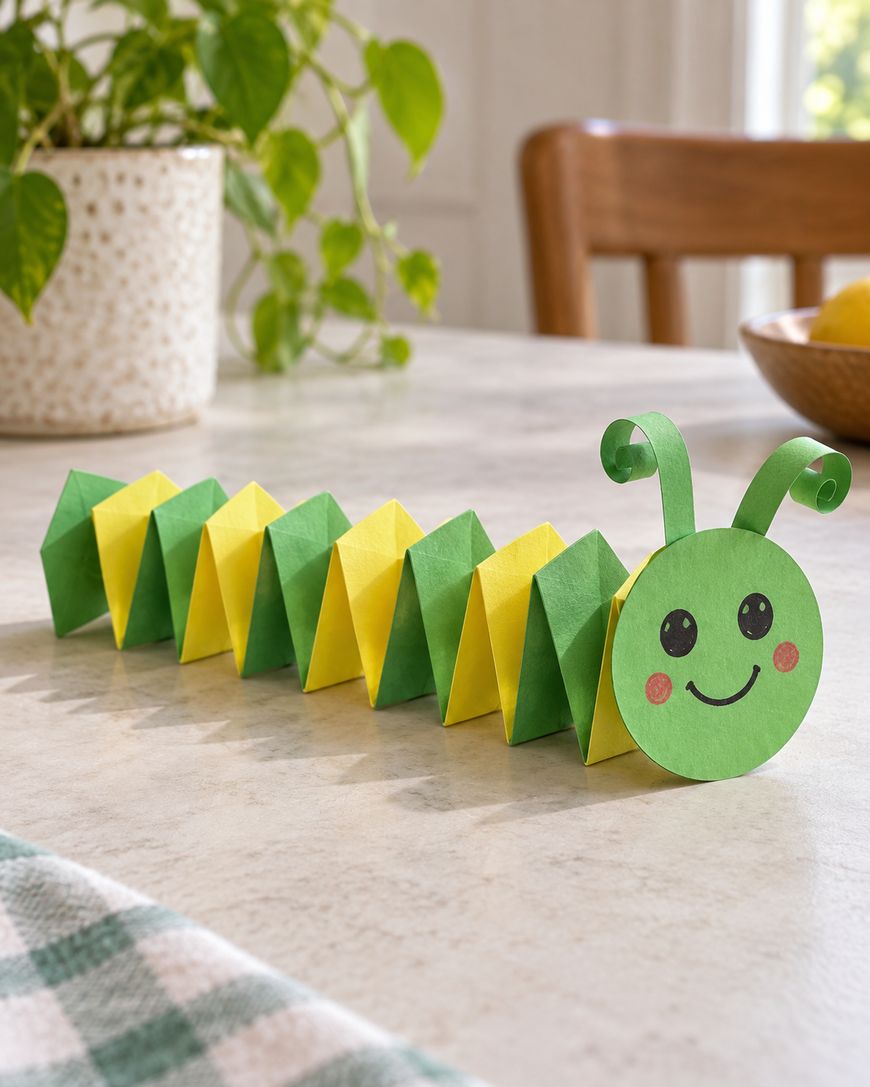
Hang it from the ceiling and it bounces every time someone walks past.
Paper fish work the same way with a different fold. Cut a teardrop body, then glue on overlapping scale circles from the tail forward so each row hides the glue line of the row before it.
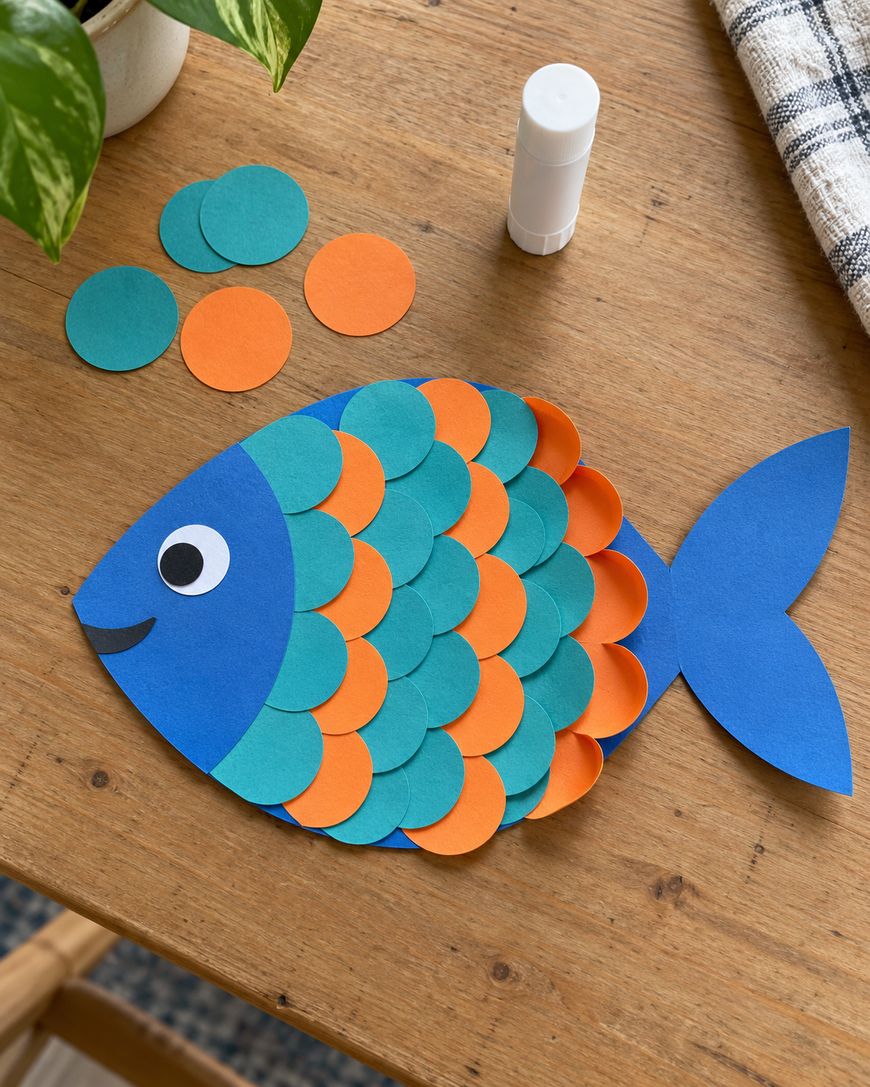
Let the last row curl slightly away from the paper for a bit of depth.
Handprint animals stretch a single sheet a long way. Trace your child’s hand, cut it out, and turn the fingers into a peacock tail, an octopus, a turkey or a set of tree branches depending on how you angle it.
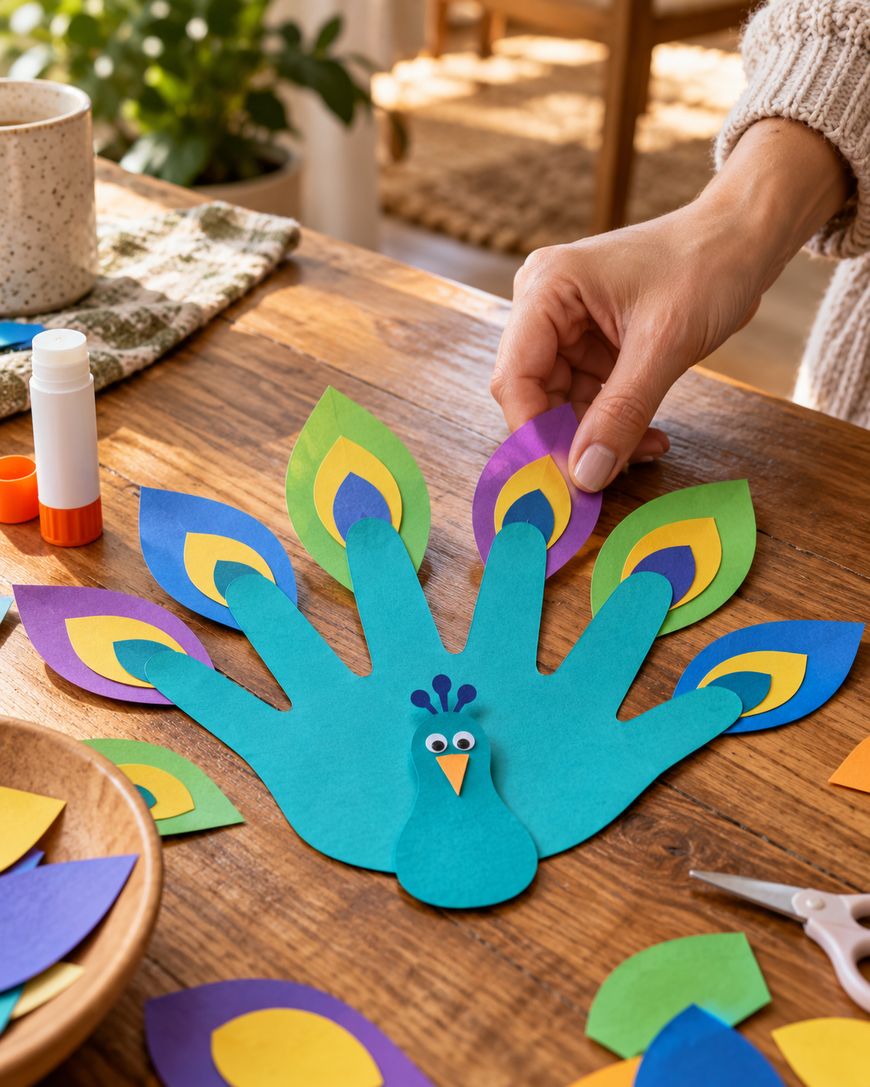
Keep one handprint tracing from each year and date the back, because they shrink into a keepsake far faster than you expect.
Paper bag style puppets can be made without the bag. Fold a sheet into thirds, glue the outer edges to make a sleeve, then decorate the front as a face your kid can slide a hand into.
Seasonal Construction Paper Crafts Through the Year
Fall gives you the best color payoff. Cut leaf shapes in red, orange and gold, glue them around a paper ring, and you have a wreath that holds up on the front door for weeks indoors.
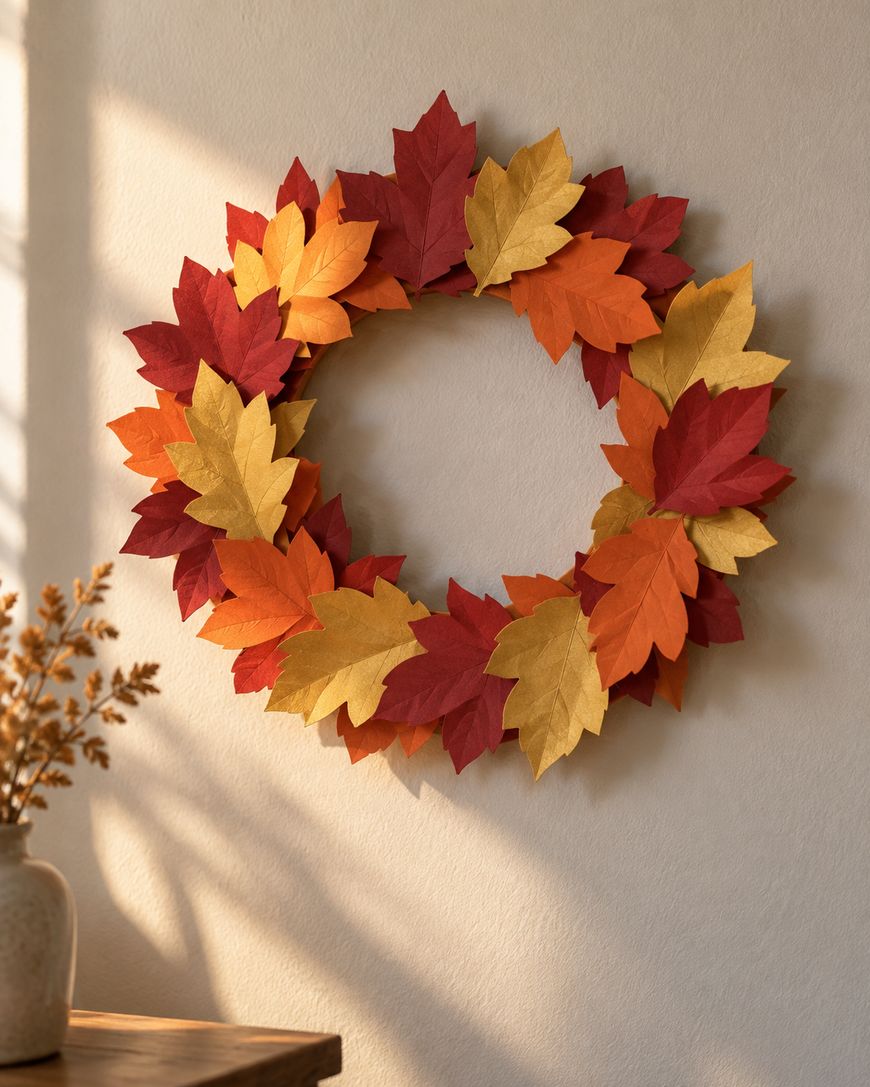
Layer a few smaller leaves on top of larger ones so the wreath has some depth rather than sitting flat.
Winter brings paper snowflakes, and construction paper handles them better than printer paper because the thickness holds a crease. Fold, snip, unfold, then tape them straight to a window where the light comes through the gaps.
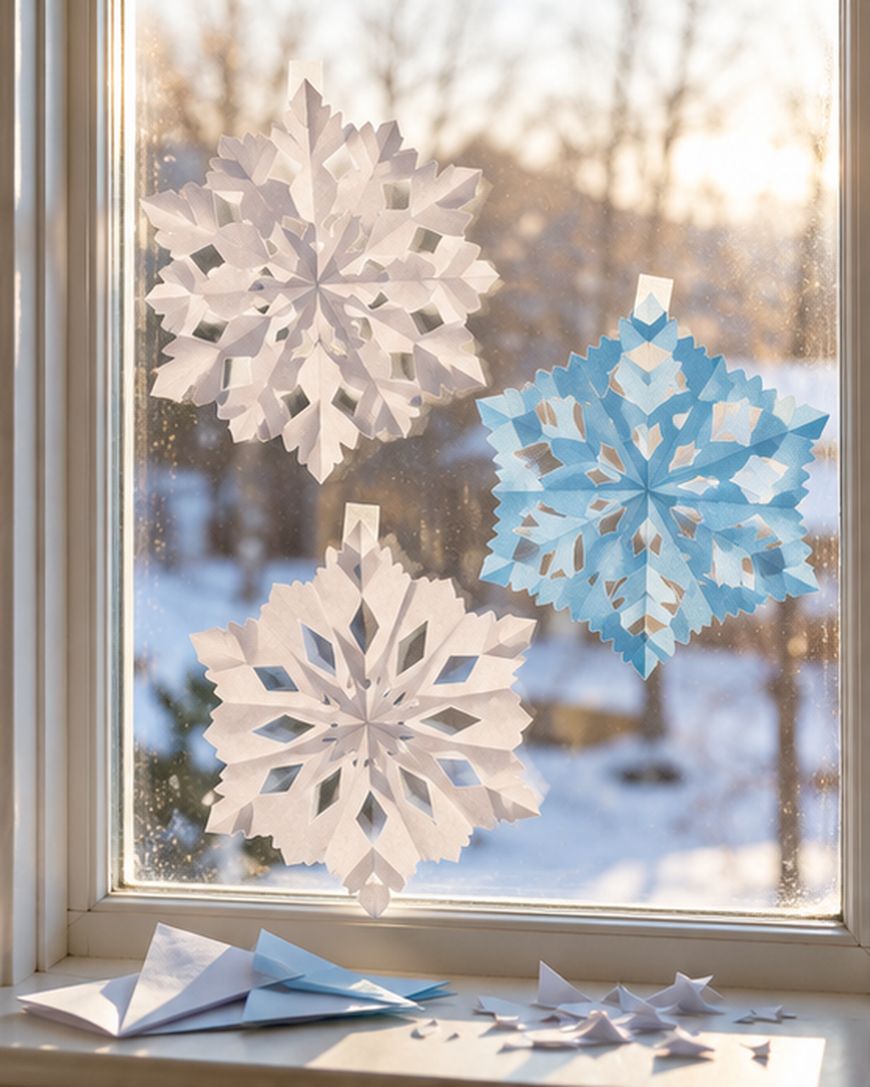
A square sheet folded into sixths gives the most snowflake looking result, while folded quarters tend to come out looking like a grid.
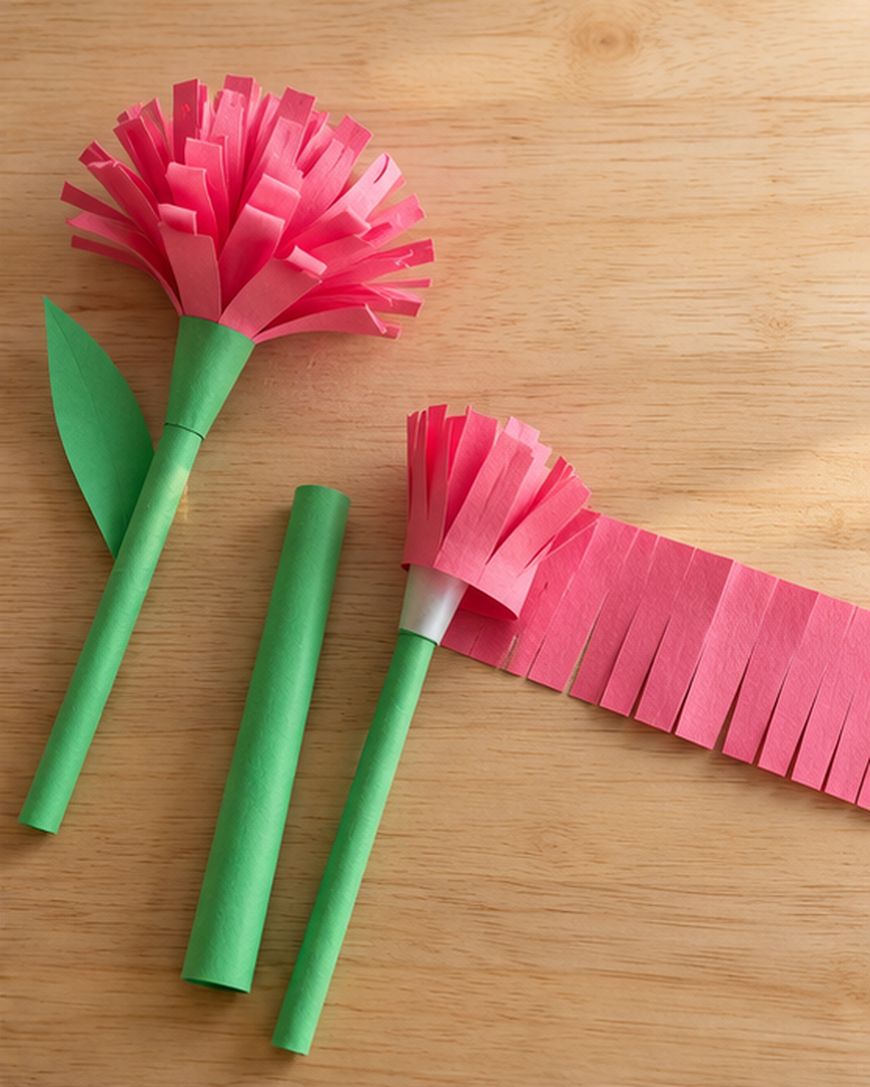
Spring is flowers and rainbows. Roll a strip of green into a stem, fringe the top edge of a bright strip to make petals, then wrap the fringe around the stem to build a bloom from the center out.
Summer projects can go outside. Cut paper sailboats and float them in a shallow tray of water to see how long they last, which is somewhere between four minutes and no time at all depending on the child.
3D Construction Paper Crafts That Stand Up on Their Own
Paper lanterns are the fastest way to make something three dimensional. Fold a sheet in half the long way, cut slits from the fold toward the open edge leaving a border, then unfold and bring the short edges together into a tube.
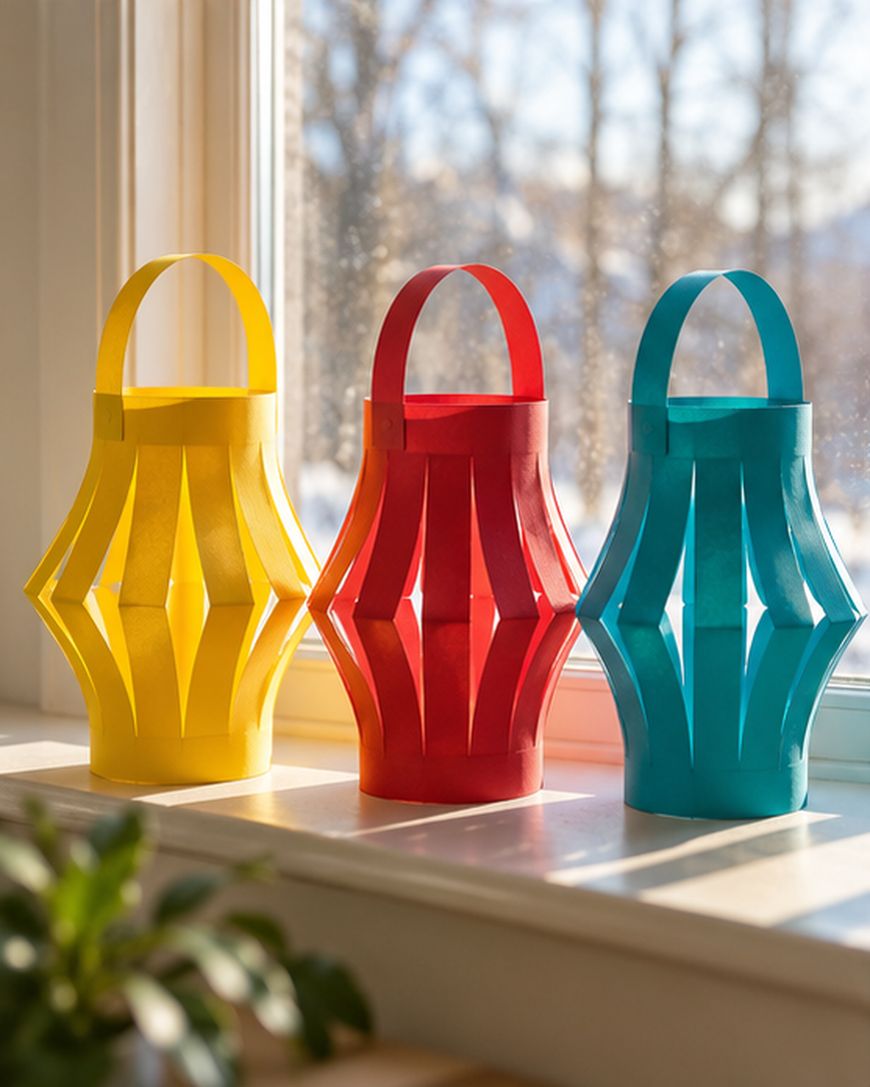
Add a strip handle across the top and the lantern is done in under ten minutes.
Pop-up cards feel like magic to kids who have never made one. Fold a card, cut two short parallel slits into the folded edge, push the tab through to the inside, and glue a shape onto the tab so it springs forward when the card opens.
Paper springs give you bouncing arms, legs and antennae for anything else you build. Glue two strips at right angles, fold them over each other in turn until you run out of paper, then glue the ends down.
Paper springs are worth learning once because they upgrade every other project you make afterward, from greeting cards to hanging mobiles.
Cone shapes round out the collection. Cut a circle, snip one straight line to the center, overlap the edges and tape, and you have a party hat, a tree, a rocket nose or a princess hat depending on what gets added.
Setting Up So Construction Paper Crafts Stay Fun
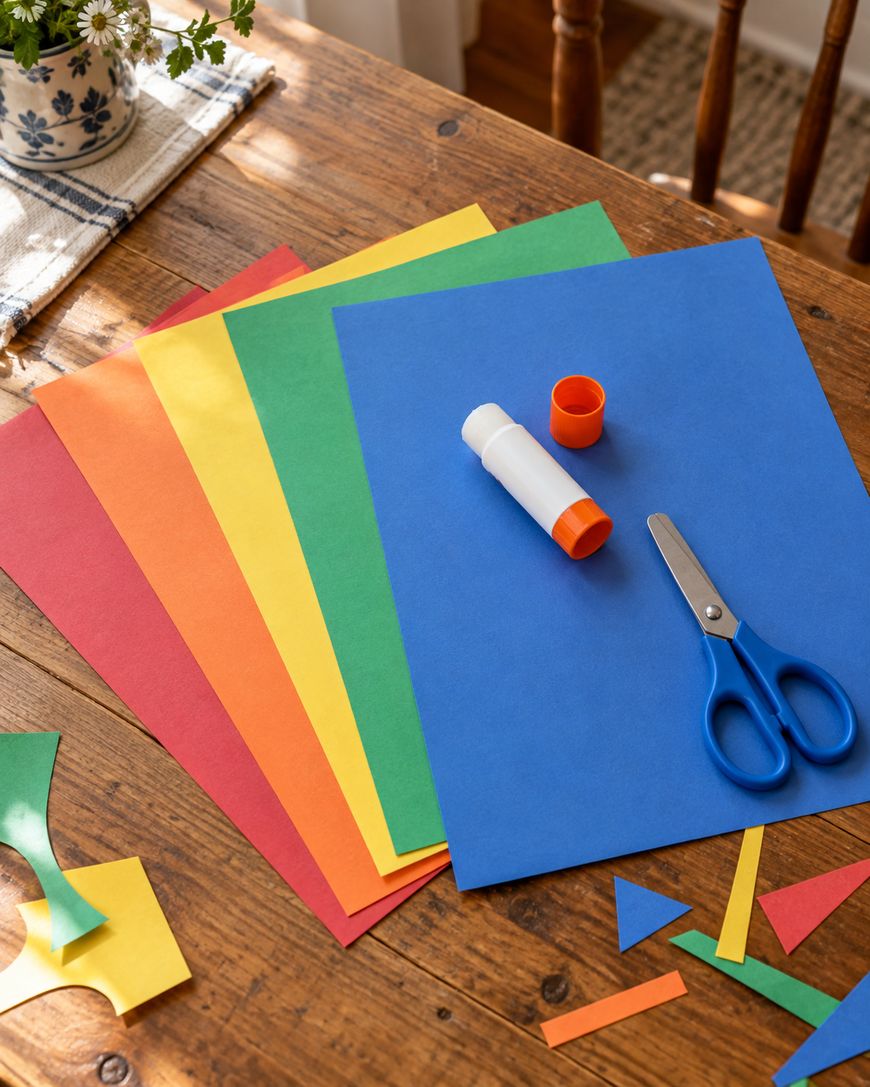
The setup does more work than the project list does. Keep the paper, glue sticks, safety scissors and markers in one open bin so nobody has to go hunting when the mood strikes.
A tray or an old baking sheet under the work gives kids a visible boundary and gives you something you can carry to the sink afterward.
Scissors deserve a word of their own. Blunt tipped safety scissors are the sensible default for young hands, and small paper offcuts are worth clearing away as you go if you have a crawling baby or a toddler in the room.
Glue sticks beat liquid glue for most construction paper crafts because they hold fast without soaking the sheet and curling it. Keep liquid glue for anything heavy, like layered cardboard or pom poms.
Set out fewer colors than you own. A limited palette produces better looking results and cuts the paralysis of choosing, and you can always bring out more once a project is underway.
What to Do With Everything Your Kids Make
Every craft session ends with the same question, so decide the answer in advance. A wire strung across one wall with clips lets kids swap their own work in and out, which they enjoy more than watching you file it away.
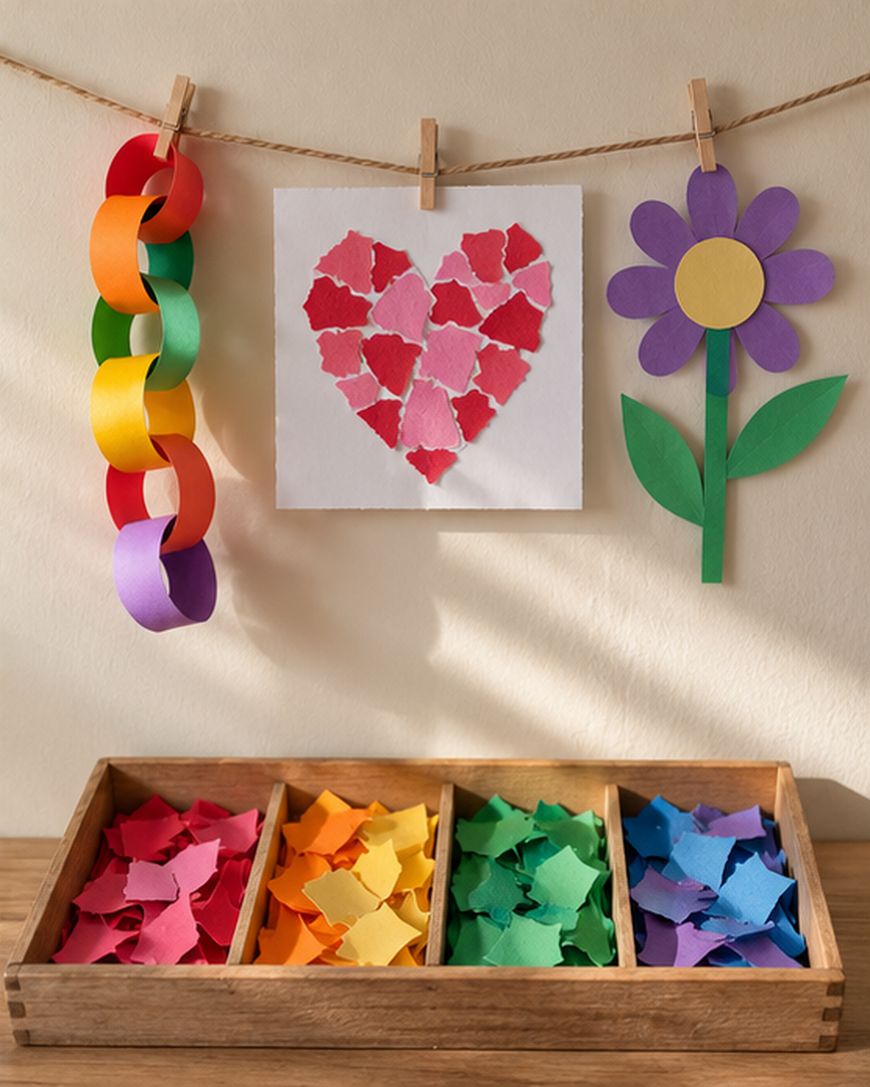
Give each finished piece a week on display, then photograph it before it goes.
Keep one flat box per child for the pieces that genuinely earned it. Handprint crafts, first written names and anything with a face they were proud of are the ones worth the space.
Photograph the bulky projects instead of storing them, since a lantern flattens badly and a photo of your kid holding it ages better than the lantern will.
The rest can go in the recycling once the excitement has passed, ideally not while they are watching. Some families run a quiet Sunday night clear out, and nobody has ever asked after a missing paper chain.
Why Construction Paper Crafts Still Beat the Fancy Kits
Craft kits arrive with the decisions already made, which is convenient and a little bit hollow. Construction paper crafts hand your kid a blank sheet and a pair of scissors, and whatever comes out is theirs.
That gap is where the actual interest lives.
There is also the cost. A pack of construction paper runs a fraction of what a single themed kit costs and stretches across dozens of afternoons instead of one.
When a project goes wrong you simply pull another sheet, and nothing has been wasted except a little paper.
Construction paper is forgiving in a way that matters for small hands. It tears cleanly, folds without cracking, takes glue, marker, crayon and tape, and holds a shape well enough to stand up on a shelf.
We also like that the whole thing packs down flat. A pack of paper and a glue stick fit in a bag for a restaurant, a long car ride or a grandparent’s house, which cannot be said for the kit with forty separate pieces.
Construction Paper Crafts Questions and Answers
What can we make with construction paper if we have nothing else?
Paper chains, snowflakes, fans, cones and woven mats all need only paper and something to fasten with. If you have no glue at all, folded and slotted projects like cones and fans still work, since the paper holds itself together once the cuts interlock.
How do we stop construction paper from fading?
Construction paper fades in direct sunlight faster than most craft papers do. Display finished pieces on an interior wall rather than a sunny window, and photograph anything you want to keep long term rather than relying on the paper itself.
What is the best glue for construction paper crafts?
A glue stick handles most projects without warping the sheet, which liquid glue tends to do when applied heavily. Save white liquid glue for attaching heavier add ons like pom poms, buttons or layered cardboard, and give those pieces time to dry flat under something weighted.
How do we keep older kids interested?
Give them a constraint instead of a project. One color only, no scissors, must stand up on its own, or has to fit inside a mug all push older kids into problem solving, which is usually more engaging for them than following a set of steps.
Can construction paper crafts work for a group?
They work well for groups because the material is cheap enough to hand out freely. Set up one shared supply station in the middle of the table, precut a few of the fiddlier shapes ahead of time, and pick a project with a wide range of acceptable outcomes so nobody is comparing results.
How do we store leftover scraps?
One clear zip bag or a shoebox for offcuts is enough, sorted loosely by color if you have the patience. Scraps are the best material for mosaics and confetti style projects, so a full scrap box actually makes the next session faster to start.
Pick One and Get Started
The hardest part of construction paper crafts is deciding, so let your kids choose from this list rather than picking for them. Pull out the paper, the glue stick and the safety scissors, and give the project a proper hour instead of squeezing it in before dinner.
Start with a paper chain if you want a guaranteed win, or go straight to the accordion caterpillar if your kids are ready for something with a bit more build to it. Whatever you pick, construction paper crafts are cheap enough that a failed attempt costs you nothing but another sheet.


Leave a Reply