Last updated: July 20, 2026
Kids organization hacks are most effective when they are built around how children actually use their space. These room-by-room strategies use specific products and systems that are easy for kids to maintain on their own.
Bedroom Organization Hacks for Kids
A child’s bedroom is ground zero for clutter, but a few targeted systems can transform it into a space that practically organizes itself.
Toy Rotation Keeps Things Fresh and Manageable
Toy rotation is one of the highest-impact kids organization hacks you can implement this weekend. Store two-thirds of your child’s toys in labeled bins in a closet or under the bed, then swap out a new set every two to three weeks.
Kids engage more deeply with fewer toys, and the rotation makes the new batch feel exciting without any new purchases. Use large, lidded IRIS USA stackable storage bins (the 58-quart size works well) to keep stored toys dust-free and easy to access during swap day.
Under-Bed Storage Reclaims Wasted Space
The space under a twin or full bed holds far more than most parents realize. A set of rolling under-bed storage drawers, such as the SONGMICS rolling storage organizer with three large drawers, slides out easily even for younger kids.
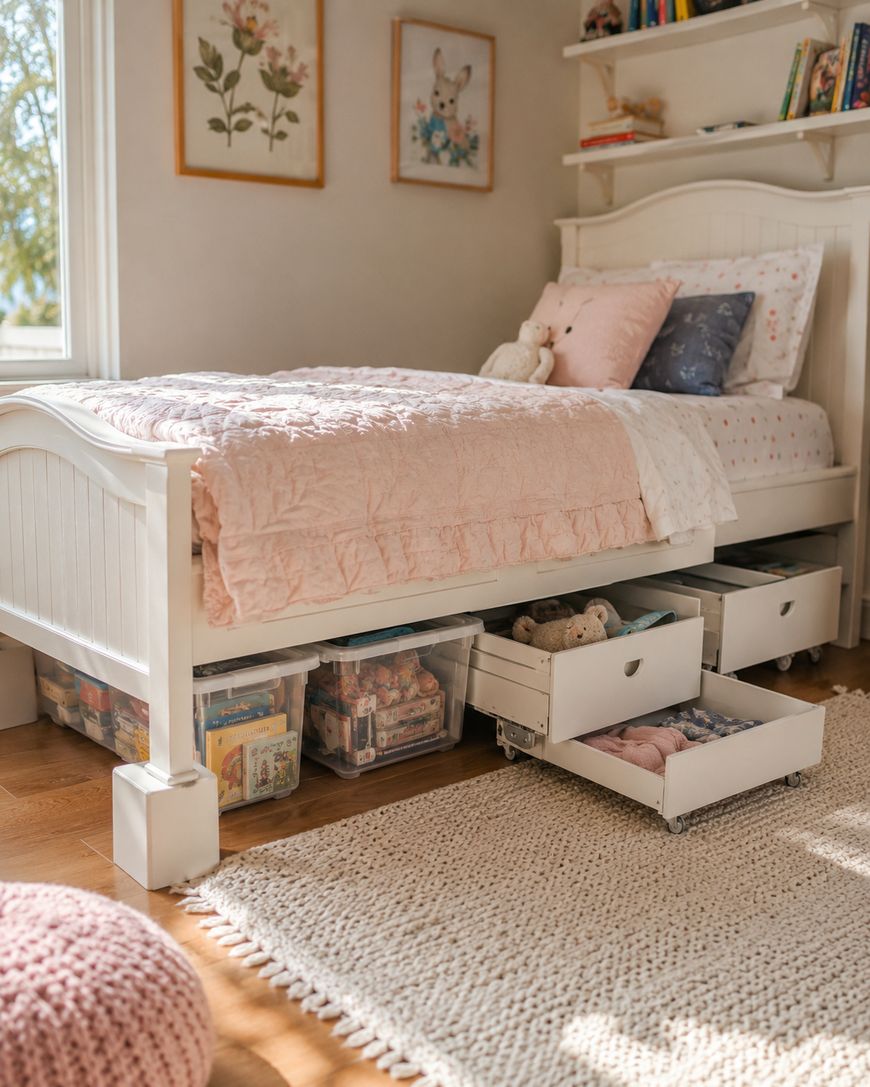
Reserve this space for seasonal items, spare bedding, or the current toy rotation overflow. Adding a furniture riser set (3-inch lifts are enough) gives you clearance for standard 6-inch-tall bins without purchasing a new bed frame.
Labeled Bins Make Tidying Automatic
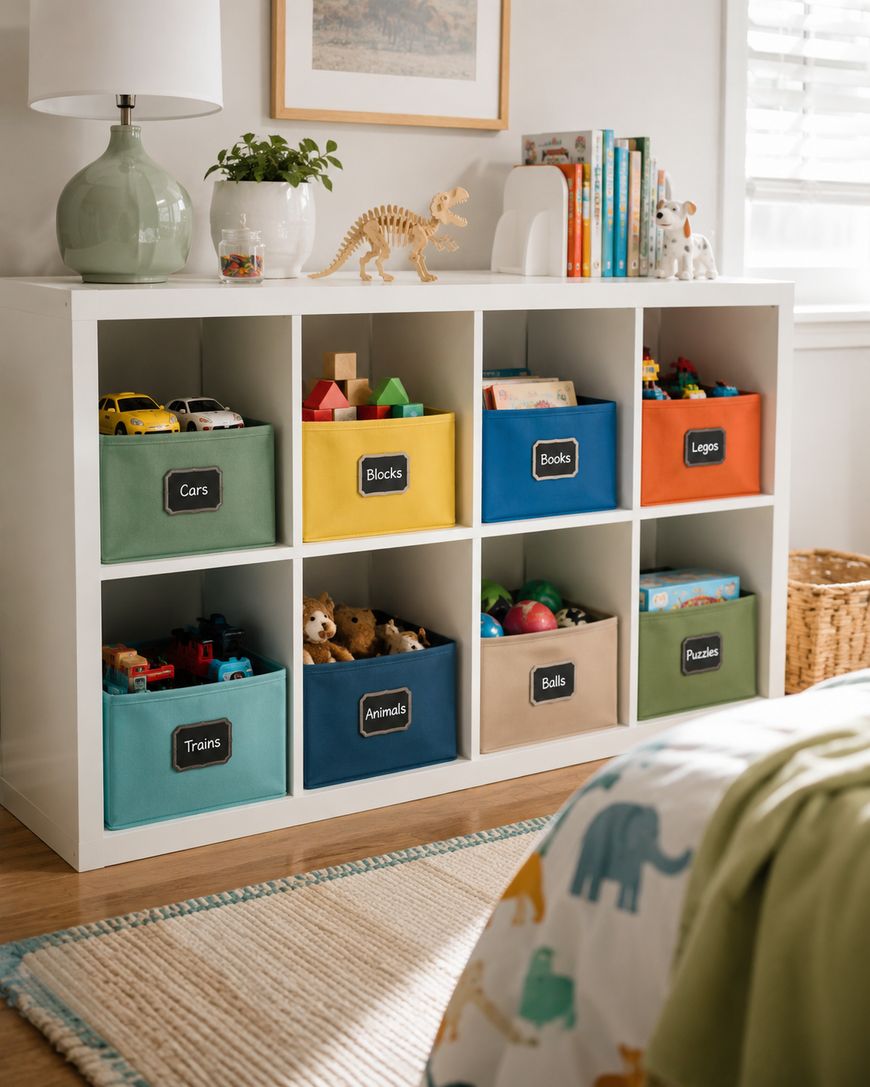
Open-top fabric bins with clear label holders, like the Brightroom assortment from Target, give every category of toy a visible home. Place them on low IKEA KALLAX shelving units at a height your child can reach independently.
The KALLAX 2×4 unit (30 by 57 inches) fits eight bins perfectly and doubles as a room divider in larger bedrooms. Pair it with chalkboard labels so categories can be updated as your child’s interests shift without buying new labels.
Book Display Rails Keep Reading Accessible
Wall-mounted picture ledges, specifically the IKEA MOSSLANDA rail at 45 inches wide, display books face-out at eye level for children. Face-out display dramatically increases the chance a child will pick up a book independently.
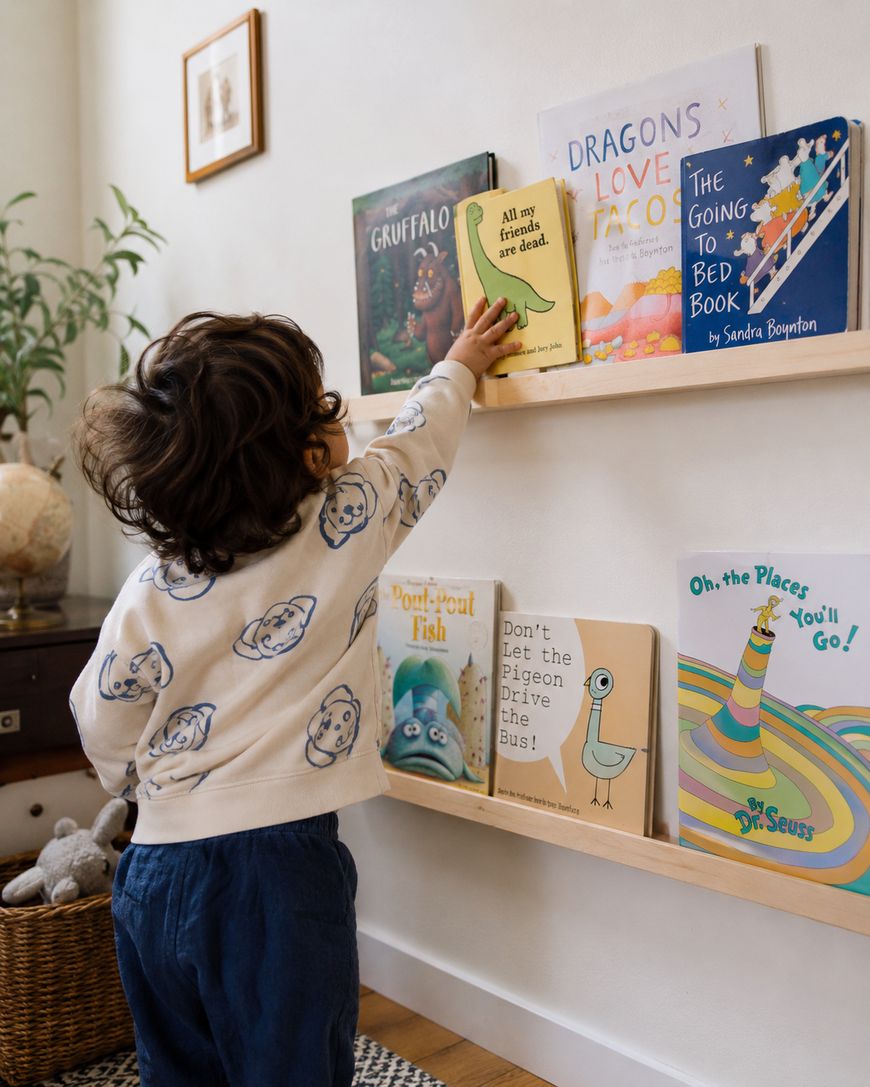
Install two rails stacked 12 inches apart on a single wall to hold 20 to 30 books without floor space. Each rail holds up to 22 pounds, so even a full row of hardbacks is secure.
Closet and Clothing Hacks That Make Getting Dressed Easier
Kids organization hacks for closets work best when you design the space around your child’s actual height and motor skills, not around a standard adult closet setup. A few targeted adjustments to the hanging height, labeling system, and seasonal inventory will dramatically cut down on morning chaos.
Low Hanging Rods Put Kids in Charge
Adding a second hanging rod at 36 to 40 inches from the floor, using an adjustable closet rod extension or the ClosetMaid 2-Tier Expandable Clothes Organizer, brings hanging clothes within reach for kids ages 3 and up. When children can hang their own jackets and school uniforms, morning chaos drops significantly.
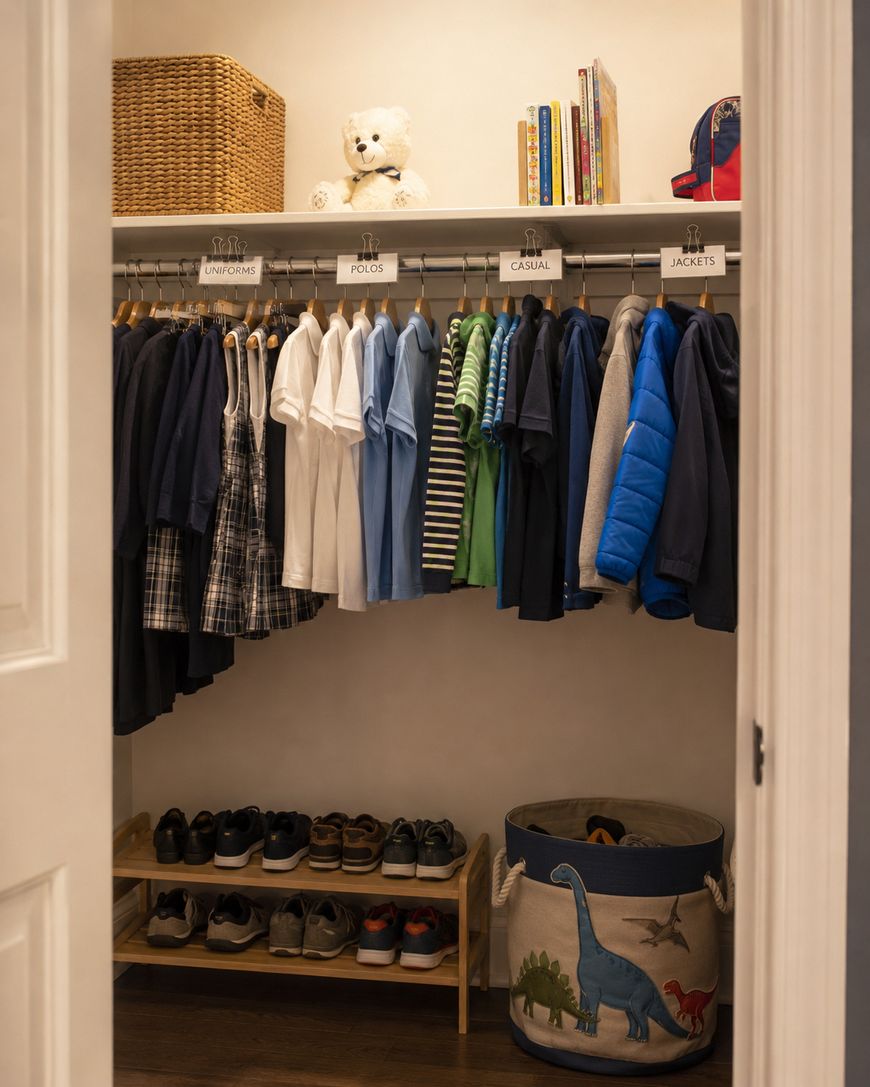
Divide the rod into labeled sections using binder clips with paper tags: school clothes on the left, casual clothes in the middle, and special occasion items on the right. This visual system means kids can grab what they need without pulling everything off the rod.
Picture Labels Turn Drawers Into a Self-Serve System
Clip-art or photo labels taped to the front of each dresser drawer eliminate the guessing game. Print simple images (socks, underwear, shorts) and laminate them with a standard home laminator before attaching with Command Strips so they are removable and reusable.
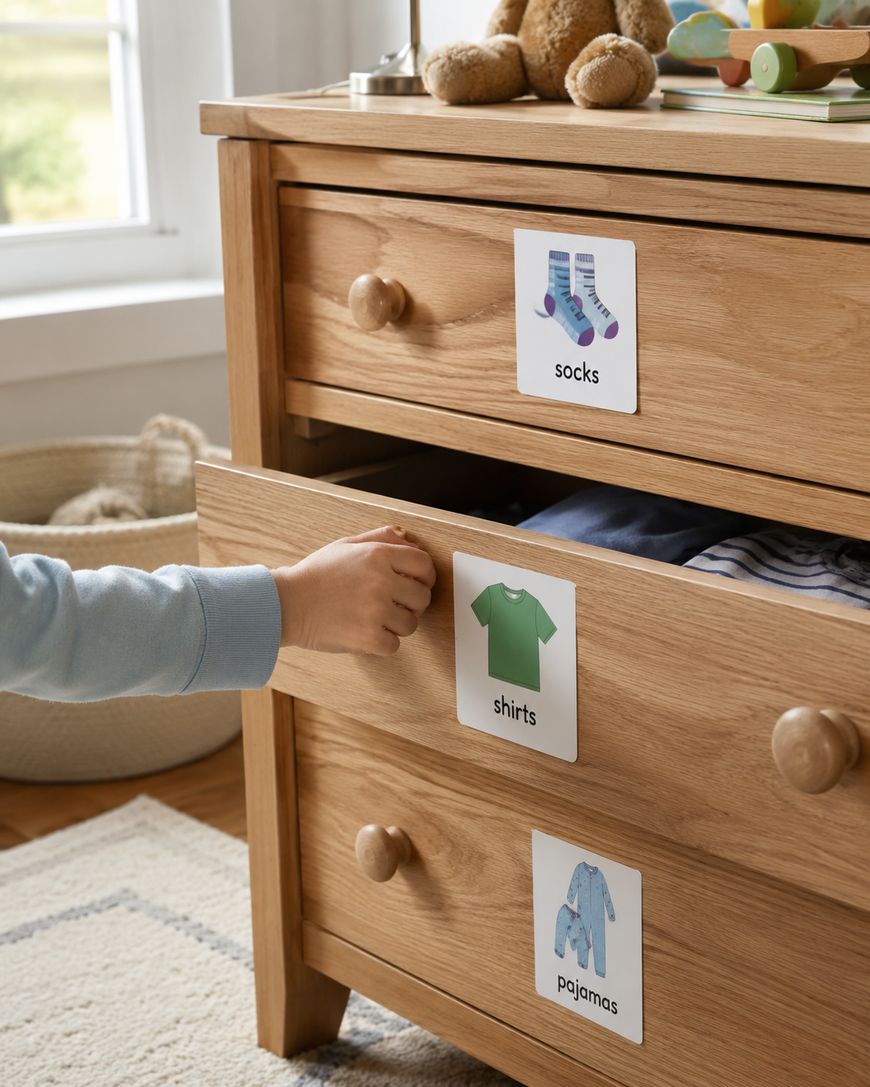
For children who are beginning to read, pair each image with the word. This dual-format label bridges the gap as literacy develops and teaches kids to read functional words in context.
Seasonal Rotation Keeps the Closet from Overflowing
Twice a year, swap out off-season clothing into vacuum storage bags (the Space Saver brand rolls down to one-third the original volume) and move them to a high shelf or under-bed bin. This keeps only current-season clothing accessible in the closet and prevents the complaint that often comes from an overcrowded rod.
Label each vacuum bag with a masking tape strip noting the size range and season so you are not guessing at the next swap.
Playroom Organization Systems That Children Can Maintain
The biggest mistake parents make with playroom organization is creating systems that require adult intervention to maintain. Every bin, shelf, and zone in a well-organized playroom should be something a five-year-old can operate independently.
Activity Zones Create Order Without Rules
Designate specific areas of the playroom for different activity types: one corner for building blocks and construction toys, one area for art supplies, and one reading nook with floor cushions. Physical separation of zones naturally contains mess to one area at a time.
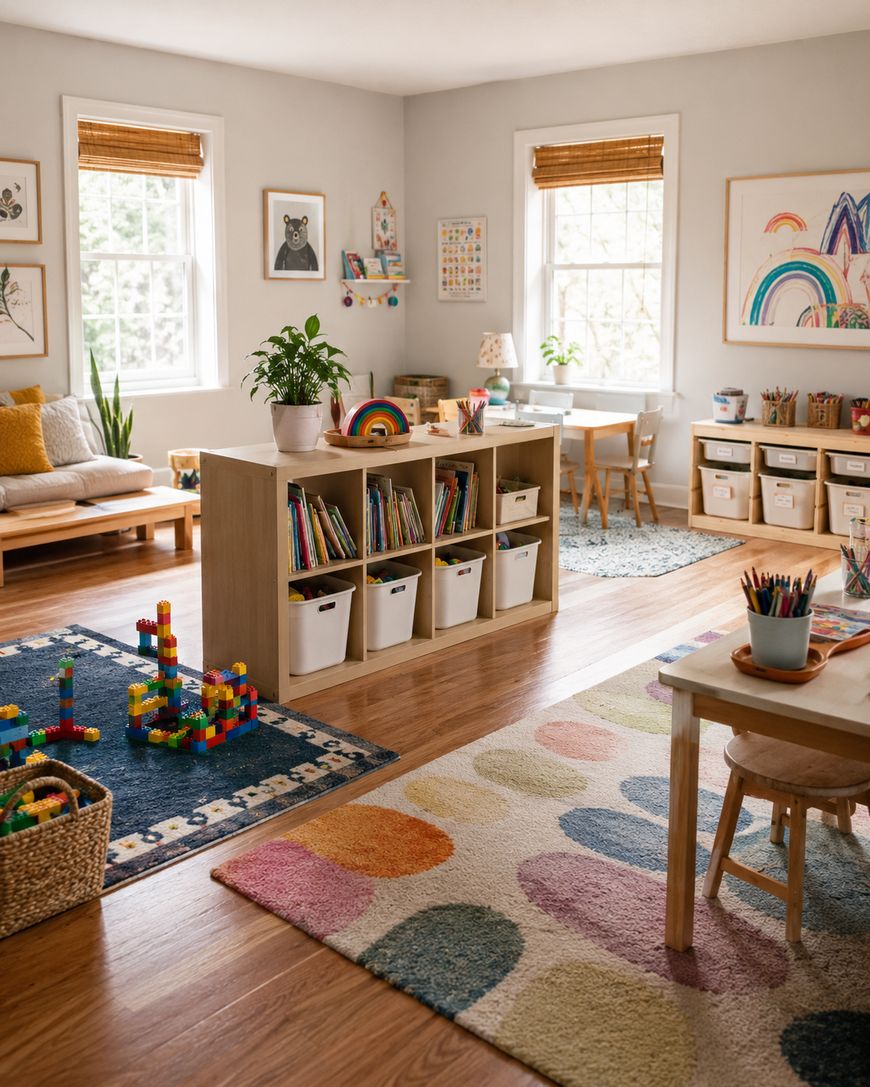
Use a low bookshelf or a length of IKEA KALLAX units as a zone divider. Children internalize the zones quickly and often police each other to keep items in the right area.
Clear Containers Let Kids See What They Have
Opaque bins require a child to open and search every container. Switching to clear stackable bins, specifically the Sterilite 6-quart clear stacking containers, means kids can identify the bin they need at a glance.
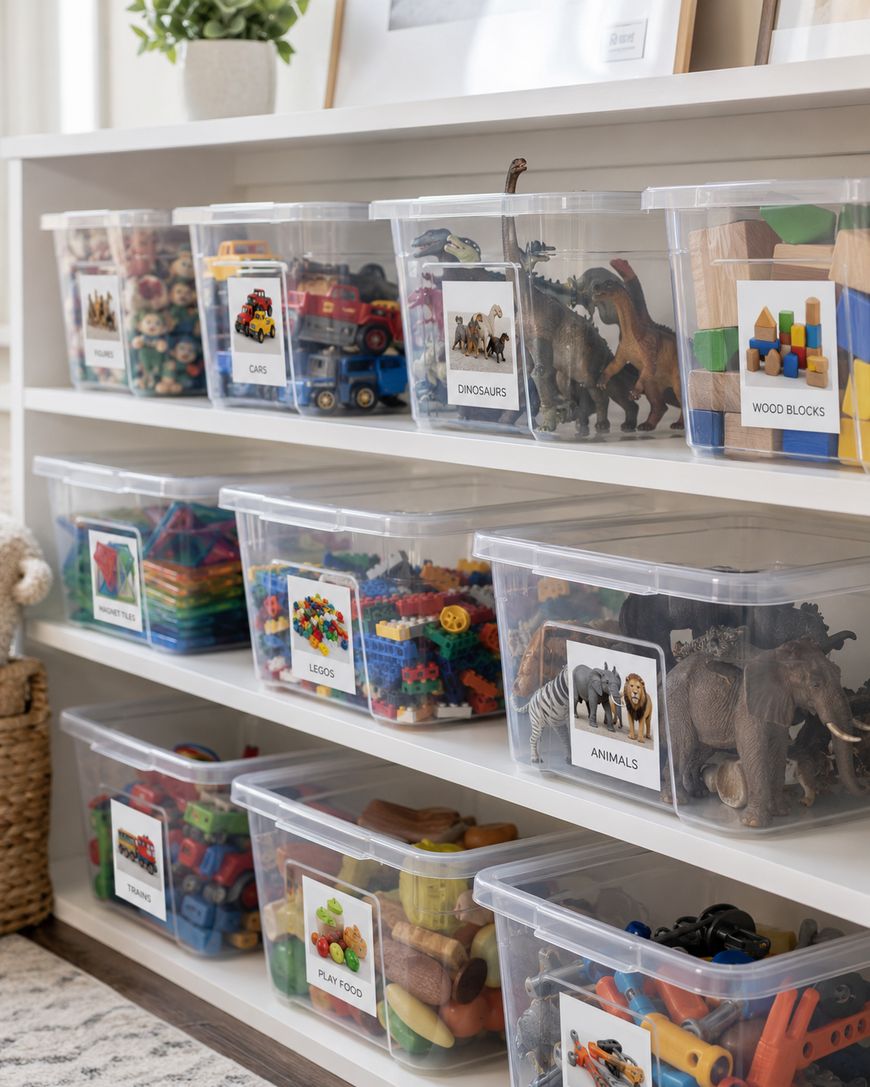
Stack them on open shelving no higher than 48 inches so children can retrieve and return bins independently. Reinforcing the bin labels with a photograph of the contents cuts return time in half for younger kids.
A Toy Library System Teaches Responsibility
The toy library concept works like a public library: every toy has a home, one category comes out at a time, and it goes back before the next one comes out. Use a simple checkout basket near the door as the active play zone, and keep everything else shelved.
This system works especially well for kids ages 5 and up who can understand simple rules. Start with one shelf at a time rather than overhauling the entire room in a single afternoon.
Homework and School Supply Organization Hacks
A dedicated workspace with the right supplies within reach removes friction from the after-school routine. The more you front-load the setup, the less mental energy everyone spends on logistics when it is time to sit down and work.
A Dedicated Homework Station Eliminates the Setup Tax
The biggest homework time-waster is gathering supplies before starting. Set up a permanent homework station, even a small one, with everything already in place: pencils, erasers, ruler, scissors, glue sticks, and a pencil sharpener.
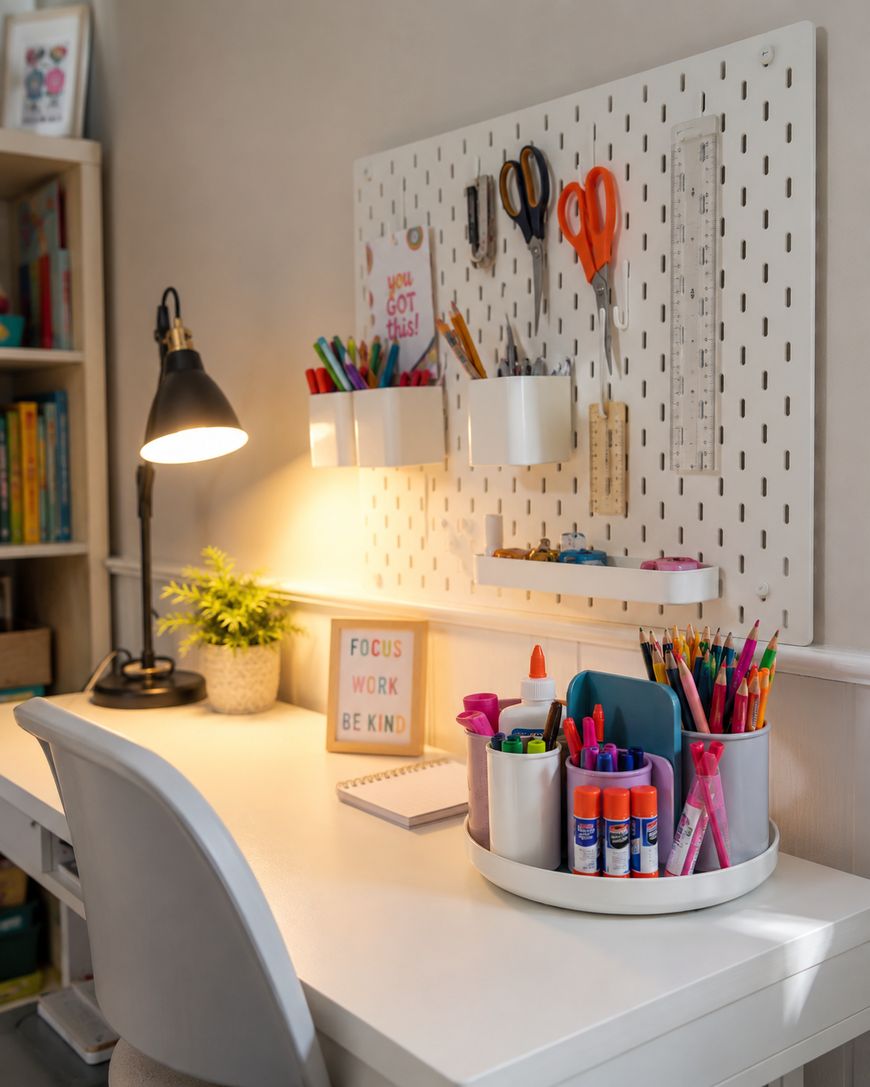
A wall-mounted IKEA SKADIS pegboard (22 by 22 inches) above the desk holds supplies in hooks and small bins so the desk surface stays clear. The pegboard system is modular, meaning you can rearrange it as your child’s needs change year over year.
A Backpack Hook System Keeps Mornings Calm
Install a row of Command Large Utility Hooks at your child’s shoulder height beside the front door or inside a mudroom, one hook per child. Placing this station near the exit door creates a natural drop zone that becomes automatic within two weeks of consistent use.
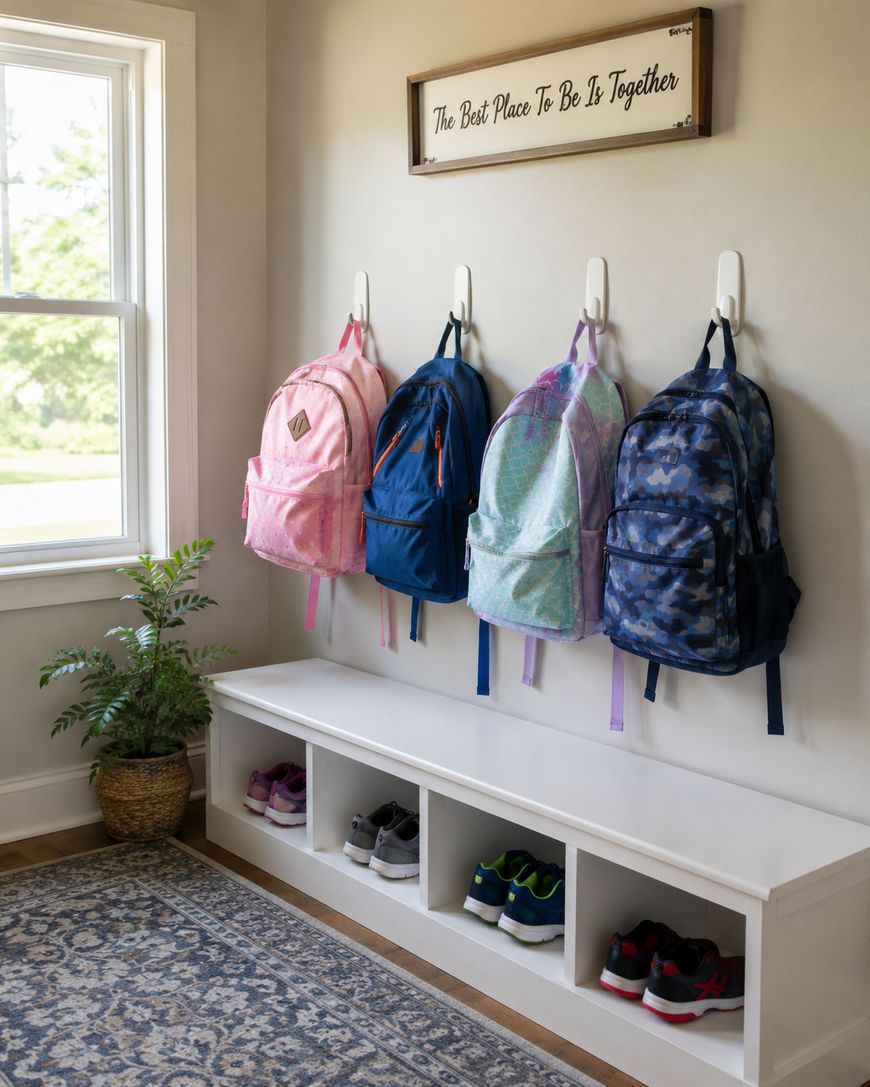
The rule is simple: the backpack goes on the hook the moment you walk in the door, which means homework, forms, and library books stay together and are never lost in the shuffle of after-school coats and shoes.
A Supply Caddy Moves Where Kids Do
A rotating desktop organizer caddy, such as the Deflecto Kids Rotating Desktop Organizer (6 compartments, 7.5 inches tall), gives every supply a slot and spins so kids can reach what they need without moving bins around. The handle makes it easy to bring to the dining table when the homework station is in use by a sibling.
Keep it stocked with a fresh supply checklist taped inside the lid so a weekly Sunday refill becomes a five-minute habit rather than a scramble on Wednesday night.
Morning Routine Hacks That Make Themselves
Kids organization hacks applied to the morning routine can turn a chaotic, late start into a smooth, almost independent process. When children can follow a visual system without being reminded at every step, mornings feel better for everyone in the house.
A Picture Schedule Takes You Out of the Equation
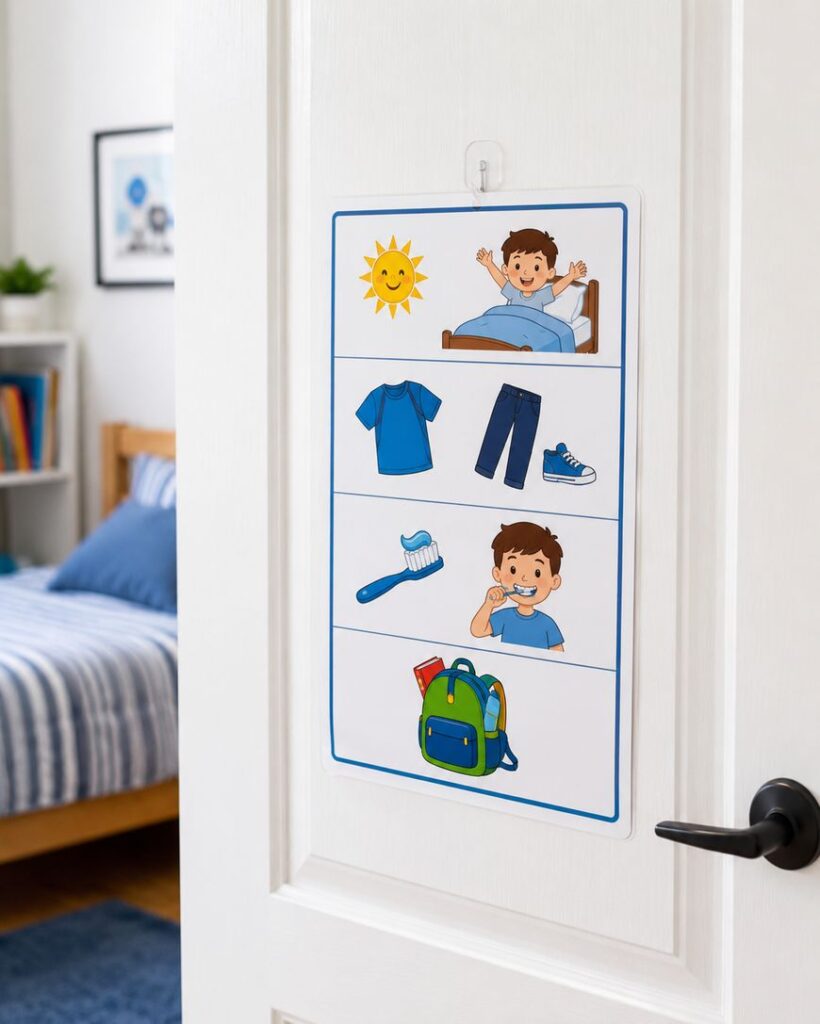
Print a morning routine chart with photographs or drawn icons for each step: wake up, get dressed, eat breakfast, brush teeth, grab backpack. Laminate it and mount it at eye level near your child’s bedroom door using Command Strips.
Kids as young as 3 can follow a visual schedule independently once it is practiced for a week. The chart shifts the authority from the parent to the system, reducing power struggles over each step.
An Outfit Prep Station Eliminates Morning Decisions
A seven-slot hanging organizer, specifically the Whitmor 7-Pocket Over-the-Door Organizer, holds a complete outfit in each pocket, one per school day. Sunday evening becomes outfit-prep time, and mornings lose one of their biggest friction points.
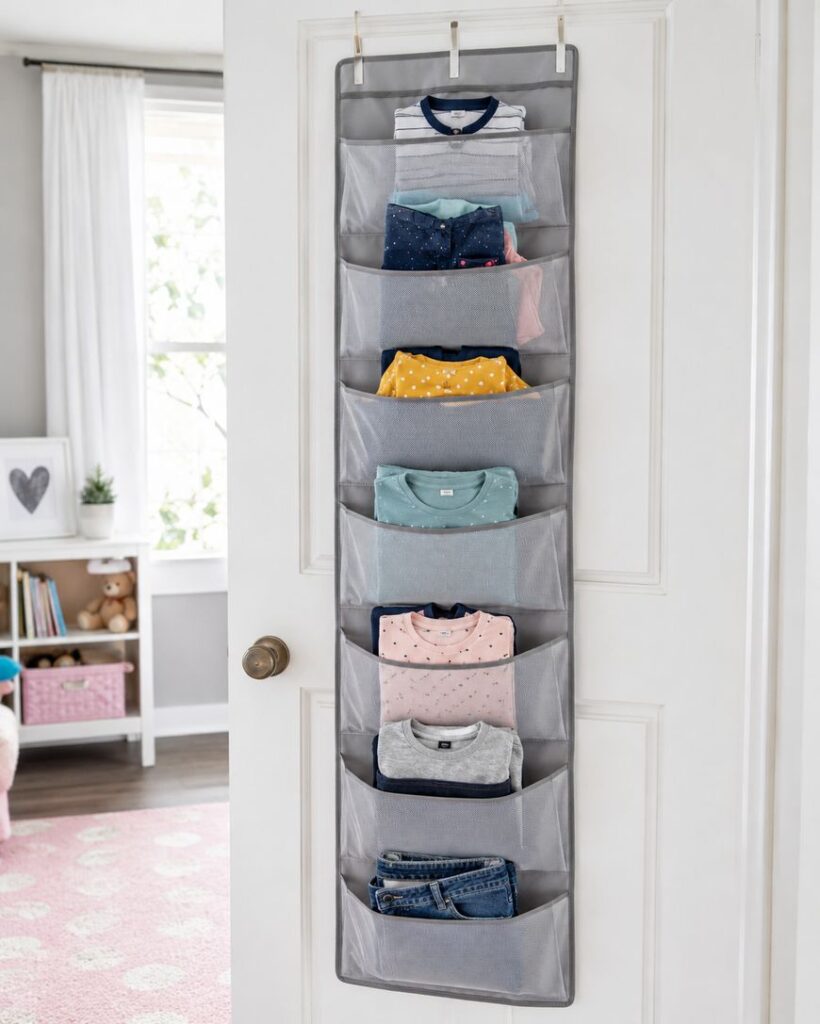
Let children choose their own outfits for each slot within parameters you set (weather-appropriate, school dress code). This builds autonomy while keeping the morning on track.
A Breakfast Station Speeds Up the Final Rush
Dedicate one low cabinet shelf or a small rolling cart to everything needed for a self-serve breakfast: cereal, bowls, spoons, and small pitchers pre-filled with milk the night before. The IKEA RASKOG utility cart (3 tiers, 14 by 17 inches) works perfectly as a mobile breakfast station that rolls to the table and back.
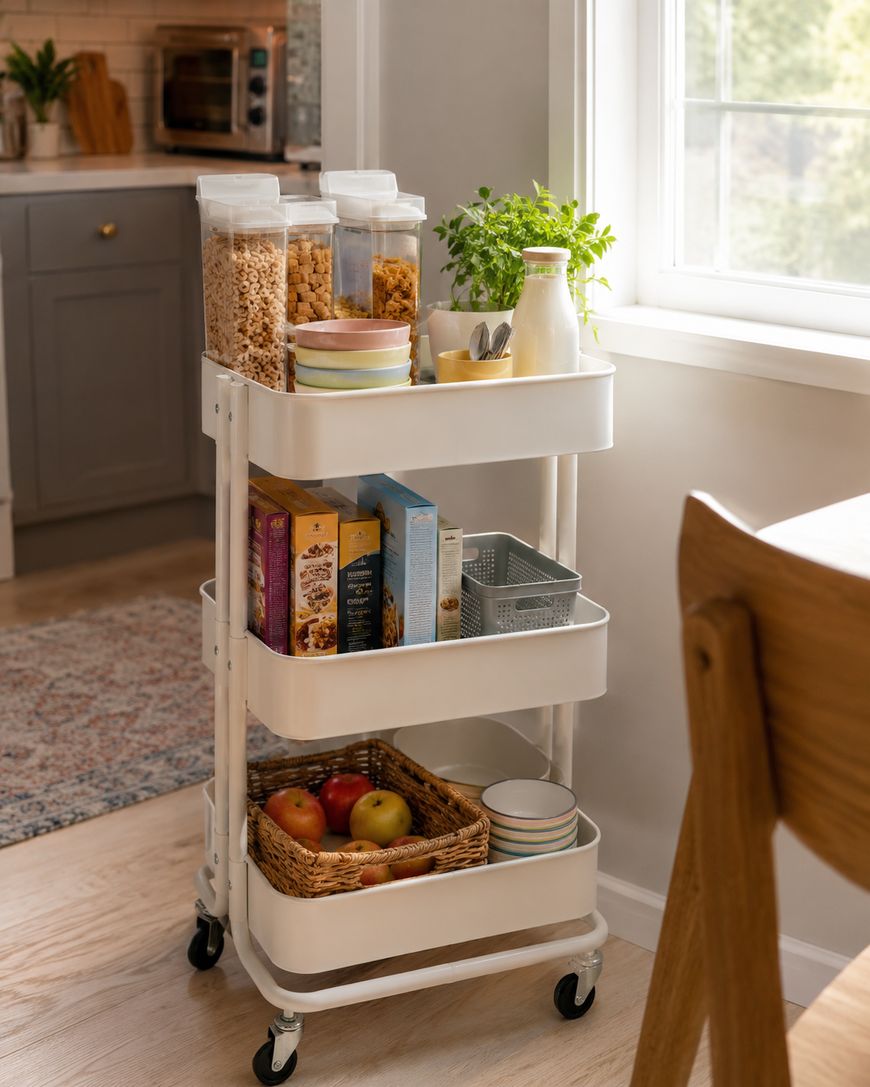
Kids who can serve their own breakfast free up 10 to 15 minutes of parent time during the morning crunch and build a genuine sense of competence.
Q&A: Kids Organization Hacks
What age should kids start learning to organize their own spaces?
Children as young as 2 can begin learning to put items back in labeled bins with picture labels. The key is making the system match the developmental stage, with simple choices, low shelves, and visual cues rather than written labels alone.
By age 5 to 6, most children can manage a full bedroom tidying routine with minimal prompting if the systems are set up correctly from the start.
What are the best organization products for kids’ rooms?
The most consistently useful products are the IKEA KALLAX shelving unit, clear Sterilite or IRIS USA stackable bins, Command hooks and strips, and chalkboard or laminated picture labels. These four categories handle the vast majority of storage needs at a low cost per unit.
Avoid elaborate specialty organizers that require adult intervention to use. Kids are most likely to maintain systems that require only one step to put something away.
How do you get kids to actually keep their rooms organized?
Start with systems that match how your child naturally plays. If toys are scattered because there is no obvious place for them, the system is the problem, not the child.
Involve kids in setting up the system and choosing labels or bin colors. Ownership of the design dramatically increases follow-through.
How often should you reorganize a kids’ space?
A seasonal review every three to four months keeps systems from becoming obsolete as kids grow and interests change. A full reorganization is rarely necessary if you build in small weekly resets, such as a 10-minute Sunday tidy before the week begins.
The toy rotation swap, done every two to three weeks, naturally prevents accumulation without requiring a major overhaul.
Are clear bins or labeled opaque bins better for kids?
Clear bins win for playrooms and homework stations where fast retrieval matters. Opaque fabric bins work well on bedroom shelving where the visual look is a priority and categories are broad enough to remember without seeing inside.
Combining both, clear bins for small parts and fabric bins for larger category groups, gives you the best of both systems.
Do kids organization hacks work for small spaces?
Vertical storage is the key to small-space organization. Wall-mounted IKEA MOSSLANDA rails, SKADIS pegboards, and over-the-door organizers reclaim wall and door space that is unused in most kids’ rooms.
Even a 100-square-foot bedroom can accommodate a full toy, clothing, and book system when storage goes up rather than out.
Building Organization Habits That Last
The most effective kids organization hacks share a common principle: they make the right choice the easiest choice. When shelves are at the right height, bins are labeled with pictures, and morning stations are pre-loaded, children naturally maintain order because the system works with their habits rather than against them.
Start with one room or one routine this week, use the specific products listed above, and build from there. A well-organized space is one of the most practical gifts you can give a child, and it pays dividends every single morning.


Leave a Reply