Last updated: May 30, 2026
You want Montessori activities that actually work at home, not vague advice about “following the child.” This guide gives you specific activities, exact materials, and the age ranges where each one shines.
Practical Life Montessori Activities
Practical Life is the foundation of the Montessori approach, developed by Maria Montessori herself as the starting point for children as young as 18 months. These activities connect children to real tasks in the household, building concentration, coordination, and a sense of genuine contribution.
Every Practical Life activity has a clear beginning, middle, and end. That cycle of task completion is what trains the child’s attention span far more effectively than any screen or toy.
Pouring Water (18 months to 3 years)
Set out two small ceramic pitchers, a tray, and a sponge for spills. The child pours water from one pitcher to the other and back again, refining wrist rotation and hand-eye coordination with every repetition.
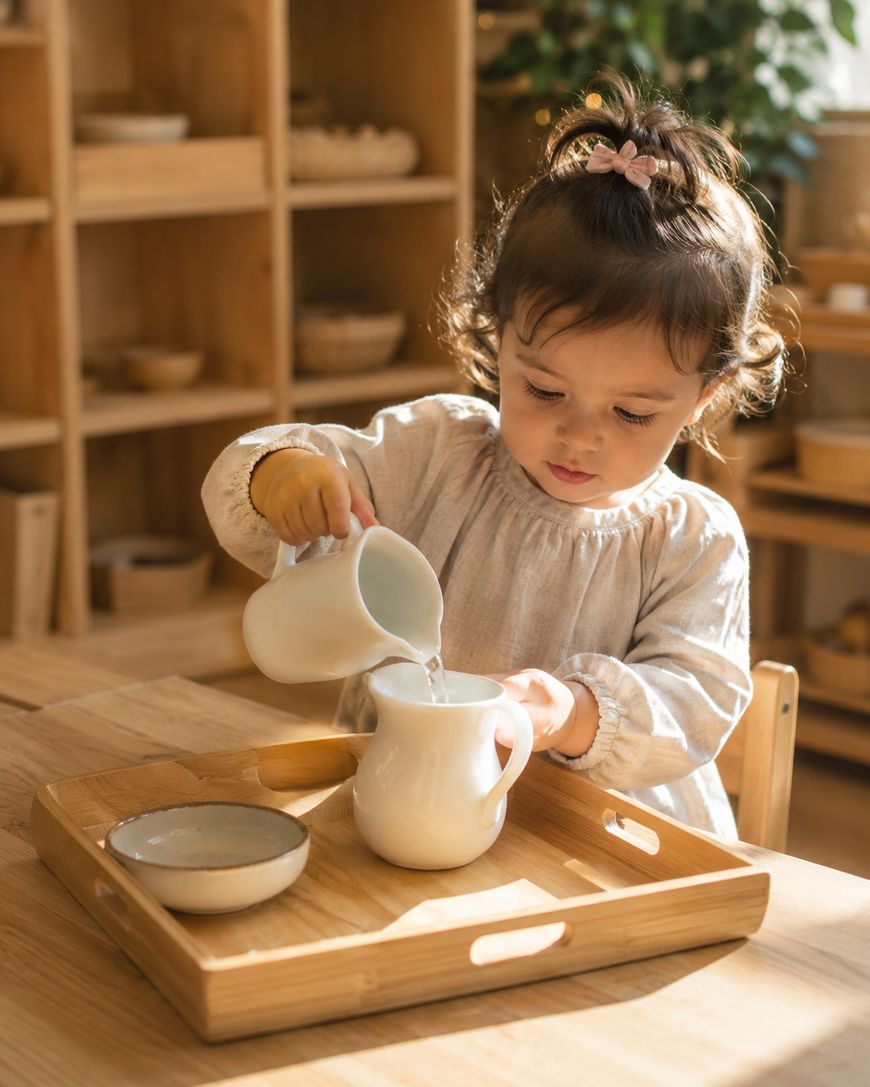
This activity develops muscular control, concentration, and the understanding that mistakes are manageable. Keep a sponge on the tray so the child can clean up independently.
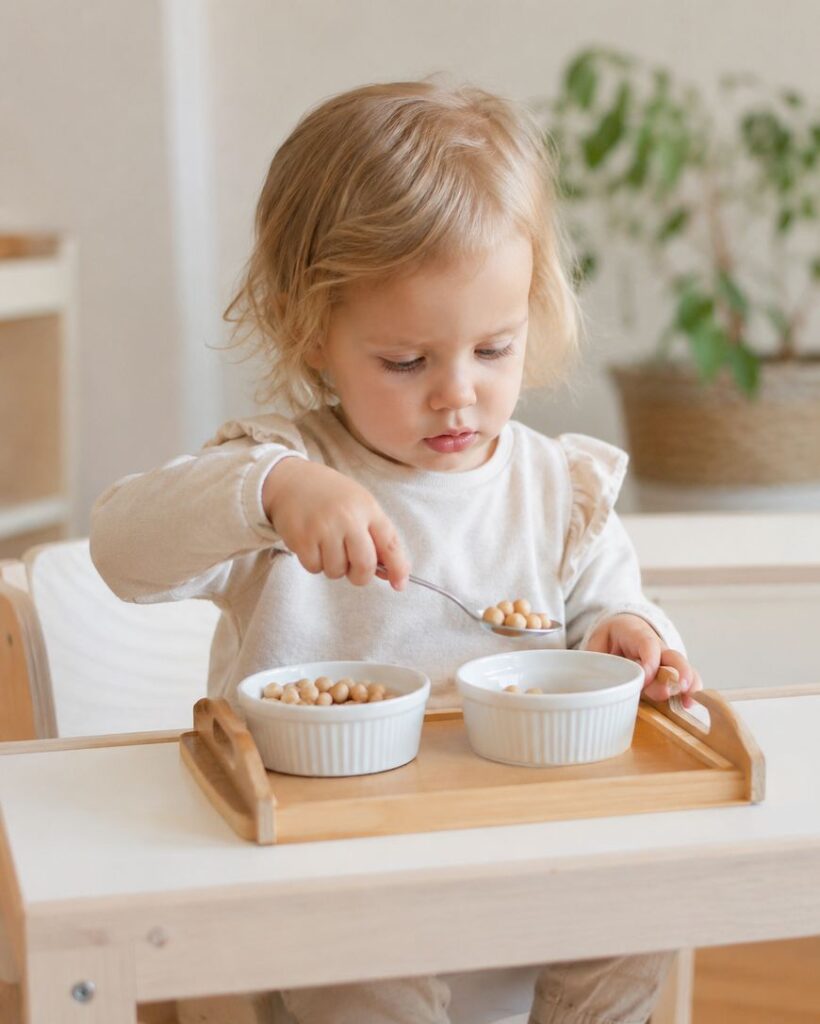
Spooning and Transferring (18 months to 3 years)
Place two small bowls side by side on a tray, one filled with dried chickpeas or large dried beans. The child uses a tablespoon to transfer the beans from one bowl to the other and back again.
This refines the pincer grip and prepares the hand for writing. Increase the difficulty over time by switching to smaller objects or a smaller spoon.
Dressing Frames (2 to 4 years)
Maria Montessori designed a series of wooden frames, each featuring a different fastening: large buttons, snaps, velcro, buckles, zippers, and laces. The child practices each fastening repeatedly on the frame before applying the skill to their own clothing.
Dressing frames give children the dignity of independence long before fine motor skills are fully mature. A child who can button a frame will eventually button their own coat without help.
Food Preparation (2.5 to 6 years)
Age-appropriate food prep tasks include spreading butter on bread with a butter knife, peeling a banana, slicing a soft banana with a crinkle cutter, and washing vegetables. Each task should be set up with child-sized tools on a low table or counter-height stool.
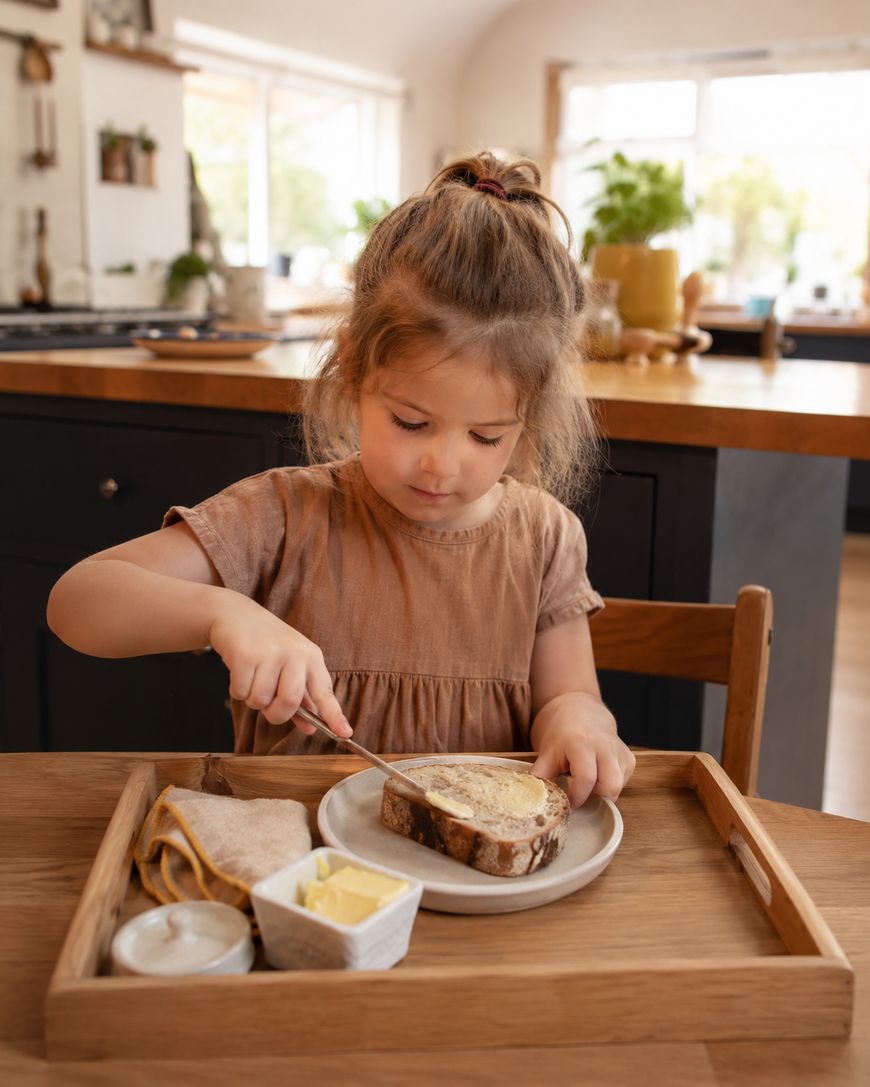
Real food preparation connects children to nourishment and builds pride in contribution. The concentration required to slice a banana without breaking it is profound for a three-year-old.
Sensorial Montessori Activities
Maria Montessori designed Sensorial materials to help children order and classify the sensory impressions they absorb from the world. These Montessori activities isolate one quality at a time, whether size, color, texture, sound, or weight, so the child can perceive it with clarity.
Sensorial work is most powerful between the ages of 2.5 and 5 years, during what Montessori called the sensitive period for refinement of the senses. Each material is self-correcting, meaning the child can see and fix their own errors without adult intervention.
The Pink Tower (2.5 to 5 years)
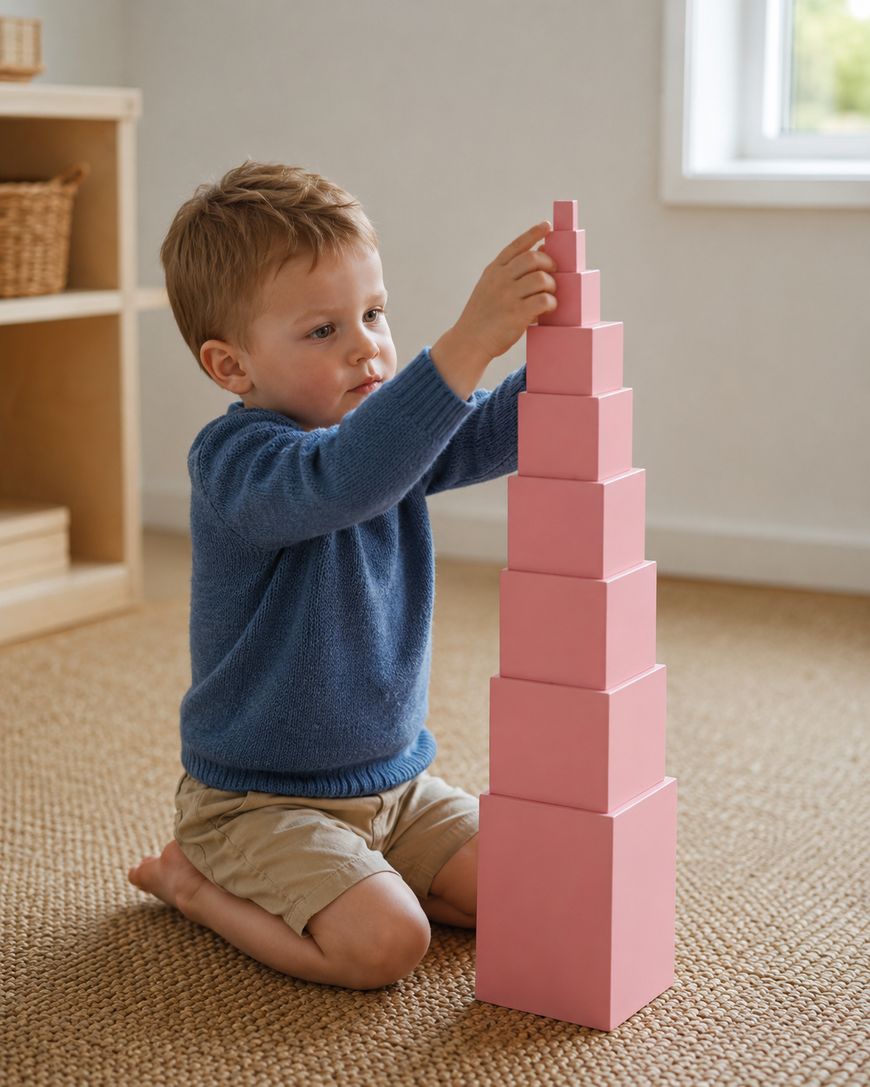
The Pink Tower is a set of ten solid wooden cubes ranging from one cubic centimeter to ten cubic centimeters. The child carries each cube individually to a mat and builds them from largest to smallest into a tower.
It develops visual discrimination of size, muscular control, and the mathematical concept of gradation. Later extensions allow the child to build the tower in combination with other Sensorial materials.
Color Tablets (3 to 5 years)
The Color Tablets come in three sets: the first introduces the three primary colors, the second adds orange, purple, green, pink, gray, black, and white, and the third introduces nine shades of each hue graded from lightest to darkest. Matching and grading the tablets trains color discrimination and develops the vocabulary to describe what the eye perceives.
This foundation supports later work in art, science, and aesthetic appreciation. Children who work with Color Tablets regularly develop an exceptionally precise visual sense.
Fabric Matching (3 to 6 years)
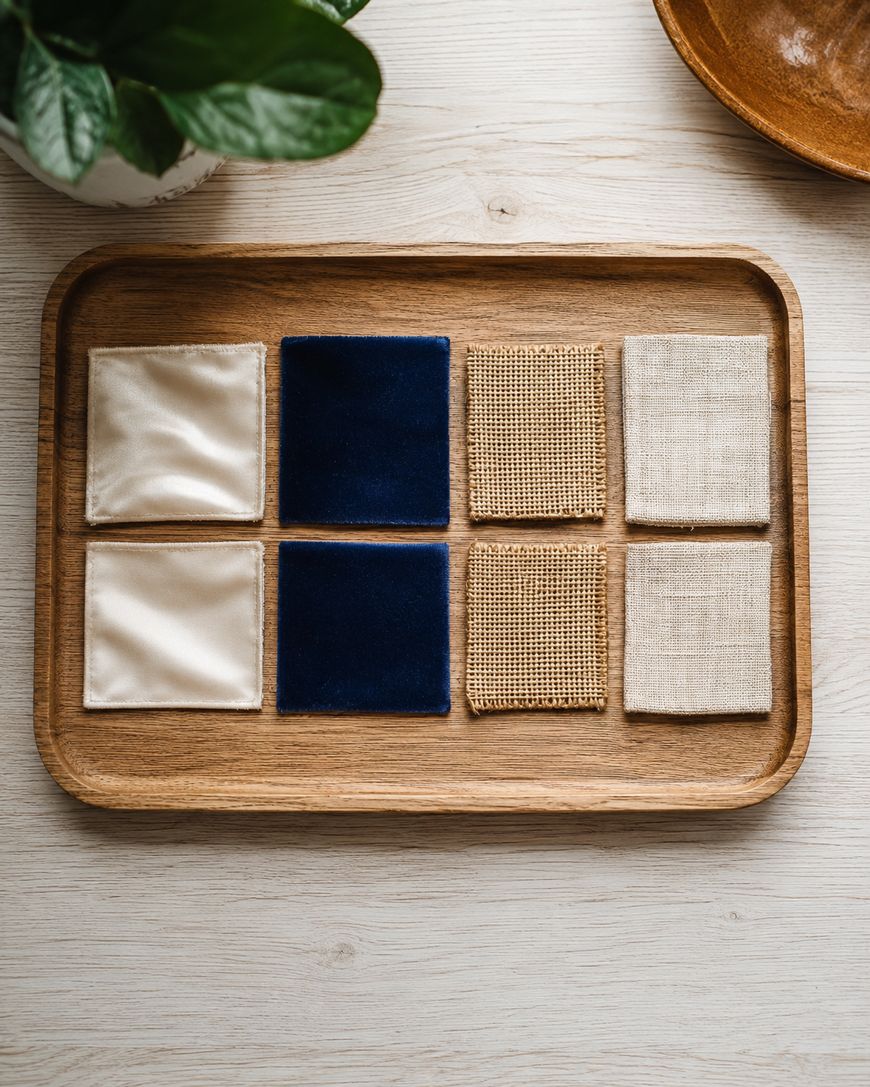
Prepare a set of fabric swatches in pairs: silk, cotton, velvet, linen, burlap, and corduroy. The child feels each swatch, then matches it to its pair by touch alone, with eyes closed or using a blindfold.
Tactile discrimination is one of the most undervalued forms of sensory intelligence. Children who regularly engage in texture matching become acutely observant in their hands-on interactions with the world.
Sound Cylinders (3 to 5 years)
Two sets of six wooden cylinders each contain different fillings, from silent to very loud when shaken. The child shakes a cylinder from one set and finds its matching partner from the other set by sound alone.
This activity trains auditory discrimination, which is a precursor skill for music, phonemic awareness, and language development.
Language Montessori Activities
Montessori Language activities build reading and writing skills through a carefully sequenced series of materials. The approach always moves from spoken language, to phonetic awareness, to symbol recognition, to writing, to reading, in that order.
Children as young as 2.5 years can begin early Language work, and the materials extend all the way through early elementary for children aged 5 to 7.
Sandpaper Letters (2.5 to 4 years)
Each Sandpaper Letter is a wooden tablet with a letter shape cut from fine sandpaper and mounted on a colored background: consonants on blue tablets, vowels on pink. The child traces the letter shape with two fingers while the adult says the phonetic sound of the letter.
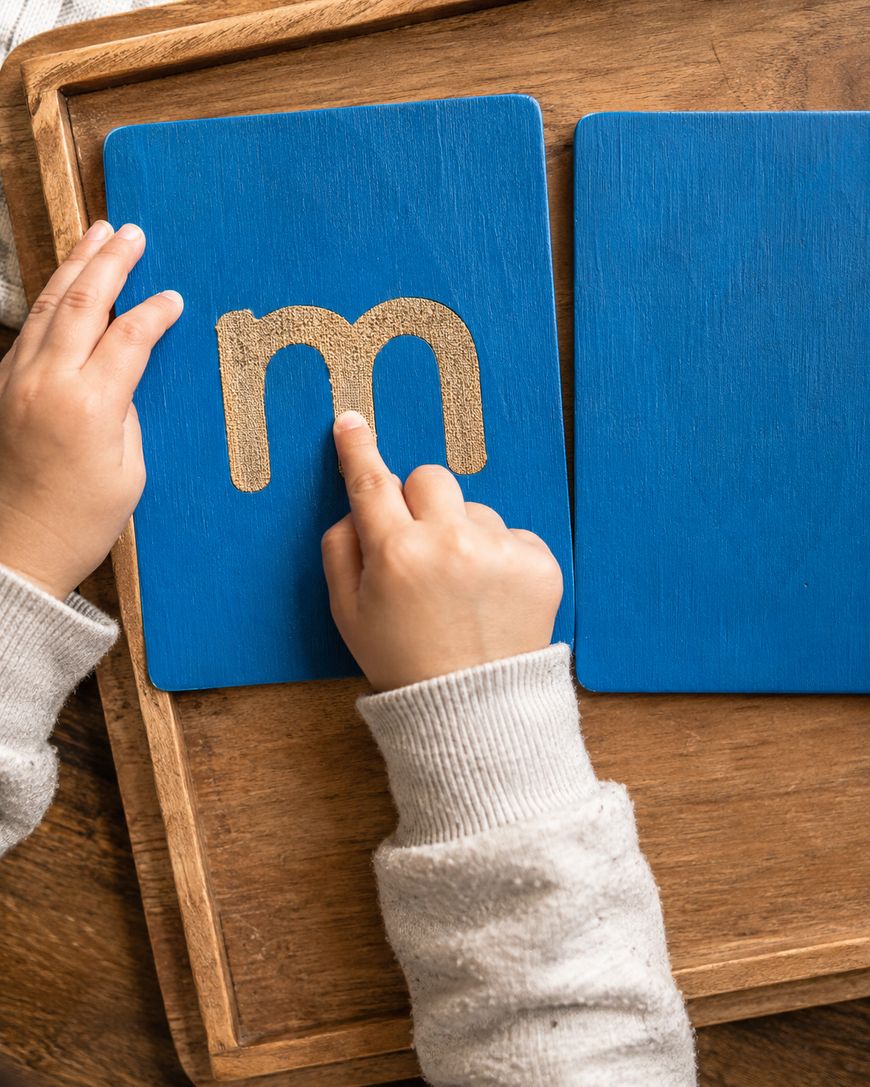
The combination of visual, auditory, and tactile input creates a powerful three-part sensory impression of each letter sound. Children typically learn letter sounds far more quickly through sandpaper letters than through paper-based drill.
The Moveable Alphabet (4 to 6 years)
The Moveable Alphabet is a large wooden box containing multiple copies of each letter: blue for consonants, red for vowels. The child uses the loose letters to compose words, then sentences, on a mat without needing to write a single letter by hand.
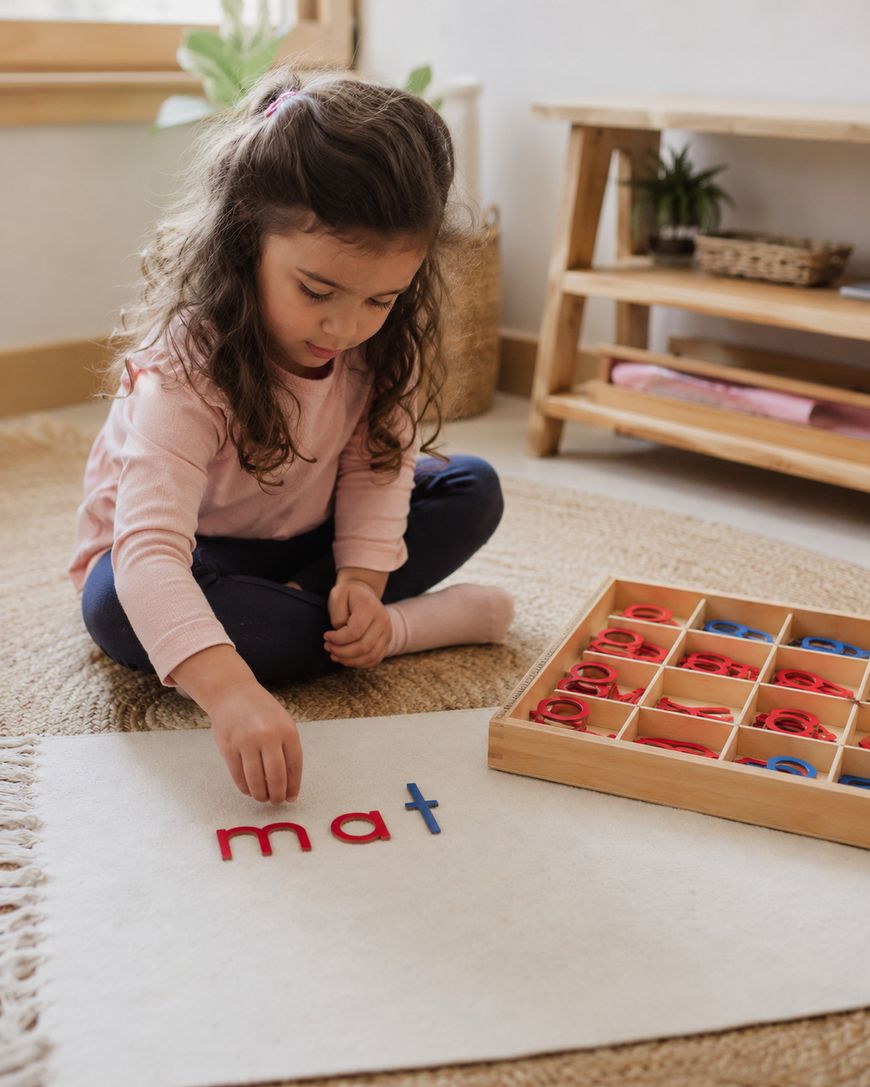
This allows children to write before they have the fine motor control to form letters with a pencil. A four-year-old who cannot yet write legibly can spell out full sentences with the Moveable Alphabet.
I Spy (2 to 4 years)
Gather a small basket of miniature objects whose names begin with different letter sounds. Say “I spy something that starts with the sound mmm,” and the child selects the correct object, in this case a miniature monkey or mouse.
This game builds phonemic awareness at the oral level before any written symbols are introduced. It can be played anywhere, with any objects, and requires no special materials beyond careful attention to sound.
Math Montessori Activities
Montessori Math materials are concrete and sensorial, meaning children touch and feel mathematical concepts before they ever see an abstract symbol. This is the essential difference between Montessori math and traditional worksheet-based approaches.
The sequence moves from quantity, to symbol, to quantity with symbol together. Children who work through this sequence develop a genuine understanding of place value, operations, and number sense by age five or six.
Number Rods (2.5 to 4 years)
Ten wooden rods, identical in diameter but ranging in length from ten centimeters to one meter, represent the quantities one through ten. The child carries each rod to a mat and arranges them from shortest to longest.
This gives the child a physical, muscular experience of mathematical quantity. The child whose arm stretched across the full length of the ten-rod has a body memory of what “ten” actually means.
Spindle Boxes (3.5 to 5 years)
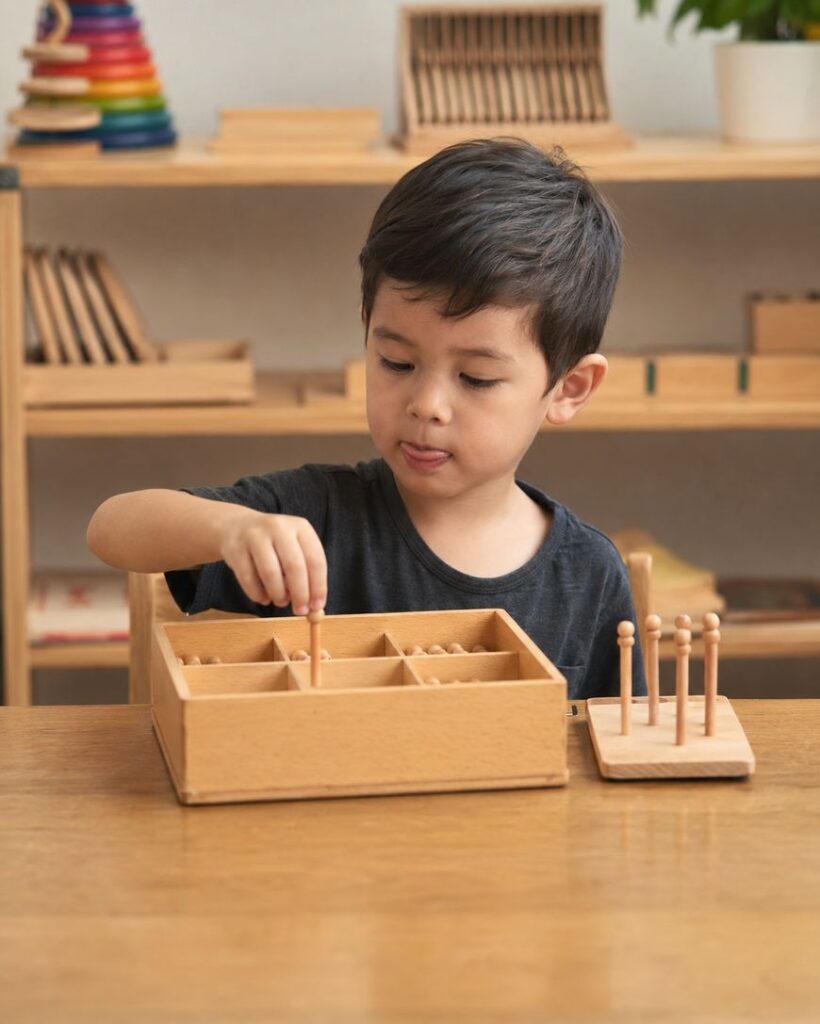
The Spindle Box is a wooden tray divided into ten compartments labeled zero through nine. The child counts out the correct number of wooden spindles into each compartment, including placing nothing in the zero compartment.
The zero compartment is the quiet genius of this material. Children encounter the concept of zero as a physical experience: you count zero spindles, and you put nothing in the box.
Golden Bead Material (4 to 6 years)
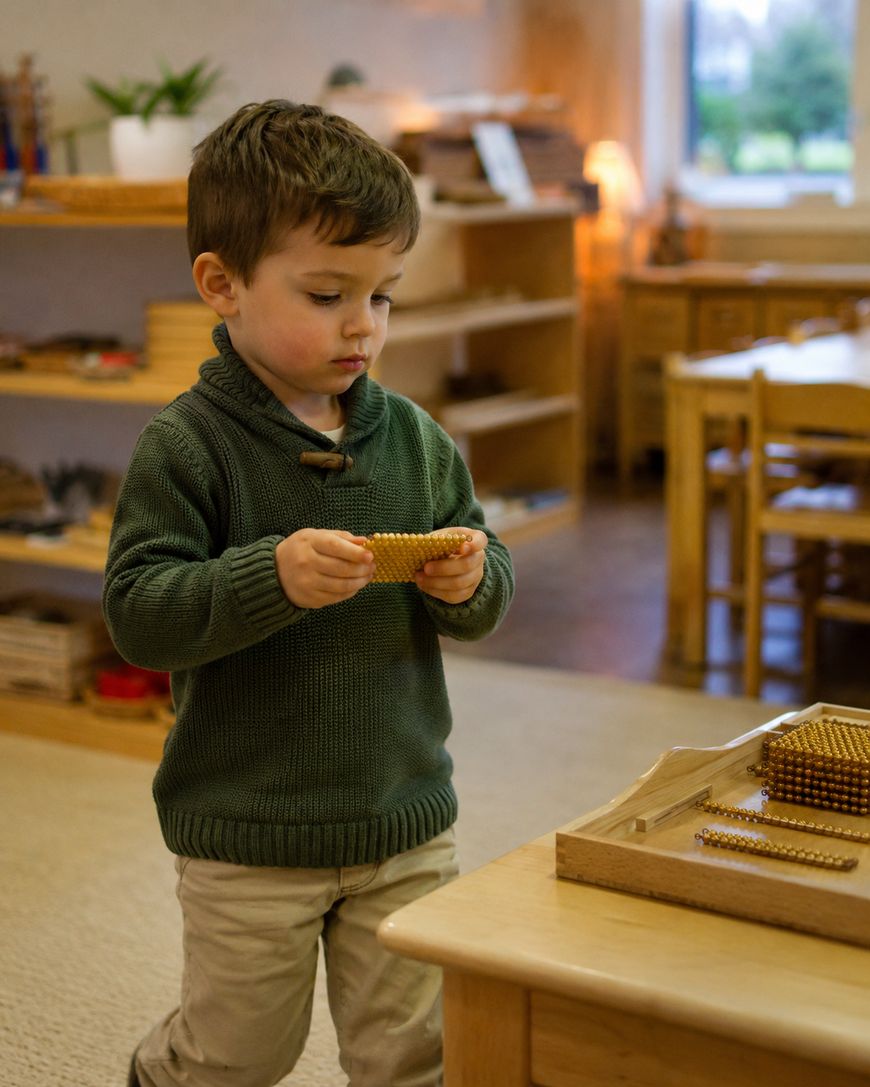
Golden bead material is the cornerstone of Montessori elementary math: single gold beads represent units, a bar of ten beads represents ten, a flat square of one hundred beads represents a hundred, and a large cube of one thousand beads represents a thousand. Children carry quantities, exchange beads at the bank, and perform addition, subtraction, multiplication, and division with this material long before they work with written algorithms.
A five-year-old doing four-digit addition with golden beads is not performing a trick. They genuinely understand what they are doing because they can hold the quantities in their hands.
Art and Creative Montessori Activities
Montessori art is process-focused, not product-focused. The goal is never a finished craft that looks identical to a teacher’s example. Instead, children explore materials, develop technique, and make genuine choices about their own creative work.
Art materials should be real, high quality, and stored in an accessible, organized way. Children who work with real watercolors on good paper produce far more engaged and original work than children given washable markers and coloring sheets.
Watercolor Painting (2.5 to 6 years)
Set up a tray with a set of real watercolor cakes, a ceramic dish for mixing, a jar of water, a rinse jar, good watercolor paper, and a natural-hair brush. Show the child how to wet the brush, touch it to the paint, and apply it to wet paper.

Wet-on-wet watercolor, where the paper is pre-wetted, creates beautiful blended colors that delight young children. The unpredictability of the color blooms teaches children to observe and respond rather than control.
Clay Modeling (3 to 6 years)
Offer real air-dry clay or natural beeswax modeling clay rather than plasticine. Beeswax clay warms in the hands and becomes increasingly workable as the child manipulates it.
Clay modeling builds hand strength, creativity, and three-dimensional spatial reasoning. Children who model with clay regularly develop a more sophisticated understanding of shape and form.
Nature Collage (2.5 to 5 years)
Take a nature walk and collect leaves, petals, small sticks, bark, seed pods, and pebbles. Back indoors, set the child up with a piece of cardstock and glue to arrange their collection into a composition.
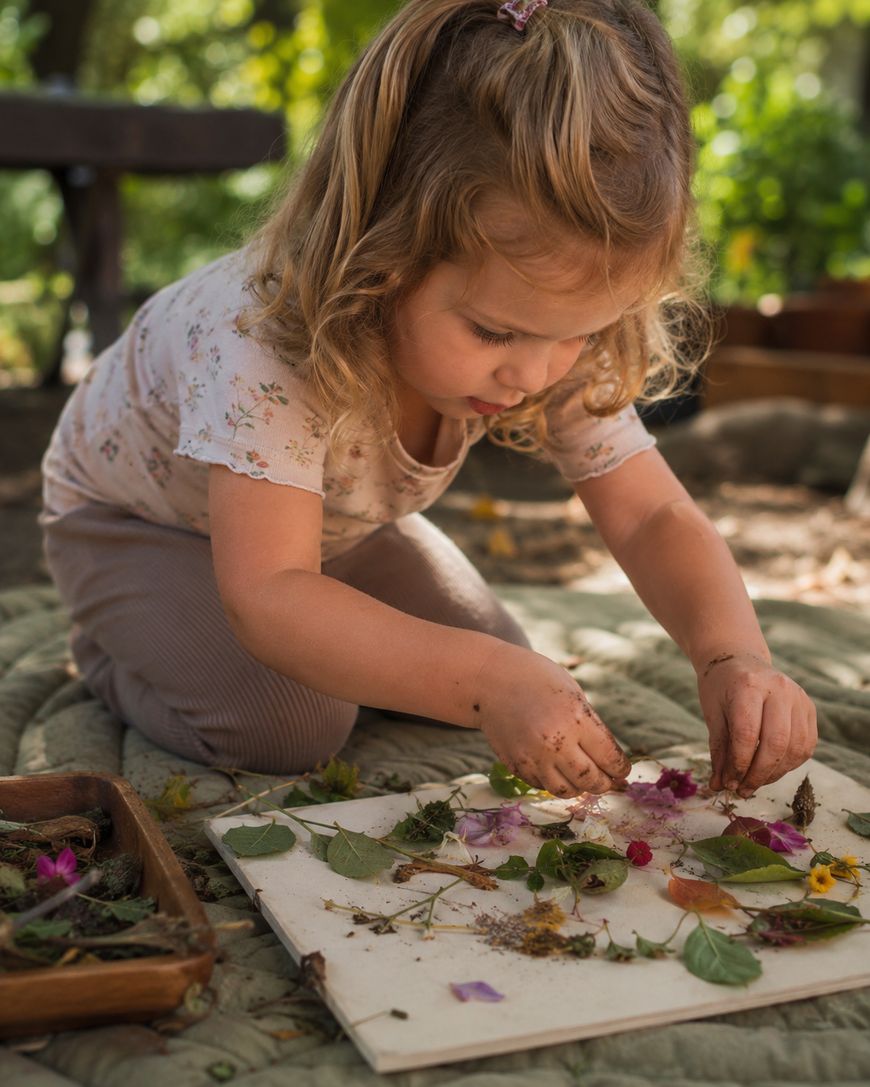
Nature collage connects the outdoor and indoor environments and builds aesthetic sensibility. Children learn to notice color, texture, and pattern in the natural world when they know they will be using it creatively.
Questions Parents Ask About Montessori Activities
At what age should children start Montessori activities?
Children can begin gentle Montessori activities from birth through sensory experiences like mobiles and floor time. Structured Practical Life and Sensorial work typically begins at 18 months to 2 years, and the full range of Language and Math materials becomes available from age 2.5 onward.
Do you need to buy expensive Montessori materials?
Many Montessori activities require no purchased materials at all. Pouring, spooning, food preparation, I Spy, and nature collage use household objects. The classic wooden materials like the Pink Tower and golden bead material are investments, but families can prioritize which materials to purchase based on what their child is drawn to.
How long should a Montessori work period last?
Maria Montessori recommended an uninterrupted work period of two to three hours in a school setting. At home, even 30 to 45 minutes of uninterrupted, self-directed activity time each day produces significant results in concentration and independence.
Can Montessori activities be done in a small space?
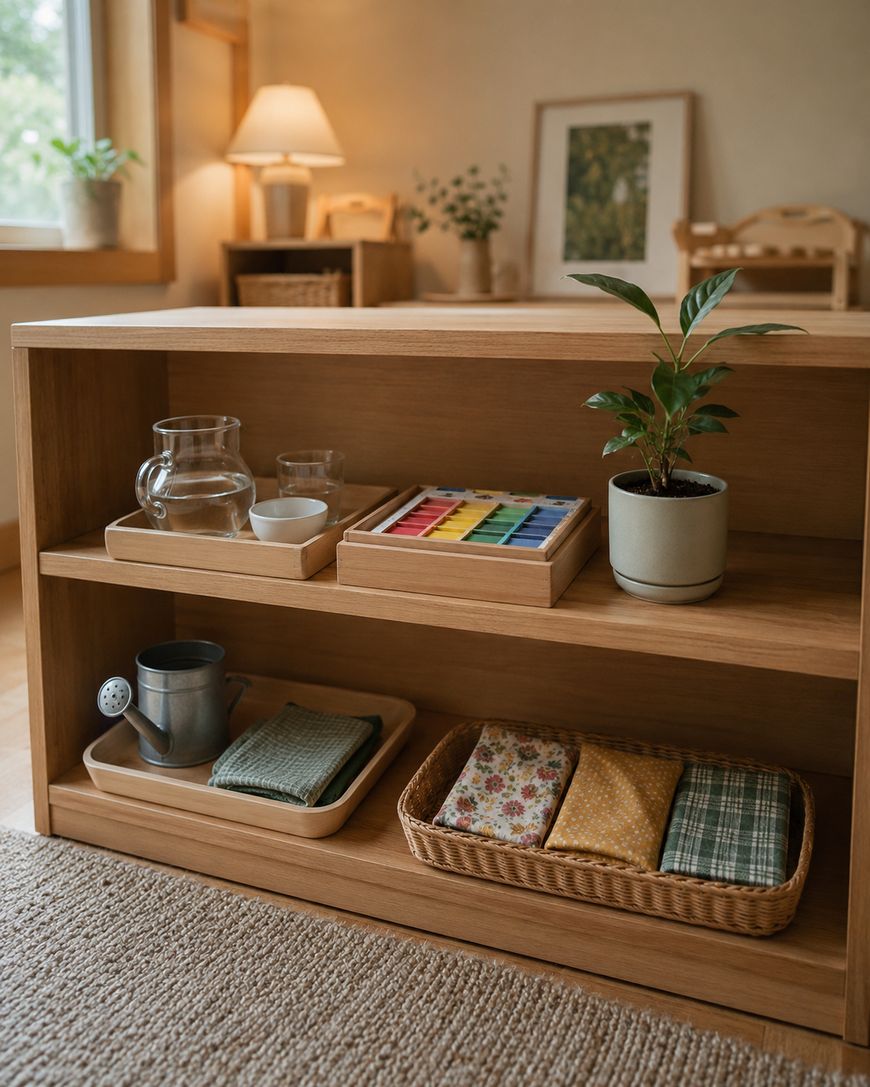
Absolutely. Most Montessori activities take place on a small mat on the floor or at a low table. The key principle is order: each material has a defined place and is returned to that place after use, so even a single shelf in a corner of a living room can house a complete and functional activity rotation.
How do you know when a child is ready for a new Montessori activity?
Watch for signs of interest: does your child try to pour their own drink, insist on helping in the kitchen, or show fascination with small objects? Those behaviors signal readiness. Introduce the activity with a slow, wordless demonstration, then step back and let the child work.
What is the role of the adult in Montessori activities?
The adult’s job is to prepare the environment and offer demonstrations, not to direct or correct the child’s work. Maria Montessori’s guiding phrase was “Help me to do it myself.” The adult observes, introduces new materials when the child shows mastery, and resists the urge to hover or help unnecessarily.
Bringing Montessori Activities Into Your Home
The best Montessori activities are the ones your child returns to again and again with deepening focus. Start with one Practical Life tray and one Sensorial activity, observe your child, and let their interest guide what you add next.
These Montessori activities are not a curriculum to rush through. They are an approach to childhood that trusts children with real materials, real tasks, and real responsibility. When you give a two-year-old a pitcher of water, a sponge, and the time to work, you are not just keeping them busy. You are building the foundation for a child who learns with joy and acts with confidence.




Leave a Reply