Last updated: October 9, 2026
Paper bag crafts are the answer when you need something to do in the next ten minutes and you refuse to buy anything to make it happen. A stack of lunch sacks, a few markers, and some glue will carry an entire rainy afternoon.
Here are the projects worth making, roughly in order of how quickly they come together.
Start With Puppets Because They Always Work
The folded bottom of a flat paper lunch sack makes a mouth that opens and closes, and that single feature is why puppets have outlasted every other paper bag project. Draw the top half of a face on the flap and the bottom half on the bag underneath, and the whole thing talks when a hand goes inside.
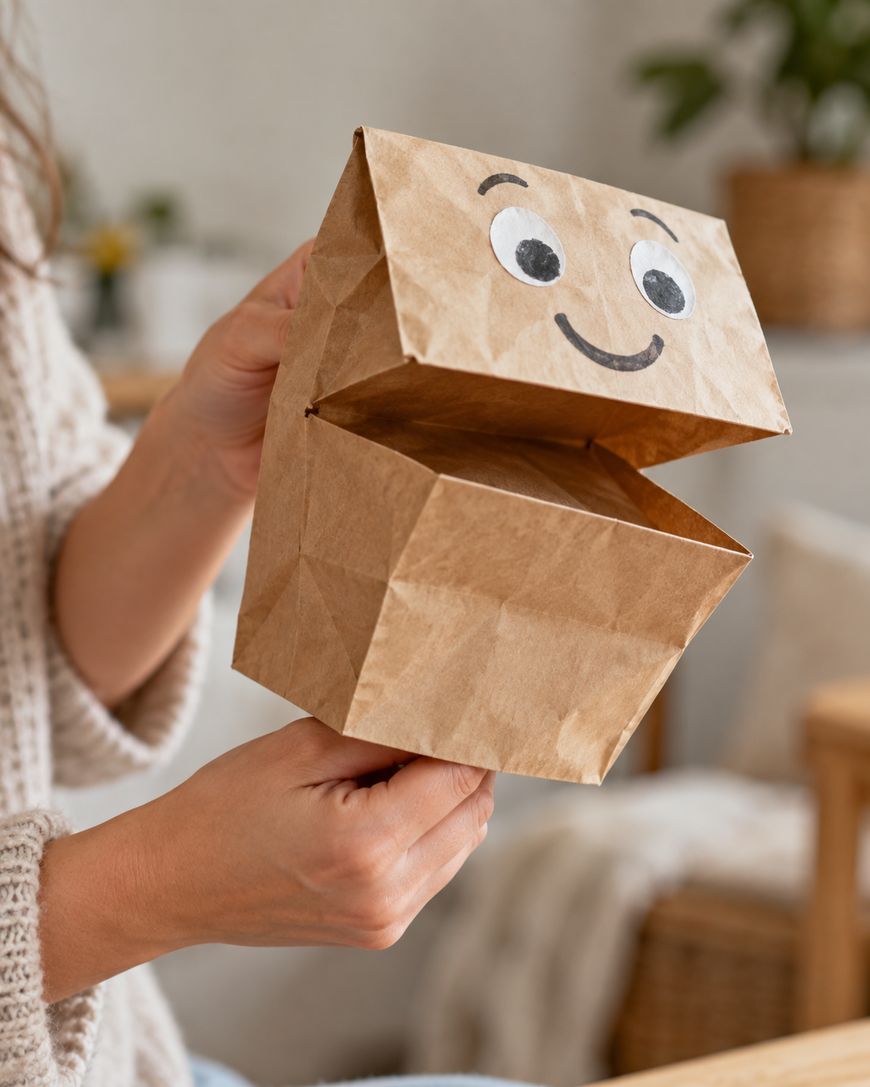
Kids figure this out faster than you can explain it. Give them the bag upside down with the flap facing them and let them go.
Construction paper ears, yarn hair, and googly eyes are the standard upgrades, though a marker alone is enough. Cutting the flap edge into a zigzag turns any animal into a slightly menacing one, which is usually the goal.
For a group of kids, set out one bowl of scrap paper shapes and one bowl of yarn pieces rather than handing out supplies individually. It cuts the requests for help roughly in half and makes the results more varied.
Keep small loose pieces like googly eyes and beads away from babies and toddlers, and hand out child-safe scissors with an adult nearby.
Paper Bag Crafts for Fall and Halloween
Brown paper takes fall color beautifully, which makes this the season these projects earn their keep. The classic is the paper bag tree, where you twist a bag from the bottom up into a trunk, cut the top third into strips, and splay the strips out into branches.

Add paper leaves in red, orange, and yellow, or use real pressed ones if you have them. The trunk holds its shape without any glue because the twisting locks the paper.
Ghosts come together even faster. Stuff a white bag with crumpled paper, tie it off with string, and draw a face on the puffed part.

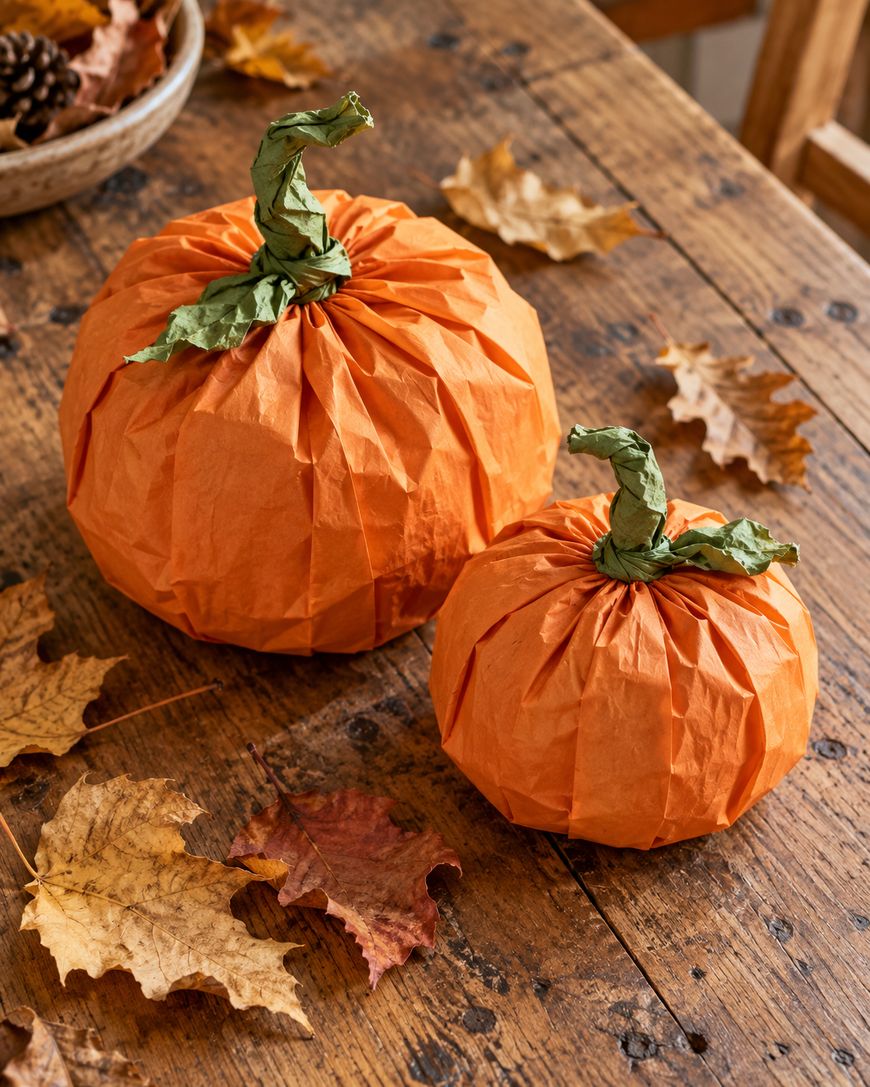
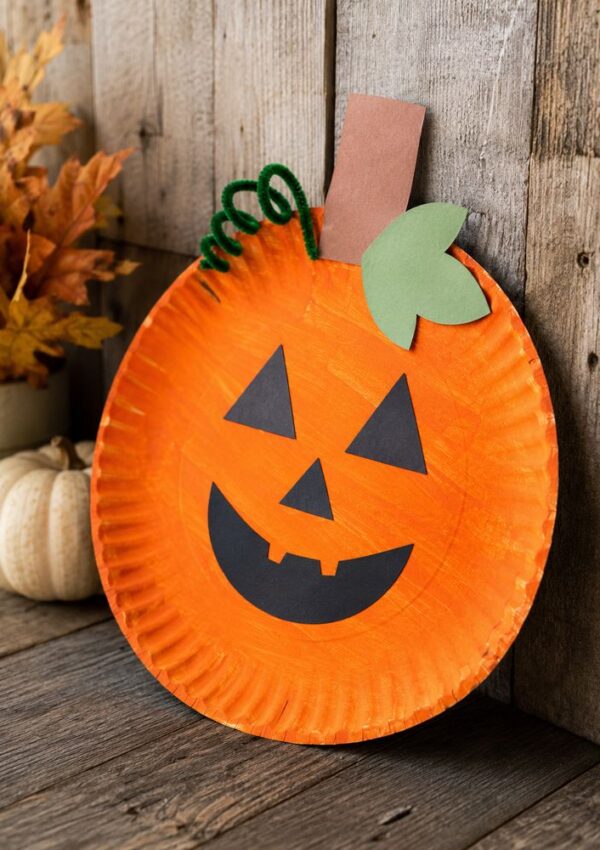
Paper bag pumpkins work the same way, using an orange bag or a brown one the kids paint first. Twist a bit of green paper into a stem and the shape reads immediately.
For a mantel or table, make three or four in different sizes rather than one large one. The variation is what makes a group of homemade decorations look intentional instead of leftover.
Animal Masks and Faces
A grocery-sized bag fits over a child’s head, and cutting eye holes turns it into a mask. This is the project that gets the most mileage in dress-up bins afterward.
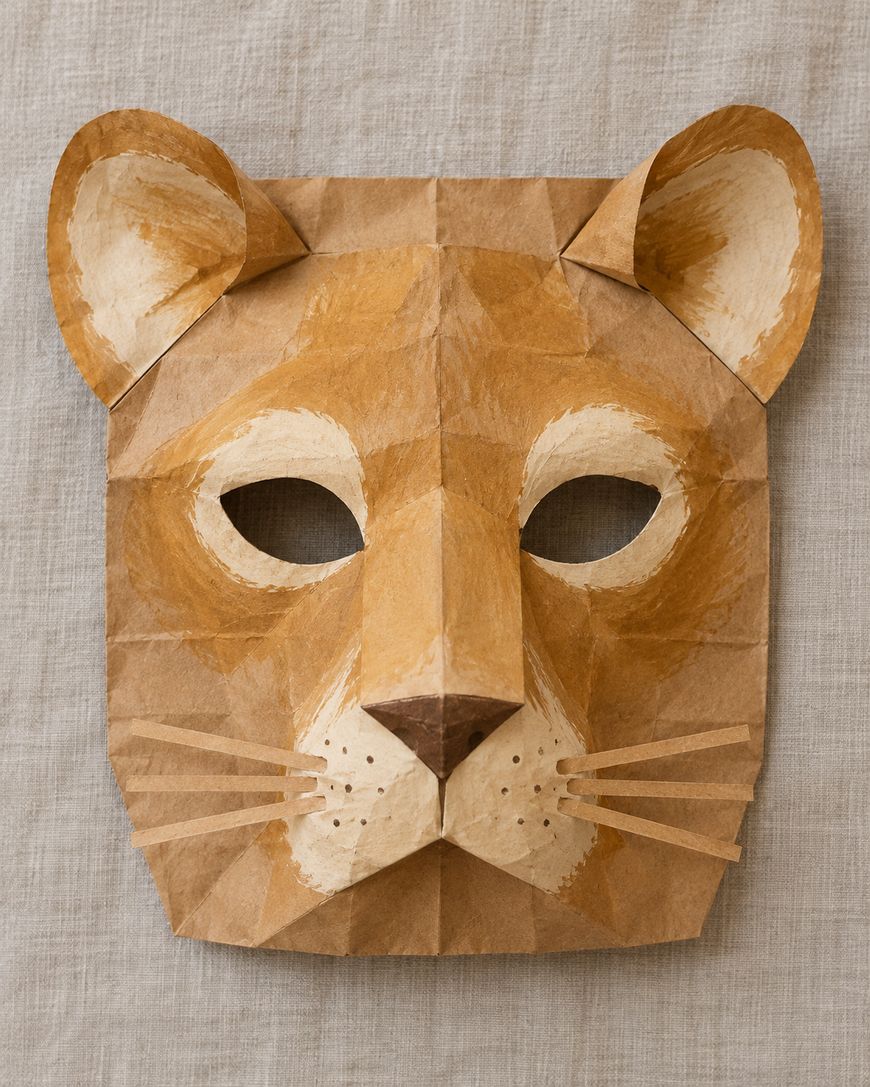
Have the child hold the bag over their head so you can mark the eye position before cutting anything. Guessing produces a mask that sits wrong and gets abandoned in about four minutes.
Cut the eye holes generously and make sure the bag sits loosely rather than snugly, so it comes off easily. An adult should do the cutting here.
Ears, snouts, and beaks all get glued on as flat construction paper shapes. A folded strip of paper glued on at both ends gives a snout or a nose that pops off the surface, which is the trick that makes a flat mask look three-dimensional.
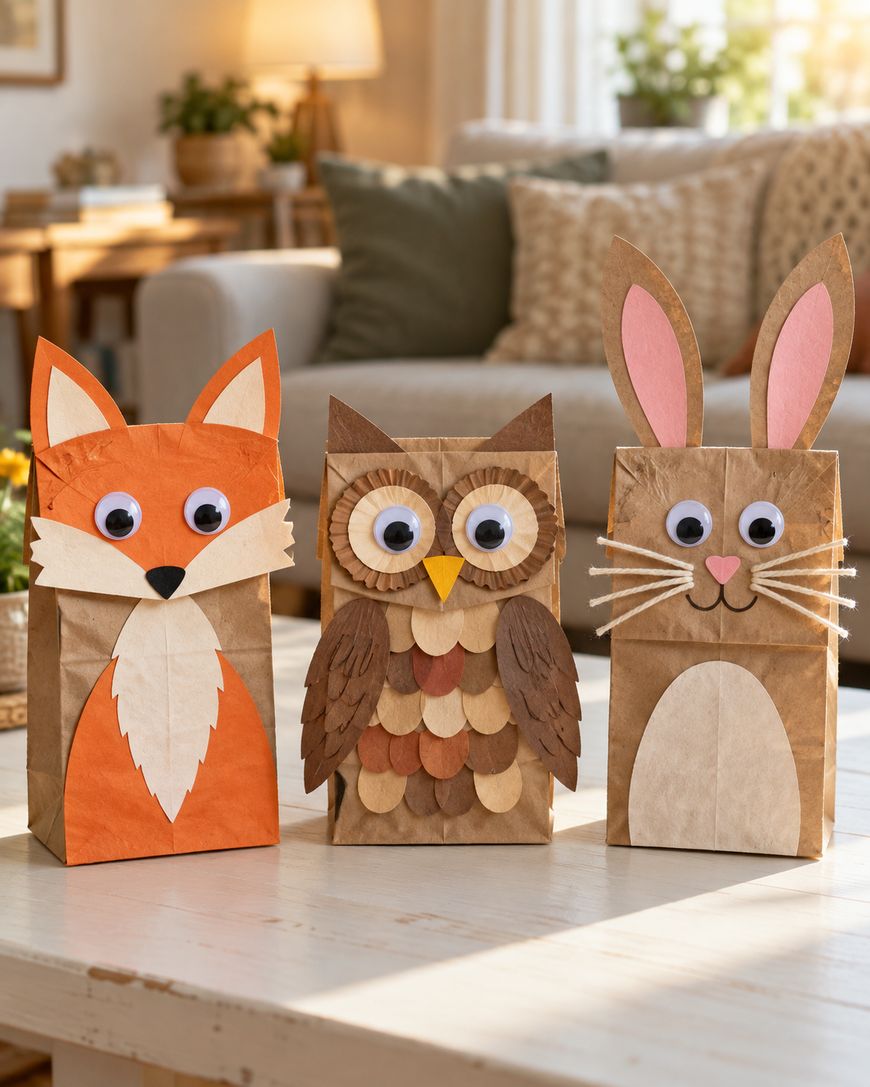
Lions, owls, and foxes are the easiest to make recognizable because their features are so distinct. Paint works better than markers on the larger bags since the surface area is bigger.
Paper Bag Crafts That Turn Into Toys
Some of the best paper bag crafts stop being crafts once they are finished and become things kids play with for days. A simple bag kite is the one to try first.
Cut the bottom out of a paper bag so air passes through, punch four holes around the open end, and tie string from each to a central point. It will not fly like a real kite, but it catches air well enough to run with, which is the entire point.
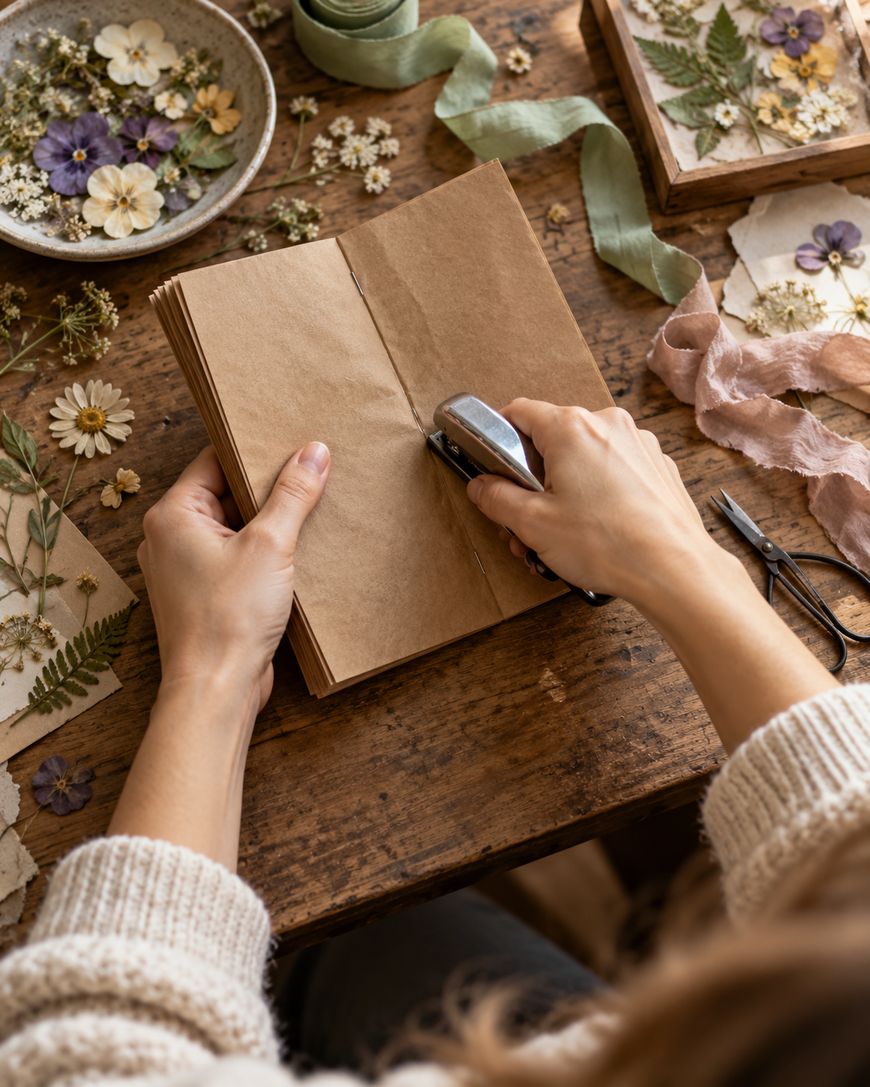
Paper bag scrapbooks are the other keeper. Stack three or four bags, fold them in half, staple along the fold, and the open bag ends become pockets for tickets, drawings, and pressed flowers.

Kids fill these up over weeks rather than minutes. Punch holes and tie with ribbon instead of stapling if you want it to look nicer.
There is also the paper bag piñata, which is a bag filled with treats, decorated with paper fringe, and hung from string. It breaks easily, so it suits younger children better than a store-bought one that requires real force.
Gift Wrap and Party Favors From Plain Brown Bags
Grown-ups can use these too, and plain brown bags are genuinely nice wrapping when handled with restraint. Cut a bag open at the seams and you have a flat sheet of kraft paper for wrapping boxes.
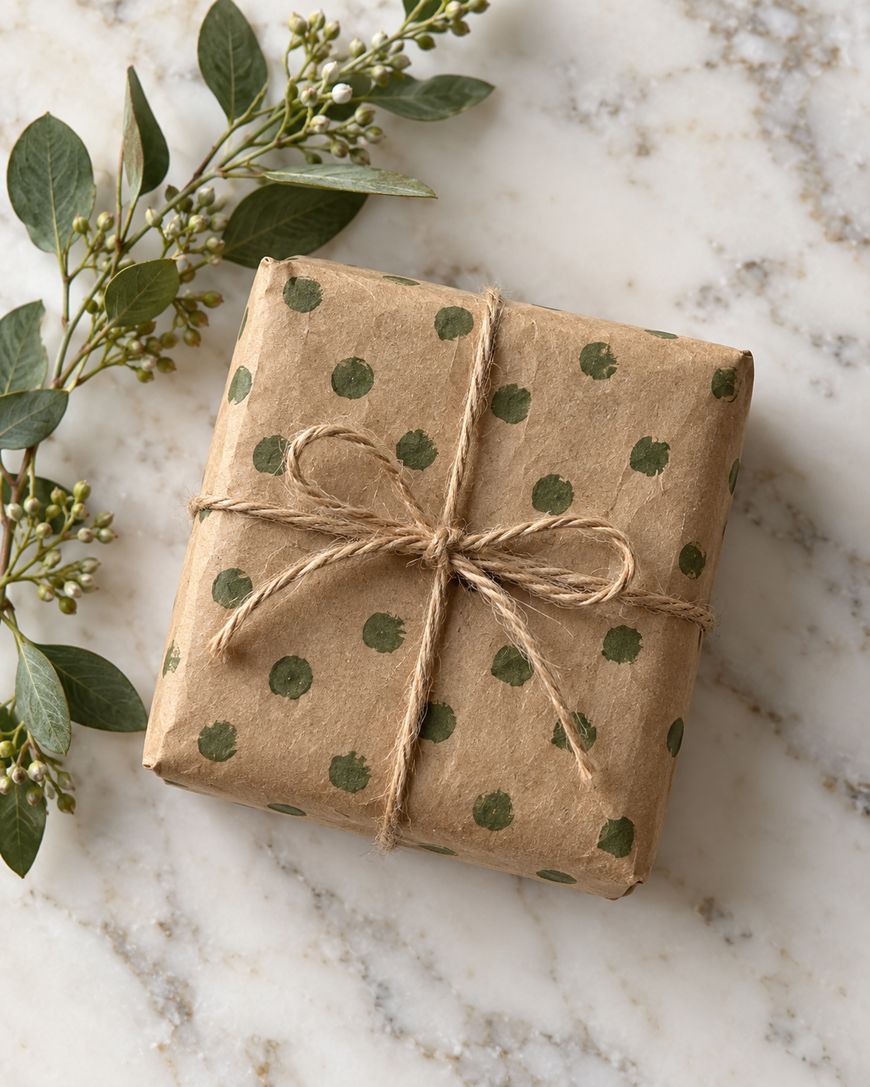
Stamp it with a potato print, a cookie cutter dipped in paint, or a simple pattern of dots. Tie with twine and it looks like it came from somewhere expensive.
For party favors, fold the top of a small bag over twice and punch two holes through the fold. Thread ribbon through, or clip it shut with a wooden clothespin.
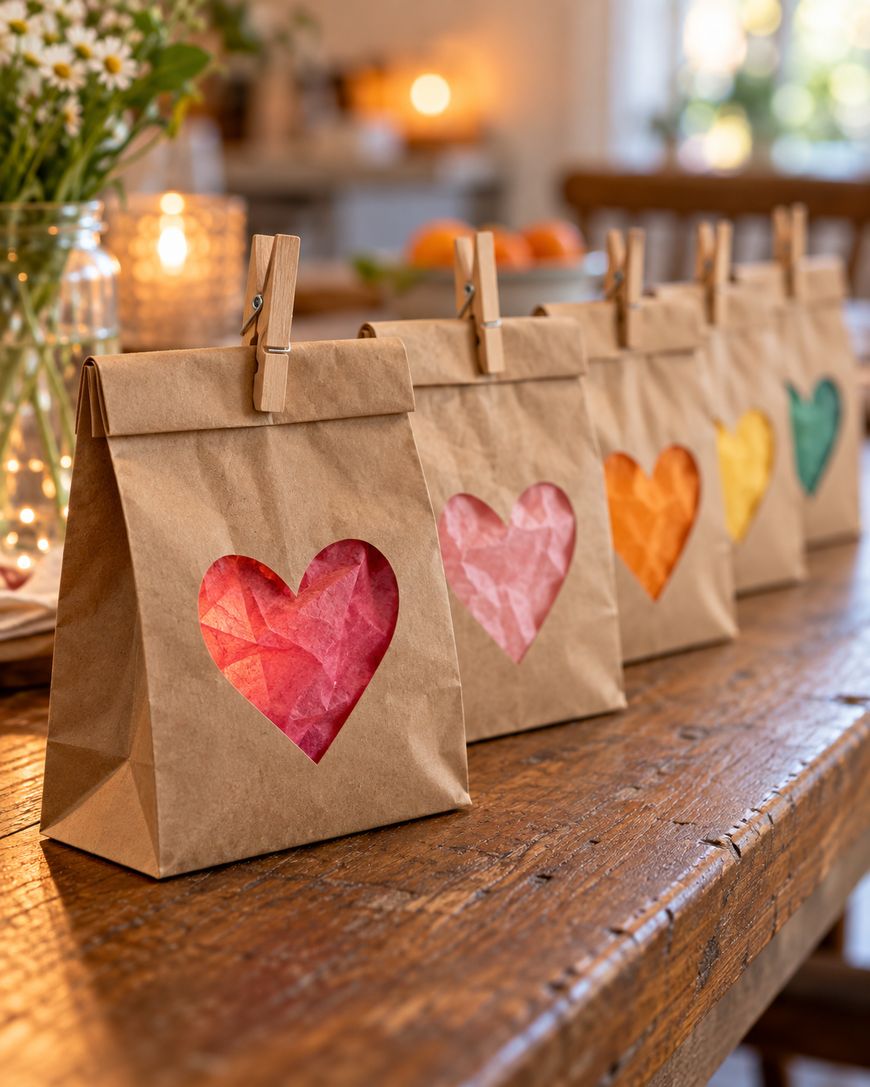
Cutting a shape out of the front of the bag and gluing tissue paper behind it gives you a little window, which is worth the extra two minutes when the bags are sitting on a table. Do this before you fill them.
Kids can run the whole favor assembly line at a party, which keeps them occupied and means you did not have to do it the night before.
What to Keep in the Craft Box
Plain paper lunch sacks are the workhorse, and buying a large pack once means you never have to think about it again. White ones cost slightly more and are worth having for ghosts and anything you want to paint a light color.
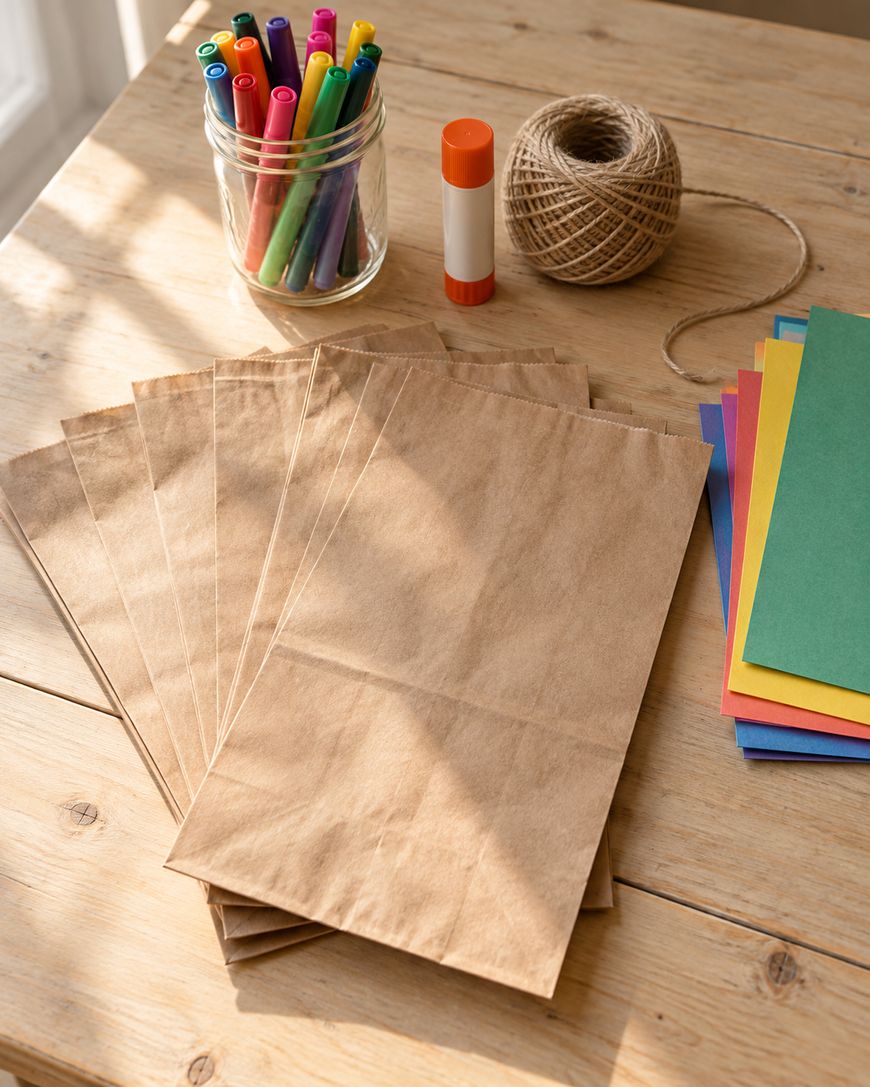
Beyond bags, the short list is construction paper, a glue stick, white school glue for anything heavier, child-safe scissors, markers, and yarn. Googly eyes make everything better and cost almost nothing.
Keep a shoebox of scraps rather than throwing away offcuts. Half of what makes these projects work is having a pile of odd shapes on hand so nobody has to cut anything from scratch.

Tape is worth having alongside glue because glue takes time to dry and children do not wait. Double-sided tape solves most of the impatience problems.
Why Paper Bag Crafts Are Worth the Shelf Space
The appeal is not really that the bags are cheap, though they are. It is that the failure stakes are zero, so children take bigger swings with them than they would with nicer materials.
A ruined bag is a ruined bag. That freedom shows up in the work, and it is the same reason paper bag crafts hold up in classrooms year after year.
They also fold flat, so a pack of a hundred takes up less room than a single sheet of poster board. When the afternoon falls apart, you want the fix to already be in the cupboard.
The finished pieces are light enough to tape to a wall and cheap enough to recycle guilt-free when the interest passes. Very few craft supplies manage both.
Paper Bag Crafts Questions Answered
What kind of paper bag works best?
Flat-bottomed paper lunch sacks are the most versatile because the folded base gives you a puppet mouth and a stable standing shape. Larger grocery bags are better for masks and for cutting open into flat sheets. Handled gift bags are the least useful since the handles and stiffening get in the way.
Can you paint on paper bags?
Yes, though the paper will buckle if you soak it. Acrylic and tempera paint both work well when applied in thin coats, and stuffing the bag with crumpled newspaper first helps it hold its shape while it dries. Markers and colored pencils avoid the problem entirely if you want something faster.
How do you make a paper bag stand up on its own?
Open the bag fully, press the bottom flat, and fold the top edge down two or three times to add rigidity at the opening. Stuffing the lower third with crumpled paper gives it weight and stops it tipping. This is how the pumpkin and ghost projects hold their shape without any structure inside.
What can you do with the leftover scraps?
Save them. Cut offcuts into leaf shapes, ears, and small circles, and keep them in a box so the next project starts with a pile of ready pieces rather than a blank bag. Long thin strips make fringe, curled hair, and piñata trim.
Are these projects suitable for a classroom or party?
They work well for groups because the materials are cheap enough to overbuy and nothing needs to be shared. Set up shared bowls of pre-cut shapes rather than distributing supplies to each child. Have an adult handle any cutting that involves larger bags or eye holes.
How long do finished paper bag crafts last?
Puppets and masks survive weeks of handling if the glue was given time to set properly. Anything painted holds up better than anything drawn in marker, which smudges. Scrapbooks last the longest since they mostly sit on a shelf being added to.
Pull Out a Pack and Start
Paper bag crafts do not need planning, a trip to the store, or a tutorial you have to keep pausing. They need a bag and about twenty minutes of somebody’s attention.
Grab a pack next time you are out, put it somewhere you will remember it, and pull it down the next time an afternoon needs saving. Start with a puppet, because it always works.
Leave a Reply