Last updated: June 20, 2026
If you have been staring at a cluttered desk wondering how other teachers manage to look so put-together, you are in the right place. We are going to walk you through everything you need for a functional, beautiful teacher desk set up that actually works for your classroom. By the end of this post, you will have a clear plan to transform your workspace from chaos to calm.
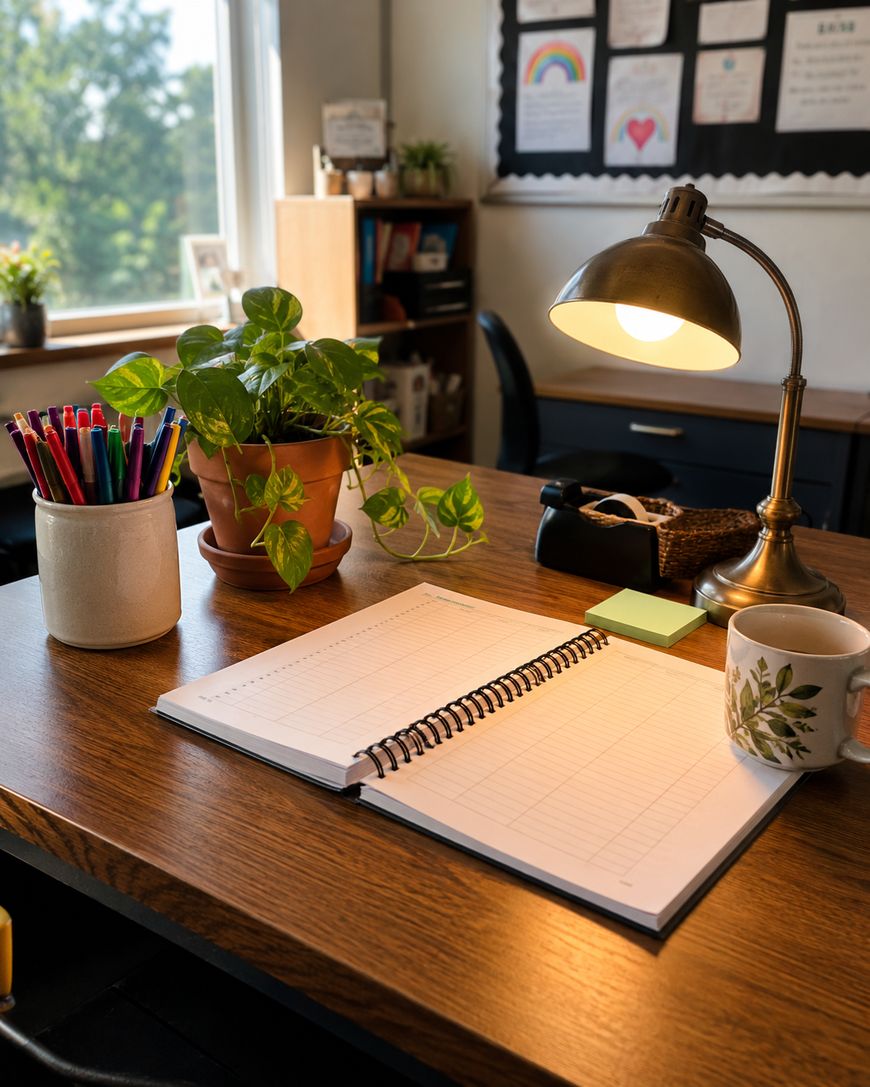
Essential Supplies for a Functional Teacher Desk Set Up
Before you rearrange anything, you need to take stock of what actually belongs on and around your desk. The goal is to keep only what you reach for daily within arm’s reach, and everything else should be stored nearby but out of the way.
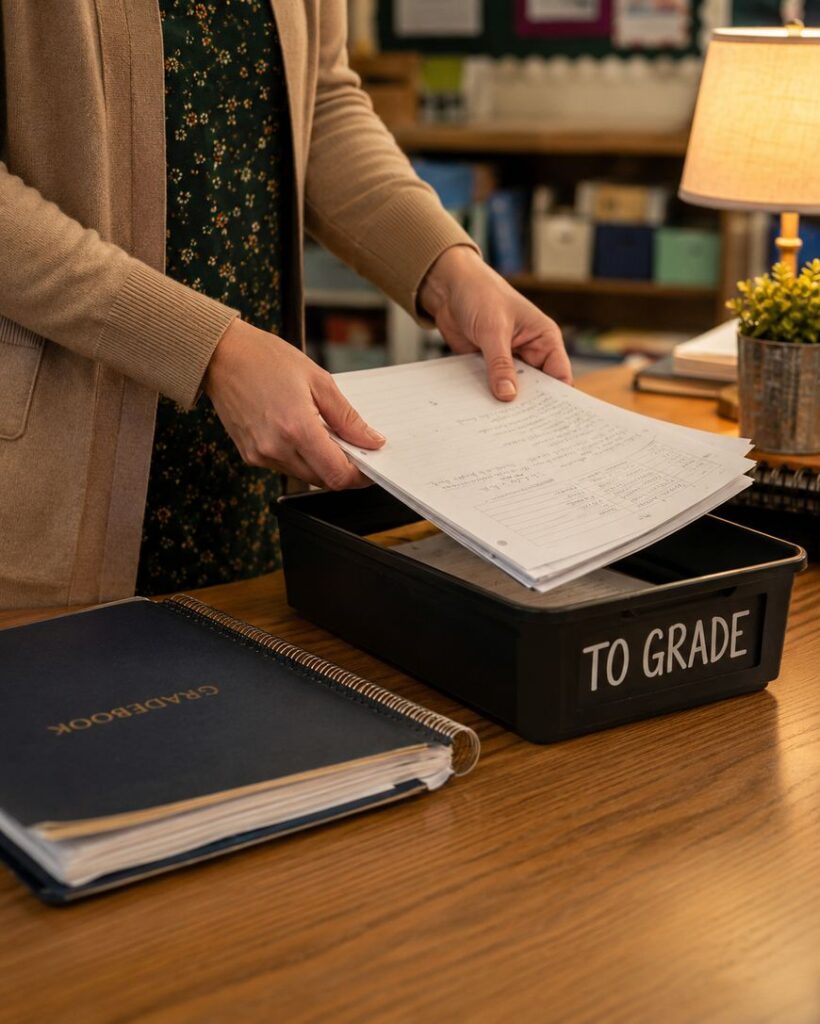
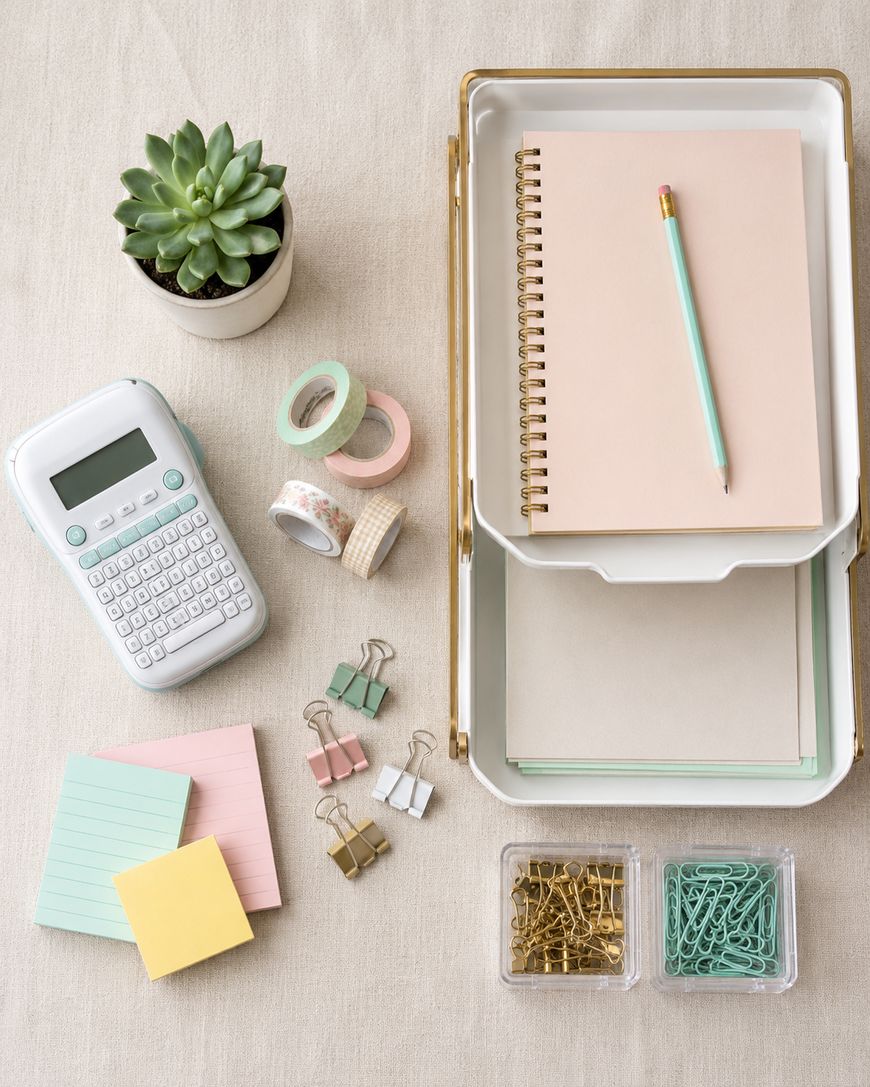
Start with the non-negotiables: your gradebook or grading software, a quality pen cup with writing tools you love, and a small inbox tray for papers that need your immediate attention. These three items form the foundation of any strong teacher desk set up.
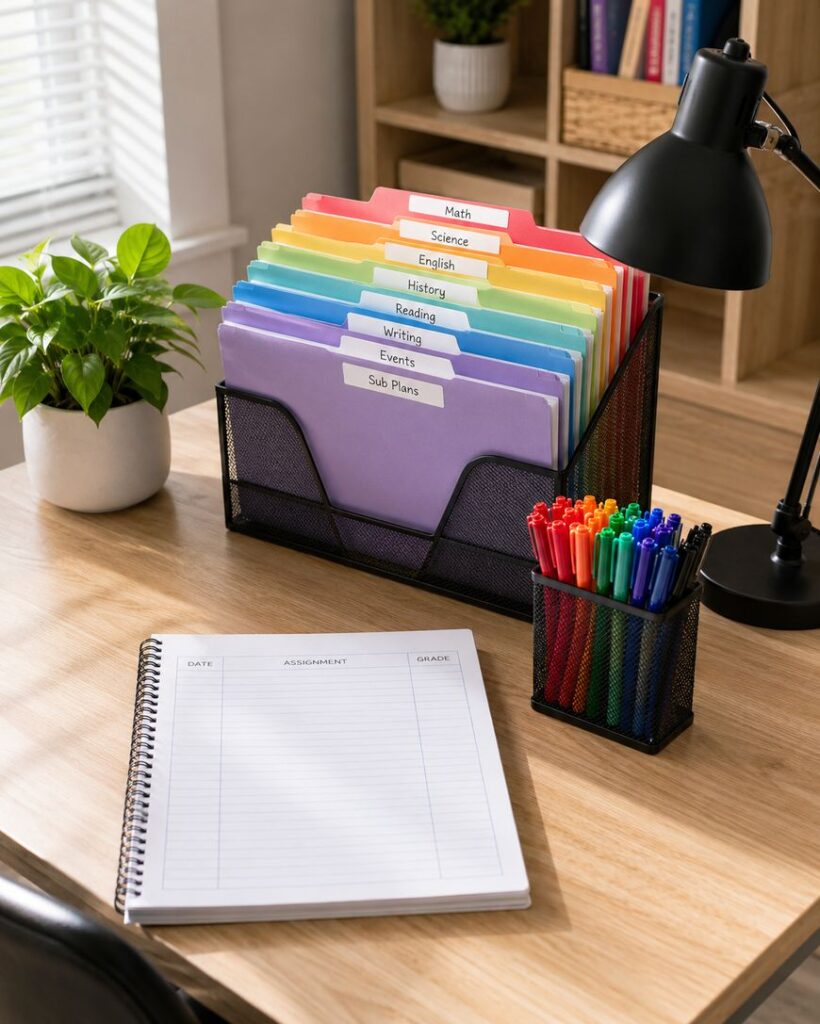
A desktop file organizer is one of the most valuable tools a teacher can own. You can use it to keep current unit materials, parent communication logs, and upcoming assignment sheets sorted and easy to grab. Look for one with at least four to six slots so you have room to grow without things piling up.
Sticky notes and a small notepad deserve a permanent spot on your desk surface. Teachers think on their feet all day, and having a quick place to jot down reminders, ideas, and student observations keeps important information from slipping away. A small washi tape dispenser or tape runner also earns its keep, especially during morning bulletin board updates and last-minute display changes.
Do not overlook the power of a good desk lamp. Many classrooms have harsh overhead lighting that strains your eyes during early morning and late afternoon grading sessions. A warm, adjustable desk lamp changes the entire atmosphere of your workspace and makes those long grading stretches feel much more manageable.
How to Organize Your Teacher Desk for Maximum Efficiency
Organization is not about perfection, it is about systems. A good system means everything has a home, and you can put things back and find them again without thinking too hard.
Start by dividing your desk into three zones: the active zone, the reference zone, and the staging zone. The active zone is the area directly in front of you where you do your primary work. Keep this clear except for your immediate project and a few key tools.
The reference zone sits to one side and holds things you reach for multiple times a day. This is where your pen cup, sticky notes, stapler, and tape live. Everything in this zone should be within easy reach without requiring you to stand up or lean awkwardly.
The staging zone is where papers in transition live. Use a two-tier tray system: incoming papers you have not yet dealt with go on top, and papers that are processed but not yet filed go on the bottom. This system prevents the dreaded paper pile that seems to reproduce overnight on every teacher desk across the country.
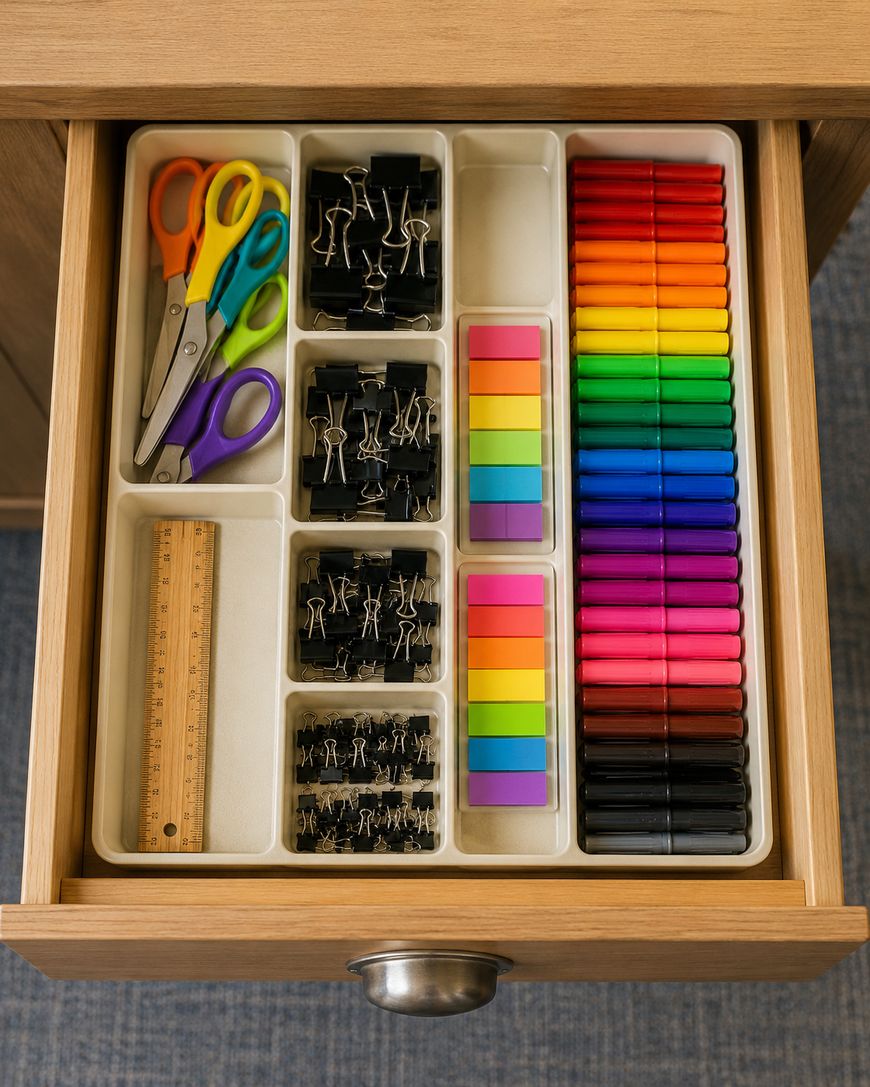
Drawer organization is just as important as surface organization. Designate each drawer a single purpose and stick to it. One drawer for office supplies, one for student materials you need quick access to, and one for personal items. Label the drawers if that helps you maintain the system long-term.
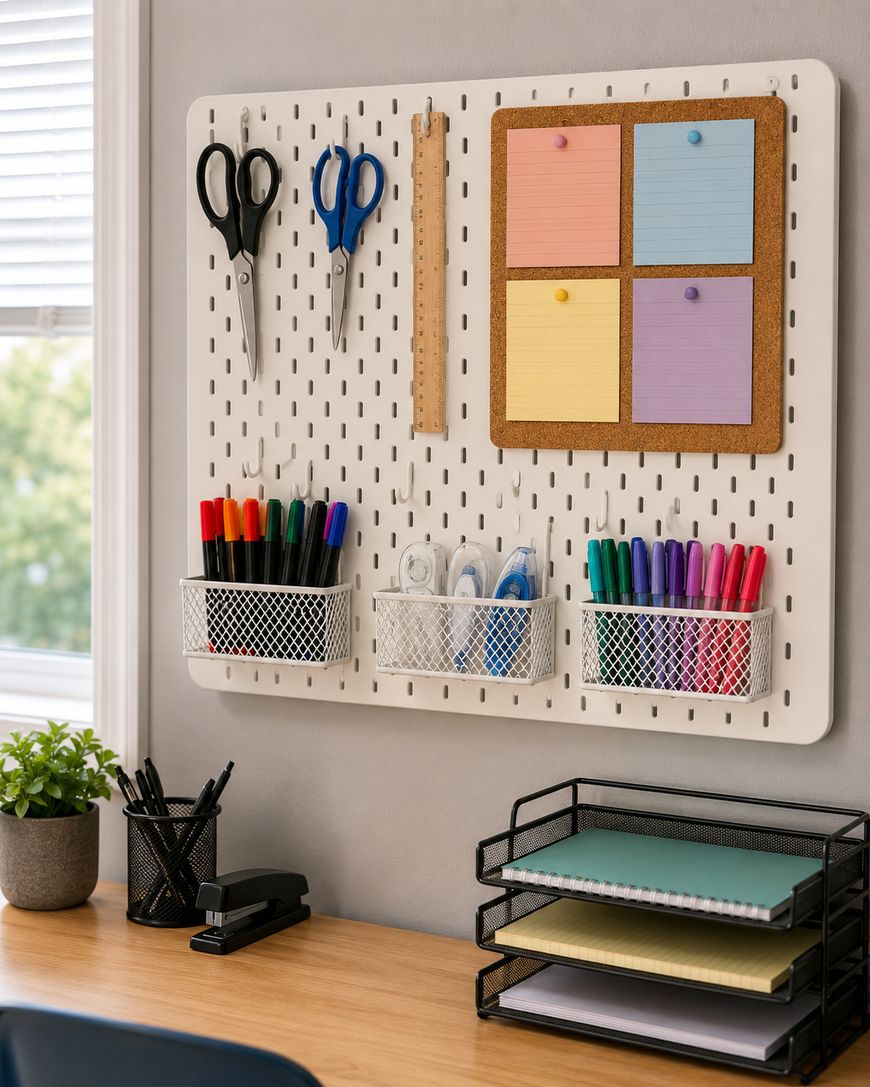
Consider adding a small pegboard or wall-mounted organizer above or beside your desk. Vertical storage is a game changer in small classroom spaces because it gets things off your desk surface without removing them from your reach. Hooks for scissors and rulers, small bins for markers and correction tools, and a magnetic strip for important notes all make excellent use of vertical real estate.
Personalizing Your Teacher Desk Set Up Without Creating Clutter
Your desk should feel like yours, not just a generic workspace. Personal touches make a huge difference in how much you enjoy spending time at your desk, but there is a fine line between personalized and cluttered.
The rule we recommend is the three-item rule for personal decor. Choose three meaningful items: a small framed photo, a plant or succulent, and one decorative piece that brings you joy. These items add personality without overwhelming your workspace or competing with functional supplies.
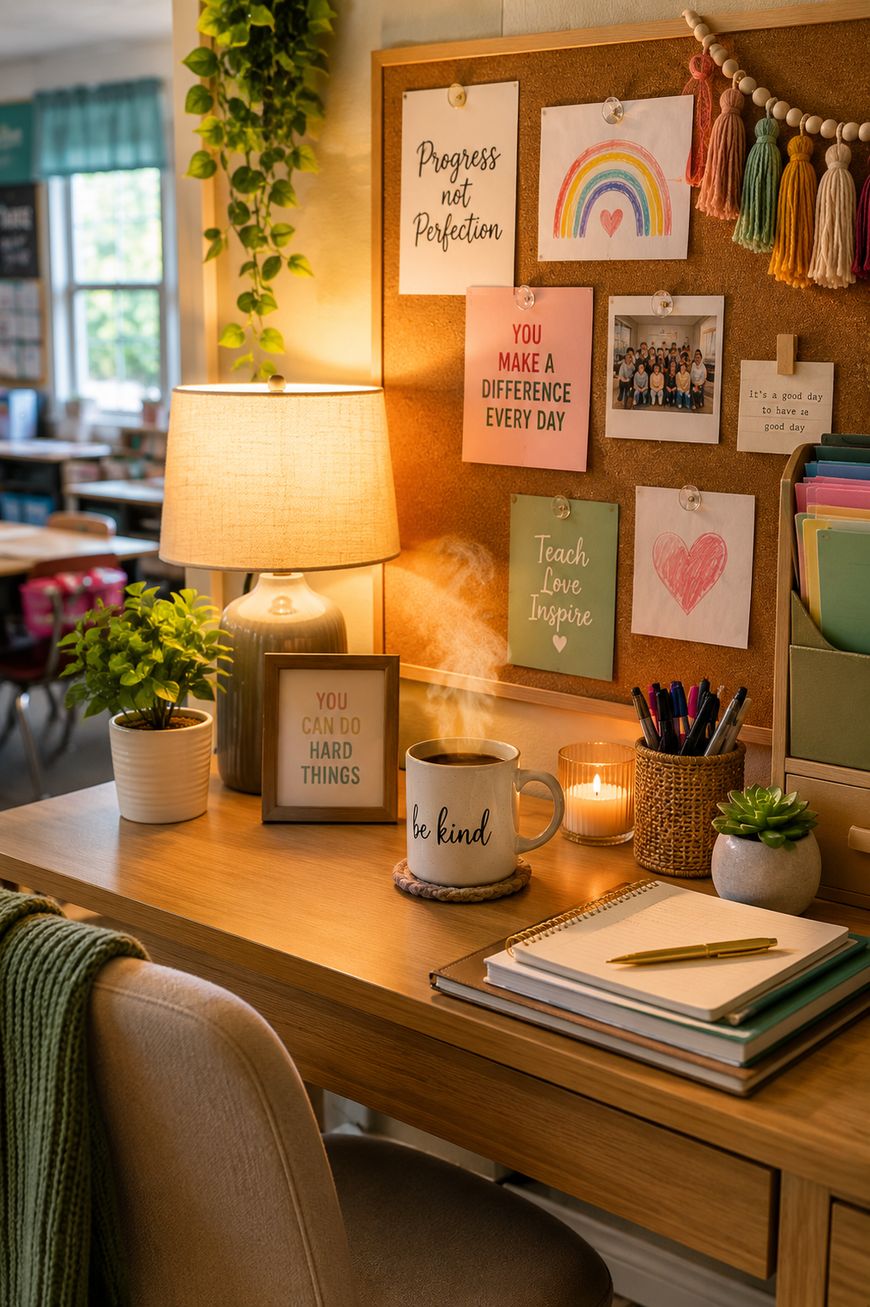
Plants deserve special mention because they do more than look pretty. Studies consistently show that having a small plant in your workspace reduces stress and improves focus. A small pothos, snake plant, or succulent thrives in classroom conditions and requires almost no maintenance, making it a perfect addition to your teacher desk set up.
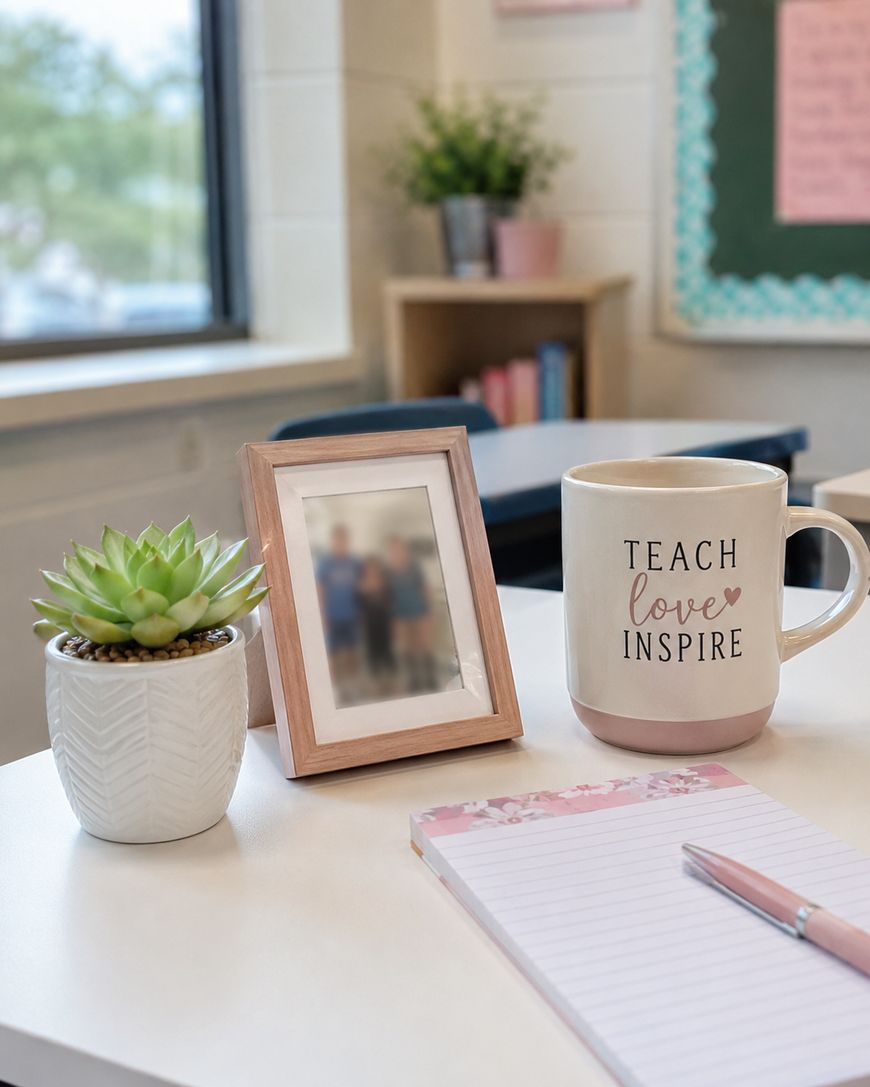
Color coordination makes a bigger visual impact than most teachers expect. When your desk accessories, storage bins, and even sticky notes share a cohesive color palette, the whole space looks intentional and calming rather than random and overwhelming. You do not have to buy everything new; a can of spray paint can unify mismatched organizers for just a few dollars.
A small inspiration board or vision board section near your desk keeps you motivated through the inevitable rough patches of the school year. Pin a few encouraging quotes, student artwork, or goals for the year where you can see them from your chair. These visual reminders of why you do what you do carry more weight than you might expect on a tough Tuesday afternoon.
Teacher Desk Storage Solutions That Actually Work
Storage is where most teacher desk set ups either succeed or fall apart. The challenge is that teachers accumulate an enormous amount of materials, and the desk area tends to become a dumping ground for everything that does not have a clear home.
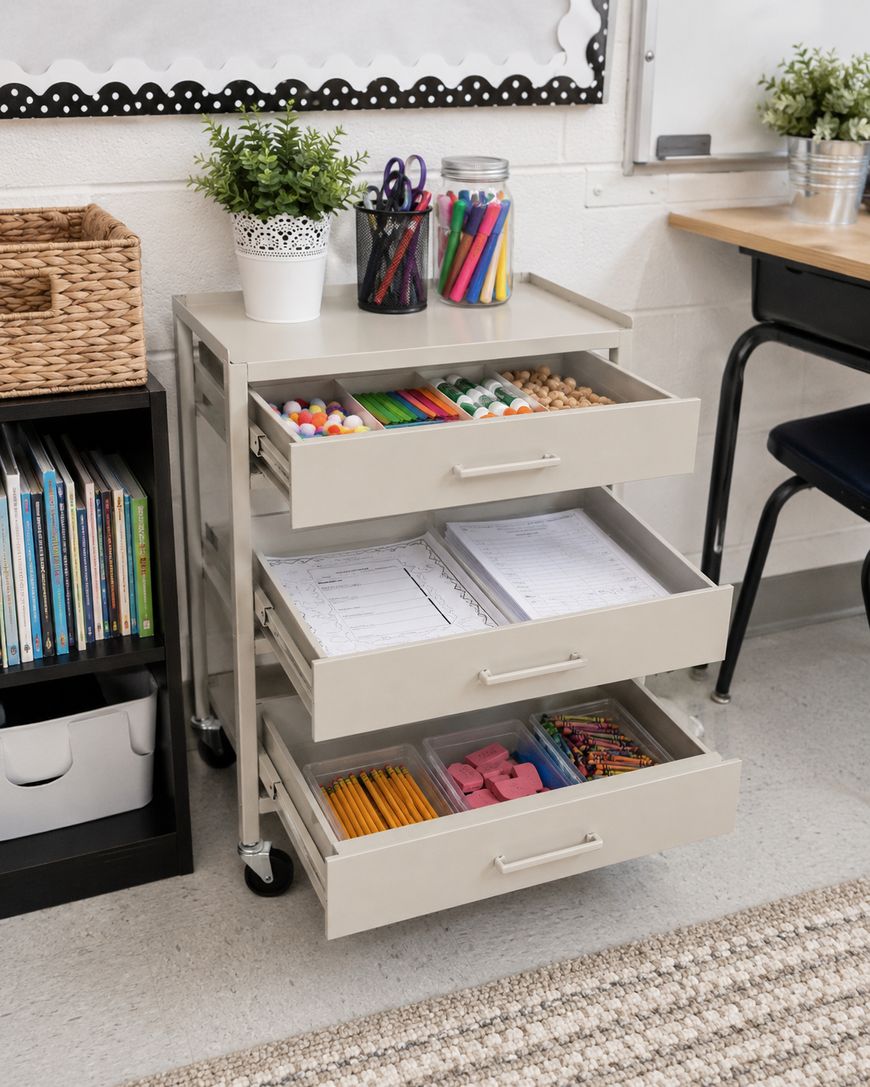
A rolling cart is one of the best investments you can make for your classroom workspace. These carts, especially the popular three-drawer versions, give you flexible storage that you can move around as needed. Keep one drawer for current unit supplies, one for craft and project materials, and one for assessment tools. Rolling it right beside your desk during prep time gives you easy access to everything without permanently cluttering your desk surface.
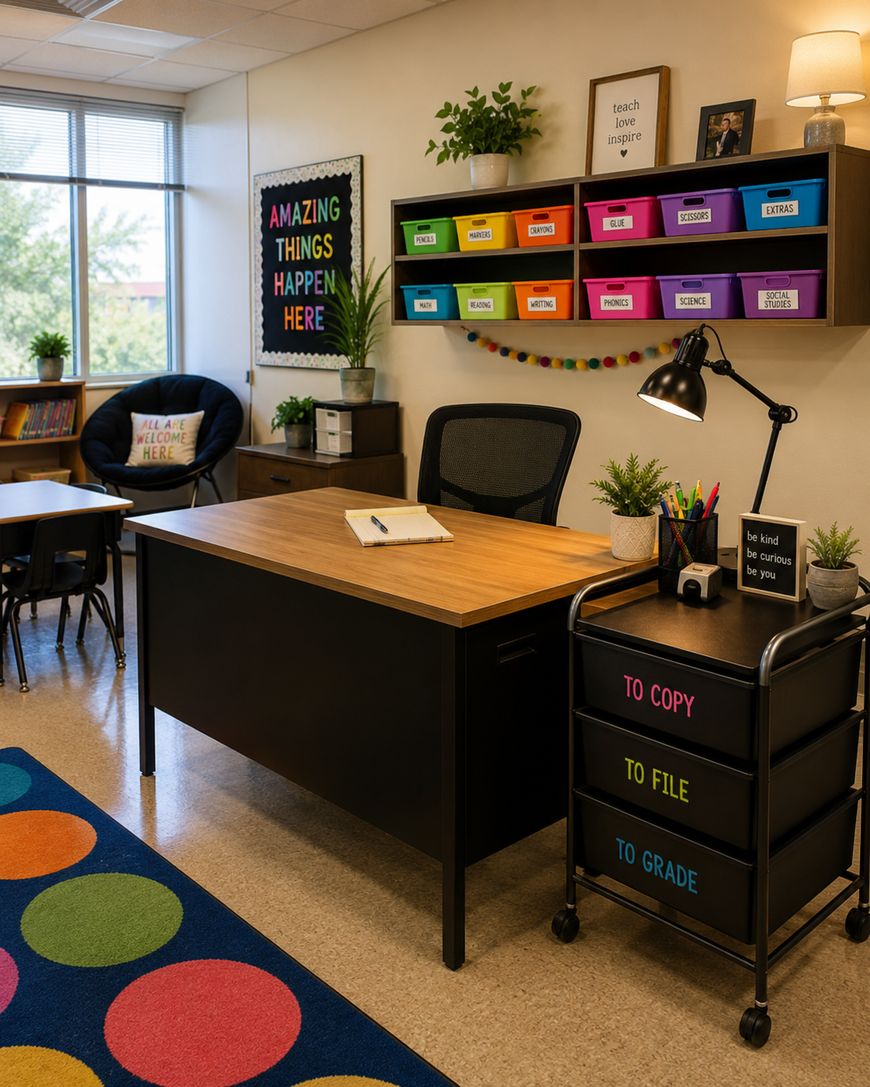
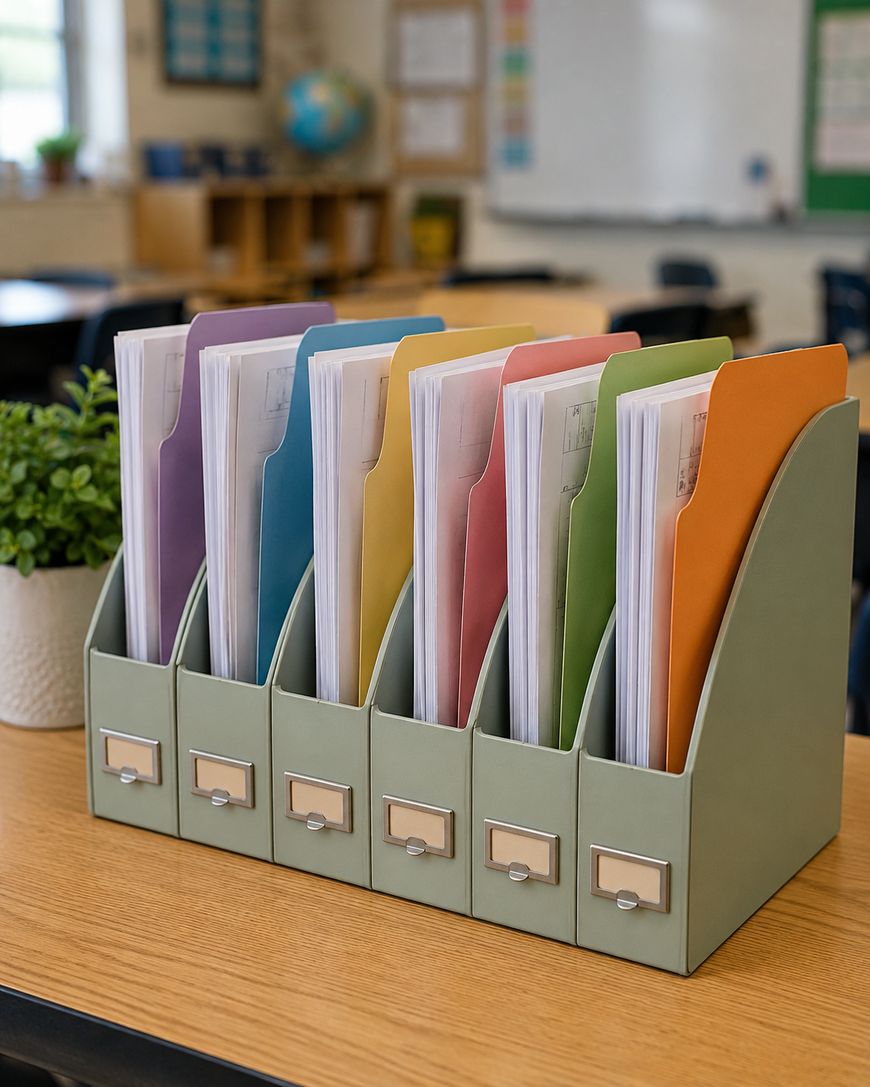
Stackable bins and magazine files work beautifully for organizing student work by class period or subject. Label each bin clearly and color-code by class if you teach multiple sections. When papers come in, they go straight into the correct bin rather than into a general pile that you will have to sort later.
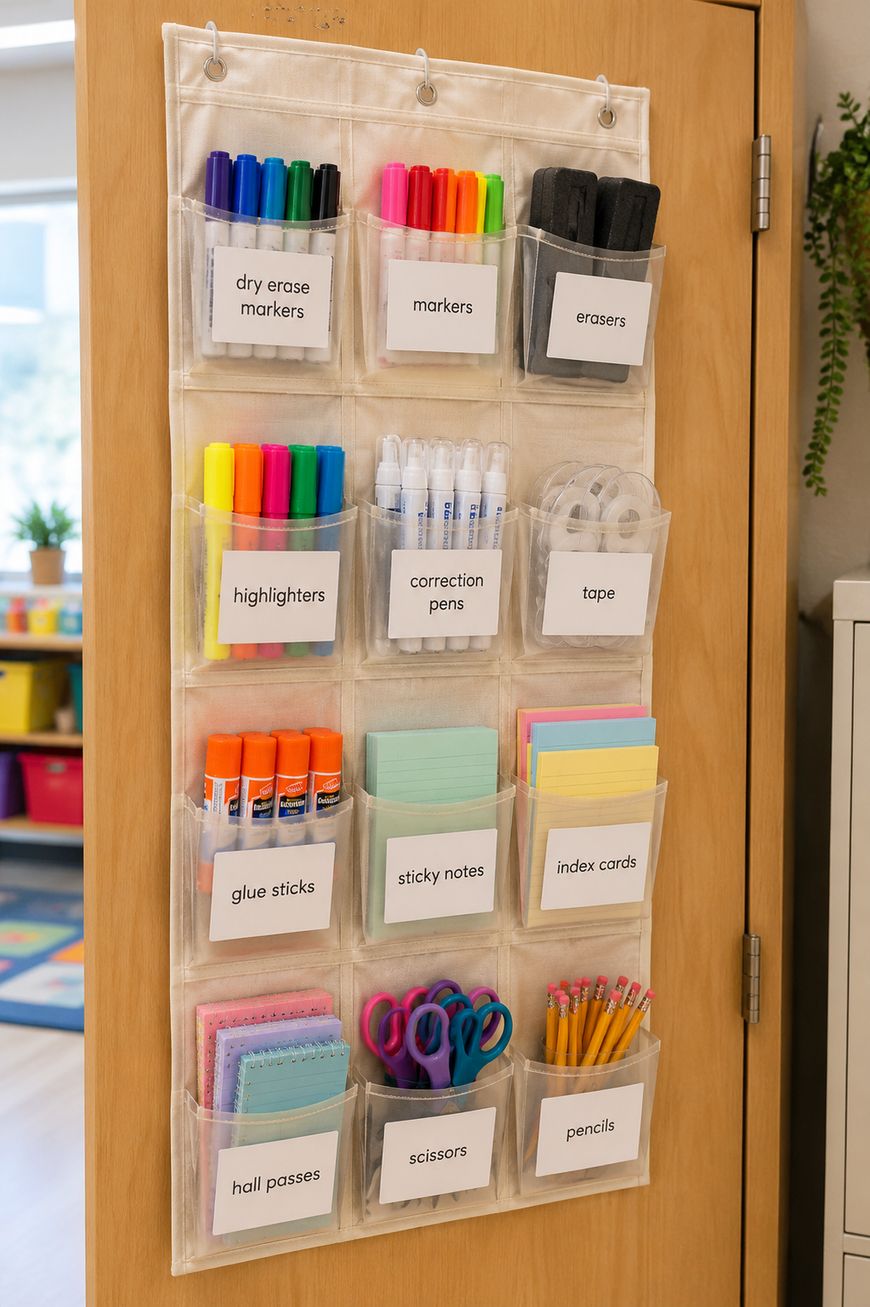
Over-the-door organizers are underused in classroom settings. If your classroom has a closet door or a storage cabinet door near your desk, an over-the-door pocket organizer can hold an impressive amount of supplies without taking up any floor or desk space.
Consider a small lockable box or drawer for sensitive materials like grade printouts, parent contact information, and any confidential student documentation. Keeping these materials secure while keeping them accessible to you is an important part of a professional teacher desk set up.
Setting Up Your Teacher Desk at the Start of the Year
The beginning of the school year is the perfect time to establish your desk organization systems before the chaos of daily teaching takes over. Spending a few focused hours before students arrive sets you up for a much smoother year.
Start fresh by removing everything from your desk and surrounding area. Sort items into three piles: keep on desk, store nearby, and remove from classroom. Be ruthless in this sorting process because every item that stays on your desk should earn its place.
Set up your zones before you start putting anything back. Define your active, reference, and staging zones with organizers and trays before adding supplies. This prevents the common mistake of just putting everything back in the same spots and wondering why it never gets more organized.
Label everything, even if the labels feel obvious right now. Six weeks into the school year when you are exhausted and running on autopilot, clear labels are what keep systems functioning. Use a label maker or neat hand-lettered labels that match your classroom aesthetic.
Do a weekly reset every Friday afternoon or Monday morning. Take five minutes to file away accumulated papers, restock supplies that are running low, and clear the staging zone. This brief habit prevents the slow creep of clutter that derails even the best organized teacher desk set up.
Why Your Teacher Desk Set Up Matters More Than You Think
Your desk is your command center, and the way it is organized directly affects how your school day flows. When your workspace is cluttered and disorganized, you lose precious minutes searching for lesson plans, grading pens, and parent communication forms.
A thoughtful teacher desk set up creates a ripple effect through your entire classroom. You feel calmer, your students sense that calm, and the whole environment becomes more conducive to learning. Teachers who invest time in organizing their workspace report feeling more in control of their days and less overwhelmed by the demands of the job.
The good news is that you do not need to spend a fortune or completely overhaul your space overnight. Small, intentional changes to how you organize and arrange your desk can make a dramatic difference in your daily experience.
We have seen teachers go from dreading their morning prep time to genuinely looking forward to getting into the classroom early. The secret is always the same: a desk set up that reflects how you actually work, not how you think you should work.
Q&A: Teacher Desk Set Up Questions Answered
What should I keep on my teacher desk at all times?
Keep only your daily-use essentials on your desk surface: writing tools, a notepad, a small organizer for current papers, and a personal item or two. Everything else should be stored in drawers, on shelves, or in nearby rolling carts to keep your active work surface clear and functional.
How do I keep my desk organized when things pile up during the school year?
The key is a daily five-minute tidy at the end of each school day. Before you leave, file or trash loose papers, return supplies to their homes, and clear your staging tray. This small habit takes almost no time but prevents the overwhelming pile-up that makes a fresh start feel impossible.
What are the best organizational supplies for a teacher desk?
A two-tier paper tray, a multi-slot desktop file organizer, a pen cup, sticky notes in two or three sizes, and a small rolling cart are the foundation of a well-organized teacher workspace. Add a label maker and you have everything you need to build a system that actually sticks.
How do I personalize my desk without making it cluttered?
Limit yourself to three personal decorative items, and make sure each has a specific, permanent home on your desk. A small plant, a meaningful photo, and one fun decorative piece add personality without creating chaos. Stick to a cohesive color palette for your functional supplies to make the whole space feel pulled together.
Should my teacher desk face the class or face the wall?
This depends entirely on your teaching style and classroom layout. Facing the class allows you to monitor students while you work at your desk. Facing the wall can help you focus during prep time. Many teachers prefer a desk positioned at an angle so they have natural sight lines into the room without fully facing either direction.
How do I organize a small teacher desk in a tiny classroom?
Maximize vertical space with pegboards, wall-mounted organizers, and over-the-door storage. Use a rolling cart instead of trying to store everything in desk drawers. Keep your desk surface as clear as possible by giving every item a specific home in nearby storage rather than on the desk itself. A small, well-organized desk in a tiny room beats a large cluttered one every time.
Conclusion: Build a Teacher Desk Set Up That Supports Your Best Work
A great teacher desk set up is not about aesthetics, though a beautiful workspace certainly helps you enjoy your days. It is about building a system that reduces friction, saves you time, and lets you focus your energy on what actually matters: your students.
Start with one change this week, whether that is setting up your zone system, adding a rolling cart, or doing that first big declutter. You do not need to implement everything at once, and small improvements compound quickly when it comes to workspace organization.
Your classroom deserves a teacher who feels organized, calm, and ready. A thoughtful teacher desk set up is one of the most practical investments you can make in your own wellbeing and your students’ experience. We hope these ideas help you create a workspace you genuinely love coming back to every day.




Leave a Reply