Last updated: July 11, 2026
If your changing table feels more like a cluttered catch-all than a functional baby station, these changing table organization ideas will transform it fast.
You’ll find practical setups, clever storage solutions, and tips that actually hold up through the newborn phase and beyond.
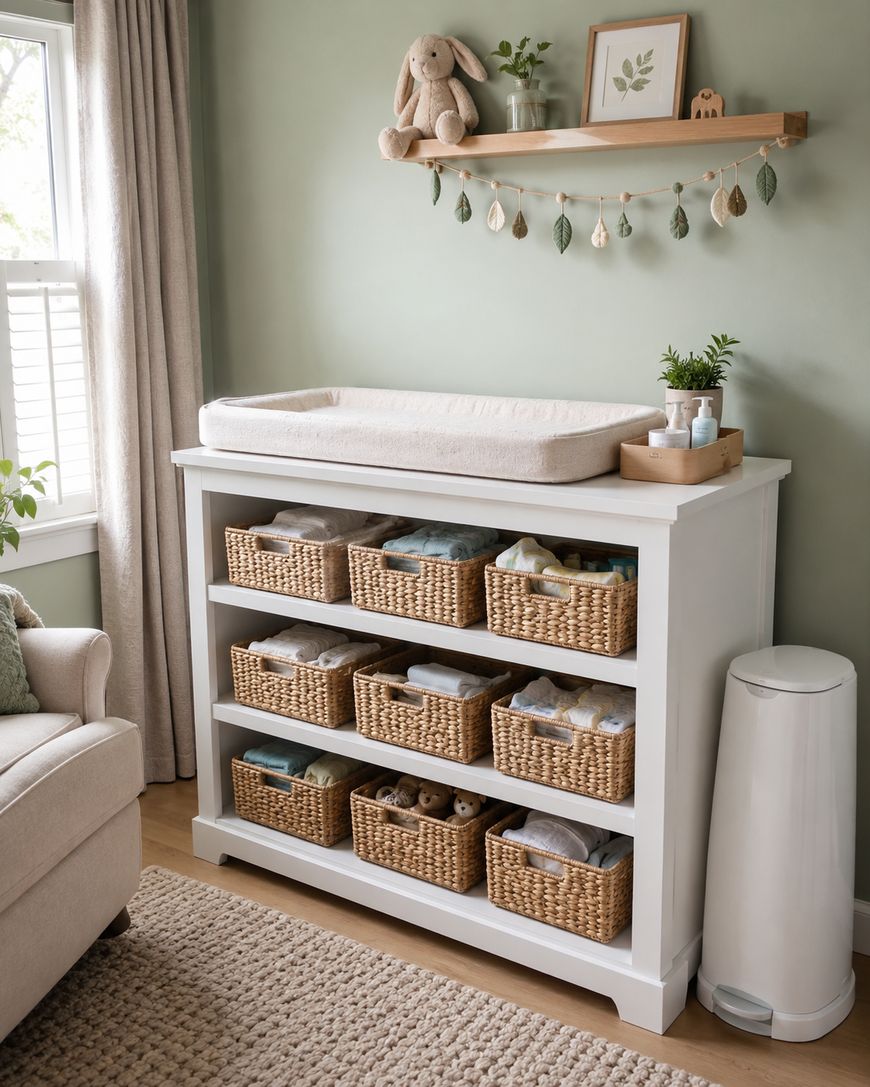
The Essential Supplies That Belong on Your Changing Table
Before you organize, you need to know what actually belongs within reach and what can be stored further away.
The core supplies you want immediately accessible are diapers in the current size, a full pack of wipes, diaper cream or ointment, and a fresh change of clothes for the baby.
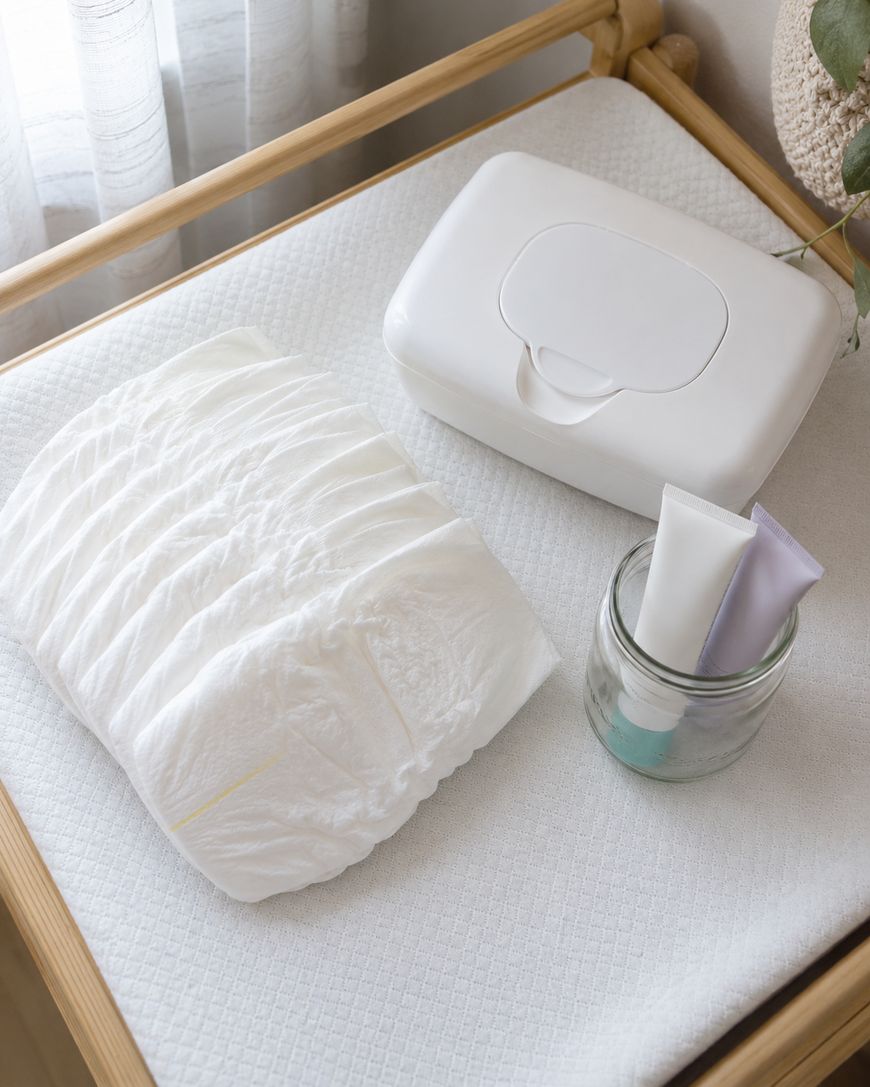
Keep a small trash can or diaper pail close enough that you can drop a used diaper without stretching or turning away from your baby.
A few extras that many parents find helpful to keep nearby include hand sanitizer, a small fan for summer months, a gentle baby powder if you use it, and a few small toys or a mobile to keep babies entertained during the change.

Anything else—extra diaper sizes, bulk wipe packs, lotions you use occasionally—can live in a drawer, closet, or a labeled bin nearby. The goal is to keep the immediate surface and shelves streamlined so you can grab what you need without looking.
Changing Table Organization Ideas for Small Spaces
Not everyone has a dedicated nursery with a full-size changing dresser and multiple shelves. Many parents are working with limited square footage, and that’s completely workable with the right approach.
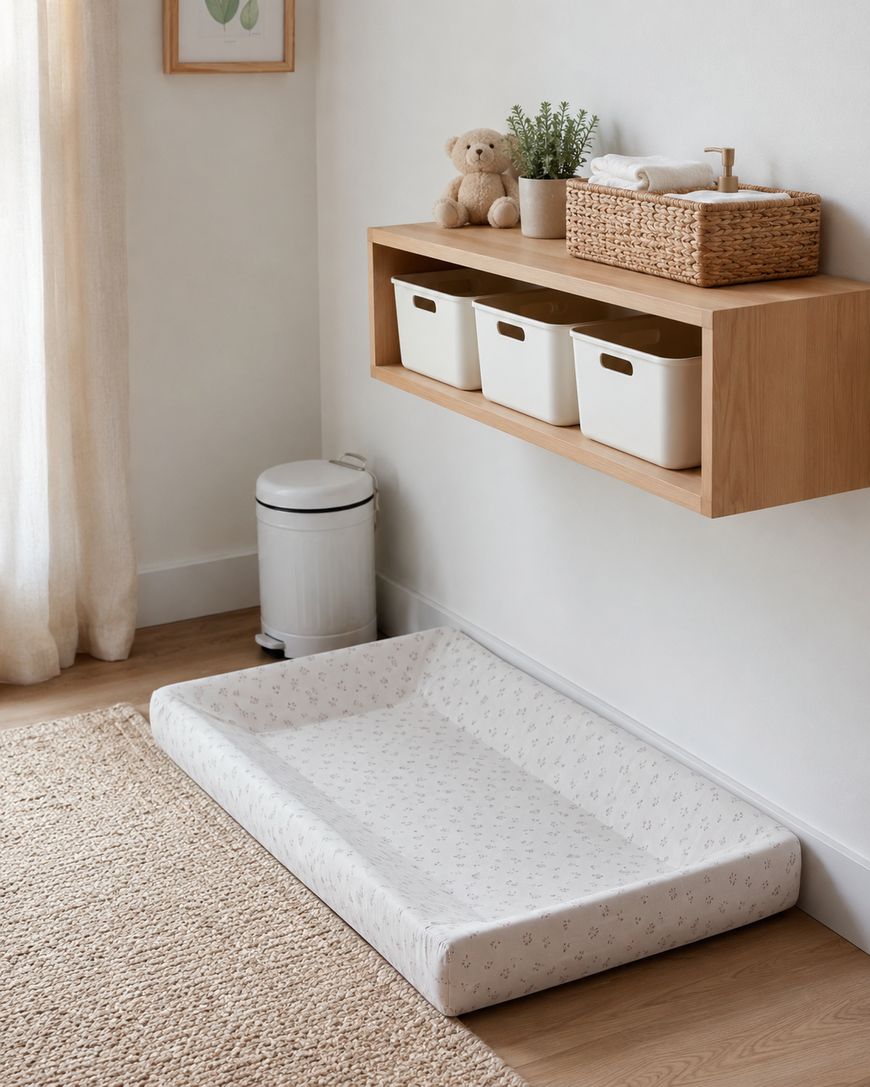
A wall-mounted shelf above a floor-level changing pad gives you vertical storage without taking up any floor space at all.
You can mount two or three small shelves at different heights, using the lowest one for frequently used items like diapers and wipes and the higher shelves for backup supplies or decorative baskets.
A hanging organizer on the back of the nursery door is another strong option for small rooms. You can store diaper cream, a thermometer, spare onesies, and even a spare set of sheets in the pockets without using any surface space.
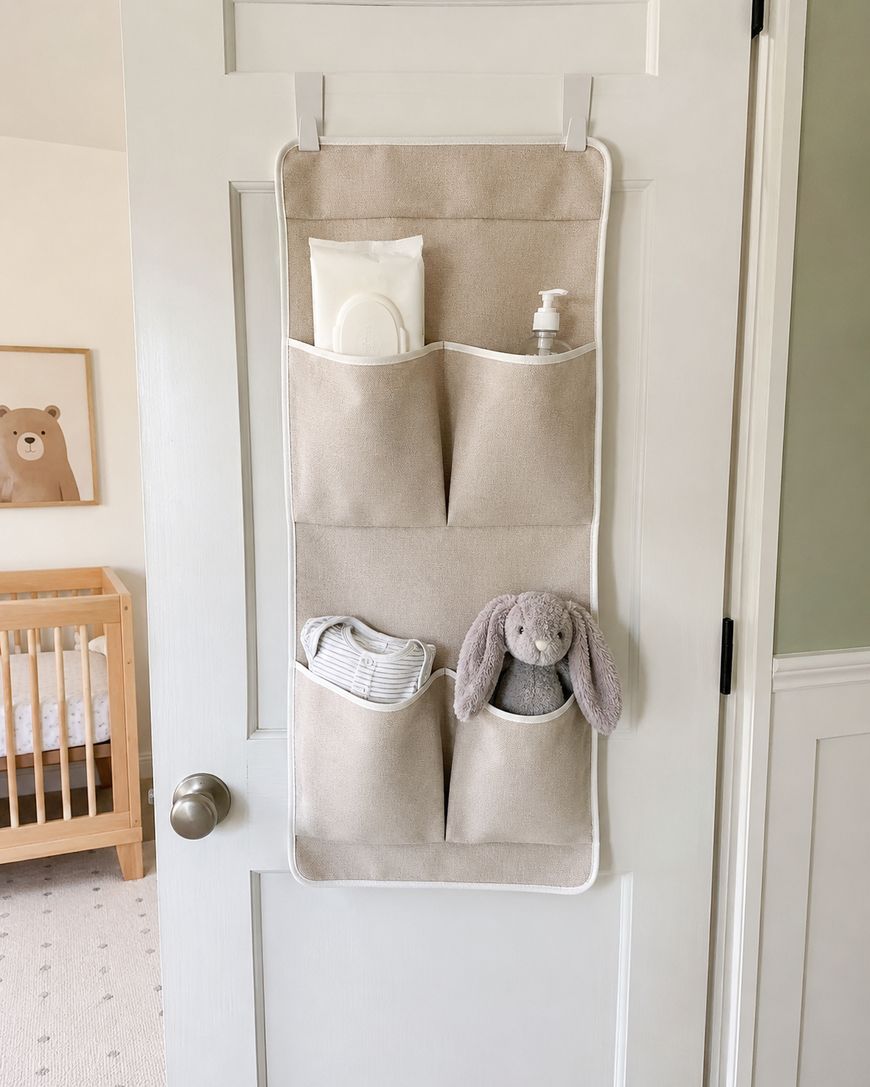
Over-the-door organizers designed for shoes work surprisingly well for baby supplies and are easy to find and inexpensive to buy.
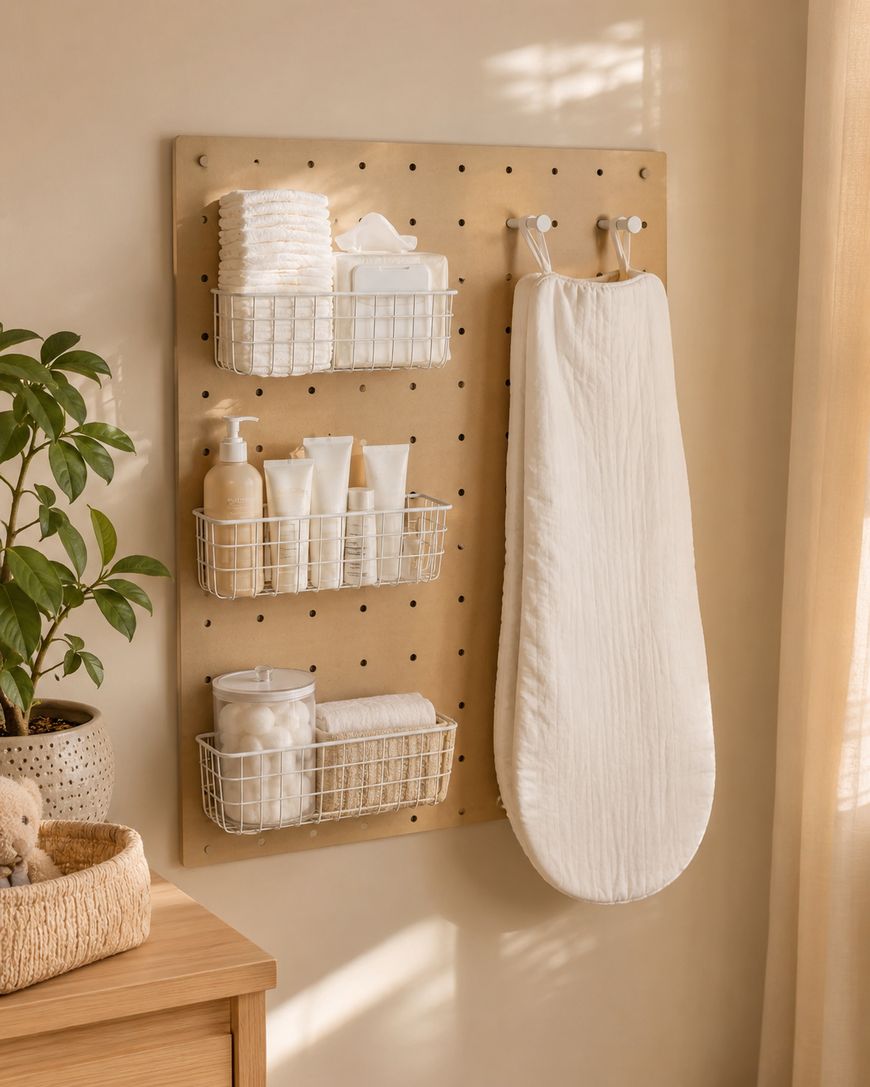
A pegboard mounted on the wall next to the changing station is a creative small-space solution that has become very popular. You can attach hooks, small baskets, and clips to hold almost anything, and it’s easy to rearrange as your baby grows and your needs change.
For truly tight spaces, a portable changing kit—a dedicated pouch with a travel mat, a small pack of wipes, and a few diapers—can sit on any surface and be moved as needed.
Using Baskets and Bins to Keep the Changing Area Tidy
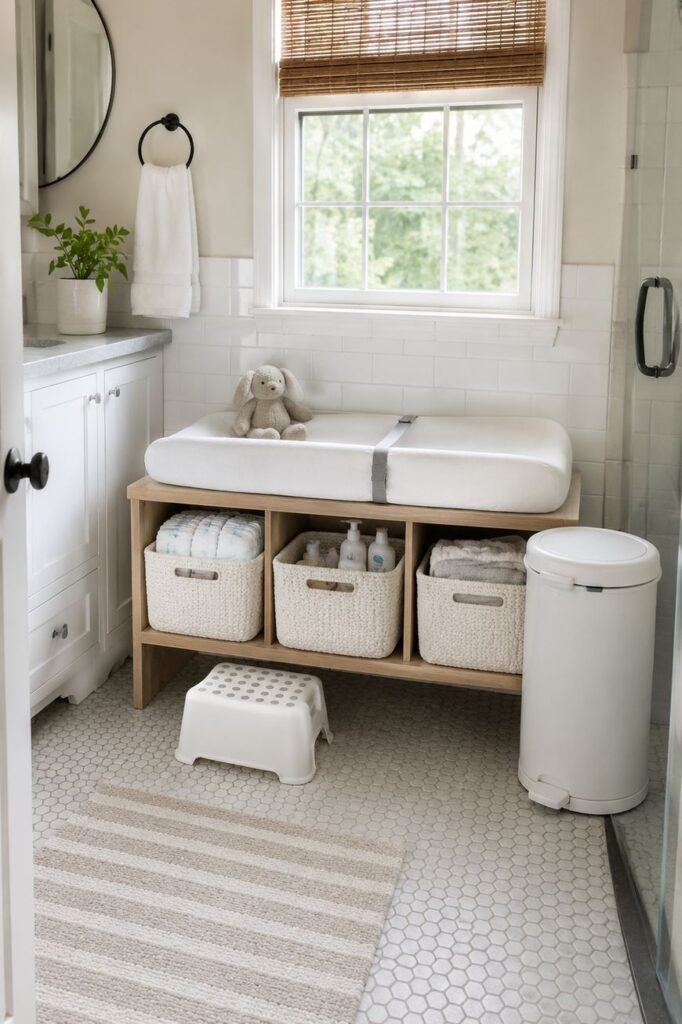
Baskets and bins are the workhorses of changing table organization, and they look great while doing their job.
Clear bins let you see exactly what’s inside at a glance, which is helpful for items like creams or cotton balls that you might have in small quantities.
Woven baskets add warmth and texture to the nursery while corralling loose supplies that would otherwise end up scattered across the surface.
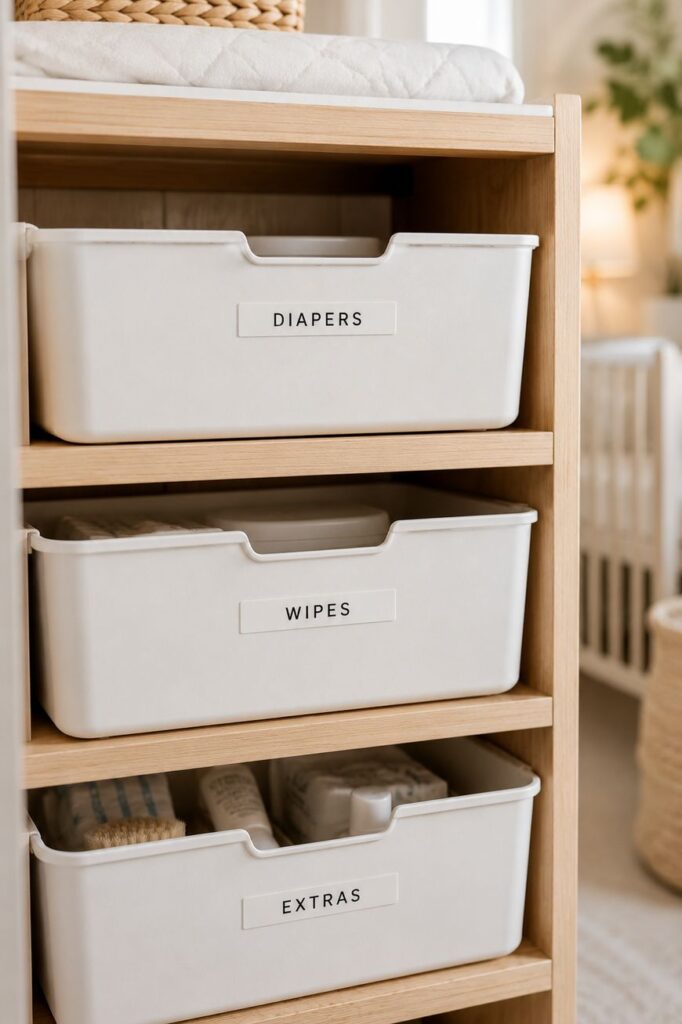
Label every basket and bin, even if the labels seem obvious to you right now. When your partner, a grandparent, or a babysitter is handling the change, clear labels mean no one has to ask where anything is.
Stackable bins are worth considering if you have open shelf space below the changing surface. You can dedicate one bin to current-size diapers, one to wipes, and one to backup supplies, and restocking becomes as simple as pulling out the right bin.
Small drawer organizers are excellent inside a changing dresser. Use them to separate creams, ointments, and accessories so nothing gets buried under everything else.
How to Organize Diapers and Wipes for Easy Access
Diapers and wipes are the two things you’ll reach for at every single change, so their placement deserves special attention.
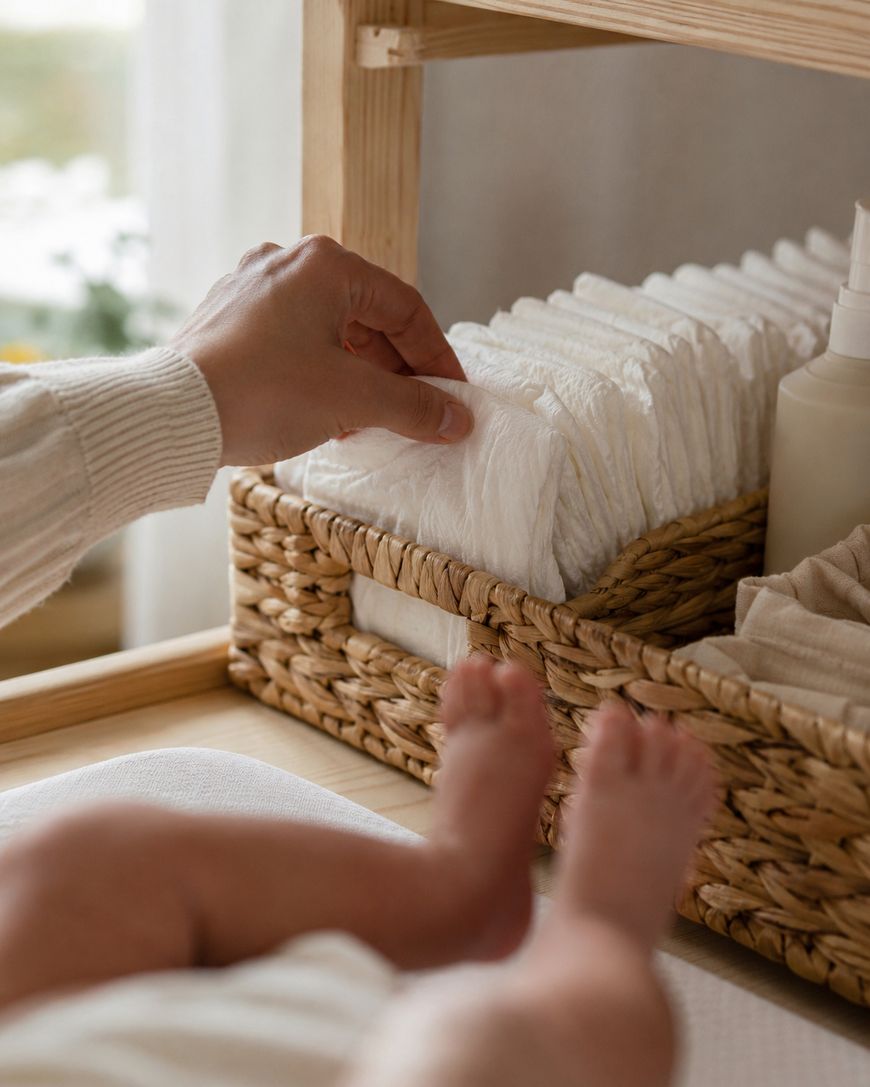
Keep diapers stacked on their sides rather than flat when possible—this lets you fan them out slightly so you can grab one easily without disturbing the whole stack.
A small basket or open bin right on the changing surface works better than a closed container because you can grab a diaper with one hand while keeping the other on your baby.
Wipes should be in a dispenser that opens with one hand. Many wipe containers have a flip-top lid that you can open with your thumb while your other hand is holding your baby’s ankles up.
Refillable wipe dispensers are worth the investment because they let you buy wipes in bulk and refill as needed, which is both more economical and reduces waste.
Some parents find it helpful to pre-open one corner of the wipe slightly so there’s no fumbling in a dark room at 3 a.m.
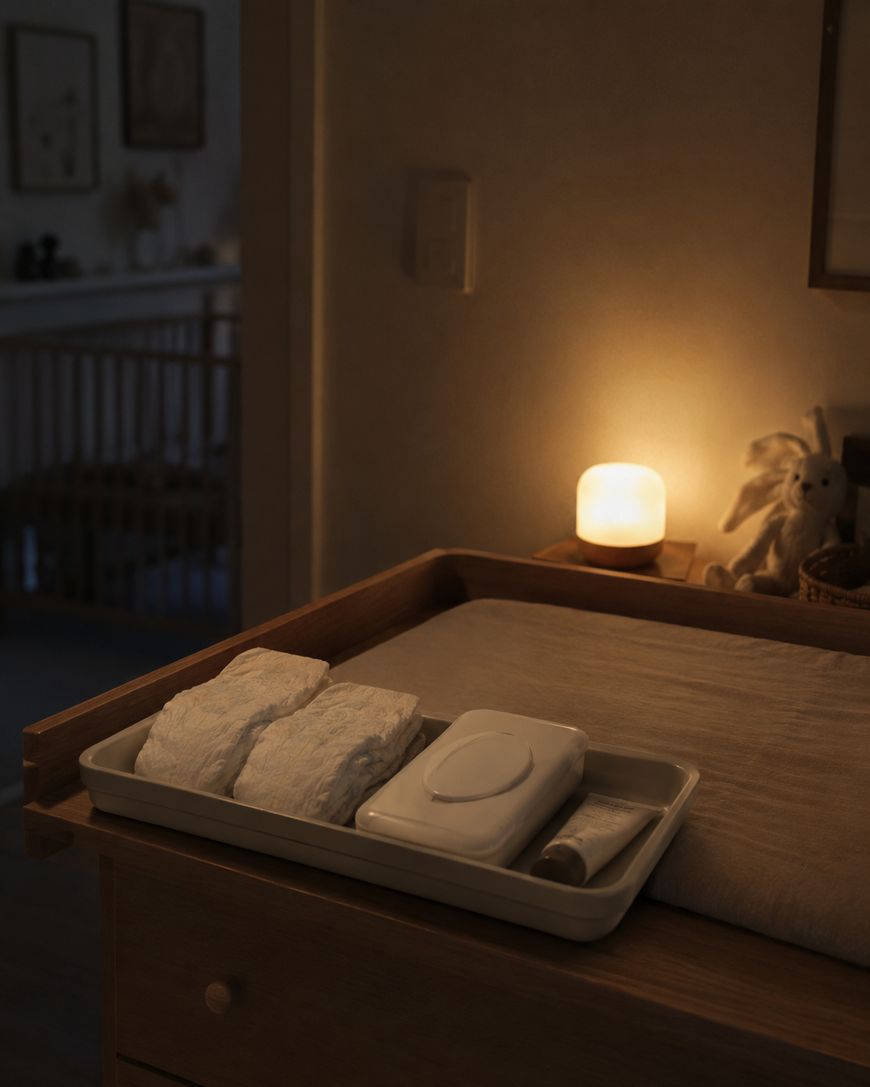
If you use cloth wipes, a dedicated wet bag hung within easy reach keeps things just as accessible as disposable wipes and makes the wet-to-dry transition smooth.
Diaper Cream and Baby Skincare Organization
Diaper creams and ointments have a way of multiplying quickly, especially when well-meaning family members gift you different brands to try.

Choose one or two creams you actually use regularly and keep only those on the changing table. Store the rest in a labeled backup bin.
A small tray or shallow basket is ideal for corralling creams upright so you can read the labels at a glance and grab the right one quickly.
If you use multiple products—a daily protective cream plus a thicker ointment for rash treatment—place them in a consistent order so muscle memory kicks in and you reach for the right one every time.
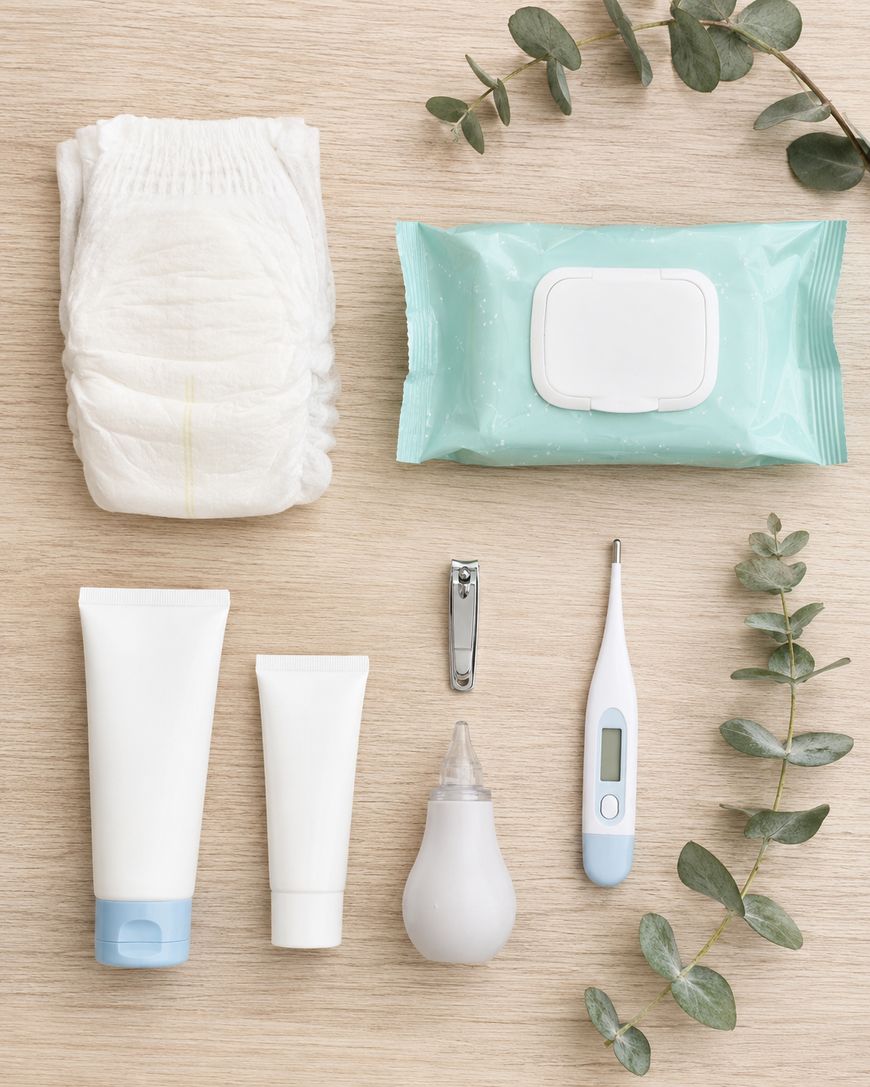
Small tubes and sticks can fall over or get buried, so a toothbrush holder or a small cup works well to keep them upright and visible.
Baby nail clippers, a nasal aspirator, and a thermometer can share a small basket on a nearby shelf. These aren’t used at every change, but they’re needed often enough to belong in the same zone.
Changing Table Organization Ideas for Nighttime Changes
Nighttime diaper changes have their own challenges, and your organization system should account for the dark, the quiet, and your sleep-deprived brain.
A small, dimmable nightlight near the changing table means you can see what you’re doing without flooding the room with bright light that wakes everyone up.
Arrange your nighttime supplies—one diaper, the wipes dispenser, and the cream you use most—in a specific order you can replicate by touch alone.
Some parents keep a small dedicated nighttime kit on the lower shelf: a pre-counted stack of two diapers, the wipes dispenser, and one cream in a shallow tray. This way there’s no decision-making involved, and you can move through the change quickly.
A small lip or guardrail on any open shelves prevents supplies from sliding off in the dark when you’re reaching without looking.
Keeping the Changing Table Organized as Your Baby Grows
The organization system that works perfectly at two months will need to change by six months and again at a year.
As your baby becomes more mobile, you’ll want to secure lightweight items that could be grabbed and knocked over. Baskets with lids or higher shelves become important for creams and small accessories.
When you transition out of one diaper size, clear that size out completely rather than letting old diapers take up space needed for the current size.
By the time your baby is a toddler and you’re in the pull-up phase, the changing area may shift to the bathroom, and you can adapt the same organizational principles—dedicated zones, labeled bins, everything within arm’s reach—to the new location.
Good changing table organization ideas grow with you, and the habit of keeping the station tidy becomes second nature faster than you’d expect.
Why Changing Table Organization Matters More Than You Think
A well-organized changing table isn’t just about aesthetics—it’s about safety and sanity.
When everything you need is within arm’s reach, you never have to take your hand off your baby or step away mid-change to hunt for supplies.
New parents are often surprised by how many diaper changes happen in a single day. Newborns can need 10 to 12 changes every 24 hours, which means your setup gets tested constantly and inefficiencies add up fast.
A thoughtful organization system saves you seconds each time, and those seconds matter when you’re running on little sleep.
It also reduces stress in those middle-of-the-night changes when you need to move quickly and quietly. Knowing exactly where everything is lets you stay calm and focused on your baby rather than fumbling through a pile of mismatched supplies.
Good organization also means you’re less likely to run out of something important at the worst moment. When diapers, wipes, and diaper cream each have a home, restocking becomes a simple habit rather than a scramble.
Frequently Asked Questions About Changing Table Organization
What should always be within arm’s reach on a changing table?
Keep diapers, wipes, and diaper cream immediately accessible on the surface or on the nearest shelf. A small trash can or diaper pail should be close enough to drop a used diaper without stepping away from your baby.
How many diapers should I keep on the changing table at once?
Most parents find a stack of 10 to 15 diapers manageable without cluttering the space. Keep bulk diapers nearby in a bin or closet and refill the changing table stack when it gets low.
What’s the best way to organize a small changing table?
Use vertical space with wall-mounted shelves, hang an organizer on the nearby door, and keep only essential supplies on the surface. A pegboard with hooks and small baskets is a flexible solution for tight spaces.
How do I keep the changing table organized with multiple caregivers?
Label every basket and bin clearly, and establish a simple restock routine so anyone caring for your baby can maintain the system. A quick rundown during handoffs helps new caregivers feel confident navigating the station.
Should I use open or closed storage for the changing table?
Open storage is generally easier for items you grab at every change, like diapers and wipes. Closed containers or lidded bins work better for backup supplies or items you use less frequently, keeping the visual space calmer.
When should I reorganize the changing table as my baby grows?
Reassess your setup whenever you change diaper sizes, when your baby becomes mobile enough to grab things, and when you start potty training. Small adjustments at each stage keep the system working without a full overhaul.
Start With One Change and Build From There
Transforming your changing table doesn’t require buying a lot of new products or spending a whole afternoon reorganizing.
Pick one of these changing table organization ideas today—start with labeling your current bins or moving the wipes dispenser closer to your dominant hand—and notice how much smoother the next change feels.
Small improvements compound quickly, and within a week you’ll have a setup that works with you instead of against you every single time you step up to that table.